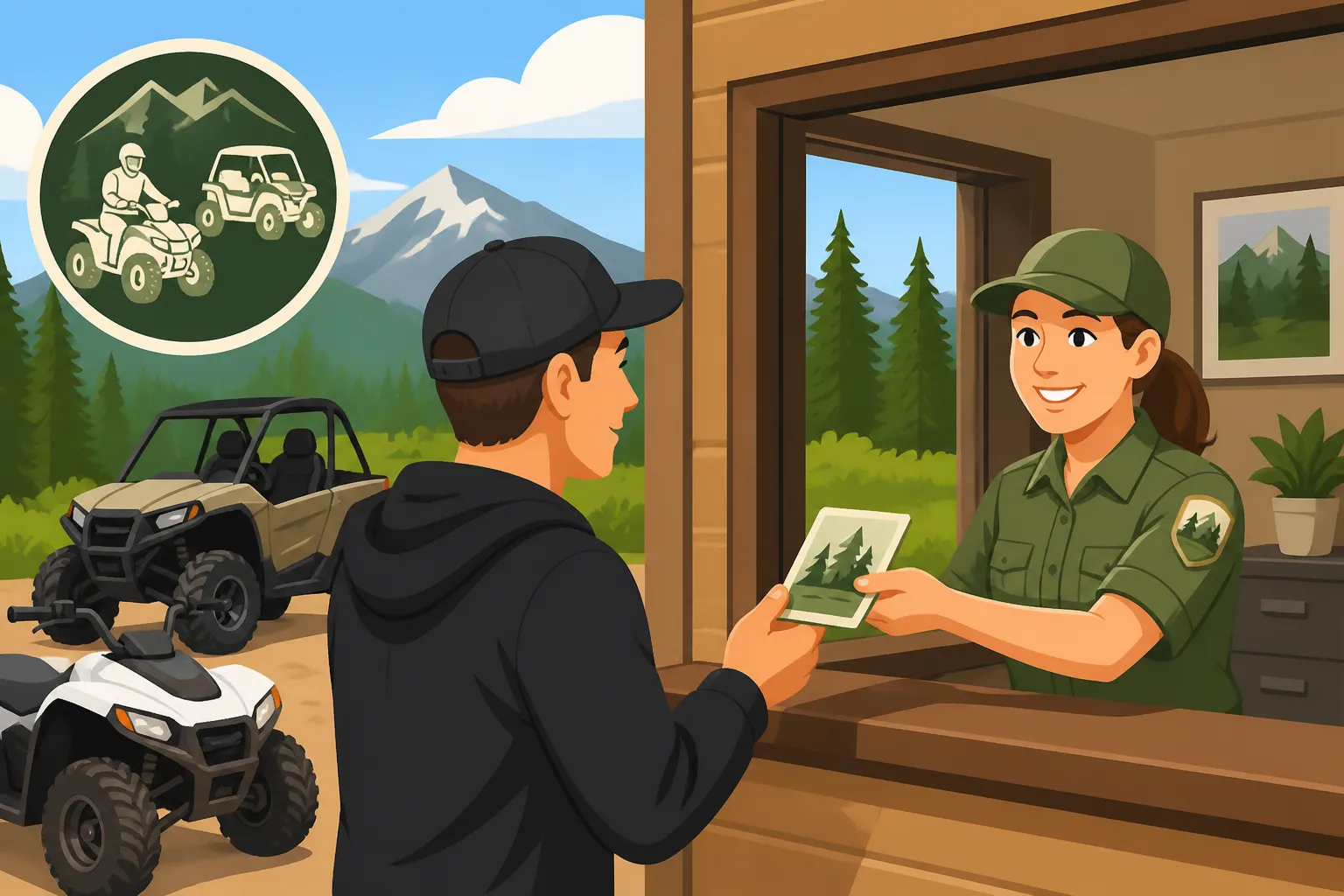
Buying a Permit at a Forest Office
There's nothing quite like the feeling of pulling your ATV or UTV off the trailer, the crisp Wyoming air hitting your face, and the promise of open trails stretching out before you. But that perfect moment can quickly turn into a headache if you realize you forgot one crucial piece of paperwork: your Wyoming ORV permit. Many riders, especially those visiting or new to a specific area, wonder if they can grab a permit right there, close to the trails. This guide will walk you through everything you need to know about purchasing your indispensable permit directly from a Forest Service office, ensuring your ride through Wyoming's stunning landscapes is legal and worry-free.
The Forest Service's Role in Wyoming's ORV Program
When you're out exploring Wyoming's incredible backcountry, often you're riding on lands managed by the U.S. Forest Service. These federal lands, from the vast expanses of the Bighorn National Forest to the rugged trails of the Medicine Bow-Routt National Forest, are integral to the state's outdoor recreation scene. It makes perfect sense, then, that many Forest Service offices serve as points of sale for your Wyoming ORV permits. They're not just there to manage the trees; they're also a key part of ensuring responsible recreation.
Directly Supporting Local Trails and Infrastructure
One of the most compelling reasons to purchase your ORV permit at a Forest Service office is the direct impact your dollar has on the very trails you're riding. The permit system in Wyoming is designed to funnel funds back into the maintenance and improvement of the ORV trail network. When you hand over your payment at a ranger station, you're contributing directly to the boots-on-the-ground work that keeps those trails open, safe, and enjoyable.
These funds aren't just for clearing downed trees or grading rough sections. They also go towards vital infrastructure like signage, ensuring you don't get lost on a remote two-track, and even facilities such as designated parking areas and vault toilets at popular trailheads. It's a closed-loop system: you pay to play, and your payment directly enhances your play experience. This is a critical piece of [Where Wyoming ORV Permit Money Goes] – the money often stays local to where it's collected, funding projects in that specific forest.
Convenience for Riders in Remote Locations
Let's be honest, sometimes you arrive at a trailhead, miles from the nearest town, and realize your permit is either expired, lost, or you simply never got one for your new machine. This is where the strategic placement of Forest Service offices becomes a lifesaver. While not every small ranger outpost will be equipped to sell permits, many of the larger district offices are. This means you might not have to backtrack an hour or more to a county treasurer's office or a distant powersports dealer just to get legal.
Imagine you're staging for a ride deep in the Shoshone National Forest. Finding a Forest Service office nearby, perhaps even on your way to the staging area, can save you precious riding time and a lot of frustration. It’s about accessibility and acknowledging that riders aren't always starting their adventures from urban centers. Being able to secure your [Wyoming's Annual ORV Permit] close to the action is a huge benefit for many riders, particularly those who travel long distances to reach Wyoming's prime riding spots.
What to Expect When Buying at a Forest Office
So, you've located a Forest Service office that sells permits. What should you bring with you, and what's the process once you walk through the door? It's generally a straightforward transaction, but a little preparation can make it even smoother.
Necessary Information and Payment Methods
When you go to purchase your ORV permit, you’ll typically need some basic information about yourself and your machine. While you don't need a title for most ORVs in Wyoming – which is covered in more detail in [Why Most Wyoming Off-Road Machines Have No Title] – it’s wise to have your machine's VIN (Vehicle Identification Number) handy. They'll also need your name and contact information. Having a valid photo ID, like your driver's license, is always a good idea for any official transaction.
Payment methods can vary. Many larger Forest Service offices are equipped to accept debit or credit cards, but it's not a universal guarantee, especially in more remote or smaller stations. Cash is almost always accepted, so it’s wise to have the exact amount on hand for the permit fee. There's no negotiation on the price; [Wyoming ORV Permit Cost] is set statewide. Before you make a long drive, it's a smart move to call ahead and confirm their accepted payment methods. You don't want to get there only to find out they're cash-only and you've only brought plastic.
Receiving and Placing Your Decal
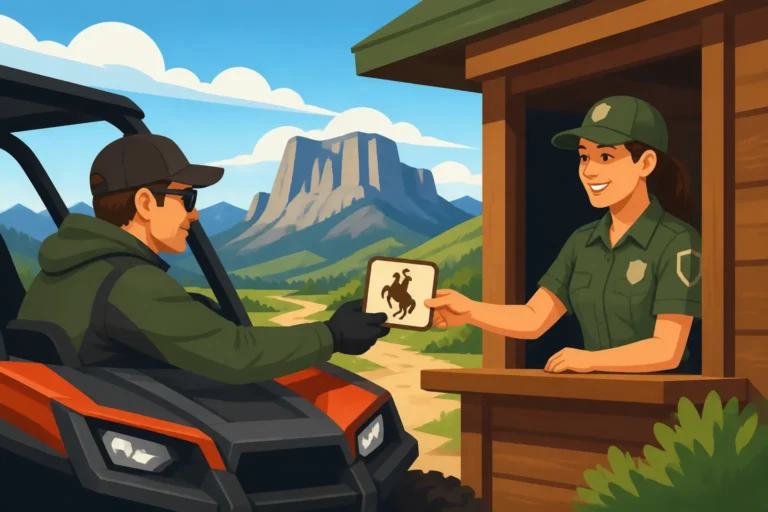
Once your transaction is complete, you’ll receive your physical ORV permit decal. This isn't just a receipt; it's the sticker you need to affix to your machine. The Forest Service employee might even offer you some tips on placement, but the general rule is to put it in a prominent, easily visible spot. Think about areas on your machine that are clean, flat, and where the decal won't be easily peeled off by brush or mud.
Proper placement is key because wardens, rangers, and other law enforcement officials will be looking for it. The decal serves as visual proof that your machine is legally registered for trail use in Wyoming. For detailed guidance on exactly where to stick it, check out [Sticking a Decal Where It Shows]. Taking a moment to affix it correctly right after purchase will save you potential hassle out on the trails. It's not just about having the permit, it's about making sure it's visible.
Finding a Forest Office That Sells Permits
While many Forest Service offices can sell permits, not all of them do, and their hours of operation can be a significant factor. It’s crucial to do a bit of homework before you load up the rig and head out.
Checking Office Hours and Availability
Unlike a gas station or a large department store, Forest Service offices often have more limited hours, especially smaller ranger stations. Many operate on standard weekday business hours, and some might be closed on weekends or federal holidays. During peak seasons, they might extend hours, but it’s never a given. Furthermore, some very small satellite offices might not be staffed at all times or might not have the capability to handle permit sales.
The best strategy is always to call the specific Forest Service district office you plan to visit before you leave home. A quick phone call can confirm their current hours, whether they sell ORV permits, and what payment methods they accept. This also allows you to ask about any current trail closures or fire restrictions, which can be invaluable information for your trip. Don't assume; always verify.
Online Resources and Local Information
The Wyoming State Parks, Historic Sites and Trails website is an excellent starting point for finding authorized permit vendors. They often have a comprehensive list of all selling agents, which includes not just Forest Service offices but also private businesses and county counters. This resource is usually updated periodically, so you can generally trust the information provided. Look for a section like [Where Wyoming Sells ORV Permits] on the state's official recreation pages.
Beyond the statewide list, individual Forest Service websites for specific forests (e.g., Shoshone National Forest, Bridger-Teton National Forest) might also provide information on where to purchase permits within their jurisdiction. Local chambers of commerce or visitor centers in towns near major riding areas can also be a surprising source of information. Sometimes, the most up-to-date intel comes from local businesses or community boards that cater to outdoor enthusiasts.
Advantages and Disadvantages of Forest Office Purchases
Every method of buying your ORV permit has its pros and cons. Understanding these can help you decide if a Forest Service office is the right place for you.
Pros: Immediate Decal, Direct Trail Support, Expert Advice
The biggest advantage of buying your permit at a Forest Service office is arguably the immediacy. You walk in, pay your fee, and walk out with a decal in hand. There's no waiting for mail delivery, which is a common issue if you're [Buying a Wyoming Permit Online]. This is perfect for those spontaneous trips or when you realize last-minute that your current permit is expired.
As mentioned before, there's also the satisfaction of knowing your money is going directly back into the local trails program. This direct link between your permit fee and [Wyoming Permits and the Trails Program] can feel more tangible when you're purchasing it from the very people who manage those trails. Moreover, Forest Service personnel are often a wealth of information. They can provide current [Wyoming Trail Maps and MVUMs], offer advice on specific routes, and give you the latest updates on conditions, closures, or wildlife activity. This local expertise is a huge bonus you won't get from an online purchase or even many other selling agents.
Cons: Limited Hours, Remote Locations, Potential for No-Stock
However, buying from a Forest Service office isn't without its drawbacks. The most common hurdle is the limited operating hours. If you arrive on a weekend, a holiday, or outside of standard business hours, you're likely to find the doors locked, which can be a real bummer if you're trying to get a ride in right away. Their locations can also be quite remote. While this is a pro for those already in the backcountry, it means a dedicated trip might be a significant detour if you're coming from a major city.
Another, albeit rare, issue is the possibility of them being out of decals. While most offices are well-stocked, unexpected surges in demand or logistical issues could, in theory, leave them temporarily without permits. Calling ahead helps mitigate this, but it's still a possibility. This is less likely at a larger vendor like a powersports shop, which usually has a higher volume of sales and more robust inventory management, such as those covered in [Buying a Permit at a Powersports Shop].
Beyond the Permit: Other Forest Office Resources
A trip to a Forest Service office doesn't have to be just about the permit. These offices are hubs of information and resources for anyone planning to recreate on federal lands. Making the most of your visit can enhance your entire riding experience.
Maps, Trail Conditions, and Local Advice
Forest Service rangers and staff are the boots on the ground, living and working in the areas you want to explore. They often have the most up-to-date and accurate information on trail conditions, recent weather events (like mudslides or washouts), and even wildlife sightings. Need to know if a particular creek crossing is running high due to recent snowmelt? They're the ones to ask. Wondering if the aspen leaves are peaking on a certain trail for a fall ride? They'll know.
They can also provide you with detailed motor vehicle use maps (MVUMs), which are absolutely essential for legal riding on federal lands. These maps clearly designate which routes are open to ORVs, any width restrictions, and seasonal closures. Relying on an outdated map or a vague GPS track can lead to fines, so having the most current official map is critical. Don't underestimate the value of a quick chat with a ranger about [Wyoming Trail Closures to Check First] before you head out.
Understanding Local Regulations and Ownership Documentation
Beyond permits and maps, Forest Service staff can clarify any specific local regulations that might apply to the area you're planning to ride. This could include things like dispersed camping rules, fire restrictions (which can change rapidly during dry seasons), or specific regulations regarding travel in certain wildlife management areas. These rules are vital for protecting the environment and ensuring everyone has a positive experience.
While less common at the point of sale, a Forest Service office can also be a helpful place to understand the nuances of machine ownership, especially for ORVs which often don't have traditional titles. If you've just purchased a used machine from a private seller, for example, and you're curious about what constitutes legal proof of ownership in Wyoming, they might be able to offer guidance or point you to state resources. For peace of mind when buying or selling, particularly for machines that don't get a traditional title, having a robust bill of sale is important. Services like LawDepot can be incredibly helpful in generating standardized, legally sound documents such as a [Wyoming ATV Bill of Sale Requirements], ensuring you always have clear proof of ownership in any situation. This makes your interactions with any official, including Forest Service personnel, much smoother.
| Aspect | Forest Office Purchase | Online Purchase |
|---|---|---|
| Immediate Decal | Yes, walk out with it | No, wait for mail |
| Local Knowledge | Excellent, direct access to rangers | None, self-service information |
| Payment Options | Varies (cash/card), call ahead | Usually credit/debit card only |
| Hours | Limited, typically weekdays | 24/7 |
| Location | Often remote, near trails | Anywhere with internet access |
| Trail Map Access | Often available for free or purchase | Must seek out independently |
| Direct Funds Impact | Strong, tangible link to local trail maintenance | Indirect, statewide fund distribution |
| Proof of Ownership | Can clarify local needs, suggest formal docs (e.g., LawDepot) | No direct assistance |
Disclaimer
This article is for general informational purposes only and does not constitute professional advice. Laws, prices and regulations vary by location and change over time. Consult a qualified professional for guidance on your specific situation.