What the MPV and ORV-MC Checklist Form Asks
It’s a common scenario for many of us who love hitting the trails in Wyoming: you’ve got your trusty ATV or side-by-side, you’re ready for adventure, but then you start hearing whispers about "MPV" classifications, "ORV-MC" designations, and a mysterious "checklist form." It can feel like wading through quicksand when all you want to do is understand the rules for your machine. This guide is here to untangle the complexities of Wyoming’s Multipurpose Vehicle (MPV) and Off-Road Recreational Vehicle-Motorcycle (ORV-MC) definitions, focusing specifically on what that crucial checklist form asks, why it asks it, and how to navigate it so you can get your machine properly registered and titled.
Decoding Wyoming's MPV and ORV-MC Designations: Why This Form Matters
Wyoming's approach to off-road vehicles isn't always straightforward, and the distinctions between a standard off-road recreational vehicle and a multipurpose vehicle are where a lot of confusion begins. Understanding these differences is the first step to making sense of the checklist form.
The Basics: What is an ORV-MC in Wyoming?
When we talk about an Off-Road Recreational Vehicle-Motorcycle, or ORV-MC, in Wyoming, we're generally referring to the machines we all know and love for tearing up the dirt: ATVs, dirt bikes, and most side-by-sides that are primarily designed for off-highway use. These vehicles are built for trails, sand dunes, and open country, not paved roads. For these machines, the state of Wyoming typically requires an annual [Wyoming's Annual ORV Permit] decal if you plan to ride on designated public lands. This decal is strictly for off-road access and doesn't grant any privileges for street use.
The key takeaway here is that most ORV-MC machines in Wyoming do not receive a title from the county clerk. You buy your machine, get your permit, and you're good to go on the trails. This simplicity is great for dedicated off-road enthusiasts, but it becomes more complicated if you have aspirations of ever riding on public roads. This is where the MPV designation comes in.
The Game Changer: Understanding Wyoming's Multipurpose Vehicle (MPV) Class
Now, let's talk about the Multipurpose Vehicle, or MPV. This is where Wyoming carves out a special niche for certain off-road machines, allowing them a path to become street-legal on designated public roads. It's a fantastic option for riders who want the versatility to travel between trailheads, access rural roads, or even run quick errands into town without having to trailer their machine everywhere. However, this isn't a free pass for every side-by-side or ATV out there.
Wyoming has very specific criteria that a machine must meet to qualify as an MPV. These aren't just arbitrary rules; they're designed to ensure that any vehicle sharing public roads meets minimum safety and classification standards. If your machine can successfully meet these specific requirements, it can then be titled by the county clerk and plated by the county treasurer, much like a traditional car or truck. This is a crucial distinction, as a regular ORV-MC only gets a permit decal and no title or plate. The checklist form is the critical gatekeeper, the document that verifies whether your machine has what it takes to join [Wyoming's Multipurpose Vehicle Class]. It's the state's way of making sure your "off-road" machine is indeed "multi-purpose" enough for the road.
The Heart of the Matter: What the Checklist Form Actually Asks
The "MPV and ORV-MC Checklist Form" isn't just a formality; it's a detailed questionnaire designed to ensure your machine meets all the necessary legal and safety standards to be classified as a Multipurpose Vehicle in Wyoming. Let's break down the core sections you'll encounter.
Section 1: Identifying Your Machine
The first part of the form is all about identifying your specific machine. This might seem obvious, but accuracy here is paramount. You'll be asked for:
- Vehicle Identification Number (VIN): This is your machine's unique fingerprint. Double-check it against the frame of your vehicle, not just your bill of sale, to ensure it’s correct. Any discrepancy can cause significant delays or even rejection of your application.
- Make and Model: The manufacturer (e.g., Polaris, Can-Am, Yamaha) and the specific model name (e.g., RZR, Defender, Wolverine).
- Year of Manufacture: The model year of your machine.
- Color: A simple but necessary detail for identification.
This information helps the county clerk's office accurately record your vehicle in the state's system. It ties your physical machine directly to the legal documentation, setting the stage for either a title or ensuring proper registration for an ORV-MC. This initial step is essentially confirming, "Yes, this is the machine we're talking about."
Section 2: Proving MPV Eligibility
This is arguably the most critical section for anyone hoping to title and plate their machine as an MPV. Here, the form dives into the physical characteristics that define a Multipurpose Vehicle in Wyoming. These aren't suggestions; they are hard requirements based on state statute. You'll need to verify:
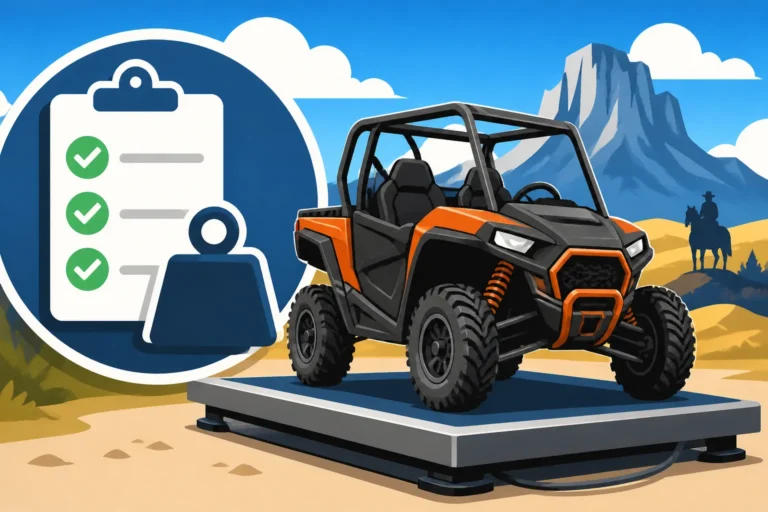
- Weight: The form will ask you to confirm your machine's empty weight (without passengers, fuel, or cargo). This is because Wyoming law specifically states that an MPV must have a [Weight Between 300 and 3,000 Pounds]. If your machine falls outside this range, it simply cannot be classified as an MPV. You might need to take your machine to a certified scale to get an accurate reading, as manufacturer specs can sometimes be approximate or refer to a base model without accessories.
- Seat Height: Another crucial measurement. The law requires [A Seat At Least 24 Inches Up] from the ground, measured to the lowest point of the operator's seat. This rule helps distinguish MPVs from other low-slung recreational vehicles. You'll need a tape measure and a level surface to get this right. Don't eyeball it!
These two physical attributes are fundamental to the [Wyoming's MPV Definition in W.S. 31-1-101]. Without meeting both, your machine will remain an ORV-MC, suitable only for off-road use with a permit, and ineligible for a title or plate. The form makes you attest that your machine meets these criteria, essentially putting the responsibility on you, the owner.
Section 3: Road-Ready Equipment Checklist
If your machine clears the physical definition hurdle, the next set of questions on the form focuses on safety equipment required for operating on public roads. This section ensures your MPV is equipped to safely share the road with other traffic. The checklist will typically ask you to confirm the presence and functionality of:
- Headlights and Taillights: Essential for visibility, especially during low light conditions or at night. The form will ask for verification of a functional headlight and taillight system, ensuring they meet the requirements described in [Wyoming Lighting Requirements for ORVs].
- Stop Lamp: A crucial safety feature that illuminates when the brakes are applied, signaling to vehicles behind you that you're slowing down or stopping.
- Mirrors: Specifically, the form will verify you have at least one working mirror on the left side of the vehicle, as outlined in [Wyoming Mirror Requirements for Road Use]. This is vital for maintaining situational awareness on public roads.
- Horn: A functional horn is required to alert other drivers or pedestrians to your presence, as per [Wyoming Horn Requirement on a Road Machine].
- Spark Arrester: While generally required for all off-road vehicles on public land to prevent wildfires, the form re-emphasizes its presence for MPVs to ensure compliance across all usage types.
- Muffler: The form will confirm your machine has a muffler system in good working order, designed to keep sound levels within legal limits.
Each of these items is a non-negotiable component of a road-legal MPV. The checklist form requires you to certify that your machine is equipped with all of these features, ready for inspection should the state deem it necessary. It’s not just about ticking boxes; it’s about ensuring public safety on shared roadways.
Section 4: Your Information and Certifications
Finally, the form requires your personal details as the applicant and owner, along with your signature. This section typically includes:
- Your Name and Contact Information: Basic details for the state to reach you.
- Your Signature: By signing, you are formally certifying that all the information you've provided on the form is accurate and truthful to the best of your knowledge. This is a legal affirmation.
- Date: The date you complete the form.
Accuracy here is just as important as in the other sections. False information could lead to issues with your title or plate down the line. If you've just purchased a used machine, you'll also want to make sure you have all your ducks in a row with ownership documentation. Sometimes, getting a clear bill of sale from a private seller can be tricky. Reputable services like LawDepot can provide customizable bill of sale templates that can help ensure you have proper documentation to present alongside this form. Having a clear record of ownership is key before you even get to this checklist.
Beyond the Checkboxes: Why Each Requirement on the Form is Important
It's easy to look at a government form as just a series of hoops to jump through, but each item on the MPV and ORV-MC Checklist Form exists for a very specific and important reason rooted in Wyoming law and public safety.
Why the Weight and Seat Height Rules are Non-Negotiable
The precise [Weight Between 300 and 3,000 Pounds] and [A Seat At Least 24 Inches Up] requirements for MPVs aren't arbitrary. They were established as part of [The MPV Rule That Started in 2008] to define a new class of vehicle that could safely operate both off-road and on designated public roads.
Consider the weight: a machine that is too light might not offer the stability and crash protection expected of a road-going vehicle, while a machine that's excessively heavy could pose different challenges for road infrastructure and handling. This specific weight range aims to capture machines that are robust enough for road use but still retain their off-road agility. Similarly, the seat height requirement helps differentiate bona fide side-by-sides or larger utility ATVs from smaller, lower-slung recreational vehicles that might not offer the same visibility for the operator or be easily seen by other drivers on the road. These rules are fundamental to the legal definition of an MPV, and if your machine doesn't fit, it's simply not an MPV in the eyes of Wyoming law, regardless of any other modifications you might make. This is why the form asks you to meticulously verify these measurements.
The Safety Imperative of Road Equipment
When your machine transitions from purely off-road trails to sharing the pavement with cars, trucks, and motorcycles, the rules of engagement change dramatically. The road equipment requirements on the checklist form are there to protect not only you but also every other driver and pedestrian on the road.
- Headlights, Taillights, and Stop Lamps: These aren't just for looking cool. They are critical for visibility. Imagine driving down a highway at dusk and not being able to clearly see the vehicle in front of you, or having them stop abruptly without a clear brake light signal. The form ensures your MPV has these essential warnings to prevent accidents.
- Mirrors: A left-side mirror provides crucial rearward visibility, allowing you to monitor traffic approaching from behind and make safe lane changes or turns. Without it, you're driving partially blind on a public thoroughfare, which is an unacceptable risk.
- Horn: A horn is a communication tool, allowing you to alert other drivers to your presence, warn them of danger, or signal before passing. It's a fundamental piece of safety equipment for any road-legal vehicle.
Each item the form asks about is a piece of the safety puzzle. By checking these boxes, you're not just completing paperwork; you're confirming that your machine is equipped to operate safely in a more complex and potentially dangerous environment than a dirt trail. The state takes this seriously, and so should you.
The Legal Ramifications of Incorrect Information
When you sign the MPV and ORV-MC Checklist Form, you are making a legal declaration. Providing false or inaccurate information, whether intentionally or unintentionally, can have serious consequences. At best, your application for an MPV title and plate could be rejected, forcing you to restart the process and potentially pay additional fees. At worst, if it's discovered later that your machine was improperly classified due to incorrect information, you could face fines, penalties, or even legal action for operating an unregistered or improperly registered vehicle on public roads.
The state relies on the accuracy of the information provided on these forms to maintain order and safety on its roads. It's an act of trust, and that trust comes with legal obligations. This is why it's so important to measure accurately, verify all equipment, and ensure you understand every question on the form before putting your signature on it. If you're unsure about any aspect, it's always better to seek clarification from the county clerk's office or a legal professional rather than guessing.
Completing the Form and What Comes Next in Wyoming
Once you understand why the MPV and ORV-MC Checklist Form asks what it does, the process of filling it out and moving forward becomes much clearer. It's a bridge between your off-road adventures and potential on-road freedom.
Step-by-Step: Filling Out the Checklist Accurately
Approach the form systematically. Don't rush through it.
- Gather Your Machine's Information: Have your VIN, make, model, and year readily available. Cross-reference the VIN with the actual frame of your machine.
- Take Precise Measurements: Before you even sit down with the form, accurately measure your machine's empty weight and the seat height from the ground to the lowest point of the operator's seat. Use a reliable scale for weight, and a tape measure on a level surface for height. Write these figures down.
- Inspect Your Equipment: Go through each required road-legal item—headlights, taillights, stop lamp, left-side mirror, horn, spark arrester, muffler—and confirm it is present and fully functional. Test everything!
- Fill Out Section by Section: Transfer all your gathered information onto the form. Print clearly or type if the form allows for electronic completion.
- Review Everything: Before signing, read through the entire form one last time. Check for any blanks, misspellings, or numerical errors. Ensure the certified statements are truly accurate for your machine.
- Sign and Date: Once confident, sign and date the form.
This diligent approach helps prevent unnecessary delays and ensures your application moves forward smoothly.
The Journey from Checklist to Wyoming MPV Title Requirements and Wyoming MPV Plate Requirements
The completed MPV and ORV-MC Checklist Form is just one piece of the puzzle, albeit a critical one. Once you have it filled out and signed, your journey diverges from that of a standard ORV. You're now on the path to obtaining a title and license plate.
The process for an MPV involves two different county offices:
- County Clerk's Office: Your first stop will typically be the [Wyoming County Clerk Title Process]. The clerk's office is responsible for vehicle titling in Wyoming. You will present your completed checklist form, along with proof of ownership (like a manufacturer's certificate of origin or a bill of sale, especially if you bought a used machine), and any other required documentation. If everything checks out, the clerk will issue your MPV title. This title formally establishes your ownership and the machine's classification as an MPV.
- County Treasurer's Office: With your MPV title in hand, your next visit will be to the [Wyoming County Treasurer Plate Process]. The treasurer's office handles vehicle registration and the issuance of license plates. You'll present your MPV title, proof of insurance (which is required for MPVs operating on public roads), and pay any applicable registration fees. They will then issue your official Wyoming MPV license plate. Don't forget, even with an MPV plate, you'll still need an [Wyoming's Annual ORV Permit] decal if you plan to ride off-road on designated trails.
Understanding Where This Form Fits in the Overall Titling a Multipurpose Vehicle in Wyoming Process
Think of the MPV and ORV-MC Checklist Form as the foundational document for converting your off-road machine into a road-legal one. It's the critical self-assessment and declaration that kickstarts the entire [Titling a Multipurpose Vehicle in Wyoming] procedure. Without a correctly completed and accurate checklist, you cannot begin the process of getting an MPV title or license plate.
It effectively acts as the pre-qualification step, ensuring that only machines meeting Wyoming's specific criteria are allowed onto the state's public roads as MPVs. If you've just acquired your machine, especially if it's a private sale, ensuring you have a solid bill of sale is important. While the state provides its forms, sometimes having a well-drafted, comprehensive bill of sale, which you can find customizable templates for on sites like LawDepot, can smooth the process for proving ownership to the county clerk. This form, combined with your ownership documents and your visits to the county offices, completes the full transformation of your machine from a simple ORV to a versatile MPV.
| Feature | Standard Off-Road Vehicle (ORV-MC) | Multipurpose Vehicle (MPV) |
|---|---|---|
| Primary Use | Off-road trails, private land, designated areas | Off-road and on-road (designated public roads) |
| Title Required? | Generally no | Yes, from County Clerk |
| Plate Required? | No | Yes, from County Treasurer |
| ORV Permit Decal? | Yes, for public land riding | Yes, still required for off-road riding |
| Weight Requirement | No specific state-wide minimum/maximum | Between 300 and 3,000 pounds (empty weight) |
| Seat Height | No specific state-wide minimum | At least 24 inches from ground to lowest point of seat |
| Lighting | Headlight, taillight for night riding | Headlight, taillight, stop lamp for road use |
| Mirrors | Not generally required | Left-side mirror required for road use |
| Horn | Not generally required | Yes, required for road use |
| Driver's License | Not required on trails, required for MPV on road | Required for on-road driving |
| Insurance | Not required for ORV permit | Required for MPV on public roads |
| Registration Process | Purchase annual decal | Checklist form, then County Clerk for title, Treasurer for plate |
Disclaimer
This article is for general informational purposes only and does not constitute professional advice. Laws, prices and regulations vary by location and change over time. Consult a qualified professional for guidance on your specific situation.