Weighing a Machine Before You Register It
Figuring out all the paperwork for your ATV or UTV in Wyoming can feel like a puzzle, especially when it comes to something as seemingly simple as its weight. You might be wondering why it even matters, or how on earth you're supposed to get an accurate number for that beast in your garage or on your trailer. Well, you're not alone in feeling a bit overwhelmed, and this guide is here to help you unravel the mystery of weighing your machine for Wyoming registration, ensuring you meet all the requirements without a hitch.
Why Your ATV or UTV's Weight Matters in Wyoming
It might seem like a nitpicky detail, but the weight of your off-road machine in Wyoming isn't just a number on a spec sheet. It's a crucial factor that determines how your vehicle can be legally classified and used across the state. Understanding this distinction can save you a lot of headaches, and potentially, some fines down the road.
The ORV vs. MPV Distinction
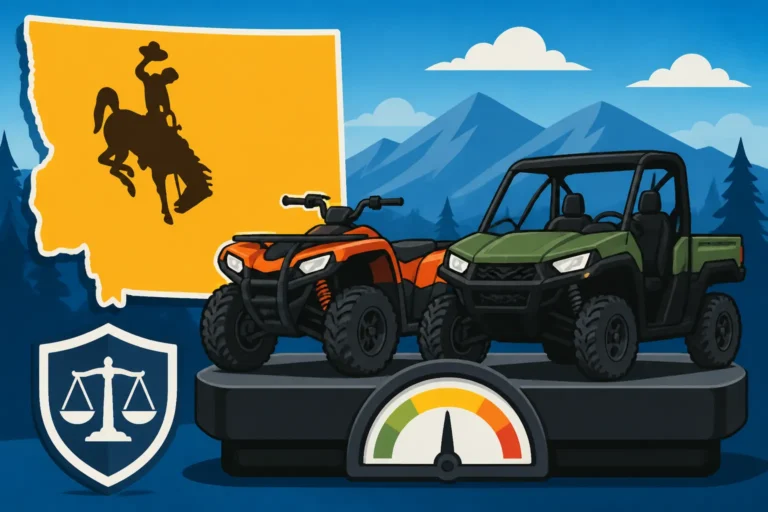
In Wyoming, your off-road machine essentially falls into one of two main categories: an Off-Road Vehicle (ORV) or a Multipurpose Vehicle (MPV). Most people are familiar with the ORV classification – this is your standard ATV, UTV, or dirt bike primarily designed for unpaved trails and open country. To ride these machines on designated public lands, you'll need a [Wyoming's Annual ORV Permit] and a decal affixed to your machine. No big surprises there for most seasoned riders.
However, the MPV class is where things get a bit more interesting, and where weight suddenly becomes a star player. An MPV is essentially a beefed-up ORV that, with a few modifications and specific registration steps, can become "street legal" for use on many public roads and highways in Wyoming. Imagine being able to ride from your cabin straight to the trailhead without having to trailer your machine! That's the dream, right? But to qualify for this coveted MPV status, your machine needs to meet a very particular set of criteria, and its weight is at the top of that list. This is why when people ask [Are ATVs Street Legal in Wyoming?], the short answer is often "it depends on how it's registered."
The Critical Weight Range for MPVs
This is where the rubber meets the road, quite literally. For your machine to even begin to be considered an MPV in Wyoming, it must fall within a very specific weight range: it has to be at least 300 pounds but not more than 3,000 pounds. If your machine is lighter than 300 pounds, it's firmly in the ORV camp and cannot be titled or plated as an MPV. If it's heavier than 3,000 pounds, same deal – it's an ORV only.
This rule, which largely came into effect with [The MPV Rule That Started in 2008], means that many popular ATVs and even some smaller UTVs fit comfortably within this window, allowing their owners to pursue street-legal registration. However, larger, heavier side-by-sides, especially those built for heavy-duty work or with extensive modifications, might easily push past that 3,000-pound upper limit, trapping them in ORV-only status. This can be a real bummer if you had your heart set on cruising county roads. It’s a key piece of information you’ll need to understand if you’re asking [Wyoming MPV Weight Limits]. It’s also why understanding [Wyoming's MPV Definition in W.S. 31-1-101] is so important. You can see how this single factor — weight — drastically influences your machine's potential uses and your overall riding experience.
How to Accurately Weigh Your Machine
Okay, so you understand why the weight matters. Now, how do you actually get an accurate number for your pride and joy? It's not as simple as looking up "dry weight" online, and getting it wrong could mean a wasted trip to the county office.
The "Dry Weight" vs. "Curb Weight" Confusion
One of the biggest mistakes riders make is relying on the "dry weight" listed in their owner's manual or on the manufacturer's website. "Dry weight" typically refers to the machine without any fluids (fuel, oil, coolant), sometimes without a battery, and definitely without any accessories like a winch, spare tire, or cargo box. This figure is great for shipping calculations, but it's not what Wyoming is looking for when considering MPV eligibility.
What you really need is the "curb weight" or "wet weight" – the weight of the machine as it would typically be operated. This means with a full tank of gas, all necessary fluids, the battery, and any permanent accessories you've added (like a heavy-duty bumper, a winch, or a full cab enclosure). The reason for this is practical: if you're going to be driving it on the road, it will have fuel, oil, and whatever gear you usually carry. The state wants to know the functional weight, not the stripped-down showroom weight. Forgetting this distinction can mean your machine might technically fall out of the MPV weight range even if its dry weight suggested it would fit.
Practical Weighing Methods
So, where do you go to get an accurate, real-world weight? You've got a few solid options:
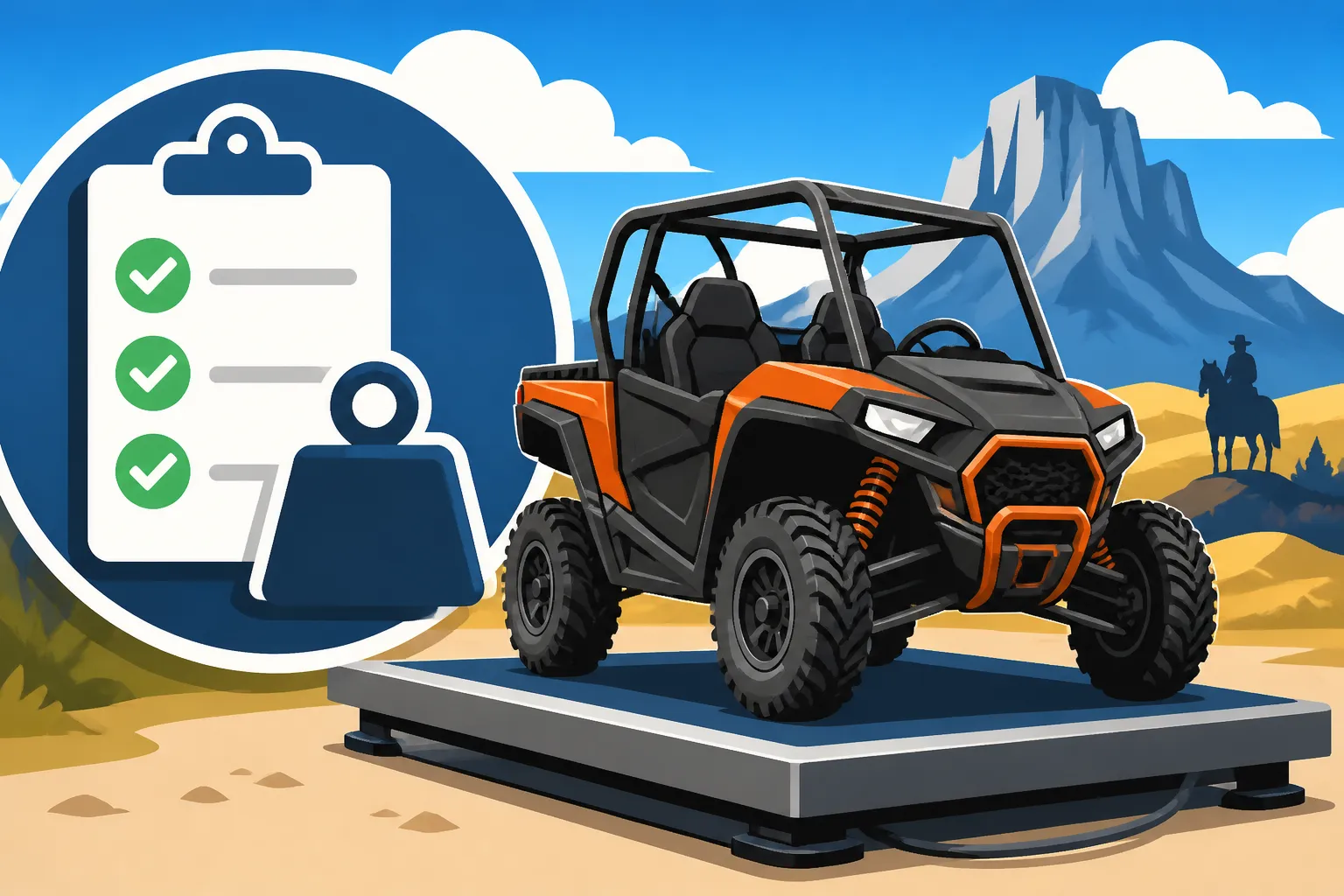
- Truck Scales/Public Scales: This is often the most reliable and accessible method for larger machines like UTVs. Many truck stops, landfills, recycling centers, agricultural co-ops, or even some moving companies have public scales. You simply drive your machine (on a trailer, or if it's already street-legal, drive it there) onto the scale. Make sure it's just the machine being weighed, not your truck or trailer, unless you weigh them separately and subtract. These scales are calibrated regularly and provide an official, verifiable weight ticket, which is exactly what you want for registration purposes. A quick phone call to your local landfill or a large truck stop will usually confirm if they have public scales and what their process is.
- Powersports Dealers: Your local ATV/UTV dealer might have a scale on-site, especially if they handle a lot of commercial or ranch vehicles. They might be willing to weigh your machine for a small fee, or even for free if you're a regular customer. It's worth calling ahead to ask.
- Specialty Scales: While less common for the general public, some dedicated inspection stations or heavy equipment rental companies might have suitable scales. This is a good option if other public scales are hard to find in your area.
When you're weighing, make sure to do it on a level surface and follow the scale operator's instructions. Get a printout or a clear record of the weight – this documentation could be important proof for the county clerk.
What to Include in the Measurement
To ensure you get the most accurate "curb weight" for Wyoming's MPV requirements, here’s a checklist of what should be on your machine when it hits the scale:
- Full Fuel Tank: Top off your gas tank completely. Fuel adds significant weight.
- All Operating Fluids: Ensure oil, coolant, and any other necessary fluids are at their proper levels.
- Battery: The battery should be installed and charged.
- Permanent Accessories: This is key. If you have a winch, a full cab enclosure, a roof, a heavy-duty bumper, rock sliders, a spare tire mounted on the machine, or any other accessory that typically stays on your machine, leave it on for the weighing. These all contribute to the functional weight.
- Avoid Temporary Items: Don't leave your cooler, tool bag, camping gear, or passenger(s) on the machine. You're weighing the vehicle itself, not its cargo or occupants.
The goal is to present the machine as it will typically roll down the road, making sure that measured weight falls squarely within that 300 to 3,000-pound sweet spot. This careful attention to detail will ensure your efforts to get your machine registered as an MPV are not thwarted by a few missing gallons of fuel or an overlooked winch.
What to Do With Your Weight Information
Once you've got that certified weight slip in hand, you're ready to tackle the next steps in the registration process. This weight information is critical, especially if you're aiming for that MPV classification, and it will be part of the documentation you present to the county.
The MPV Checklist and Paperwork
The weight of your machine, along with its [Wyoming MPV Seat Height Rule] (at least 24 inches from the ground to the lowest part of the seat) and whether it has four wheels, are all part of a crucial document: the [What the MPV and ORV-MC Checklist Form Asks]. This form is your official declaration that your vehicle meets Wyoming's specific criteria to be registered as an MPV. You'll fill out sections detailing these specifications, and having that accurate weight measurement from a scale will allow you to confidently complete this part of the paperwork.
Submitting this checklist is just one piece of the puzzle. For an MPV, you'll embark on a two-step process that involves two different county offices. First, you'll visit your local County Clerk's office to apply for a title for your MPV. This is where you'll present your weight documentation, the completed checklist, proof of ownership (like a bill of sale – you can find useful templates on sites like LawDepot if you’re selling or buying a machine and need formal documentation, or the previous owner’s title if applicable), and any other required forms. It's a bit more involved than just getting an ORV permit, which is why understanding [Wyoming County Clerk Title Process] is so vital. If your machine doesn’t meet the MPV requirements, it will remain an ORV, and for those, [Why Most Wyoming Off-Road Machines Have No Title] is the general rule.
Preparing for Your County Clerk Visit
Before you even step foot in the County Clerk's office, do your homework. Call ahead or check their website for a list of all required documents for [Titling a Multipurpose Vehicle in Wyoming]. Beyond your weight documentation and the MPV checklist, you'll likely need:
- Proof of Ownership: This could be a manufacturer's certificate of origin (MCO/MSO) for a new machine, or a bill of sale and possibly a previous title for a used one.
- Identification: Your valid driver's license or other government-issued ID.
- Funds for Fees: Be prepared to pay any titling fees. These can vary, so it's best to confirm the exact amount beforehand.
- VIN/Serial Number: Have your vehicle's Vehicle Identification Number (VIN) or serial number readily available.
Once the County Clerk processes your title application and issues you a title, your journey isn't over yet. With title in hand, you'll then proceed to the County Treasurer's office to actually register your MPV and receive your license plates. Yes, for MPVs, you get plates, not just a decal! This is the [Two Counters for One Machine] dance that MPV owners know well. The County Treasurer handles the ongoing registration and plate issuance, much like they do for cars and trucks. For more details on this, look into [Wyoming County Treasurer Plate Process]. Being thoroughly prepared with all your documentation, including that crucial weight verification, will make these visits much smoother and increase your chances of getting your machine street-legal without a hitch.
Here's a quick comparison of the two main off-road vehicle classifications in Wyoming:
| Feature | Off-Road Vehicle (ORV) | Multipurpose Vehicle (MPV) |
|---|---|---|
| Typical Machines | Most ATVs, UTVs, dirt bikes, snowmobiles | Certain ATVs/UTVs meeting specific criteria |
| Primary Use | Designated off-road trails, private land | Designated off-road trails, public roads (where permitted) |
| Weight Requirement | No specific weight range for ORV status | 300 to 3,000 pounds (curb weight) |
| Seat Height Requirement | No specific requirement | At least 24 inches from ground to lowest part of seat |
| Wheels | Varies (2 for dirt bikes, 3-4 for ATVs, 4+ for UTVs) | Typically 4 wheels |
| Registration | [Wyoming's Annual ORV Permit] (decal) | Title from County Clerk, Plates from County Treasurer |
| Street Legal? | No (unless specifically enrolled on designated ORV roads) | Yes, on most public roads (with proper equipment/endorsements) |
| Title | Generally no title issued | Required for MPV classification |
Getting that accurate weight measurement for your ATV or UTV is more than just a step in a long process; it's a foundational requirement that unlocks how you can legally ride in Wyoming. By understanding the distinction between ORVs and MPVs, carefully weighing your machine for its curb weight, and meticulously preparing your paperwork, you can navigate the registration process with confidence. Don't let the details deter you from enjoying all the incredible riding opportunities Wyoming has to offer, whether that's on a dedicated trail or cruising down a scenic county road.
Disclaimer
This article is for general informational purposes only and does not constitute professional advice. Laws, prices and regulations vary by location and change over time. Consult a qualified professional for guidance on your specific situation.