Measuring Seat Height From the Ground
Trying to figure out if your beloved side-by-side or ATV can legally hit those enrolled roads in Wyoming can be a real headache, especially when you start diving into the nitty-gritty details of Multipurpose Vehicle (MPV) requirements. One of the most confusing parts often boils down to a seemingly simple question: "How exactly do I measure the seat height from the ground?" It's frustrating when you just want to get your machine legal, but the rules feel like they're written for someone else. This guide is here to cut through that confusion, giving you clear, actionable steps on how to accurately measure your machine's seat height so you can confidently determine its MPV eligibility.
Why Does Seat Height Even Matter in Wyoming?
It might seem like a minor detail, but that seat height measurement holds the key to whether your off-road machine can open up a whole new world of riding opportunities in Wyoming. It’s not just about comfort; it's about classification and, ultimately, where you’re legally allowed to ride.
The Multipurpose Vehicle MPV Distinction
Wyoming has a special classification for some off-road vehicles: the Multipurpose Vehicle, or MPV. Unlike a traditional ORV (Off-Road Vehicle) that's generally restricted to designated trails and private property, an MPV can be registered, titled, and plated for limited road use on "enrolled" roads. Imagine being able to ride from your campsite directly to a general store or connect different trail systems without having to load your machine onto a trailer every time. That's the freedom an MPV designation offers, and it's a huge benefit for many riders.
The thing is, getting this MPV status isn't just handed out. It's determined by a specific set of criteria outlined in Wyoming Statute 31-1-101. Many of us dream of taking our powerful side-by-sides out on the open road for short stints, but often get bogged down in the technicalities. If your machine doesn't fit the MPV definition, then those dreams of road-connecting trails remain just that. This MPV classification is something that really [The MPV Rule That Started in 2008], offering a pathway for some machines to gain greater utility.
The Upright Seat Requirement
One of the critical factors in the MPV definition, alongside other aspects like weight, is the requirement for "a seat or seats at least 24 inches in height from the ground to the lowest point of the top of the seating surface." The key here isn't just "seat height," but also the notion of an "upright seat." This generally refers to the kind of seating you'd find in a traditional vehicle, like a bucket seat in a side-by-side or the saddle-style seat on an ATV. It's meant to distinguish these machines from very low-slung, non-upright recreational devices.
This particular requirement can be a real sticking point. Some machines, especially older models or certain specialty vehicles, might be just shy of that 24-inch mark. This single measurement can make all the difference between a machine that qualifies for expanded road use and one that remains strictly off-road. It’s part of a broader set of rules that also includes things like the machine needing [Weight Between 300 and 3,000 Pounds]. Understanding this specific measurement is your first step in unlocking the full potential of your machine in Wyoming.
The Right Way to Measure Seat Height for Your Machine
Alright, let's get down to business. Measuring seat height isn't rocket science, but it does require a bit of precision to ensure you get it right. You don't want to get to the county clerk's office only to find out your measurement was off, delaying your registration and causing unnecessary hassle. Taking the time to do it correctly from the start will save you a lot of grief.
Preparing Your Machine for Measurement
Accuracy is paramount when it comes to this measurement. A couple of inches, or even less, can literally be the difference between your machine qualifying as an MPV or not. So, before you grab that tape measure, you need to ensure your machine is in the proper state for an accurate reading. Many riders make the mistake of measuring on uneven ground or with tires that aren't properly inflated, leading to inconsistent and potentially incorrect results.
First, park your machine on a level, hard, flat surface. A concrete garage floor or a paved driveway is ideal. Avoid grassy areas, gravel, or any surface that might cause your tires to sink or the machine to sit unevenly. Next, check your tire pressure. Ensure all tires are inflated to the manufacturer's recommended specifications. Low tire pressure can significantly reduce your machine's ground clearance and, consequently, its seat height. Finally, make sure the suspension is at its natural resting height. This means no one should be sitting on the machine, and it shouldn't be loaded down with heavy gear, tools, or cargo that would compress the suspension. If you've made any aftermarket modifications that significantly alter the seat (like an extra-thick cushion) or the suspension, try to consider how that might impact the factory specification. For the purpose of legal compliance, the state will likely consider the machine's standard configuration.
Step-by-Step Measurement Process
Once your machine is prepped, you're ready to take the measurement. You'll need two basic tools for this: a standard tape measure and, ideally, a small level. The level will help ensure your tape measure is perfectly perpendicular to the ground, giving you the most accurate reading possible.
Here’s how to do it:
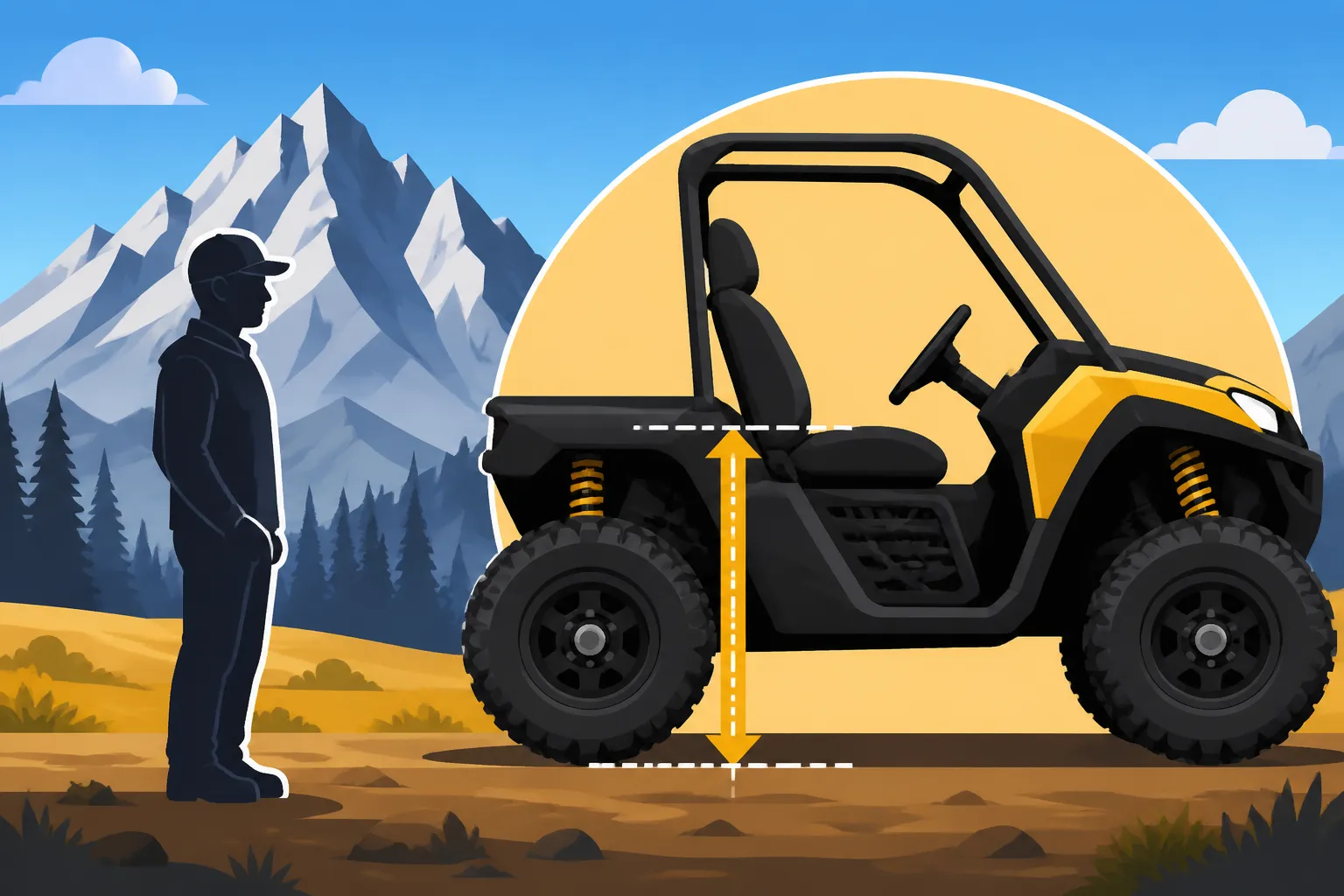
- Locate the Lowest Point of the Seating Surface: This is crucial. Don't measure to the highest part of the seat or where your back rests. You need to find the lowest point where a rider's rear end would actually sit when riding. For most side-by-sides, this will be the bottom of the bucket seat. For ATVs, it's the lowest part of the saddle.
- Position the Tape Measure: Hold your tape measure vertically, extending it from the ground directly up to this lowest point of the seating surface.
- Ensure it's Plumb: This is where the level comes in handy. Hold the level against the side of the tape measure to ensure it's perfectly straight up and down, forming a 90-degree angle with the ground. Any tilt in the tape measure will result in an inaccurate reading, usually making the seat appear taller than it actually is.
- Take the Reading: Read the measurement at the lowest point of the seating surface. Take a couple of readings, perhaps moving slightly around the seat, just to ensure consistency.
Here's a quick reference table for general guidance, but always measure your specific machine:
| Machine Type | Typical Seat Height (Approximate) | Wyoming MPV Minimum | Notes |
|---|---|---|---|
| Sport ATV | 32 – 34 inches | 24 inches | Most ATVs easily exceed the minimum. |
| Utility ATV | 34 – 36 inches | 24 inches | Utility models also typically well above. |
| Sport Side-by-Side | 26 – 30 inches | 24 inches | Many sport UTVs will meet this, but always measure. |
| Utility Side-by-Side | 28 – 32 inches | 24 inches | Utility UTVs are usually good to go. |
| Youth ATV/UTV | 20 – 28 inches | 24 inches | Some youth models might be under 24 inches. |
| Custom/Modified | Varies widely | 24 inches | Critical to measure after any modifications. |
Remember, this table is illustrative. Your individual machine's exact measurement is what matters for [Wyoming MPV Seat Height Rule] compliance. Don't eyeball it; a precise measurement is essential.
Common Pitfalls and What to Do If You're Close
It’s easy to get frustrated when you're diligently following all the rules and still run into snags. Understanding potential issues upfront, especially if your measurement is right on the cusp, can help you navigate the process smoothly. No one wants to spend time and effort only to find out they missed a crucial detail.
What If My Measurement Is Just Under 24 Inches?
This is a scenario many riders fear: you measure, re-measure, and then measure again, only to find your machine comes in at 23.5 inches, or perhaps even 23.9 inches. If your machine's seat height is definitively under that 24-inch threshold, it simply will not qualify as an MPV under current Wyoming law. This can be incredibly frustrating, especially if you had your heart set on using those enrolled roads.
Unfortunately, there's no "close enough" when it comes to legal definitions. The law is quite specific. While it might be tempting to consider modifications to raise the seat height, proceed with extreme caution. Any modification should be done safely, without compromising the machine's stability or design, and ideally, professionally. However, it's important to remember that even if you modify the seat, other MPV criteria still apply, such as the [Wyoming MPV Weight Limits]. It's rarely a simple fix, and trying to force a qualification through unsafe modifications is never recommended. Sometimes, it just means that particular machine is best suited for pure off-road trail riding.
Documenting Your Measurement for Registration
Even if your machine clearly meets the 24-inch requirement, having your measurements documented properly is a smart move. When you go to [Crossing From ORV to MPV] at the county office, you'll need to fill out various forms, including the [What the MPV and ORV-MC Checklist Form Asks]. This checklist will ask for specific details about your machine, including its dimensions. Having your accurate seat height measurement readily available will make completing these forms much easier and demonstrate your due diligence.
Consider taking a photograph of your measurement with the tape measure clearly visible against the seat and the ground. While not always a mandatory requirement, having visual proof can certainly smooth the process if any questions arise. This level of preparation is similar to ensuring you have a proper bill of sale when buying or selling, for which resources like LawDepot can provide customizable templates to ensure all necessary information is included. Good documentation is your best friend when dealing with vehicle registration and titling.
Beyond Seat Height – Full MPV Compliance
While accurately [Measuring Seat Height From the Ground] is a critical step, it's essential to remember that it's just one piece of the puzzle. Wyoming's MPV classification is comprehensive, and every requirement must be met for your machine to be truly road-legal on enrolled routes. Overlooking any single detail could mean a trip to the county office results in disappointment.
The Complete MPV Checklist
To truly qualify as a Multipurpose Vehicle in Wyoming, your machine needs to satisfy several specific criteria, not just the seat height. Think of it as a gate with multiple locks; you need a key for each one. Beyond the 24-inch seat height, your machine must:
- Have Four Wheels: Simple enough, but it rules out dirt bikes and two-wheeled machines. The law specifically mentions [Four Wheels and an Upright Seat] as a key characteristic.
- Meet Weight Limits: The machine must have an unladen (empty) weight of at least 300 pounds but not more than 3,000 pounds. This is a crucial detail covered in [Wyoming MPV Weight Limits]. Many heavier side-by-sides fall within this range, but some smaller or very large ones might be outside it.
- Have a Manufacturer's Certificate of Origin (MCO) or Title: This is fundamental for proving ownership and the machine's initial specifications.
- Meet Equipment Requirements for Road Use: This includes things like headlights, taillights, brake lights, a horn, mirrors, and a spark arrestor. These are generally for safety and visibility on public roads.
Successfully navigating this checklist means your machine isn't just an ORV; it’s a versatile MPV ready for more adventures. This is how you take your [Registering a Ranger as a Road Vehicle] or similar side-by-side from trail-only to road-capable.
Where to Go for MPV Registration
Once you've diligently measured your seat height, checked off all the other MPV criteria, and gathered your documentation, you're ready to tackle the actual registration process. This involves two distinct steps, usually handled by different county offices:
- Titling: You'll first head to your local County Clerk's office to obtain a Wyoming title for your MPV. This is where you'll present your MCO or previous title, fill out the necessary paperwork, and affirm that your machine meets all the MPV requirements. The [Wyoming County Clerk Title Process] is where the ownership is formally established and the MPV designation is first recognized.
- Plating and Registration: After you have your title, you'll then go to the County Treasurer's office to get your license plate and complete the annual registration. This is similar to registering a regular car. The [Wyoming County Treasurer Plate Process] is the final step that allows you to legally operate your MPV on enrolled public roads.
Making sure all your paperwork is in order before you visit these offices will save you immense time and frustration. Resources like LawDepot can be invaluable for organizing your personal documents, understanding forms, or even creating a legally sound bill of sale if you recently acquired the machine. Having everything meticulously prepared, from your seat height measurement to your title application, ensures a smooth journey from an off-road machine to a versatile Wyoming MPV.
Disclaimer
This article is for general informational purposes only and does not constitute professional advice. Laws, prices and regulations vary by location and change over time. Consult a qualified professional for guidance on your specific situation.