Replacing a Lost Wyoming Decal
There's nothing quite like that sinking feeling when you realize your Wyoming ORV decal is missing. Whether it peeled off somewhere on the trail, faded into oblivion, or simply went missing during a wash, it's a frustrating hiccup that can put a serious damper on your riding plans. After all, hitting those incredible Wyoming trails without a current decal is an invitation for a citation. This guide is here to walk you through the straightforward process of replacing a lost or damaged Wyoming ORV decal, helping you get back to enjoying the backcountry with peace of mind.
Why Your ORV Decal Is Non-Negotiable in Wyoming
You know that little sticker is important, but sometimes it's easy to forget just how critical it is. In Wyoming, your ORV decal isn't just decoration; it's tangible proof that you've fulfilled your legal obligation to register your off-road vehicle with the state's Trails Program. This registration is what grants you access to Wyoming's vast network of designated ORV trails and roads, and without it, you're essentially riding illegally.
Legal Requirements for Trail Access
The state of Wyoming is very clear: if you're operating an off-road vehicle on public lands managed by agencies like the Forest Service, Bureau of Land Management (BLM), or State Parks, you absolutely must have a current [Wyoming's Annual ORV Permit] prominently displayed. This includes popular spots like the Bighorn National Forest, Medicine Bow-Routt National Forest, and the Killpecker Sand Dunes. It doesn't matter if you're a resident or just visiting from out of state; [Wyoming ORV Permit for Nonresidents] applies to everyone.
Riding without this decal, or with an expired one, can lead to fines and a less-than-pleasant encounter with a game warden or law enforcement officer. These officials routinely patrol popular riding areas, checking for compliance. It's not worth the risk of a ticket when replacing a decal is a relatively simple process. The revenue generated from these permits, by the way, goes directly back into maintaining and improving the very trails you love to ride, funding everything from signage to accessible trailheads. You can learn more about [Where Wyoming ORV Permit Money Goes] and [Wyoming Permits and the Trails Program].
The Decal as Proof of Purchase
Your decal serves as your receipt, so to speak, that you've paid your dues to the Wyoming Trails Program. It's proof that your machine is recognized as a legal off-road vehicle within the state's system. When you're out on the trails, that little sticker tells anyone who needs to know that you're compliant.
Without it, even if you know you paid, there's no immediate visual confirmation for an officer. While you might be able to pull up a digital receipt on your phone, having the physical decal correctly placed on your machine is the easiest way to avoid any potential misunderstandings or delays while you're out enjoying the beautiful Wyoming landscape. It's all about smooth sailing on the trail, and that starts with having your paperwork in order.
Common Reasons a Decal Goes Missing or Gets Damaged
It's not always because you were careless. Sometimes, the elements, the rigors of trail riding, or even an act of nature can conspire against your little sticker. Understanding how and why decals disappear can help you prevent it in the future, even if it's too late for your current one.
Wear and Tear from the Elements
Wyoming weather can be relentless. The intense summer sun, freezing winter temperatures, and constant exposure to wind, dust, and rain can take a serious toll on adhesives and plastic over time. You might have carefully applied your decal, ensuring no bubbles or wrinkles, but after a year of riding in all conditions, it can start to show its age.
Ultraviolet (UV) rays are particularly harsh, causing the colors to fade and the vinyl to become brittle. Once the decal starts to crack or lose its pliability, it's much more susceptible to peeling at the edges. Before you know it, a strong gust of wind or a bump on a washboard road might be all it takes for a corner to lift, letting water and grime get underneath, accelerating its demise. You might find yourself [Replacing a Decal Peeled Off by Sun and Sand] more often than you'd like.
Trail Riding Hazards
Let's be honest, we don't ride our ORVs to stay on perfectly smooth pavement. We ride them for adventure, which often means brushing against branches, splashing through mud, and navigating tight spots. While your machine can take a beating, that small decal is a bit more vulnerable.
A stray branch could snag an edge, tearing a piece off. A high-pressure wash after a muddy ride might lift a corner, especially if the adhesive has already begun to weaken. Even loading and unloading your machine from a trailer could inadvertently rub against a surface, causing damage. These are all part of the game when you're actively using your ORV, and sometimes, a lost decal is just a battle scar from a good day on the trails. It's a testament to the rugged life your machine lives, but it still needs to be replaced.
Theft or Vandalism
While less common than environmental damage or trail mishaps, decals can unfortunately be stolen or vandalized. This is particularly frustrating because it's an intentional act. If you've left your ORV unattended, especially in a public area or an unsecure location, there's a small chance someone might try to peel off your decal.
It could be a misguided prank, an act of petty vandalism, or even someone attempting to use it illicitly on another machine (though that's unlikely to work given the unique identifiers). Regardless of the motive, discovering your decal has been intentionally removed can feel like a violation. In such cases, replacing it quickly is important not just for legal compliance, but also to regain a sense of security and readiness for your next adventure.
The Process for Getting a Replacement Decal
Fear not, getting a replacement decal isn't an epic quest. The Wyoming State Trails Program understands that things happen, and they've made the process relatively straightforward. You won't have to jump through too many hoops to get a new sticker back on your machine.
Where to Obtain a Replacement
The most direct way to secure a replacement ORV decal is through the Wyoming State Trails Program's official channels. Your primary options are generally through the state's online portal or by visiting one of the many authorized selling agents across Wyoming. These agents include many county treasurers, some parks and forest offices, and a variety of private businesses like powersports dealers.
Many riders find the online process to be the most convenient, as it allows you to handle everything from the comfort of your home. However, if you prefer a face-to-face interaction or need a decal immediately for an upcoming trip, visiting a local agent can be a great option. For example, you might stop at a powersports shop that sells permits, like you would when [Buying a Decal at a Powersports Shop], or even a ranger station if you're near a national forest. Always check the hours and availability before you make a special trip.
Necessary Information and Documentation
When you request a replacement decal, whether online or in person, you'll need to provide some specific information about yourself and your off-road vehicle. This ensures that the new decal is correctly associated with your machine and that you are indeed the rightful owner or registered operator.
Typically, you'll need the following:
- Your full name and contact information: This is standard for any official transaction.
- Your ORV's Vehicle Identification Number (VIN): This is absolutely crucial for identifying your specific machine. Make sure you have the correct VIN readily available. It’s usually stamped on the frame.
- The ORV permit number from your original decal: If you have any record of this, it will help streamline the process. Sometimes, you might have taken a photo of your decal when you first put it on, or perhaps you kept a record of the number in your files. This is where good record-keeping comes in handy.
- Proof of prior registration: While not always strictly required if they can find your VIN in their system, having a copy of your original registration receipt or permit purchase confirmation can definitely speed things up, especially if there's any difficulty locating your previous record.
If you don't have the original permit number, don't panic. As long as you have your VIN, the Trails Program staff or agent can usually look up your machine's registration history. Having important documents like your bill of sale, which you can create using services like LawDepot, can also serve as excellent backup for proving ownership, should any questions arise about the machine itself.
Filling Out the Replacement Form
The replacement process usually involves completing a simple form. If you're doing it online, it will be a digital form with fields for all the information mentioned above. You'll input your details, the VIN, and any other requested information, then select that you're requesting a replacement decal.
If you're at an authorized agent, they will likely have a paper form for you to fill out or will input the information directly into their system for you. The key is to be accurate and thorough. Double-check your VIN to ensure there are no typos, as an incorrect VIN could lead to issues down the road. This form essentially tells the state that your previously issued decal is no longer valid (due to loss or damage) and you require a new one for the same registered machine.
Cost and Timeframe for a New Decal
The process itself might be simple, but naturally, you'll want to know what it will cost and how long you'll be waiting before you can confidently hit the trails again. Good news: the replacement fee is typically quite reasonable, reflecting the administrative cost rather than a full re-registration fee.
Replacement Fee Structure
Unlike the full annual permit cost, which remains the same whether you're a resident or a visitor, the fee for a replacement decal is generally a nominal amount. This fee covers the cost of producing and mailing the new sticker, as well as the administrative time involved in processing the request and updating your record in the system.
While I can't give you a specific dollar amount, expect it to be a fraction of the original annual permit fee. It's designed to be affordable enough that riders aren't deterred from replacing a lost decal, which ultimately helps keep more riders legal and contributes to the funding of the Trails Program. You'll simply pay this small fee, and your new decal will be on its way.
Expected Delivery Times
Once you've submitted your request and paid the replacement fee, the timeframe for receiving your new decal will vary depending on how you've ordered it and current processing volumes.
- Online Orders: If you've ordered online, the state usually processes requests fairly quickly. However, standard mail delivery times will apply. You might wait anywhere from [How Long a Decal Ordered Online Takes to Arrive], perhaps a week or two for the decal to reach your mailbox. Factor in potential delays during peak seasons (like spring or early summer when many permits are being renewed).
- In-Person at an Agent: If you visit an authorized selling agent in person, such as a county treasurer's office or a powersports dealer, you often walk out with your replacement decal on the spot. This is by far the fastest option if you need it immediately for a planned trip. You can also explore [Where Wyoming Sells ORV Permits] to find a convenient location.
Always plan ahead if you have a specific ride date in mind. It's a good idea to check the Wyoming State Parks, Historic Sites and Trails website for any current advisories on permit processing times, especially during busy periods.
What to Do While You Wait for Your Decal
So you've ordered your replacement, but the mail hasn't delivered it yet. What should you do if you absolutely can't wait to get out on the trails? There are steps you can take to minimize your risk of a citation and ride with a bit more confidence during the interim.
Carrying Proof of Purchase
The most important thing you can do while awaiting your new physical decal is to carry clear proof that you have indeed purchased a permit and requested a replacement. This could be:
- A printed copy of your online order confirmation: Many online systems will email you a confirmation right after you complete a purchase. Print this out and keep it with your riding documents.
- Your original purchase receipt: If you bought your original permit in person and kept the receipt, that can serve as proof that your machine was registered for the current year.
- A dated copy of your replacement request: If you filled out a physical form, ask for a copy or take a photo of it, especially if it indicates the date of your replacement request.
Keep this proof in a waterproof bag or container with your other essential riding documents, like your driver's license and insurance card. While an officer might still issue a citation if they can't see a physical decal, having this documentation can certainly help your case and might even result in a warning rather than a fine, or serve as crucial evidence if you need to [Appealing a Trail Citation].
Temporary Measures and Diligence
In some cases, especially if your decal has only partially peeled off but is still somewhat legible, you might consider trying to secure it temporarily with clear packing tape. This is a stop-gap measure at best and isn't a substitute for a new decal, but it might help keep the remnants in place until your replacement arrives. Be mindful that if the decal is too damaged or completely gone, this isn't an option.
During this waiting period, it's wise to be extra diligent about checking the rules for the specific area you plan to ride. Some areas might be more strictly enforced than others. It's also a good practice to proactively approach any game wardens or rangers you encounter at a trailhead to explain your situation and present your documentation. Transparency and courtesy go a long way. Remember, the goal is to avoid [Wyoming Fines for Riding Without a Permit].
Preventing Future Decal Loss
Once you've gone through the hassle of replacing a decal, you definitely want to avoid doing it again. There are several steps you can take to ensure your new decal adheres properly and stands the test of time, giving you a full season of worry-free riding.
Proper Decal Placement and Application
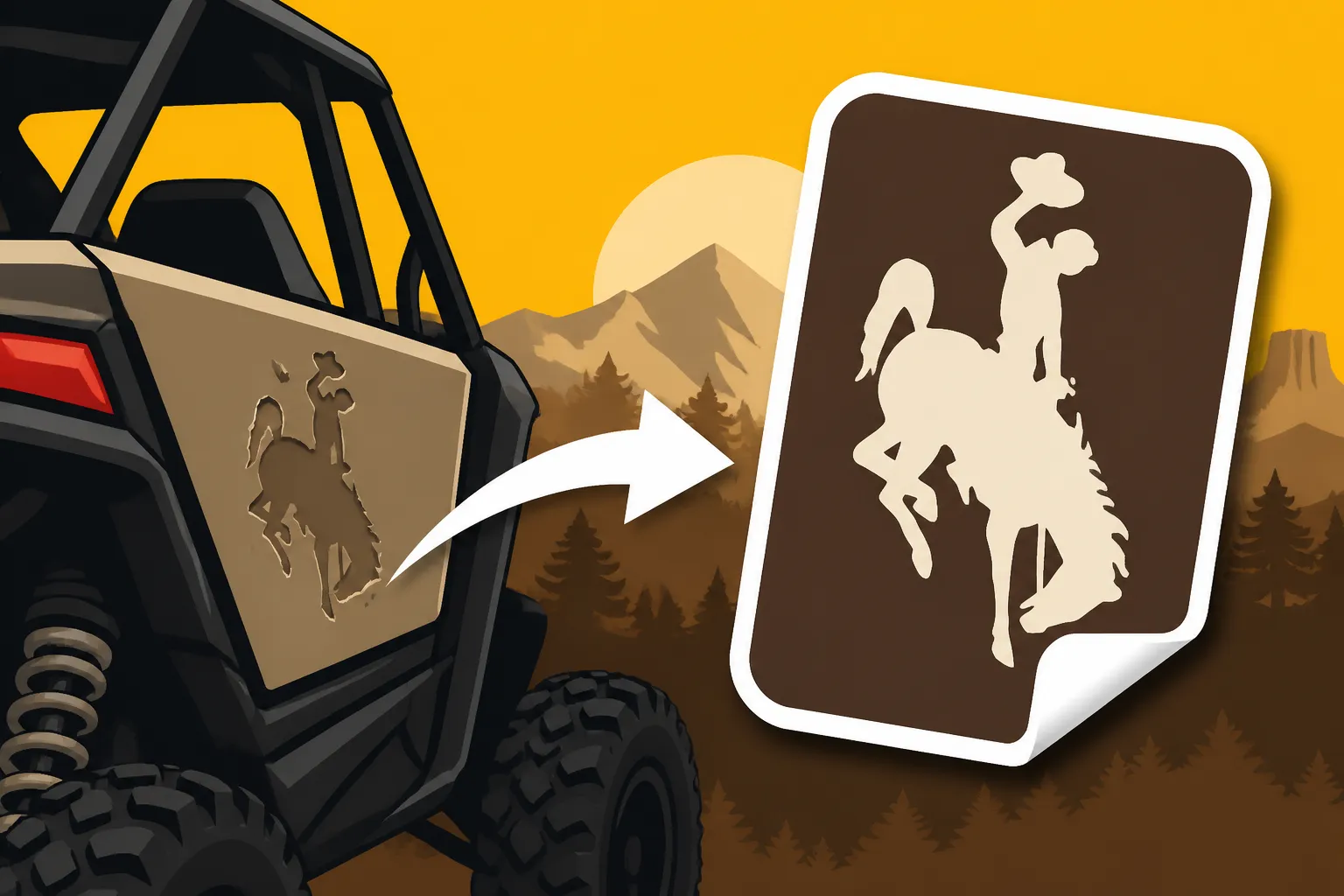
The way you apply your decal can significantly impact its longevity. First, choose the correct spot on your machine. Wyoming law generally specifies that the decal should be clearly visible on the left side of the machine, usually on the front fork, fender, or fairing. Check [Where the Wyoming Decal Goes on a Machine] for more specific guidance.
Before applying, thoroughly clean the surface where the decal will go. Use rubbing alcohol to remove any dirt, grease, or wax, then let it dry completely. A clean, smooth surface is essential for the adhesive to bond properly. When applying, start from one edge and slowly press the decal down, smoothing out any air bubbles as you go. Take your time; a hasty application often leads to trapped air or wrinkles, which can cause peeling later. For optimal adhesion, apply the decal when the temperature is moderate, not too cold or too hot, as extreme temperatures can affect the adhesive's initial bond.
Protecting Your Decal from Wear
Once your decal is properly applied, consider ways to protect it from the elements and trail hazards. While you can't completely shield it, a few proactive steps can extend its life.
- Avoid Direct High-Pressure Spray: When washing your ORV, be careful with high-pressure washers, especially around the edges of your decal. The force of the water can easily lift even well-adhered stickers. Hand-wash or use a gentler spray around the decal area.
- Clear Protective Film: Some riders choose to apply a thin, clear protective film or tape over their decal after it's fully cured. This can provide an extra layer of defense against UV damage, abrasion from branches, and even some impacts. Make sure the protective layer is designed for outdoor use and won't harm the decal underneath.
- Regular Inspections: Periodically check your decal for any signs of wear, such as lifting edges, fading, or cracks. Catching a small problem early can allow you to reinforce it with a small piece of clear tape before it becomes a full-blown loss. This proactive approach can save you time, money, and frustration in the long run. Keeping your important documents, like your original bill of sale (which you might have created using a service like LawDepot) in order alongside your permit information, can also make any future replacement process smoother.
By taking these steps, you can significantly increase the chances that your Wyoming ORV decal will stay put for its entire lifespan, allowing you to focus on the thrill of the ride rather than worrying about paperwork.
Disclaimer
This article is for general informational purposes only and does not constitute professional advice. Laws, prices and regulations vary by location and change over time. Consult a qualified professional for guidance on your specific situation.