Registering an Inherited Quad in Wyoming
Inheriting an ATV or UTV in Wyoming can bring a mix of emotions – perhaps a bittersweet reminder of a loved one, coupled with the excitement of new adventures on the trails. But then the reality sets in: how do you actually transfer ownership and get that machine registered so you can ride it legally? The process can feel like navigating a maze, especially with Wyoming's unique rules for off-road vehicles. This comprehensive guide is here to untangle the complexities, offering clear, step-by-step advice on how to successfully register an inherited quad or side-by-side in the Cowboy State.
Understanding Wyoming's Rules for Inherited Off-Road Vehicles
Wyoming has some particular ways of handling off-road vehicles (ORVs) that can be a real head-scratcher if you're used to how cars or trucks are managed. When you inherit a machine, these quirks become especially important to understand. It’s not always as straightforward as signing over a title, because often, there isn't one to begin with.
Why Titling is Key for an Inherited Machine
One of the biggest distinctions in Wyoming is that most off-road vehicles, like ATVs and dirt bikes, typically do not receive a traditional title from the state. This can be confusing, right? You'd expect a vehicle, even an off-road one, to have a title that proves ownership. But for machines primarily used off paved roads, Wyoming opts for a different system. Instead of a title, these machines often operate with just a bill of sale as proof of ownership, and an annual permit decal for trail access.
However, when you inherit an ORV, the legal transfer of ownership becomes paramount. While the machine itself might not have had a state-issued title during your loved one's lifetime, proving your legal right to it is the first hurdle. Without clear documentation of who legally owns it now, you can’t register it for trail use or, more importantly, sell it down the line. Imagine your grandparent rode a quad exclusively on their vast ranch for years. They never bothered with any formal registration beyond the initial purchase, because it was private land. Now that machine is yours. To ride it on public trails, or even just to affirm your new ownership, you’ll need to formally establish that the quad now belongs to you. This is where the inheritance process intersects with Wyoming's unique ORV rules, and why the "no title" rule for ORVs becomes a bit more nuanced. For more insight into this, you might find [Do You Need a Title for an ATV in Wyoming?] helpful.
This is also a good point to consider if the inherited machine might actually fall into Wyoming's [Wyoming's Multipurpose Vehicle Class] (MPV). Unlike regular ORVs, MPVs do get titles and license plates because they can be made street-legal. If your inherited side-by-side fits the MPV criteria, the process will involve a title, which simplifies the legal ownership transfer considerably compared to an untitleable ORV.
The Importance of a Decent Paper Trail Even If There's No Title
Since many ORVs don't have titles, you might wonder what constitutes a "paper trail" for an inherited machine. For most vehicles, the title is king. For an ORV, a simple bill of sale from when it was originally purchased usually serves as the primary proof of ownership. However, when you inherit an item, that initial bill of sale doesn't show you as the current owner. This is where legal documentation from the estate process steps in.
For inherited property, whether it's an ATV, a car, or even a cherished family heirloom, the deceased person's will or the legal documents generated through the probate process become your essential "paper trail." These documents formally transfer ownership from the estate to you. If your loved one had a will, it should ideally specify who inherits the ATV. If not, then the laws of intestate succession in Wyoming come into play, and a court will determine who the rightful heirs are. In situations where there isn't a will, or if the estate is small enough to avoid formal probate, an affidavit of heirship might be the document you need. This is a sworn legal document signed by witnesses who confirm the identity of the heirs and the assets of the deceased. Crafting such documents can feel daunting, and online resources like LawDepot can be incredibly helpful for generating legally sound affidavits of heirship or other necessary paperwork to affirm your new ownership. Having these documents is crucial for both peace of mind and for completing the [Registering an ORV in Wyoming] process.
Consider a scenario where your beloved uncle passed away unexpectedly, and tucked away in his garage is a well-maintained quad he adored. There’s no will, and you're not sure if he ever had any official paperwork beyond the original purchase receipt. Without a will or a formal probate process, you might feel lost on how to prove that quad is now legally yours. This is precisely where a properly executed affidavit of heirship becomes invaluable, allowing you to establish your claim and move forward with enjoying the machine.
The Probate Process and Your Inherited ATV/UTV in Wyoming
Probate sounds like a big, scary legal word, and for many people, it conjures images of endless court battles and mountains of paperwork. While it can be complex, understanding its role in transferring ownership of an inherited ATV or UTV is crucial.
When Probate is Necessary and What It Means
At its core, probate is the legal process of proving a will (if one exists) and settling a deceased person's estate. This involves identifying all assets, paying off debts, and distributing what's left to the rightful heirs or beneficiaries. In Wyoming, whether an estate needs to go through full probate often depends on the value and type of assets involved. If the deceased's assets exceed a certain value (which varies and you'd need to check current Wyoming statutes or consult legal counsel), or if there's real estate involved, full probate is usually required.
For an inherited ATV or UTV, if it's part of a larger estate that's already going through probate, then the ownership transfer will be handled as part of that overall process. The executor, appointed by the will and confirmed by the court, will be authorized to manage and distribute assets, including the ORV. This is often the smoothest route, as the court's authority provides an undeniable paper trail for your new ownership.
However, not every estate requires a full probate. Wyoming, like many states, has provisions for "small estates." If the total value of the deceased's personal property (which would include an ATV or UTV) falls below a certain threshold, heirs might be able to use a simplified process, such as a Small Estate Affidavit. This can allow for the transfer of assets without the time and expense of full probate. This is another area where tools from providers like LawDepot can be incredibly useful, helping you understand if a Small Estate Affidavit is an option for your situation and guiding you through its creation. Always confirm specific thresholds and requirements with a legal professional or the county clerk's office, as these can change.
Imagine your parent passed away, leaving behind a clear will that specifically states you inherit their side-by-side. The will names an executor (perhaps you or another family member). In this scenario, the executor would present the will to the probate court, obtain formal authorization, and then use that court order to transfer the side-by-side into your name. It's a structured process designed to ensure everything is done by the book.
Obtaining Necessary Documentation for Transfer
To legally transfer an inherited ATV or UTV, especially when dealing with the state for registration or potential titling, you'll need specific official documents from the probate court. These documents serve as your legal proof that you are the rightful new owner.
The primary document you'll need is either Letters Testamentary (if there was a will and an executor was appointed) or Letters of Administration (if there was no will and the court appointed an administrator). These documents are issued by the probate court and formally grant the executor or administrator the authority to manage the deceased's estate, including distributing assets like the off-road vehicle to the designated heirs. Think of them as your golden ticket, proving you have the legal standing to claim ownership of the machine.
In addition to the Letters Testamentary or Letters of Administration, you will also need a certified copy of the death certificate. This document proves that the individual has passed away, which is a prerequisite for any estate settlement or asset transfer. You can usually obtain certified copies from the county clerk or vital records office in the county where the death occurred.
It's crucial to understand that these are official, court-stamped documents. A photocopy of a will, or an uncertified death certificate, typically won't be enough for government agencies like the Department of State Parks or the County Clerk's office when trying to register or title the inherited machine. You need the formal versions to ensure the legal transfer is recognized.
Let's say you are the named executor in your grandparent's will. After the will is probated, the court will issue you Letters Testamentary. You'll then take these, along with a certified copy of the death certificate and the quad's VIN, to begin the process of getting an [Wyoming's Annual ORV Permit] or, if it's an MPV, applying for a title and plate. These documents unequivocally prove your authority and ownership, allowing you to proceed with confidence.
Registering Your Inherited Off-Road Vehicle for Public Use
Once you’ve successfully navigated the probate or heirship process and secured the legal documentation proving you own the inherited ATV or UTV, the next step is getting it ready for the trails. This primarily involves obtaining the necessary permits to ride on public land in Wyoming.
Getting Your Wyoming ORV Permit
For most inherited off-road vehicles that are not multipurpose vehicles (MPVs), your main goal will be to secure a [Wyoming's Annual ORV Permit]. This permit is a decal that must be affixed to your machine, indicating you've paid the required fee to use designated public trails and open riding areas in Wyoming. It's important to remember that this permit is mandatory for all ORVs, whether you’re a resident or a visitor, and regardless of whether your machine has a title or not. There's no reciprocity for out-of-state registrations in Wyoming; every machine needs its own Wyoming decal if it's going to be ridden on public land.
The process for obtaining this permit, once you have your ownership documents in order, is relatively straightforward:
- Gather Your Documents: You'll need your proof of ownership (e.g., the Letters Testamentary, Affidavit of Heirship, or a notarized bill of sale from the estate), the vehicle identification number (VIN) of the quad or side-by-side, and some basic personal information.
- Choose Where to Buy: Wyoming makes it fairly convenient to purchase these permits. You can buy them:
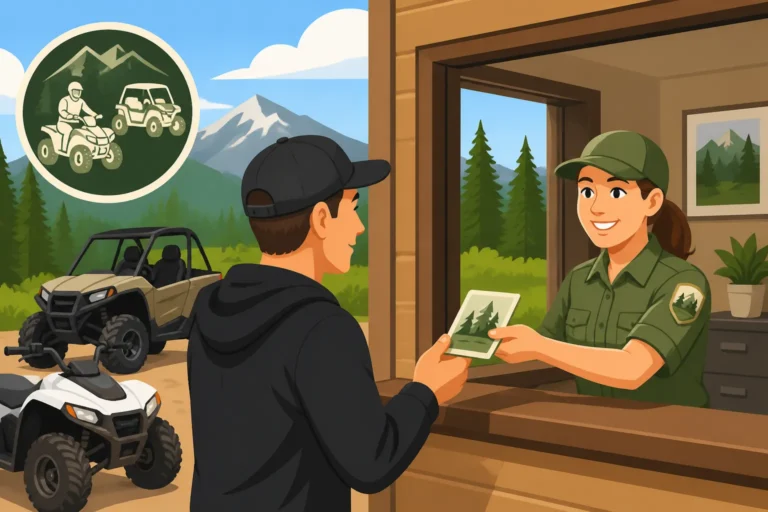
- Online: Through the Wyoming State Parks, Historic Sites & Trails website. This is often the easiest method, though it involves waiting for the decal to be mailed to you.
- At Authorized Vendors: Many powersports dealers, outdoor recreation shops, and even some convenience stores throughout the state are authorized to sell permits. This is great if you need one quickly.
- At County Offices: Some County Clerk or County Treasurer offices may also sell them.
- [Where Wyoming Sells ORV Permits] provides a good overview of the various options.
- Pay the Fee: The permit comes with a flat fee. For details on the current cost, refer to [Wyoming ORV Permit Cost]. Remember, the fee is the same for residents and non-residents, and it covers the entire calendar year, expiring on December 31st regardless of when you purchase it.
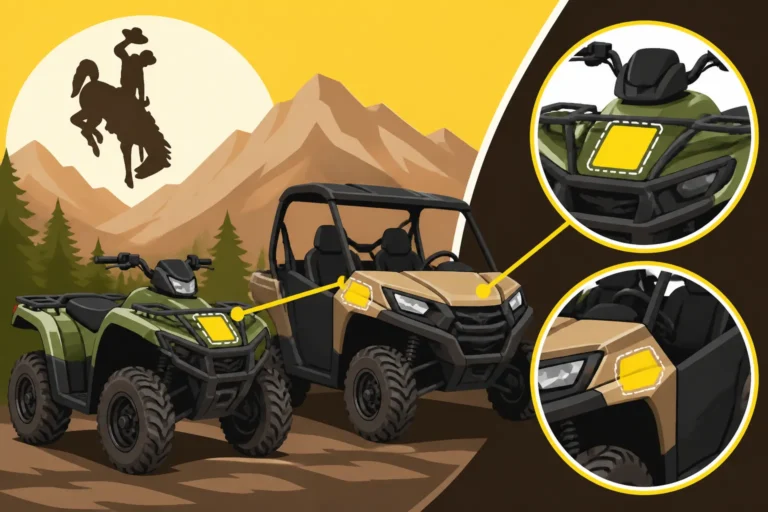
Once you have your permit decal, make sure to affix it properly to your machine in a visible location, as specified by Wyoming regulations. It’s always a good idea to keep a copy of your ownership documents and permit receipt with you when you ride, just in case a warden checks.
For example, imagine you’ve inherited a trusty ATV from your grandmother, and the probate court has issued you the Letters Testamentary. You jot down the VIN from the machine's frame, hop online to the State Parks website, fill out the form, upload or mail in copies of your Letters Testamentary as proof of ownership, and pay the fee. Within a week or two, your new ORV decal arrives, and you're ready to hit the trails at your favorite spot, like the Bighorn National Forest, knowing you're fully compliant.
Special Considerations for Multipurpose Vehicles (MPVs)
If the inherited machine happens to be a side-by-side or similar vehicle that qualifies as a Multipurpose Vehicle (MPV) under Wyoming law, you have an additional option: making it street-legal. MPVs are a distinct class of off-road vehicle that, by meeting certain criteria (like a minimum weight of 300 pounds and a seat at least 24 inches high), can be titled and registered for road use, much like a car or motorcycle. This is a significant difference from regular ORVs, which only get a decal.
If your inherited side-by-side meets the [Wyoming's Multipurpose Vehicle Class] definition, and you wish to ride it on public roads (including enrolled county, state, or BLM roads), you'll need to go through a two-part process:
- Titling at the County Clerk's Office: This is where you formally transfer the legal ownership of the MPV into your name and obtain an official Wyoming title. You'll need your probate documents (Letters Testamentary or Administration, Affidavit of Heirship), a certified copy of the death certificate, and the vehicle's VIN. If the MPV had an existing title (common for MPVs), you’d present that too. The County Clerk will process the ownership transfer and issue you a new title. More details on this can be found in [Wyoming MPV Title Requirements] and [Wyoming County Clerk Title Process].
- Plating at the County Treasurer's Office: Once you have the title, you'll take it to the County Treasurer's office to register the MPV and obtain license plates. This involves paying registration fees and potentially property tax on the vehicle. You will also need to ensure the MPV has the required street-legal equipment (headlights, taillights, horn, mirror, etc.) and obtain appropriate insurance. Information on this is available in [Wyoming MPV Plate Requirements].
Choosing to title and plate an MPV offers distinct advantages. Beyond road legality, it provides a clear, state-issued document of ownership, which can simplify future sales or transfers. It solidifies your ownership in a way that an untitleable ORV cannot.
For example, imagine you inherited your father’s rugged side-by-side. You know he used it both on trails and for running errands on county roads. After obtaining your Letters Testamentary, you take them to the County Clerk in Cheyenne, along with the side-by-side’s VIN. The Clerk verifies your documentation and issues you a new title. With that in hand, you then visit the County Treasurer to pay the registration fees, secure your license plates, and get the decals needed for road use. Now, you can legally drive it from your home to a nearby trailhead on an enrolled road, making your adventures even more convenient.
Common Challenges and Helpful Resources
Even with a clear understanding of the steps, dealing with an inherited ATV or UTV can present its own set of hurdles. From missing documents to questions about where to find help, it's wise to be prepared for potential challenges.
Dealing with Missing Paperwork or Unknown Ownership History
One of the most frustrating scenarios when inheriting an off-road vehicle is discovering that crucial paperwork is missing. What if your loved one never had any official bill of sale, or if the machine had changed hands several times without proper documentation? This isn't uncommon, especially for older ORVs that may have been passed down informally within families or bought privately years ago without much attention to formal paperwork.
Without a bill of sale, a will, or other clear documentation from the deceased, proving legal ownership becomes significantly more challenging. You might face:
- Difficulty obtaining an ORV permit: While the State Parks often accept various forms of ownership proof, a complete lack of any document connecting the machine to the deceased, and then to you, can raise red flags.
- Issues with potential theft: If there's no paper trail, it can be difficult to prove the machine wasn't stolen at some point in its history, even if you know it belonged to your family.
- Complications if selling later: If you ever decide to sell the machine, a future buyer will want to see proof of your legal ownership. Without it, the value could be significantly diminished, or you might struggle to sell it at all.
In these tough situations, the probate court often becomes your best ally. The legal process of settling an estate, even a small one, is designed to establish clear ownership of all assets. If no will exists, or if there's no other way to trace the machine's ownership, the court can make a formal determination. This might involve publishing notices to see if anyone else has a claim to the property or conducting a more thorough investigation. While this can add time and expense, it ultimately provides the legal clarity you need. Before you get too far, consider performing a [Wyoming ATV VIN Check Before Buying] even for an inherited machine. This can sometimes turn up information about past registrations or reported thefts that could save you a lot of headache.
Imagine inheriting a vintage dirt bike that your great-uncle owned. It's been in the family for decades, but no one can find a single piece of paper linking him to it, let alone to you. The VIN is faded, and there's no record of any past registration. In this case, you would likely need to go through a formal probate process to have the court declare the dirt bike an asset of your great-uncle's estate and then legally distribute it to you. It's a longer road, but it provides the undeniable legal proof you need.
Leveraging Online Legal Resources and Local Expertise
Navigating the legalities of inheritance can be overwhelming, but you don't have to do it alone. There are numerous resources available to help streamline the process:
- Online Legal Platforms: Websites like LawDepot can be incredibly useful for generating standardized legal documents. As mentioned, if you're dealing with a small estate or no will, an affidavit of heirship might be precisely what you need, and LawDepot provides templates and guidance to help you create one that's valid. They can also assist with creating a proper bill of sale if you decide to sell the inherited machine later, ensuring you have the right documentation for the buyer. These tools simplify what could otherwise be a confusing and expensive process.
- Local County Offices: Your local County Clerk and County Treasurer offices are invaluable resources. They handle vehicle titling, registration, and can often provide specific guidance on what documents they require for an inherited machine. Don't hesitate to call or visit their offices; the staff are usually very knowledgeable about local procedures.
- Wyoming Department of State Parks, Historic Sites & Trails: For questions specific to ORV permits, designated trails, and regulations for public land use, this department is the authority. Their website is a wealth of information, and they have contact numbers if you need to speak with someone directly. You can find their contact information and more details about the permit system at [Wyoming Trails Program Contact].
- Legal Counsel: For complex estates, disputes among heirs, or if you encounter significant challenges with missing paperwork, consulting with an attorney specializing in estate law is always a wise decision. They can provide tailored advice and navigate the legal system on your behalf.
Here's a quick summary of key documents and where they fit into the process:
| Scenario | Key Documents Needed | Where to Get It | Relevant Wyoming Office |
|---|---|---|---|
| Inheriting a regular ORV (no title) with a Will | Certified Copy of Will, Letters Testamentary, Death Certificate | Probate Court | ORV Permit Vendor / State Parks |
| Inheriting a regular ORV (no title) without a Will | Letters of Administration, Affidavit of Heirship (LawDepot could help here), Death Certificate | Probate Court / LawDepot | ORV Permit Vendor / State Parks |
| Inheriting an MPV (titled) with a Will | Certified Copy of Will, Letters Testamentary, Death Certificate, Old Title (if any) | Probate Court | County Clerk (Title), County Treasurer (Plate) |
| Inheriting an MPV (titled) without a Will | Letters of Administration, Affidavit of Heirship (LawDepot could help here), Death Certificate, Old Title (if any) | Probate Court / LawDepot | County Clerk (Title), County Treasurer (Plate) |
By leveraging these resources and understanding the nuances of Wyoming's ORV and MPV regulations, you can successfully navigate the process of registering your inherited quad or side-by-side and honor your loved one's memory by hitting the trails.
Disclaimer
This article is for general informational purposes only and does not constitute professional advice. Laws, prices and regulations vary by location and change over time. Consult a qualified professional for guidance on your specific situation.