Wyoming Fines for Riding Without a Permit
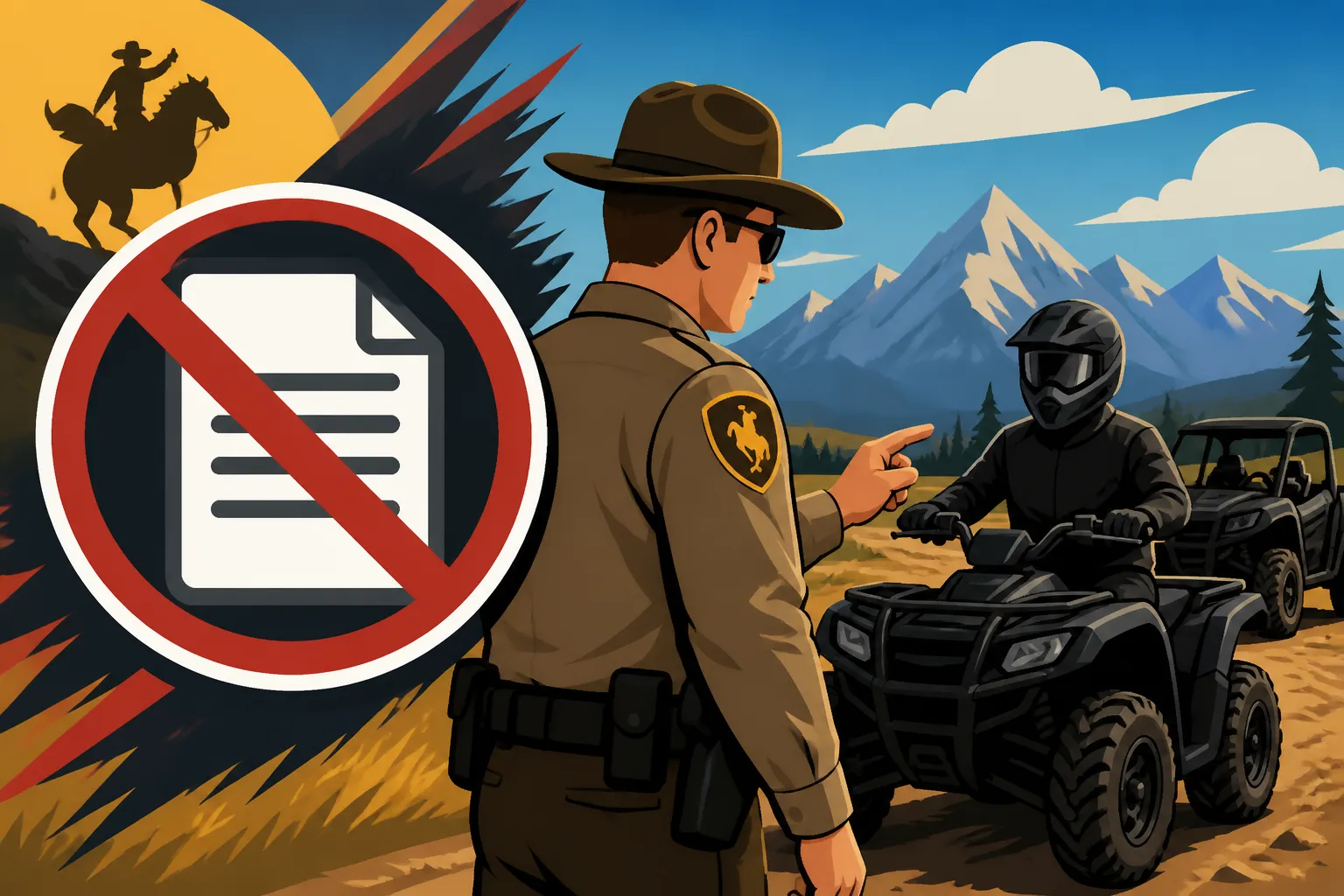
You pull into a trailhead outside Casper, unload the quad, and a game warden walks over before you have your gloves on. Your decal is from last year, or there is no decal at all because you assumed your home-state sticker covered you. This guide explains what a Wyoming citation for riding without a valid ORV permit really costs, how the process works, and how to avoid ever paying it.
Why Wyoming Writes Tickets for Missing Permits
Wyoming’s off-road permit system is about as simple as these programs get. One decal, one flat price, good for the calendar year, sold by a long list of agents and online. That simplicity is exactly why officers have so little patience for riders who skip it. When the permit is cheap and easy to buy, “I didn’t know” and “I didn’t have time” do not land very well at the tailgate.
What the Permit Actually Is
The Wyoming ORV permit is a decal issued through Wyoming State Parks, Historic Sites and Trails, and the money funds the state Trails Program. If you have never bought one, start with Wyoming’s Annual ORV Permit for the full background. In short, any off-road vehicle ridden on the public roads and trails enrolled in the state’s ORV program needs a current decal. It does not matter whether you live in Gillette or Denver; the requirement and the price are the same for everyone.
The decal is not a title and it is not a license plate. It is a use permit. That distinction matters later when we talk about tickets, because the citation is not about ownership or road legality. It is about riding a program route without paying into the program that maintains it.
Who Can Write the Ticket
This is where a lot of riders get surprised. People tend to picture one specific type of officer checking ORV decals, but in practice several kinds of officers may stop you:
- Wyoming State Parks rangers and Trails Program enforcement staff, especially at busy staging areas and during peak summer weekends.
- Wyoming Game and Fish wardens, who are out on two-tracks and forest roads constantly during hunting season and who check machines as part of their normal patrol.
- County sheriff’s deputies, particularly on county roads that have been enrolled in the program near towns.
- Federal officers from the Forest Service or the BLM, who enforce their own travel rules and may work alongside state staff on shared routes.
Each of these people has a slightly different focus, and that changes what ends up on the citation. A warden checking hunters on the Bighorn National Forest might notice your missing decal while really looking at your tags. A State Parks ranger at a staging area is looking specifically at decals. Either way, the permit violation is the same offense under state law.
Where the Requirement Applies and Where It Does Not
The permit is tied to riding on public land routes enrolled in the program. A machine that never leaves your own ranch is a different conversation, and Does a Ranch-Only Quad Need a Wyoming Permit? walks through that scenario in detail. The trouble is that many riders think they are on private ground when they have actually crossed onto state trust land, a BLM parcel or an enrolled county road. Wyoming’s checkerboard land pattern, especially along the I-80 corridor, makes that easy to do without noticing.
A good rule of thumb: if you are on any road or trail that the public can legally drive, or any route shown on a travel management map, assume you need a decal. The $15 you spend buying one is cheap insurance against a citation that costs several times more.
How Wyoming Treats the Violation
Riding without a required ORV permit is treated as a misdemeanor under Wyoming law. That word sounds scary, but for a first-time permit violation it almost always plays out as a ticket with a set bond amount that you can pay without appearing in court. The bond figures come from the Uniform Bail and Forfeiture Schedule adopted for Wyoming’s circuit courts, and court costs are added on top of the bond itself.
Where a Wyoming statute does not set its own penalty for a misdemeanor, the general ceiling for an ordinary misdemeanor in the state is a fine of up to $750, up to six months in jail, or both. You will almost never see anything close to that for a missing decal, but it shows why officers take these stops seriously and why ignoring the ticket is a terrible idea.
What a Citation Costs and What Happens Next
Nobody wants to hear “it depends,” but the honest answer is that the final number on your bill depends on the bond schedule in effect, the court’s costs, and whether there were other violations stacked on the same stop. What does not change is the basic math: the ticket costs far more than the permit would have.
Breaking Down the Real Cost
Here is how the pieces of a typical permit-related stop compare. Dollar figures for the citation itself come from the court’s current schedule, so the table describes the shape of the cost rather than inventing exact numbers.
| Item | What It Costs | Notes |
|---|---|---|
| Wyoming ORV permit, bought in advance | $15 | Same price for residents and visitors, valid through December 31 |
| Selling agent’s share of that $15 | $1 | Kept by the dealer, sporting goods store or county office that sells it |
| Bond on a citation for no permit | Set by the circuit court bail schedule | Usually several times the cost of the permit |
| Court costs | Added to the bond | Charged even when you pay by mail |
| Permit you still have to buy afterward | $15 | Paying the ticket does not give you a decal |
| Extra charges stacked on the same stop | Varies | Riding a closed route, no spark arrester, youth rules, and so on |
That last row is the one that hurts. A permit stop is often the moment an officer notices other problems. If you were also off a designated route, riding a machine wider than an enrolled trail allows, or carrying a passenger without a required helmet, each of those can be its own violation. If you want to see what those extra charges look like, read Wyoming Fines for Riding a Closed Road.
To keep the money where it belongs, it helps to understand where your $15 goes when you buy the permit the normal way. The selling agent keeps $1 of it, and the rest stays in the Trails Program funding signs, grooming, toilets and trail crews.
What Happens at the Stop
Most permit stops are calm and quick. Officers deal with this all summer, and the riders who make it hard on themselves are usually the ones who argue. Here is how a typical stop unfolds:
- The officer approaches and asks to see your decal and, depending on the location, your driver’s license or other identification.
- If the decal is missing, expired or on the wrong machine, the officer asks a few questions: whose machine it is, where you have been riding, and whether you bought a permit and simply did not apply it.
- The officer decides between a warning and a citation. That choice is entirely at their discretion and is influenced by your attitude, the circumstances and anything else they noticed.
- If you receive a citation, it lists the violation, the court, the bond amount and the date by which you must respond.
- You are usually told to stop riding the program routes until you have a valid permit. Some officers will point you to the nearest selling agent so you can fix it the same day.
If you want to know exactly what gets looked at during these checks, What a Warden Checks at a Trailhead goes deeper into the routine, including license checks and equipment.
Scenarios That Commonly End in a Ticket
Let’s walk through a few situations that come up again and again on Wyoming trails.
The out-of-state rider. A family from Fort Collins trailers two side-by-sides to the Snowy Range. They have Colorado OHV registration on both machines and assume that covers them. It does not. Wyoming does not honor other states’ registrations or stickers, and each machine needs its own Wyoming decal. Wyoming ORV Permit for Nonresidents covers this in detail.
Last year’s decal. A Sheridan rider pulls the quad out in May and heads up into the Bighorns. The decal on the fender says last year. Wyoming permits run on the calendar year and expire on December 31, so in practical terms this machine has no valid permit at all. See Riding With Last Year’s Decal for why “I bought one, it just expired” rarely helps.
The decal in the glovebox. A rider buys a permit online, the decal arrives, and it sits in a drawer at home. On the trail, they show the officer a receipt on their phone. Whether that is accepted depends on timing and the officer, and Does a Permit Receipt on Your Phone Count? explains why you should not rely on it once the physical decal is in your hands.
The borrowed machine. You borrow your brother-in-law’s quad for a weekend ride out of Rock Springs. His decal expired last year. The citation is written to the operator, which means you. The permit belongs to the machine, but the responsibility for riding it legally belongs to whoever is in the seat.
The new purchase. You buy a used quad on Saturday from a seller in Riverton and head out Sunday morning. No decal, because the seller’s ran out. That machine needs its own current permit before it goes onto an enrolled route.
Paying, Contesting or Ignoring the Ticket
Once you have a citation, you have three paths. Two of them are reasonable.
Paying the bond. For most first-time permit violations, paying the bond by the deadline closes the case. The court treats the payment as a forfeiture, and in practical terms you are done once the payment is processed. You can usually pay by mail, in person at the circuit court, or through the court’s payment options. The instructions are printed on the citation.
Contesting the citation. If you genuinely had a valid permit, for example a decal that was bought before the stop but not yet stuck on, or the officer misread the year on a faded decal, you can plead not guilty and appear in court. Bring your receipt, the decal itself and any dated proof of purchase. What a Wyoming Citation for an Expired Decal Costs lays out the numbers on that kind of ticket, which helps you decide whether a court trip is worth it.
Ignoring it. This is the path that turns a small problem into a large one. Failing to respond to a citation can lead to a bench warrant, additional penalties and, in many cases, trouble with your driver’s license. If you live out of state, it can follow you home through interstate agreements. Do not ignore it.
How to Make Sure You Never Get This Ticket
The good news about this particular violation is that it is almost completely avoidable. Unlike a closed-route ticket, where you might genuinely misread a map, a permit ticket comes down to whether you bought and displayed a $15 decal.
Buy the Right Permit Early
The easiest way to avoid a citation is to buy your decal before you need it. Wyoming makes this easy:
- Decide which machines you will ride on public routes this year. Each machine needs its own permit.
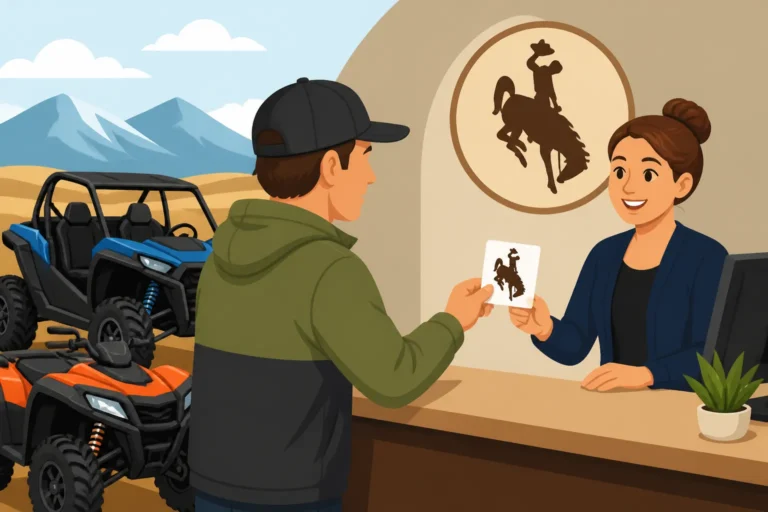
- Choose where to buy. You can order online, or visit a selling agent such as a powersports dealer, sporting goods store, county office or some Forest Service offices. Where to Buy a Wyoming ORV Permit lists the options.
- If you are ordering online, leave enough time for the decal to arrive by mail. Ordering the week before a trip is cutting it close, and mailing time can stretch during busy months.
- If you are buying in person, carry what the agent will ask for: details about the machine, usually including its make, model and identification number.
- Keep the receipt with your riding paperwork until the decal is properly applied.
If you ride every year, consider buying next year’s decal as soon as it goes on sale late in the current year. The new decals are typically available before the old ones expire, which removes the January scramble entirely.
Put the Decal Where Officers Expect It
A decal sitting in your truck console does not protect you. It has to be on the machine, visible, and in the place officers are trained to look. Wyoming ORV Decal Placement covers exactly where it goes on quads, side-by-sides and dirt bikes.
A few practical tips from riders who have been doing this for years:
- Clean the spot with rubbing alcohol before you apply the decal so it sticks properly.
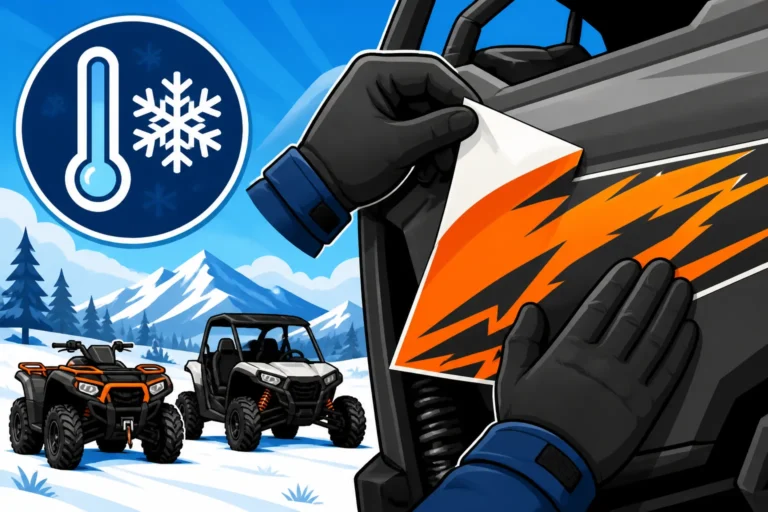
- In cold weather, warm both the decal and the plastic first. Decals applied to a freezing fender often peel off within weeks.
- If a decal is damaged, faded or peels off, replace it rather than taping it back on. A decal the officer cannot read is not much better than no decal.
- Do not move a decal from one machine to another. The permit is tied to the machine it was purchased for.
Keep Your Paperwork in Order
Permits are only part of the story. If you buy, sell or borrow machines regularly, solid paperwork saves you from awkward conversations at the trailhead. Many riders keep a dry bag or a small waterproof box under the seat with the permit receipt, a copy of the bill of sale for recently purchased machines, and contact details for the owner if the machine is borrowed.
When you buy a used machine, a clear bill of sale with the date, price, identification number and both parties’ signatures helps if an officer asks whether the quad is yours. You can write one from scratch, but many riders use an online legal document service such as LawDepot to generate a clean bill of sale template they can print and fill out on the tailgate. A Wyoming Bill of Sale for an ATV covers what Wyoming expects that document to include.
The same goes for informal borrowing. If a friend lends you their machine regularly, a simple written permission note, which you can also draft with a template from LawDepot or a similar service, removes any doubt about whether you are allowed to be riding it. It does not replace the permit, but it answers the “whose machine is this” question in seconds.
A Pre-Ride Checklist for Permits
Before every ride on public land, run through this short list:
| Check | Why It Matters |
|---|---|
| Decal on every machine you are bringing | Each machine needs its own permit, even if one rider owns them all |
| Year printed on the decal matches the current year | Permits expire December 31 |
| Decal is readable and stuck firmly | A faded or loose decal invites a closer look |
| Receipt kept for recently purchased decals | Proof of purchase helps if the decal has not arrived yet |
| Bill of sale or owner permission for borrowed or new machines | Answers ownership questions quickly |
| Travel map for the area you are riding | Keeps you on enrolled routes and away from extra violations |
Special Situations Worth Knowing
A few situations come up often enough that they deserve their own notes.
Rental machines. Many rental companies include the permit on their machines, but not all do. Ask when you book and look at the machine before you leave the lot. If there is no current decal, ask about it before you ride, because the operator is the one who gets cited.
Youth riders. A child riding a youth quad still needs a permit on that machine if it is ridden on enrolled public routes. The parent or guardian supervising usually ends up dealing with the citation if there is a problem.
Multiple machines in one family. One decal does not cover two machines, even if both belong to the same household. If you have four machines in the garage and plan to ride all of them on public routes, you need four decals.
Machines that are also road-registered. A machine registered as a multipurpose vehicle with a plate is in a different category for road use, but it is worth confirming whether you also need the ORV decal for the trails you plan to ride. Why an ORV Permit Is Not a Road License explains how the two systems interact.
When to Talk to a Professional
For almost everyone, a permit ticket is a matter of paying the bond, buying the decal and moving on. There are situations, however, where it makes sense to call a local attorney: when you have multiple violations from the same stop, if the citation includes charges beyond a missing permit, if you are a commercial outfitter or rental operator whose business could be affected, or if you have past citations that could change how the court views the new one.
A short consultation with a lawyer familiar with your county’s circuit court can clarify whether paying, contesting or negotiating makes the most sense. For simple document needs around a sale or loan of a machine, a self-service template from LawDepot or a similar service is often enough, but anything that involves a court date deserves a real conversation with someone licensed in Wyoming.
Common Questions About Permit Fines
Is there a grace period at the start of the year?
Do not count on one. The decal is good through December 31 of the year printed on it, and after that the machine is unpermitted. Some officers may show discretion in the first days of January, but that is their choice, not your right. Buying early is the only reliable way to avoid the gap.
Can the officer let me buy a permit on the spot?
Officers do not usually sell permits at the trailhead. What sometimes happens is that a rider with an honest mistake receives a warning and a firm suggestion to visit the nearest agent before riding again. If you get that chance, take it immediately.
Will a permit ticket go on my driving record?
A missing ORV permit is not a moving violation in the usual sense, and it is handled as a misdemeanor citation in circuit court. What can affect your license is failing to respond to the citation. Paying or appearing by the deadline is what keeps it simple.
Does paying the ticket give me a permit for the rest of the year?
No. The citation and the permit are completely separate. After you deal with the ticket, you still need to buy a decal for $15 before riding enrolled routes again.
What if I bought the permit online and it has not arrived?
Carry your receipt, ride conservatively and be honest with the officer. Some will accept a dated receipt as proof that you are in the process of complying, especially if the purchase was made before the ride. It is still safest to plan purchases far enough ahead that the decal is on the machine before you unload.
Can I get a refund on a decal if I sell the machine?
Permits are generally tied to the machine and not refundable once issued. If you sell a machine mid-year, make sure the buyer understands whether the decal transfers with it and check with the Trails Program about how that works for your situation.
Buying the decal, sticking it where it belongs and keeping a little paperwork in a dry box is all it takes to keep your Wyoming riding season ticket-free. The $15 you spend up front funds the trails you are riding, and it is far less than you would pay to explain yourself to a circuit court.
Disclaimer
This article is for general informational purposes only and does not constitute professional advice. Laws, prices and regulations vary by location and change over time. Consult a qualified professional for guidance on your specific situation.