Does a Ranch-Only Quad Need a Wyoming Permit?
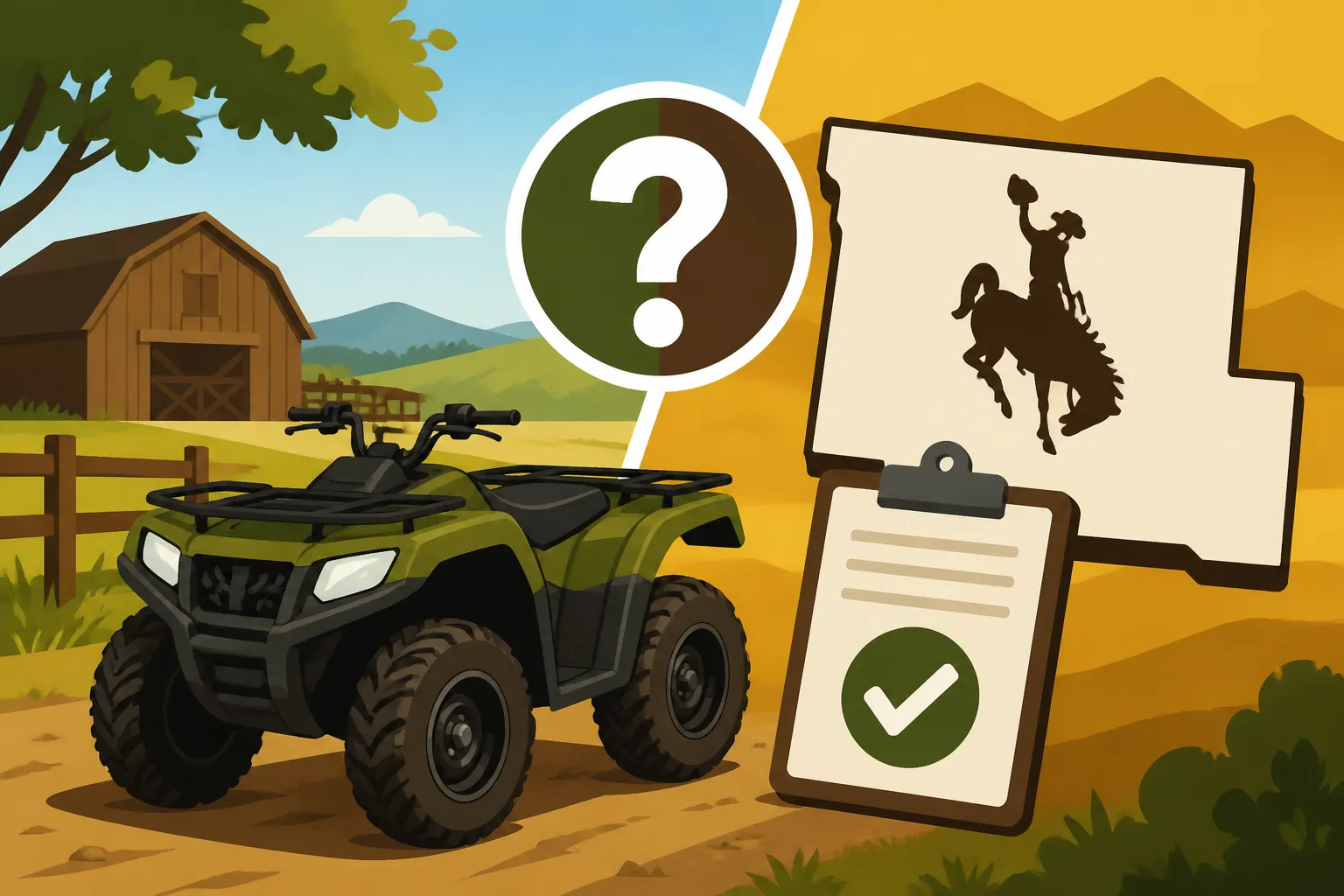
It's a common scenario across Wyoming's vast landscapes: you have a quad or a side-by-side that lives and works exclusively on your ranch, never sees a designated trail, and helps with daily tasks. So, do you really need to bother with a Wyoming ORV permit? This guide dives deep into the nuances of Wyoming law, dispelling common myths and clarifying when even your trusted ranch machine absolutely needs that little decal, and when it might be exempt.
Understanding Wyoming's ORV Permit System
Before we get into the specifics of ranch machines, it’s crucial to understand how Wyoming's Off-Road Vehicle (ORV) permit system works for everyone. The state has a clear framework designed to fund trail maintenance, signage, and enforcement, ensuring that everyone who uses public lands contributes to their upkeep. This system is pretty straightforward for most recreational riders, but it often causes confusion for those using machines primarily for work.
The Basics of Wyoming's ORV Decal
In Wyoming, if you plan to operate an off-road vehicle—be it an ATV, UTV, or dirt bike—on any designated public land or enrolled trail, you need a current ORV permit. This isn't just a suggestion; it's a legal requirement. The permit is issued as a decal that you affix to your machine, clearly visible, signifying that you've paid your dues for the year. The cost is the same for residents and non-residents, emphasizing the shared responsibility for maintaining our beautiful outdoor spaces. Think of it as your passport to Wyoming's incredible trail system. Without it, you’re essentially riding without permission, and that can lead to some inconvenient roadside conversations with a game warden or a county sheriff. You can learn more about this by checking out [Wyoming's Annual ORV Permit].
Why No Reciprocity for Out-of-State Permits
One of the most frequent points of confusion for visitors, and sometimes even for new residents, is the lack of reciprocity. Many states have agreements where an ORV permit from one state is recognized in another. Wyoming, however, operates differently. If you're coming from Montana, Colorado, or any other state, your home-state registration or permit won't cut it on Wyoming's public lands. You'll need to purchase a separate Wyoming ORV permit, even if your machine is fully registered and permitted elsewhere. This policy helps ensure that all funds collected stay within Wyoming to directly benefit the trails and riding areas that are actually being used here. It can feel like an extra step, but it’s foundational to how the state manages its vast network of trails. We often hear questions like [Does Wyoming Honor a Montana Registration?], and the answer is consistently no. Wyoming's system is self-contained.
The "Ranch-Only" Exemption: Myth vs. Reality
This is where the rubber meets the road, or rather, where the tires meet the sagebrush, for many ranchers and landowners. The idea that a machine used solely on private property for agricultural purposes is exempt from all state regulations is a common misconception. While there are some practical differences in how these machines are treated, the "ranch-only" label doesn't provide a blanket exemption from a Wyoming ORV permit.
Public vs. Private Land Riding
The core of the matter lies in where you intend to ride. If your quad or side-by-side never, ever leaves your private property and is exclusively used for ranching activities—like checking fences, moving livestock, or hauling feed—then, yes, you generally do not need a Wyoming ORV permit. This is because the state's permit system is specifically tied to the use of public lands and enrolled trails. On your own land, you're the master of your domain, and the state isn't going to tell you how to operate your equipment as long as you're not breaking other laws, such as those related to environmental protection or public safety.
However, the definition of "private property" can sometimes be tricky in Wyoming. Many ranches share boundaries with Bureau of Land Management (BLM) land, National Forests, or state trust lands. Sometimes, ranch roads or section lines that appear to be private actually cross public easements or are themselves public access routes. It's crucial for landowners to be absolutely certain of their property lines and any easements or rights-of-way that might exist. Relying on an outdated understanding or local lore can put you in a bind. Even if you only ride a few hundred feet down what you think is your private access road, if it's actually an enrolled public route or crosses a patch of BLM, that ORV permit becomes instantly necessary. Understanding [Wyoming Rules for Riding Private Land] is paramount for any landowner.
When a Ranch Machine Crosses Public Ground
Here’s the critical point: the moment your "ranch-only" quad or side-by-side touches a public road, a designated public trail, or any piece of state or federal land where ORV use is permitted, it must have a Wyoming ORV permit. This includes situations like:
- Crossing a public road: Even if you're just going from one part of your ranch to another, and that requires crossing a county road or a state highway, your machine generally needs to be permitted. If it's a designated ORV road, it absolutely needs the permit. If it's a paved public road, it would need to be registered as a Multipurpose Vehicle (MPV) and meet different requirements entirely, which is a whole other can of worms!
- Accessing federal or state lands: Many ranches are intertwined with public grazing allotments or access points to national forests. If your daily ranch work takes you onto these public parcels, even briefly, your machine needs a permit. A rancher might run cattle on BLM land under a grazing lease, but that doesn't necessarily mean their machines are exempt from ORV permitting requirements when operating there.
- Using a "section line" that is public: In Wyoming, many section lines are public rights-of-way. While they might feel like private ranch access, they are legally public. Riding along one of these without a permit is just like riding a designated trail without one. It's a subtle but important distinction that often catches people unaware. For more details on this, see [Wyoming Rules for Riding a Section Line].
- Participating in community events or helping a neighbor: If you take your machine off your property to assist a neighbor on their land, or if you participate in a local parade or community event that uses public rights-of-way, your machine would need the permit.
The easiest way to think about it is this: if there's any chance your wheels will leave your deeded private property, investing in the ORV permit is a small price to pay for peace of mind and legal compliance. It’s significantly cheaper and less stressful than dealing with a citation.
What Happens If You Ride Without a Permit
Ignoring the permit requirement, even for a quick hop across a public road, can lead to unwelcome consequences. The authorities in Wyoming are well-versed in the regulations, and they patrol public lands and watch for compliance.
Enforcement and Penalties
If you're caught riding an unpermitted ORV on designated public lands or trails in Wyoming, you can face fines. Game wardens, Forest Service rangers, BLM officers, and even county sheriffs have the authority to issue citations. These fines can vary depending on the specific circumstances and the officer's discretion, but they're typically more expensive than the annual permit itself. Beyond the immediate financial penalty, there's the inconvenience of dealing with the citation, potentially a court appearance, and the potential for repeat offenses to lead to escalating penalties. It's simply not worth the risk. Understanding [Wyoming Fines for Riding Without a Permit] can help you avoid these situations.
Imagine you're out checking a remote water trough, and you cut across what you thought was a remote corner of your own land, only to find yourself on a small piece of BLM access road. A ranger, perhaps on patrol or simply passing through, spots you. The conversation can quickly turn from friendly to official when they see no decal. It’s an easy fix to avoid this situation entirely.
Essential Documentation for Ranchers
Even if your machine is genuinely "ranch-only" and never leaves your private property, there are other important documents you should still keep track of. For instance, a bill of sale is crucial for proving ownership, especially if you ever need to sell the machine or if it gets stolen. Many ranchers don't think about formal paperwork for these machines, but having a clear record of purchase can save a lot of headaches down the line. Templates are readily available from services like LawDepot, which can help you create professional and legally sound documents for transactions, even for private sales of used equipment. This can be especially helpful if you're buying or selling a used ATV within the state. A proper [Wyoming ATV Bill of Sale Requirements] can protect both buyer and seller.
Furthermore, if your ranch machine somehow qualifies as an MPV (Multipurpose Vehicle) and you do want to make it road-legal for even limited public road use, you'll enter a whole new world of titling and registration. But for a strictly off-road, strictly private-land ranch machine, the focus remains primarily on ownership documentation and avoiding public land excursions without a permit. Keeping records from services like LawDepot can streamline any future transaction.
Considerations for Ranch Operations
While the permit rule is strict, understanding how it interacts with practical ranching can help you stay compliant without disrupting your work.
When a Farm Exemption Applies
Some states have specific exemptions for agricultural machinery. While Wyoming's ORV permit system is primarily focused on recreational use, it's worth noting that if your machine is exclusively defined and used as agricultural equipment, like a tractor or certain specialized farm vehicles, it falls under different regulations. However, most ATVs and UTVs, even if used for ranching, are still considered ORVs by definition, meaning the permit applies if they touch public land. The key is the type of machine and its primary purpose, but more importantly, the location of its operation. If it's an ATV or UTV, assume it needs a permit for public land use.
Planning Routes to Avoid Public Land
For many ranchers, the simplest solution is careful route planning. If you know certain areas of your ranch border public land or require crossing a public section line, map out alternative routes that stay strictly on your deeded property. This might mean taking a slightly longer path or making a small detour, but it ensures you remain compliant without having to permit a machine that truly never leaves private ground.
However, sometimes it's unavoidable. If a particular task must take you onto a public right-of-way or across a public parcel, then the decision is simple: get the permit. It’s far better to proactively obtain the decal than to risk a fine or, worse, an accident on public land without proper authorization. Ensuring your deeds and maps are up to date can help immensely here. Using tools or services that help clarify property boundaries and public easements, like those that can be found in resources from LawDepot for property agreements, can be invaluable for large landholders.
Summary of Permit Requirements for Ranch-Only Quads
To help clarify, here’s a quick overview of when that Wyoming ORV permit is needed for your ranch machine:
| Scenario | Wyoming ORV Permit Required? | Notes |
|---|---|---|
| Exclusively on your deeded private ranch land | No | Machine never touches public roads, trails, section lines, or state/federal land. |
| Crossing a public county road | Yes | Even for a short distance between private parcels. Consider MPV registration for frequent road use. |
| Riding on BLM, Forest Service, or State Land | Yes | This includes grazing allotments, access roads, or any designated public ORV area. |
| Using a public section line | Yes | Many section lines are public rights-of-way, even if they feel like private access. |
| Carrying an out-of-state permit | Yes | Wyoming does not honor permits from other states. You'll need a Wyoming permit. |
| Used for recreational purposes on your ranch | No | As long as it only stays on your private land, regardless of purpose. |
The bottom line is simple: if your ATV or UTV, even if primarily for ranch work, is going to touch any public land or designated public access in Wyoming, you need that permit. It's a small investment that protects you from fines and helps maintain the incredible riding opportunities we have in this state. Keep your proof of ownership handy, perhaps using a securely stored document from a service like LawDepot if you bought it used, and make sure that little decal is visible if you're venturing beyond your private fence line.
Disclaimer
This article is for general informational purposes only and does not constitute professional advice. Laws, prices and regulations vary by location and change over time. Consult a qualified professional for guidance on your specific situation.