Why No Title for an Off-Road Machine in Wyoming
It can feel incredibly confusing when you dive into the world of off-road riding in Wyoming, especially when you're used to buying vehicles with a clear-cut title. You've just shelled out good money for that shiny new side-by-side or rugged ATV, only to find out there's no official title from the state to call your own. This guide is here to clear up that head-scratching mystery, explain why Wyoming operates this way, and ensure you understand exactly what you need to prove ownership and stay on the right side of the law.
Understanding Wyoming's Approach to ORV Ownership
Wyoming has a unique way of classifying and regulating off-road vehicles (ORVs) compared to many other states, and it often leads to a lot of questions from new riders and even seasoned veterans who move here. The biggest difference you'll encounter is the general absence of a state-issued title for most ATVs, dirt bikes, and other machines designed solely for off-highway use. It’s a common point of confusion, and frankly, a source of frustration for many.
The Core Distinction: ORV vs. Road-Legal Vehicle
Think of it this way: Wyoming primarily differentiates between vehicles intended for highway use and those meant for the backcountry, dunes, or private land. A car, a truck, or even a motorcycle that you drive on public roads will have a title. This title is a legal document issued by the state, proving who the legal owner is and outlining any liens against the vehicle. It's how the state tracks ownership for taxation, sales, and ensuring legitimate transfers.
Off-road vehicles, or ORVs, on the other hand, are generally not designed or permitted for extensive use on public highways in their standard configuration. Because they aren't primarily road-going machines, Wyoming's legal framework for them is different. The state doesn't feel the same need to track their ownership through a formal title system like it does for your daily driver. This distinction is foundational to understanding why your new quad might not come with the paper title you expect. You'll find that this approach isn't just about semantics; it impacts how you register, buy, and sell these machines.
Why Wyoming Focuses on Permits, Not Titles, for ORVs
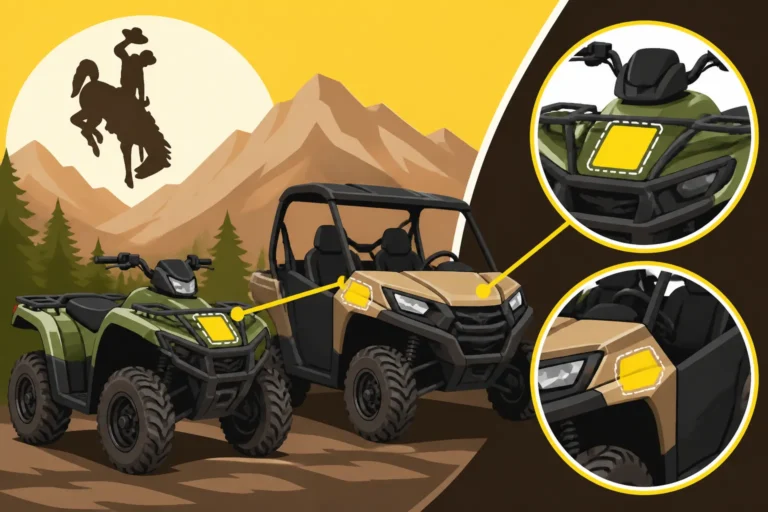
Instead of titles, Wyoming primarily focuses on a permit system for ORVs. If you plan to ride on designated public lands and trails in Wyoming, your off-road machine will need a special permit and decal. This annual permit is less about proving who owns the machine and more about ensuring that the machine is legally allowed to operate on the state's extensive network of trails and public lands. It's a user fee that contributes directly to the maintenance, development, and enforcement of the very trails we all love to ride.
This system is designed to be streamlined for off-road recreation. When you purchase an ORV permit, you're essentially buying access. The state wants to make it easy for riders, both residents and visitors, to get out and enjoy the wilderness without the added layer of title paperwork that might be required for a street-legal vehicle. This is why you'll often hear discussions about [Registering an ORV in Wyoming] or [Wyoming's Annual ORV Permit] rather than conversations about titling these machines. The permit verifies that you've paid your dues to the trails program, not that you hold the official deed to the vehicle itself. It’s a pragmatic approach for a state that boasts incredible outdoor recreation opportunities.
What "No Title" Really Means for Your Off-Road Machine
So, if there's no state-issued title for most ORVs in Wyoming, how do you prove you actually own your machine? This is where many people get a little nervous, and rightly so. In a world where every major purchase comes with official paperwork, the absence of a title can feel like a gaping hole in your ownership proof. But don't worry, there are established ways to demonstrate ownership that are recognized and accepted within the state.
Proof of Ownership Without a Title
Without a title, the most crucial document proving you own your ORV is your original bill of sale. This isn't just a simple receipt; it's a legal document that should clearly state who bought the machine, who sold it, the date of the sale, the purchase price, and a detailed description of the machine, including its Vehicle Identification Number (VIN). When you buy a new machine from a dealer, they will provide a comprehensive bill of sale that serves this purpose.
For private party sales, it's equally important to create a thorough bill of sale. This document becomes your primary legal record, proving the transfer of ownership from the previous owner to you. Keep it safe! Consider it as important as a title would be for a car. You might even want to keep a digital copy backed up somewhere, in addition to the physical paper. This documentation will be vital if you ever need to register the machine, sell it, or if there's ever a dispute about ownership.
The Role of a Bill of Sale in ORV Transactions
A properly executed bill of sale is the bedrock of ORV ownership in Wyoming. It acts as the legal contract of sale and transfer. When you're buying a used machine, insisting on a detailed bill of sale is not just good practice; it's essential for your protection. This document should ideally include:
- The full names and addresses of both the buyer and seller.
- The date of the transaction.
- The agreed-upon purchase price.
- A clear description of the ORV, including make, model, year, and crucially, its VIN.
- A statement from the seller confirming they are the legal owner and have the right to sell the machine.
- Signatures of both the buyer and seller.
Many riders find it helpful to use a standardized template for this. Resources like LawDepot offer customizable bill of sale forms that can help ensure all the necessary legal points are covered. Without this document, proving you're the rightful owner can become a significant headache, especially if the machine is ever stolen or if you need to dispose of it later. For a deep dive into what this document should contain, check out [A Wyoming Bill of Sale for an ATV].
When a Title Does Matter: The MPV Exception
Now, here’s where things get a little more nuanced, and where the title question does come into play for some off-road-style machines. Wyoming recognizes a category of vehicle called a Multipurpose Vehicle, or MPV. These are typically side-by-sides or certain larger UTVs that meet specific criteria related to weight, seat height, and other features, allowing them to be registered and titled for limited street use. If your machine qualifies as an MPV and you intend to ride it on public roads where allowed, then yes, it will receive a state-issued title, just like a car or truck.
This is a crucial distinction and often the source of confusion. Many people see a side-by-side with a license plate and assume all ORVs can be titled, but that's not the case. The MPV classification is specifically for machines that bridge the gap between pure off-roaders and street-legal vehicles. If you're looking to take your side-by-side onto county roads, understanding [Wyoming's Multipurpose Vehicle Class] and its titling process is absolutely essential. Otherwise, your typical ATV or dirt bike will remain in the "permit-only, no title" category.
Navigating Ownership Transfer for Off-Road Vehicles
The absence of a traditional title for most ORVs in Wyoming doesn't mean you can't buy, sell, or transfer ownership with confidence. It just means the process relies more heavily on other forms of documentation and good communication. Whether you're bringing a new machine into your life or sending an old friend down the trail with a new owner, knowing the proper steps will save you a lot of hassle.
Buying a Used ORV: What Paperwork You Need
When you’re eyeing that sweet deal on a used ATV or side-by-side from a private seller, it's easy to get caught up in the excitement. However, this is precisely when you need to be diligent about paperwork. Since there's no state title to transfer for most ORVs, your main focus will be on obtaining a comprehensive and legally sound bill of sale.
Here's what you should absolutely ensure you get:
- A Detailed Bill of Sale: This is your number one priority. It needs to include all the details mentioned earlier: buyer/seller info, purchase price, date, and most importantly, the machine's VIN. You can find robust templates online, such as those provided by LawDepot, to ensure you don't miss any critical fields.
- Previous Registration/Permit Info: Ask the seller for their previous [Wyoming's Annual ORV Permit] or any past registration documents. While these don't transfer ownership, they help establish a chain of custody and show the machine was legitimately operated in Wyoming.
- Proof of Original Purchase: If the seller still has the original bill of sale from when they bought the machine (especially if new from a dealer), ask for a copy. This further reinforces the machine's history.
Always inspect the VIN on the machine itself and compare it to any paperwork. Make sure they match. If the seller can't provide a clear bill of sale or seems hesitant about documentation, it should be a major red flag. For more specific tips, refer to [Buying a Used ATV in Wyoming].
Selling Your ORV: Protecting Yourself and the Buyer
When it's your turn to sell, your responsibility is to ensure a smooth and legal transfer for both parties. The biggest mistake sellers make is not providing adequate documentation, which can lead to headaches for the buyer down the line and potentially reflect poorly on you.
Here’s your checklist for selling an ORV in Wyoming:
- Prepare a Comprehensive Bill of Sale: Just like when buying, this is paramount. Fill it out completely, detailing the machine, the price, and both parties' information. Make two copies, one for you and one for the buyer, and ensure both are signed by both parties.
- Remove Your ORV Decal: Technically, the annual permit is for your use of the machine. The new owner will need to purchase their own [Wyoming's Annual ORV Permit] if they plan to ride on public lands.
- Provide Any Available History: Hand over any past service records, owner's manuals, or original purchase documents. This adds value and transparency to the sale.
Remember, the bill of sale is your proof that you no longer own the machine and are not liable for any incidents that happen after the sale. Protect yourself by having clear, signed documentation. For more on the seller's perspective, check out [Selling an ORV in Wyoming].
Dealing with Inherited or Gifted Machines
Receiving an ORV as a gift or through inheritance can be a wonderful thing, but it often comes with unique paperwork challenges, precisely because of the lack of a formal title. The key here, again, is documentation of the transfer.
- For a Gifted Machine: You'll need a bill of sale that clearly states the machine was a gift, with a value of $0 or "gift." It should still include all the machine's details (VIN, make, model, etc.) and be signed by both the giver and the recipient. This proves the transfer of ownership.
- For an Inherited Machine: This can be a bit more complex. You'll need documentation proving your right to the deceased's assets, such as a will, probate court documents, or a small estate affidavit. Once you have legal authority, you'll create a bill of sale or an affidavit of inheritance, transferring the ORV from the estate to you.
In both cases, having the original purchase documentation for the machine (if available) can greatly assist in establishing its legitimate history. It's always a good idea to consult with the county clerk's office or even an attorney for specific guidance on inherited property, especially if the estate is complex. For more details on this specific scenario, you can look up [Registering an Inherited Machine in Wyoming].
The Multipurpose Vehicle MPV and Its Title Requirements
The world of off-road vehicles is constantly evolving, and with the rise of the side-by-side, Wyoming had to adapt its regulations. This adaptation gave birth to the Multipurpose Vehicle (MPV) class, which is where titles for certain off-road machines suddenly become a reality. This is a vital distinction to grasp, as it determines whether your machine will ever carry a state-issued title and what responsibilities come with it.
Defining an MPV: More Than Just an ORV
An MPV is not just any off-road vehicle. Wyoming law has very specific criteria that a machine must meet to be classified as an MPV. Generally, these criteria include:
- Weight: Typically weighing between 300 and 3,000 pounds.
- Seat Height: A seat at least 24 inches from the ground.
- Wheels: Generally four or more wheels.
- Steering: A steering wheel, not handlebars.
Most traditional ATVs, with their straddle seating and handlebar steering, do not qualify as MPVs. It's primarily certain side-by-sides (SxS or UTVs) that fit this bill. The intent of the MPV classification is to allow these specific types of machines, which often have automotive-like features, to be equipped and registered for limited use on public roads. If your machine meets these criteria, you can then pursue the steps to make it "street legal" in Wyoming, which does involve obtaining a title and a license plate. For a comprehensive overview of these specific requirements, you'll want to review [Wyoming MPV Title Requirements].
The Process of Titling an MPV in Wyoming
If your side-by-side or UTV qualifies as an MPV, the titling process is similar to that of a car or truck, but with specific paperwork for the MPV designation. You won't be able to just show up and get a title; there's a checklist to complete.
Here's a general outline of the process:
- Complete the MPV Checklist: You'll need to fill out a specific form that verifies your machine meets all the physical requirements of an MPV. This often involves measuring the machine's weight and seat height.
- Gather Purchase Documentation: You'll need your original bill of sale and possibly a Manufacturer's Statement of Origin (MSO) if it's a new machine.
- Visit the County Clerk: Titles in Wyoming are handled by the County Clerk's office. This is where you'll submit your completed MPV checklist, bill of sale, and MSO (if applicable). They will process your application for a state-issued title.
- Register and Obtain Plates: Once your machine is titled, you then take your new title to the County Treasurer's office to register the vehicle and obtain a license plate. This is also where you'll pay your [Wyoming MPV Registration Cost] and any applicable taxes.
It's a two-step process involving two different county offices, which can sometimes be a surprise to folks. First the title, then the plates. For more on the specifics of the paperwork, check out [Wyoming Paperwork for an MPV Title] and [Wyoming County Clerk Title Process].
Why Some Side-by-Sides Get Titles (and Quads Don't)
The reason behind this distinction boils down to the legislative intent to allow certain utility-style vehicles, particularly side-by-sides, to operate on designated public roads. Traditional ATVs, with their open seating and motorcycle-like controls, are generally deemed less suitable for road use by the state. Their design simply doesn't align with the safety and operational standards Wyoming has set for road-legal vehicles.
Side-by-sides, on the other hand, with their bench seating, roll cages, and often more robust suspension and braking systems, can more easily be adapted to meet basic road-legal equipment requirements such as headlights, taillights, turn signals, mirrors, and horns. The title and plate system for MPVs ensures these modified machines are properly identified, insured, and regulated for their intended mixed-use purpose. So, if you've been wondering [Can You Plate a Side-by-Side in Wyoming?], the answer is yes, but only if it meets the specific MPV criteria and goes through the titling and registration process. Your classic quad, however, will remain an ORV, requiring only a permit for public trail use, but no title or plate.
Common Misconceptions and Practical Advice
The unique titling and registration system for off-road vehicles in Wyoming can lead to a lot of misunderstandings. It's easy to assume things operate the same way as they do for cars or in other states, but that's rarely the case with ORVs here. Let's tackle some common myths and offer some straightforward advice to keep you riding happy and legal.
The Myth of the "Street Legal" ATV Title
One of the most persistent misconceptions is that you can get a "street legal" title for any ATV or dirt bike in Wyoming. This is generally not true for traditional ATVs. As we've discussed, the path to street legality and a state title in Wyoming is almost exclusively through the Multipurpose Vehicle (MPV) classification. A standard ATV, even if you put turn signals and a horn on it, will not qualify for an MPV title or license plate.
Many riders from other states might be accustomed to more lenient street-legal ATV laws or temporary road use permits. However, in Wyoming, if your machine doesn't meet the specific MPV definition and go through that rigorous titling process, it's considered an ORV. While some local jurisdictions (like counties or towns) might designate specific roads where ORVs can legally operate, this is not the same as being "street legal" with a title and plate for general road use. It's a critical difference that can lead to fines if misunderstood. For more clarification, consider reading [Street Legal ATVs in Wyoming: The Short Answer].
Best Practices for Keeping Your ORV Records Straight
Since you won't have a state-issued title for most ORVs, meticulous record-keeping becomes your best friend. This isn't just about being organized; it's about protecting your investment and your rights as an owner.
Here are some best practices:
- Secure Your Bill of Sale: This is non-negotiable. Treat your original bill of sale like it's gold. Keep it in a safe place, such as a fireproof safe or a secure filing cabinet.
- Make Copies (and Digital Backups): Scan your bill of sale and other important documents (like past service records, warranty info, or original dealer invoices). Store digital copies on a cloud service, an external hard drive, or both. This protects you in case the physical document is lost or damaged.
- Keep Your Annual Permit: While the ORV permit doesn't prove ownership, it does show that you've been legitimately operating the machine on public lands. Keep copies of your [Wyoming's Annual ORV Permit] with your other important papers.
- Document Modifications and Maintenance: Keep receipts for major parts, accessories, and maintenance work. This not only helps with resale value but can also serve as supporting documentation of your continued ownership and investment in the machine.
- Consider a LawDepot Bill of Sale: When buying or selling, using a professional, templated bill of sale from a reputable source like LawDepot can add an extra layer of legal confidence and ensure all necessary details are captured.
By being diligent with your paperwork, you create an undeniable paper trail that clearly establishes your ownership, even without a state-issued title.
What to Do If You've Lost Your Original Purchase Documentation
Losing your bill of sale or other critical purchase documentation can feel like a disaster, especially in a state like Wyoming where there's no title to fall back on. However, it's not a lost cause. You have a few avenues you can explore:
- Contact the Seller (if possible): If you bought the machine new from a dealer, they will almost certainly have a copy of your original bill of sale in their records. Reach out to them and request a duplicate. If you bought it from a private party, contacting them might be an option, but it's less guaranteed they'll have a copy or be willing to provide one.
- Affidavit of Ownership: In some cases, if you can't retrieve the original bill of sale, you might be able to create an "Affidavit of Ownership" or a sworn statement. This document, typically notarized, details how and when you acquired the machine, including its VIN, and states under penalty of perjury that you are the rightful owner. While not as strong as an original bill of sale, it can serve as a substitute in certain situations.
- VIN Check and Police Report: If you're concerned about potential theft or fraudulent activity (e.g., if you bought the machine without proper paperwork and now suspect issues), you can run a VIN check through a reputable service or even contact your local law enforcement. They can check if the machine has been reported stolen. If you cannot establish clear ownership and need to dispose of the machine, or if it was seized for any reason, this process becomes much more difficult without proper documentation.
This situation underscores why the bill of sale is so critical. Always strive to secure and maintain this document, as it truly is the cornerstone of your ORV ownership in Wyoming.
Comparing ORV and MPV Titling in Wyoming
To help clarify the differences between Off-Road Vehicles (ORVs) and Multipurpose Vehicles (MPVs) when it comes to titling and registration in Wyoming, here's a handy comparison table. This should give you a quick reference point for what to expect for your machine.
| Feature | Off-Road Vehicle (ORV) | Multipurpose Vehicle (MPV) |
|---|---|---|
| Wyoming State Title | No (Generally not issued by the state) | Yes (Issued by the County Clerk) |
| Primary Proof of Ownership | Bill of Sale (from dealer or private party) | State-issued Title; Bill of Sale as supporting document |
| Required for Public Land Use | Annual ORV Permit (decal required) | Annual ORV Permit (decal required for trails) & Road Plate (for roads) |
| Street Legal Status | Generally not street legal; limited local road access | Limited street legal on designated public roads |
| Machines That Qualify | ATVs, Dirt Bikes, some smaller UTVs, side-by-sides | Specific Side-by-Sides/UTVs meeting weight/seat height criteria |
| Registration Process | Purchase annual permit (online, dealers, offices) | Title at County Clerk, then register and plate at County Treasurer |
| Key Documents Needed | Bill of Sale, VIN | MPV Checklist, MSO (new), Bill of Sale, VIN |
| Governing Authority | WY State Parks, Historic Sites and Trails (Permit) | County Clerk (Title), County Treasurer (Plate) |
This table highlights why a title is such a distinct and important differentiator for MPVs, while ORVs rely on a permit system for access and a strong bill of sale for ownership.
Disclaimer
This article is for general informational purposes only and does not constitute professional advice. Laws, prices and regulations vary by location and change over time. Consult a qualified professional for guidance on your specific situation.