Registering a Side-by-Side as a Wyoming MPV
You bought a side-by-side because you love hitting the trails and exploring Wyoming's incredible backcountry, but you’re probably also thinking, "Wouldn't it be great if I could just drive this thing down the road to get to that next trailhead, or even grab groceries, without having to load it onto a trailer?" It's a common dream for many riders, and thankfully, Wyoming offers a unique pathway for certain off-road vehicles to become street-legal: the Multipurpose Vehicle (MPV) classification. This guide will walk you through the often-confusing steps to register your side-by-side as a Wyoming MPV, turning that dream into a reality.
Understanding Wyoming's MPV Classification
Wyoming has a special category for off-road machines that can bridge the gap between dedicated trail use and limited street legal operation. This isn't just about slapping an ORV decal on your machine; it's a completely different registration process designed for specific types of vehicles.
What Exactly is an MPV?
Unlike many states that might try to force a side-by-side into a "motorcycle" or "low-speed vehicle" category, Wyoming created the Multipurpose Vehicle (MPV) classification to specifically address machines like side-by-sides. This means your machine gets its own distinct recognition, allowing it to be titled and plated for road use, much like a traditional car or truck. It's a huge benefit for riders who want more flexibility.
The MPV status isn't just a fancy name; it comes with a full vehicle title and a license plate issued by the state, setting it apart from a standard Off-Road Vehicle (ORV) that only receives a decal. Think of it as giving your rugged trail machine a formal identity for paved and gravel roads. This legal distinction acknowledges the growing popularity and capabilities of modern side-by-sides, allowing them to serve both recreational and utility purposes on a broader range of terrain. It's a recognition that these machines aren't just for dirt; they have a place on many public roads as well.
Key Criteria for MPV Status
Not every off-road machine can become an MPV in Wyoming. There are strict, non-negotiable criteria that your side-by-side must meet. If your machine doesn't tick these boxes, it simply won't qualify, so it's crucial to check these details before you start the registration process.
First, your machine must have four wheels. This immediately excludes dirt bikes, three-wheelers, and most traditional ATVs, which only have handlebars. The MPV category is specifically designed for vehicles with a steering wheel and pedal controls, which typically means side-by-sides.
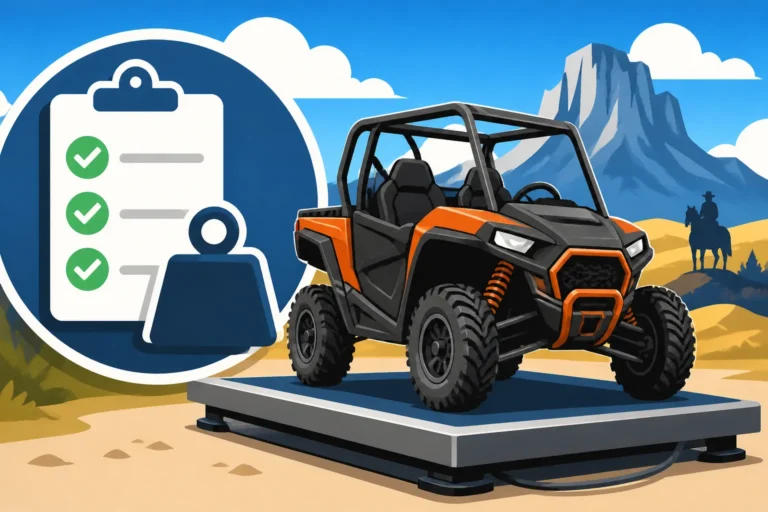
Second, the machine must have a dry weight between 300 and 3,000 pounds. This is a critical measurement. Most modern side-by-sides will fall within this range, but it's important to verify your specific model's dry weight. Machines that are too light (like many youth quads) or too heavy (some larger, heavily accessorized UTVs or specialty utility vehicles) will be disqualified. This weight range is set to ensure the vehicle is robust enough for road interaction but not so heavy as to pose excessive wear or safety concerns on public infrastructure when compared to full-sized vehicles.
Third, your machine needs an upright seat that is at least 24 inches from the ground when measured from the lowest point of the seat. This rule helps distinguish MPVs from traditional ATVs where the rider straddles the machine, and from machines with very low seating positions. Side-by-sides, with their bucket or bench seats, typically meet this requirement easily. This ensures a certain level of visibility and a more "automobile-like" seating position, which is part of the MPV's intended use on public roads. You'll need to measure carefully, usually from the ground to the top of the seat cushion, to ensure compliance. If you're unsure about any of these measurements, consulting your owner's manual or a local dealership for specifications can be very helpful.
Navigating the Paperwork: The MPV Checklist and Initial Documents
The journey to getting your side-by-side road-legal as an MPV in Wyoming involves quite a bit of paperwork, and getting it right from the start can save you a lot of headaches. This isn't like simply buying an [Wyoming's Annual ORV Permit]; it's a much more formal process.
The Importance of the MPV Checklist Form
The cornerstone of your MPV registration is the specific MPV Checklist form provided by the state. This isn't just a suggestion; it's a mandatory document that acts as your formal declaration that your side-by-side meets all the necessary physical requirements to be an MPV. You can usually find this form on the Wyoming Department of Transportation (WYDOT) website or at your local County Clerk's office.
The form will ask for detailed information about your machine, including its Vehicle Identification Number (VIN), make, model, and year. Crucially, it will require you to attest to and often provide specific measurements for the weight and seat height criteria we discussed earlier. You'll need to accurately measure your machine's dry weight (without fuel or passengers) and the height from the ground to the lowest point of the seat. Being precise here is vital. Incorrect measurements could lead to your application being denied, forcing you to start over. This form ensures that only vehicles designed to be safely operated on public roads under the MPV classification are allowed through the system.
Gathering Essential Documents
Beyond the checklist, you'll need a collection of other crucial documents to prove ownership and eligibility for your side-by-side. Think of this as building a complete legal case for your machine.
If your side-by-side is brand new, you'll need the Manufacturer's Statement of Origin (MSO) or Manufacturer's Certificate of Origin (MCO). This document is essentially the "birth certificate" for your vehicle and confirms that you are the first retail owner. If you purchased a used side-by-side, you'll need the previous title (if it was titled in another state) or a notarized bill of sale. Even if it's a brand-new machine, some dealerships might provide a bill of sale in addition to the MSO. For used machines, a clear, concise [Wyoming ATV Bill of Sale Requirements] is paramount. It should include the VIN, purchase price, date of sale, and the names and signatures of both buyer and seller. Making sure this document is properly notarized adds a layer of legal protection and can prevent issues down the line.
Sometimes, especially with private sales, getting all the right paperwork can feel daunting. Resources like LawDepot can be helpful for generating standardized legal forms like a bill of sale, ensuring all the necessary fields are present and legally sound for your transaction. Having all these documents in order before you visit the county offices will streamline your entire registration process. Don't forget any previous registration slips or proof of any taxes paid, as these can also be helpful.
The Two-Step Registration Process: Title and Plate
Unlike a simple ORV decal, registering an MPV in Wyoming is a two-part process involving two different county offices. It's a bit more involved, but it ensures your side-by-side is fully recognized as a road-legal vehicle.
Getting Your MPV Titled at the County Clerk's Office
The very first step in making your side-by-side a street-legal MPV is to get it titled. This is a critical distinction from standard ORVs, which do not receive titles in Wyoming. You'll need to visit your local County Clerk's office for this. This office handles all vehicle titles within the county, making sure that ownership is properly recorded.
When you go to the County Clerk, bring all your gathered paperwork: the completed MPV Checklist, your MSO or previous title, and your bill of sale. The clerk will review these documents to ensure everything is in order and that your machine meets the MPV criteria. They will also perform a VIN verification, often by checking the VIN on your machine against your paperwork, to prevent fraud and ensure the vehicle's identity. Expect to pay a titling fee at this stage. Once approved, the County Clerk will issue you a vehicle title in your name. This title is proof of legal ownership and is a one-time process for as long as you own the machine (unless you sell it, then the new owner will need to re-title it). For more detailed information, you can review the steps for [Titling a Multipurpose Vehicle in Wyoming] or specifically the [Wyoming County Clerk Title Process]. Having this title is your golden ticket to the next step.
Obtaining Your MPV Plate from the County Treasurer
With your MPV title in hand, your next stop is the County Treasurer's office. This is where you'll get your actual license plate and register your vehicle for road use. You might think one office handles it all, but Wyoming separates these functions to ensure proper checks and balances.
At the County Treasurer's office, you'll present your newly issued MPV title. This proves that you legally own the machine and it has been officially recognized as an MPV. You will then register the vehicle and be issued a license plate, similar to what you'd get for a car or truck. This plate must be displayed prominently on your side-by-side whenever you're operating it on public roads. This is also where you'll pay your annual registration fees. These fees typically cover the cost of the plate and contribute to local road maintenance and other services. Don't forget that you'll also need to show proof of insurance for your MPV, as it will be operating on public roads, just like any other motor vehicle. The County Treasurer's office will handle your annual [Wyoming MPV Registration Cost] and ensure your vehicle is current for road use. For a comprehensive overview of this phase, look into the [Wyoming County Treasurer Plate Process]. This annual registration is crucial, and riding with an expired plate can lead to fines and legal trouble.
Equipping Your Side-by-Side for Wyoming Roads
Simply getting a title and plate isn't enough to legally drive your MPV on Wyoming roads. Your side-by-side must also be equipped with specific safety features that bring it up to road-legal standards. This isn't just about compliance; it's about ensuring your safety and the safety of others sharing the road.
Mandatory Road-Legal Equipment
When you transition your side-by-side from a strictly off-road machine to a road-legal MPV, it needs to meet a minimum set of equipment requirements. These are standard features you’d expect on any vehicle allowed on public roadways.
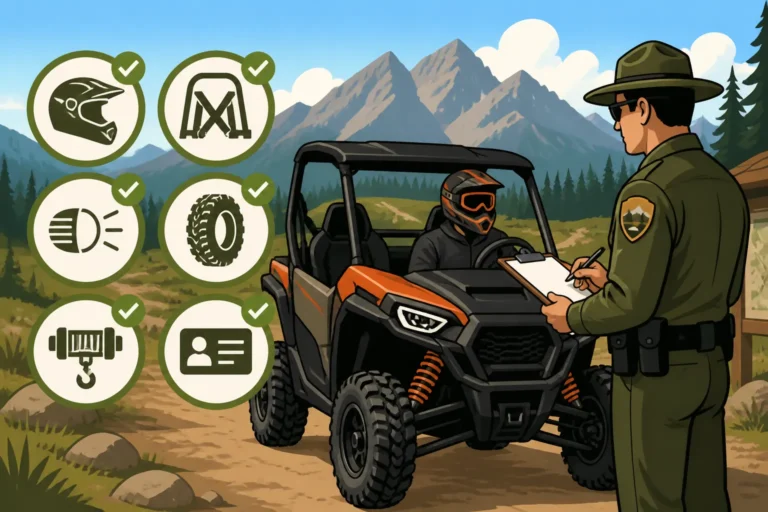
First, your MPV must have proper headlights, taillights, and brake lights. These are essential for visibility, especially during dawn, dusk, or adverse weather conditions, and for signaling your intentions to other drivers. The brake lights must activate when the brakes are applied. Additionally, a horn is required for signaling and warning other drivers or pedestrians, especially in unexpected situations. For [Wyoming Lighting Requirements for ORVs] and [Wyoming Horn Requirement on a Road Machine], these are non-negotiable safety items.
Mirrors are another key requirement. You must have at least one rearview mirror mounted on the left side of your machine, providing a clear view of traffic approaching from the rear. While a right-side mirror is often helpful, the left is mandatory. Many side-by-sides come with some mirrors, but you'll need to ensure they meet the specific requirements for clarity and placement. Check [Wyoming Mirror Requirements for Road Use] for details. Finally, your machine must have seatbelts for all occupants, which most side-by-sides are already equipped with. Beyond these, a properly functioning muffler and spark arrester are also necessary. These regulate noise levels and prevent wildfires, critical aspects of responsible off-road and on-road operation in Wyoming's natural environments. You can learn more about these with [Wyoming Muffler and Spark Arrester Rules]. Make sure all these components are in good working order before you hit the pavement.
Driver Licensing and Insurance
Operating an MPV on public roads in Wyoming also comes with specific requirements for the driver and the vehicle's insurance coverage. This ensures that you are properly qualified to operate the vehicle and that you are financially protected in case of an accident.
For starters, anyone operating an MPV on a public road must hold a valid driver's license with the appropriate endorsement. In Wyoming, this typically means a standard driver's license with either an "M" (motorcycle) endorsement or an "MR" (motorcycle restricted) endorsement. The MR endorsement is specifically designed for MPVs and other three-wheeled vehicles, indicating that the driver has been tested on a machine similar to what they will be operating. You can get these endorsements through your local Department of Motor Vehicles (DMV) office after passing a written test and a skills test. Understanding [Wyoming Motorcycle Endorsement for an MPV] is crucial here. Also, there are [Wyoming Minimum Age to Ride a Road] rules for MPVs. Generally, a driver must be at least 16 years old and hold a valid license.
Just as critical is insurance. When your side-by-side becomes an MPV and operates on public roads, it must carry liability insurance, just like any other motor vehicle. This is distinct from any insurance you might have for off-road use only. The insurance must meet Wyoming's minimum liability requirements, covering bodily injury and property damage. You'll need to carry proof of this insurance with you whenever you're driving your MPV on the road. This is a non-negotiable item, and riding without it can result in significant fines and penalties. For specific details on what you need, refer to [Wyoming ATV Insurance Requirement]. If you're looking for help understanding insurance requirements or even formalizing other legal aspects related to your MPV, LawDepot can be a useful resource for general legal information and document creation.
Where You Can Legally Ride Your MPV in Wyoming
Having your side-by-side registered, plated, and properly equipped as an MPV doesn't mean you can just drive it anywhere. Wyoming has specific rules about which roads are open to MPVs, and knowing these regulations is crucial to avoid fines and ensure your safety.
Understanding Enrolled Roads and Designations
The most important concept to grasp is that an MPV is generally permitted only on "enrolled" public roads. These are roads, often county roads or those within National Forests or Bureau of Land Management (BLM) lands, that have been specifically designated and approved for ORV/MPV use by the relevant land management agency and the local county government. This dual approval process ensures that roads are suitable for mixed traffic and that local authorities are on board.
You cannot assume every gravel road or secondary highway is open to MPVs. It's imperative to consult Motor Vehicle Use Maps (MVUMs) for Forest Service and BLM lands, and check with county offices for their specific ordinances and enrolled road lists. These maps clearly mark which routes are open to what types of vehicles. Riding your MPV on an unenrolled road, even if it looks like a suitable path, is considered illegal and can lead to trespass violations or fines. Familiarize yourself with [Wyoming's Designated ORV Roads], [Wyoming Rules for Riding a County Road], and [Wyoming Rules for Riding a Forest Road]. Always look for signage; while maps are authoritative, on-the-ground signs will always supersede them if there’s a temporary closure or restriction.
Interstates, Highways, and City Streets
When it comes to major thoroughfares and urban areas, the rules for MPVs become even more restrictive. Generally, MPVs are prohibited from riding on interstate highways. There are extremely limited exceptions for crossing an interstate at specific, designated grade-separated crossings, but these are rare and highly regulated. Do not plan to use your MPV for interstate travel. [Wyoming Rules for Crossing an Interstate] outlines these very narrow circumstances.
Similarly, riding on state highways can be restricted. While some sections might be enrolled for MPV use, many are not. Always verify the specific route. You can’t just hop on any state highway. When it comes to city streets, the situation is even more nuanced. Local municipalities (cities and towns) have the authority to create their own ordinances regarding MPV use within their corporate limits. Some towns might allow MPVs on certain streets, while others might ban them entirely. Before you venture into any town, it’s essential to check with the local police department or city clerk’s office about their specific rules. [Wyoming Rules for Riding a City Street] can vary wildly from one community to the next. The overarching principle is that your MPV is primarily intended for linking trail systems, accessing remote areas, or navigating less-trafficked rural roads, not for general urban commuting or high-speed highway travel. Always err on the side of caution and verify the legality of any road segment before you ride.
Here's a quick comparison of ORV vs. MPV status in Wyoming:
| Feature | Off-Road Vehicle (ORV) | Multipurpose Vehicle (MPV) |
|---|---|---|
| Purpose | Primarily off-road recreation, designated trails | Off-road recreation AND limited public road use |
| Classification | Off-road Vehicle (ATVs, dirt bikes, side-by-sides) | Specific class for qualifying side-by-sides |
| Identification | Annual ORV decal from State Parks | Full vehicle title (County Clerk) & license plate (County Treasurer) |
| Road Use | Generally NOT allowed on public roads (except crossings) | Allowed on "enrolled" public roads |
| Eligibility | Most ATVs, dirt bikes, side-by-sides | 4 wheels, 300-3000 lbs, 24"+ seat height, steering wheel |
| Driver License | No specific endorsement for off-road use | M or MR endorsement required for road use |
| Insurance | Not state-mandated for off-road use | Mandatory liability insurance for road use |
| Required Gear | Spark arrester, muffler | Headlights, taillights, brake lights, horn, left-side mirror, seatbelts, spark arrester, muffler |
| Annual Cost | Flat fee for decal [Wyoming ORV Permit Cost] | Annual registration fee for plate [Wyoming MPV Registration Cost] |
| Example | A dirt bike on a forest trail | A side-by-side driving a county road to a trailhead |
Disclaimer
This article is for general informational purposes only and does not constitute professional advice. Laws, prices and regulations vary by location and change over time. Consult a qualified professional for guidance on your specific situation.