One Flat Permit Price, Whatever You Ride
It's frustrating when you're just trying to enjoy the incredible trails Wyoming has to offer, but the rules and fees around off-road vehicles (ORVs) feel like a labyrinth. Many riders wonder if their dirt bike costs a different amount to permit than their side-by-side or ATV, adding unnecessary stress to what should be an easy process. This guide is here to clear up that confusion, explaining Wyoming's straightforward flat permit price for almost all off-road vehicles, regardless of their type or size.
Understanding Wyoming's Universal ORV Permit Fee
One of the biggest anxieties for new or visiting off-road enthusiasts is figuring out permit costs. You might be accustomed to other states that differentiate fees based on vehicle type, weight, or even engine size. Perhaps you've heard whispers of different prices for ATVs, dirt bikes, or larger side-by-sides, leaving you wondering if your specific machine will incur a heftier fee. Let me tell you, Wyoming keeps it refreshingly simple in this regard. The state operates on a "one price fits all" model for its annual Off-Road Recreational Vehicle permit.
This means whether you're bringing a nimble dirt bike for some single-track thrills, a rugged ATV built for ranch work and weekend adventures, or a spacious side-by-side (UTV) to explore with friends and family, the cost of the Wyoming ORV permit is the same for everyone. This flat fee simplifies budgeting and removes any guesswork, making it easier for residents and non-residents alike to plan their rides. It's a system designed to be equitable and straightforward, reflecting the state's commitment to broad access to its vast network of trails and public lands. This universal approach helps ensure that all types of off-road enthusiasts contribute equally to the maintenance and development of the trails we all love to ride. You can learn more about this through [Why Wyoming Charges Everyone the Same].
Why a Flat Fee Makes Sense for Wyoming Riders
Imagine the headache if Wyoming had a tiered pricing structure. You'd need to bring out the tape measure for your side-by-side's width, check the displacement of your dirt bike's engine, and then consult a complex chart to figure out your permit cost. It would be a bureaucratic nightmare, not just for you but for the state agencies responsible for issuing these permits. The flat fee system cuts through all that complexity. It treats all eligible off-road vehicles as equal contributors to the trails program, focusing on the shared benefit of access rather than the specifics of the machine itself. This simplicity is a boon for busy riders who just want to get their decal and hit the dirt.
For example, if you own both an older utility ATV that you use for hauling firewood and a newer, sportier side-by-side for aggressive trail riding, you won't have to calculate two different permit fees. You'll pay the same flat rate for each machine. This ease of understanding and application is a cornerstone of Wyoming's approach to ORV permitting. It's about encouraging compliance by making the rules clear and unambiguous, rather than penalizing riders for their choice of machine. This also ensures that the folks selling you the permit, whether at a county office or a private dealer, don't need to be experts in every make and model's specifications.
Which Off-Road Machines Need This Universal Permit
While the permit price is flat, it's crucial to understand which machines are actually covered by this ORV permit. Wyoming's definition of an Off-Road Recreational Vehicle is quite broad, encompassing most of what riders commonly refer to as ATVs, UTVs, and dirt bikes. If it's designed for off-road use and you plan to ride it on designated public trails or routes in Wyoming, chances are it needs this permit. This applies whether you're exploring the winding paths of the Bighorn National Forest or tearing up the dunes at Killpecker.
The key is its primary design and intended use. A typical four-wheeled ATV (All-Terrain Vehicle), a side-by-side (UTV or Utility Terrain Vehicle) with its automotive-style seating, and dirt bikes (two-wheeled off-highway motorcycles) all fall under this umbrella. Even youth machines, designed for younger riders, typically require the same ORV permit if they'll be used on public lands. This ensures that every machine benefiting from the state's trail system contributes to its upkeep. To get a detailed understanding of the types of machines, you can check [Which Machines Wyoming Counts as Off-Road Vehicles].
It's important to remember that this permit is specifically for off-road use. If your machine is modified to be street-legal and registered as a Multipurpose Vehicle (MPV) – a distinct category in Wyoming – it will have different registration and titling requirements, including a license plate issued by the county treasurer. The ORV permit we're discussing here is exclusively for those machines sticking to designated off-road trails.
Common ORV Types and Their Permit Needs
Let's look at some specific examples.
- ATVs (All-Terrain Vehicles): These are perhaps the most classic image of an off-road machine, typically ridden straddling a seat like a motorcycle, but with four wheels. Whether it's a utility quad used for ranch work or a sport quad for recreational riding, it needs a Wyoming ORV permit for public land use.
- Side-by-Sides (UTVs): These have grown immensely in popularity, offering bench or bucket seating, a steering wheel, and often a roll cage. They range from sporty, high-performance models to utility-focused machines. Just like ATVs, if you're taking your side-by-side out on Wyoming's enrolled trails, it needs this permit. You can find specific info on [Wyoming Permits for a Side-by-Side].
- Dirt Bikes (Off-Highway Motorcycles): Two-wheeled machines designed purely for off-road riding, dirt bikes are also covered by this same permit. From motocross bikes to trail-focused enduro models, they all require the ORV decal to legally access public trails. See [Wyoming ORV Permit for a Dirt Bike] for more details.
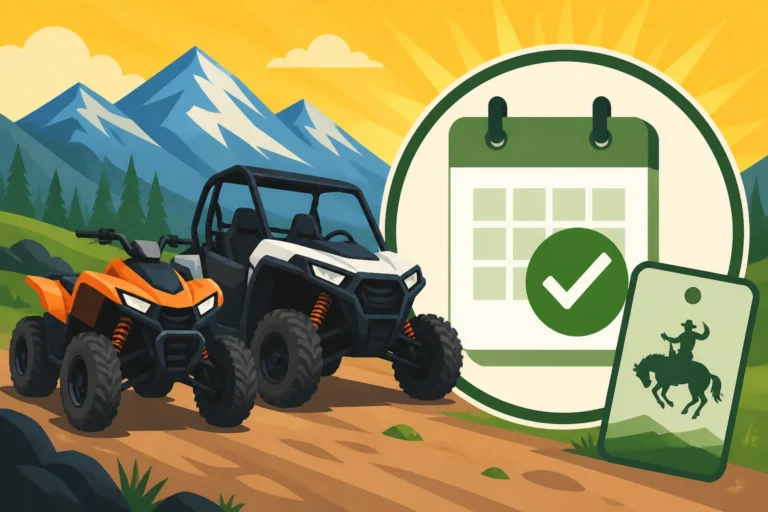
Essentially, if it's not a street-legal, plated vehicle, and you're planning to ride it off-pavement on public lands in Wyoming, the universal ORV permit is what you'll need. This permit is an annual requirement, typically running from January 1st to December 31st of each calendar year, regardless of when you purchase it. So, if you buy a permit in July, it still expires on December 31st of that same year. Learn more at [Wyoming's Calendar-Year Permit].
Getting Your Wyoming ORV Permit: A Simple Process
Obtaining your Wyoming ORV permit is thankfully a straightforward process, designed for convenience so you can spend less time on paperwork and more time on the trails. Since the price is universally fixed, you won't encounter any surprise costs based on your machine at the point of purchase. The typical cost for this annual permit is around $15, a small investment for access to thousands of miles of incredible terrain.
The permit is issued as a decal that you'll affix to your machine. This decal serves as your proof of registration for the calendar year. There are several accessible avenues for purchasing these permits, ensuring that whether you're a local or just passing through, you can easily get what you need. Remember, this decal is specific to the machine, not the rider. If you own multiple ATVs or UTVs, each one will need its own separate permit and decal.
Where and How to Purchase Your Permit
Wyoming understands that riders come from all over, and their permitting system reflects this by offering multiple convenient locations to purchase your ORV permit.
- Online: For many, the easiest way to get a permit is online through the official Wyoming State Parks, Historic Sites & Trails website. This allows you to purchase from the comfort of your home, and the decal is then mailed to you. It's a great option if you plan ahead. You can check [Buying a Wyoming Permit Online] for more details.
- Local Vendors: Throughout the state, numerous vendors, often powersports dealerships, sporting goods stores, or even small-town convenience stores, are authorized to sell ORV permits. These are frequently found near popular riding areas or along major travel routes, making it easy to grab a permit on your way to the trailhead.
- State Offices: Many Wyoming State Parks and Historic Sites, as well as some Forest Service or BLM (Bureau of Land Management) offices, also sell these permits. If you're visiting one of these locations, it can be a convenient stop. [Where Wyoming Sells ORV Permits] provides more information on locations.
- County Offices: While not the primary point of sale for all ORV permits, some county clerk or treasurer offices might facilitate sales, though this varies. For specific information, it's always best to check with the local county office or the State Parks website.
When you purchase your permit, you'll generally need to provide some basic information about your machine, such as the make, model, year, and VIN (Vehicle Identification Number). This information ensures that the decal is correctly associated with your specific ORV. If you're buying a used ATV or UTV, make sure you have a proper bill of sale. Resources like LawDepot can be invaluable for generating a legally sound bill of sale, ensuring you have the necessary documentation when you acquire a machine before getting it permitted. It simplifies the transfer of ownership, which is key for ensuring your VIN details are accurate for the permit application.
What Your Wyoming ORV Permit Fee Does for Riders
It's natural to wonder where your money goes when you pay for any fee or permit. With the Wyoming ORV permit, you can rest assured that your investment directly supports the very trails and facilities you enjoy. The flat permit price, typically $15, isn't just a charge for entry; it's a contribution to the sustainability and enhancement of the state's vast off-road recreation system. This funding model is critical for maintaining access and ensuring a high-quality riding experience for everyone.
The Wyoming State Trails Program, managed by Wyoming State Parks, Historic Sites & Trails, is the primary beneficiary of these funds. This program is responsible for the planning, development, maintenance, and management of non-motorized and motorized trails across the state. This means that every permit purchased helps keep your favorite trails open, well-marked, and safe. You can explore [Where Wyoming ORV Permit Money Goes] for a more detailed breakdown.
Investing in Trail Infrastructure and Rider Experience
Your permit fee contributes to a wide array of essential services and improvements:
- Trail Maintenance: This is perhaps the most visible use of funds. Crews work tirelessly to clear fallen trees, repair washouts, grade trail surfaces, and address erosion, ensuring that trails remain passable and enjoyable.
- New Trail Development: As rider numbers grow and preferences evolve, there's always a need for new trail segments or connections to expand the riding network. Permit fees help fund the planning, environmental reviews, and construction of these new opportunities.
- Signage and Mapping: Clear and consistent signage is crucial for rider safety and navigation, especially in remote areas. Funds are used to install and maintain trail markers, directional signs, and interpretive panels. Similarly, these funds support the creation and distribution of up-to-date trail maps, which are vital for planning your adventures.
- Trailhead Facilities: Imagine arriving at a trailhead after a long drive, only to find no parking, no restrooms, or no information. Permit money helps fund the development and maintenance of basic trailhead amenities, such as parking areas, vault toilets, and picnic tables, enhancing the overall experience.
- Enforcement and Education: A portion of the funds also goes towards supporting enforcement efforts to ensure riders adhere to rules and regulations, protecting the natural environment and promoting respectful use. Educational programs help inform riders about safe practices and responsible recreation.
Consider a scenario where you're planning a multi-day trip on one of Wyoming's continental divide routes. You use a current map, easily follow trail markers, and find a well-maintained dispersed camping area. All of these elements, from the clear path to the amenities, are made possible by the collective contributions of ORV permit holders. This communal investment fosters a stronger, more vibrant off-road community in Wyoming.
Key Considerations for Wyoming ORV Permits
While the flat fee system is straightforward, there are a few important details that every rider, particularly those new to Wyoming, should keep in mind to ensure a smooth and legal riding experience. Understanding these nuances will prevent any unwanted surprises or fines while you're out exploring the vast wilderness.
First and foremost, the permit is an annual permit, effective for the calendar year, not for 12 months from the date of purchase. This means a permit bought in August will still expire on December 31st of that same year. It's an important distinction that sometimes catches people off guard. You can even buy next year's permit early, typically starting in the late fall, so you're ready to go as soon as the new year begins. See [Wyoming Permits Already on Sale for 2026] for more information.
Secondly, Wyoming does not recognize ORV registrations or permits from other states. This is a common point of confusion for non-resident riders. Even if your ATV or UTV is fully registered and permitted in your home state, you still need a Wyoming ORV permit to ride on public lands within Wyoming. This no-reciprocity policy is a critical piece of information for visitors. This ensures that all users of Wyoming's trail system contribute to its upkeep, regardless of where they hail from. Information on this is available in [Wyoming ORV Permit for Nonresidents].
Permit Details at a Glance
To make things easy, here's a quick summary of essential Wyoming ORV permit details:
| Feature | Description |
|---|---|
| Cost | One flat fee for all eligible ORVs, typically $15. |
| Duration | Annual, calendar-year permit (January 1 to December 31), regardless of purchase date. |
| Required For | All ATVs, UTVs, and dirt bikes (and similar off-road machines) used on designated public trails and routes in Wyoming. |
| Purchased From | Wyoming State Parks website, authorized local vendors (dealers, sporting goods stores), some state/federal land management offices. |
| Proof | A physical decal affixed to the machine, visible for inspection. |
| Reciprocity | None. Wyoming does not honor out-of-state ORV permits or registrations. Every machine riding public lands in Wyoming needs a Wyoming permit. |
| Purpose | Funds trail maintenance, development, signage, and facilities through the Wyoming State Trails Program. |
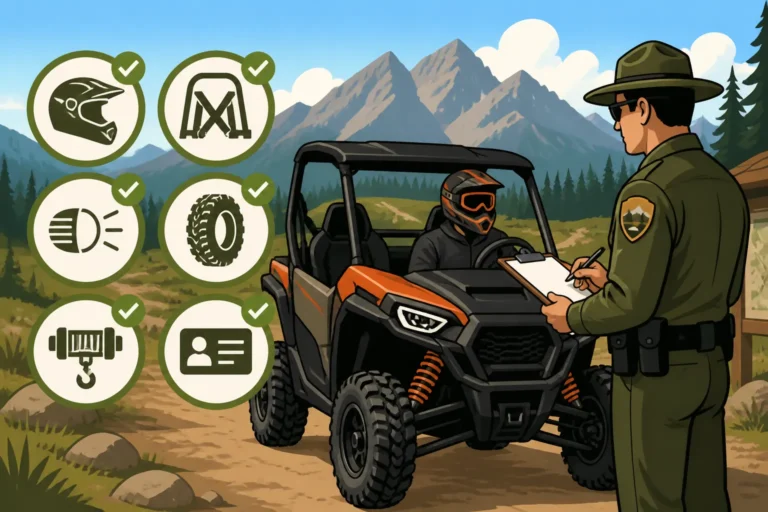
This table provides a quick reference for the core components of Wyoming's ORV permitting system. Always ensure your decal is properly affixed to your machine in a visible location, as wardens and rangers do check for compliance. Riding without a current permit can lead to fines, which no one wants on their outdoor adventure. If you're setting up a new machine, or perhaps just bought a used one, make sure your ownership paperwork is in order. A robust bill of sale, often available through services like LawDepot, can be crucial for smooth processing if any questions arise about your vehicle's history or ownership when applying for the permit.
Remember, the goal of this system is to provide and maintain an incredible network of trails. By understanding and complying with these straightforward rules, you're not only ensuring your own legal access but also contributing to the future of off-road recreation in one of the most beautiful states in the country. Before you head out, double-check your permits, pack your gear, and get ready to experience the unmatched beauty of Wyoming's backcountry. If you're uncertain about anything, a quick call to Wyoming State Parks or checking their website is always a good idea. For those seeking specific cost details, [Wyoming ORV Permit Cost] can offer more insights.
Disclaimer
This article is for general informational purposes only and does not constitute professional advice. Laws, prices and regulations vary by location and change over time. Consult a qualified professional for guidance on your specific situation.