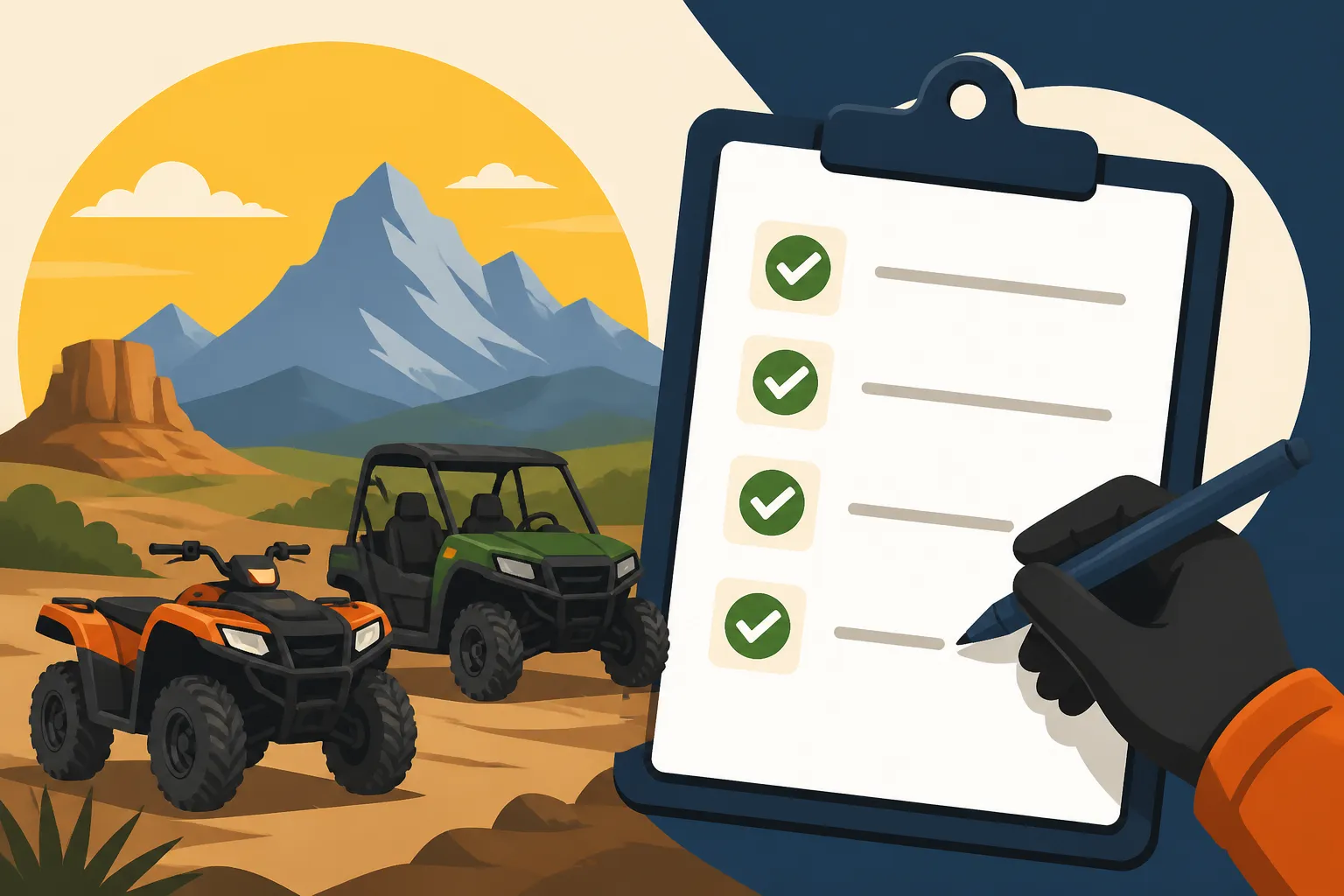
Filling Out the Checklist Form
It’s a familiar scenario for many of us here in Wyoming who love our off-road machines: you’re excited to hit the trails, maybe even ride some designated roads, but the thought of deciphering government paperwork gives you a headache. Trying to figure out which form applies to your specific ATV or side-by-side, especially if you want to make it street-legal, can feel like navigating a muddy two-track without a map. This guide is here to walk you through the often-misunderstood Wyoming Off-Road Vehicle/Multipurpose Vehicle (ORV/MPV) Checklist Form, helping you understand its purpose and how to fill it out correctly to get your machine ready for adventure.
Understanding the Wyoming ORV/MPV Checklist Form
When you're dealing with anything official for your off-road machine in Wyoming, it can feel like there are a hundred different rules and forms. The ORV/MPV Checklist Form is one of those pieces of paper that, at first glance, might seem like just another hurdle. But understanding its purpose is key to unlocking the full potential of your quad or side-by-side here in the Cowboy State.
What Exactly is This Form, and Why Do You Need It?
At its heart, the Wyoming ORV/MPV Checklist Form is a verification document. It’s not the form that registers your machine for a trail permit, nor is it the application for a title directly. Instead, it serves as a crucial step for certain machines to transition from being simply an "Off-Road Vehicle" to a "Multipurpose Vehicle" (MPV). Why does this distinction matter? Because in Wyoming, an MPV is the classification that allows specific off-road machines to be legally titled and then plated for road use, opening up a whole new world of riding opportunities beyond the traditional trail system.
Think of it this way: your standard ATV or dirt bike (an ORV) needs an annual [Wyoming's Annual ORV Permit] to ride on designated trails. That's a decal you stick on the machine. But if you have a side-by-side, or perhaps a larger quad, and you want to ride it on roads that are enrolled for MPV use, you need more than just a decal. You need a full-blown title and a license plate, just like a car. The Checklist Form is the first hurdle in proving to the state that your specific machine qualifies for that MPV status. It’s designed to ensure your machine meets very specific physical criteria before it can even be considered for a title and plate. Without this checklist, properly filled out and signed, your machine can't make that leap to becoming a road-legal MPV. It's truly foundational for anyone looking to go beyond just trails.
The Crucial Distinction: ORV Permit vs. MPV Title
This is where a lot of riders get tangled up, and it’s a point worth clarifying because it dictates which paperwork you even need. As we just touched on, an ORV permit is primarily for riding on designated trails and off-road areas. Every machine classified as an ORV – be it an ATV, dirt bike, or side-by-side – needs this permit to be legal on public land. It's an annual fee, and you get a decal. Simple, right? You can pick these up at a wide variety of places, from county offices to authorized dealers, and even online.
The MPV title and plate, however, are a different beast entirely. This isn't about trail access; it's about road access. Wyoming law created the MPV class to allow certain larger, more stable off-road machines to be operated on public roads if they meet specific criteria and if those roads are designated for MPV use. This means you’ll be dealing with two different government offices: the county clerk for the title and the county treasurer for the plate. The Checklist Form is directly tied to this MPV classification. If you only plan to ride trails and never intend to put your machine on a public road, then you likely won't need to bother with this specific checklist. You'll stick with your annual ORV permit, and that's perfectly fine. But if you dream of riding from your campsite directly into town for supplies, or connecting different trail systems via an enrolled county road, then embracing the MPV process, starting with this checklist, becomes essential. It's the gateway to expanding your riding territory significantly.
When and Where to Get Your Hands on the Checklist
The ORV/MPV Checklist Form isn't something you'll typically find sitting on a rack at your local powersports dealer. Because it's specifically for the MPV titling process, you'll generally find it through Wyoming's Department of Transportation (WYDOT) or by asking at your local [County Clerk or County Treasurer in Wyoming] office. These offices are the ones that handle the titling and plating of vehicles, so they're the primary source for the forms related to that process.
You might be wondering if you need to physically go to an office to get it. While it's always a good idea to confirm with your specific county, these forms are often available for download from the WYDOT website. This is usually the easiest way to obtain it, allowing you to print it out and fill it in at your leisure. The key is to make sure you have the most current version of the form, as regulations can occasionally be updated. Don't just grab the first one you see online from an old forum post! A quick call to your county clerk's office can confirm where they prefer you obtain the form. It’s always best to be prepared and have the correct paperwork in hand, rather than showing up at the counter only to be told you have the wrong version or need to fill out something else first.
Navigating the Core Sections: Your Machine's Identity
Once you have the Wyoming ORV/MPV Checklist Form in front of you, the task becomes less about "what is this?" and more about "how do I fill it out?" This form is designed to capture very specific details about your machine, ensuring it meets the definition of an MPV under Wyoming law. Taking your time through each section is crucial to avoid any hiccups later on.
Identifying Your Off-Road Vehicle: VIN, Make, Model
The first few sections of the checklist are all about identifying your machine. This might seem straightforward, but accuracy here is paramount. You'll be asked for information like the Vehicle Identification Number (VIN), make, model, and year of your off-road vehicle.
- VIN (Vehicle Identification Number): This is the most critical piece of identifying information. Just like a car, every ATV or UTV has a unique VIN. You'll typically find this stamped on the frame of your machine, often near the front suspension, on the frame rail, or under the seat. It’s a series of 17 characters (letters and numbers). Double-check, even triple-check, that you transcribe this correctly onto the form. A single間違えた character can cause significant delays in the titling process. If you’re buying a used machine, always verify the VIN on the machine matches any existing paperwork, like a bill of sale or prior registration. You might want to do a [Wyoming ATV VIN Check Before Buying] for extra peace of mind.
- Make and Model: This is simply the brand (e.g., Polaris, Can-Am, Yamaha) and the specific model name (e.g., RZR, Maverick, Grizzly). This should be easy to find on your machine itself or in its owner's manual.
- Year: The manufacturing year of your machine. Again, this is usually on a sticker or easily found in the owner's manual.
Why are these details so important? The VIN is essentially your machine's fingerprint. It's how the state tracks its history, ensures it hasn't been reported stolen, and properly records its ownership. Any discrepancies here will send you back to square one, requiring more research or even a physical inspection. Being meticulous in this initial section sets a strong foundation for the rest of the process. Remember, official documents like a bill of sale, which you might have created using a service like LawDepot for clarity, will also contain this identifying information and should ideally match.
The MPV Criteria: Weight, Seat Height, and Wheel Count
Now we get to the heart of what makes an MPV different from a standard ORV, and this is where the checklist truly earns its name. Wyoming law has very specific definitions for what constitutes a Multipurpose Vehicle, and this section of the form asks you to verify that your machine meets those thresholds.
- Weight Between 300 and 3,000 Pounds: This is a key distinguishing factor. The law dictates that an MPV must have an unladen (empty) weight of at least 300 pounds but not exceed 3,000 pounds. Most side-by-sides easily fall within this range, but some smaller ATVs might be under 300 pounds, and some heavily accessorized or larger utility UTVs might push the upper limit. You’ll need to provide an accurate weight. How do you get this? You can [Weighing a Machine Before You Register It] at a commercial scale, like a truck stop or recycling center, or by checking the manufacturer's specifications. Don't guess here; an incorrect weight will invalidate your claim to MPV status.
- Seat Height and Wheel Count: The form will also inquire about the number of wheels and the minimum seat height. An MPV must have at least four wheels (so dirt bikes are out) and the seat must be at least 24 inches from the ground when measured to the lowest point of the seat. This rule is designed to distinguish MPVs, which are generally more stable and often designed for multiple passengers, from smaller, more nimble ORVs. For most side-by-sides and larger utility quads, meeting the [Wyoming MPV Seat Height Rule] isn't an issue. You can [Measuring Seat Height From the Ground] yourself with a tape measure, ensuring you measure from the ground to the lowest point of the seat. The form essentially asks for confirmation of these facts. It’s crucial because these aren’t arbitrary rules; they are part of the [Wyoming's MPV Definition in W.S. 31-1-101] and are fundamental to the machine being considered road-worthy.
| MPV Requirement | Detail | Why it Matters |
|---|---|---|
| Wheels | At least 4 | Ensures stability for road operation; excludes dirt bikes. |
| Unladen Weight | Between 300 and 3,000 pounds | Differentiates larger, utility-focused machines from smaller ORVs. |
| Seat Height | Minimum 24 inches from ground to lowest point of seat | Relates to rider position and visibility for road use. |
| Steering | Steering wheel (not handlebars) or handlebars for specific ATVs | Defines how the machine is controlled, impacting road safety. |
Note: While many ATVs have handlebars, side-by-sides have steering wheels. The form will likely confirm the type of steering mechanism your machine uses, which is another differentiator within the MPV class.
Verifying Your Ownership: Bills of Sale and Other Documents
While the checklist form itself is mostly about the physical attributes of your machine, you can't get a title without proving ownership. The form might ask you to indicate what ownership documents you'll be submitting, or it might be an implicit requirement that you understand as you prepare for the titling process. This is where your bill of sale, previous title (if applicable), or other ownership paperwork comes into play.
If you’ve purchased your machine from a dealer, they will typically provide you with the necessary MSO (Manufacturer’s Statement of Origin) or a title from the previous owner, along with a bill of sale. If you bought it used from a private party, a clear and comprehensive bill of sale is absolutely essential. Wyoming generally doesn't title most ORVs, so for many used machines, the bill of sale is your primary proof of ownership. Make sure it includes:
- The full names and addresses of both buyer and seller.
- A complete description of the machine (make, model, year, and especially the VIN).
- The purchase price.
- The date of sale.
- Signatures of both parties.
Having a robust bill of sale can prevent headaches down the road. If you need a template, services like LawDepot offer customizable legal forms that can help you draft a professional and compliant bill of sale, ensuring all the necessary details are covered. This document, along with your completed MPV checklist, will be vital when you head to the county clerk's office to apply for your [Wyoming Paperwork for an MPV Title]. Without solid proof of ownership, even if your machine perfectly meets all the MPV criteria, you won't be able to secure a title, let alone a license plate.
Common Hurdles and How to Overcome Them
Filling out government forms can be intimidating, and the Wyoming ORV/MPV Checklist Form is no exception. It’s easy to get stuck or make a mistake that could delay your progress. But don't despair! Many of these hurdles are common, and with a little preparation and understanding, you can navigate them smoothly.
Dealing with Missing Information or Unsure Measurements
One of the biggest frustrations riders face is when they don’t have all the exact information requested on the form, or they’re unsure about how to take a precise measurement. This is particularly true for older machines or those purchased without complete documentation.
- Missing Manufacturer Specs: If you can’t find the original manufacturer specifications for your machine's unladen weight, your best bet is to get it weighed. As mentioned, truck stops, recycling centers, or even some agricultural supply stores might have scales you can use. Call ahead to confirm. Do not guess the weight; an estimate is unlikely to be accepted.
- Uncertain Seat Height: While it seems simple, measuring seat height accurately can be tricky. Ensure your machine is on a flat, level surface, and the tires are properly inflated. Measure from the ground to the absolute lowest point of the seat. If the seat is contoured, you're looking for the lowest part where a rider would sit. Take a photo of your measurement if you're concerned about proving it later. Remember, it needs to meet the [Wyoming MPV Seat Height Rule] of at least 24 inches.
- VIN Difficult to Read: Over years of riding, dust, mud, and wear can make the VIN on the frame difficult to read. Clean the area thoroughly. If it’s still obscured, you might need to take it to a reputable dealer or mechanic who can help locate and verify it, possibly with specialized tools or by cross-referencing with other parts of the machine.
The key here is proactive problem-solving. Don't leave blanks or put down vague answers. If you’re truly stumped, it's far better to reach out to your county clerk's office for clarification before you submit the form. They deal with these questions regularly and can often provide guidance specific to your situation. Remember, the goal is to provide clear, verifiable information.
The Role of This Form in the Two-Step MPV Process
It’s crucial to understand that filling out and submitting the ORV/MPV Checklist Form is only the first step in a larger, two-step process to get your machine legally on Wyoming roads. This form does not, by itself, grant you a title or a plate.
Here’s how it generally works:
- Step 1: The Checklist & Title Application (County Clerk): You will take your completed ORV/MPV Checklist Form, along with your proof of ownership (bill of sale, MSO, etc.), to your county clerk's office. This is where you apply for the actual [Titling an ORV in Wyoming] (specifically, an MPV title). The clerk will review the checklist to ensure your machine qualifies as an MPV under state law. If everything checks out, they will then process your title application. You'll receive a physical title for your MPV. This step is about confirming your machine's identity and its legal class.
- Step 2: Registration & Plates (County Treasurer): After you have received your MPV title from the county clerk, you then take that title to the county treasurer's office. This is where you will register your MPV and obtain your license plates. The treasurer handles vehicle registration and collects the necessary fees for road use. It’s a distinct process from the titling. Without the title from the clerk, the treasurer cannot issue you a plate.
This distinction can be confusing because many states combine these steps. In Wyoming, it truly is two separate stops, often in two different departments, or even different buildings. Understanding that this checklist is specifically for the first part of that journey will help manage your expectations and ensure you bring the right documents to the right place at the right time. Don't rush to the treasurer with just the checklist form, or you'll be told to go see the clerk first! This two-step process is why Wyoming is unique in how it handles MPV registration. You effectively interact with two separate "counters" or departments to finalize your road-legal status – one for the title and one for the plate, as detailed in [Two Counters for One Machine].
Preventing Delays: Double-Checking Before You Submit
There's nothing more frustrating than thinking you're done with paperwork, only to have it sent back for corrections. To prevent unnecessary delays when submitting your ORV/MPV Checklist Form, adopt a thorough double-checking strategy.
- Read Everything Twice: Before you even start filling it out, read the entire form, including any instructions or fine print. This helps you understand what's being asked and why.
- Verify All Information: Go back through every blank you filled in. Does the VIN match exactly? Is the make and model spelled correctly? Are your measurements accurate and within the specified ranges? Ensure your unladen weight is between [300 Pounds at the Low End] and [3,000 Pounds at the High End].
- Attach Supporting Documents: While the checklist itself is a verification, you'll need to submit it along with other key documents to the county clerk, primarily your proof of ownership. Make sure you have a clear, legible copy of your bill of sale or MSO.
- Sign and Date: This seems obvious, but it's often overlooked. Ensure all required signatures are present and dated correctly.
- Make a Copy: Always, always make a copy of the completed form and all supporting documents for your own records before you hand them over. This way, if anything goes missing or there’s a question later, you have your own proof.
Taking these few extra minutes to be meticulously thorough can save you days or even weeks of waiting and re-submitting paperwork. The more accurate and complete your submission, the smoother your journey will be from off-road enthusiast to road-legal MPV owner in Wyoming. It's all about making sure you're Filling Out the Checklist Form completely and correctly.
Disclaimer
This article is for general informational purposes only and does not constitute professional advice. Laws, prices and regulations vary by location and change over time. Consult a qualified professional for guidance on your specific situation.