Bringing a Machine From Utah
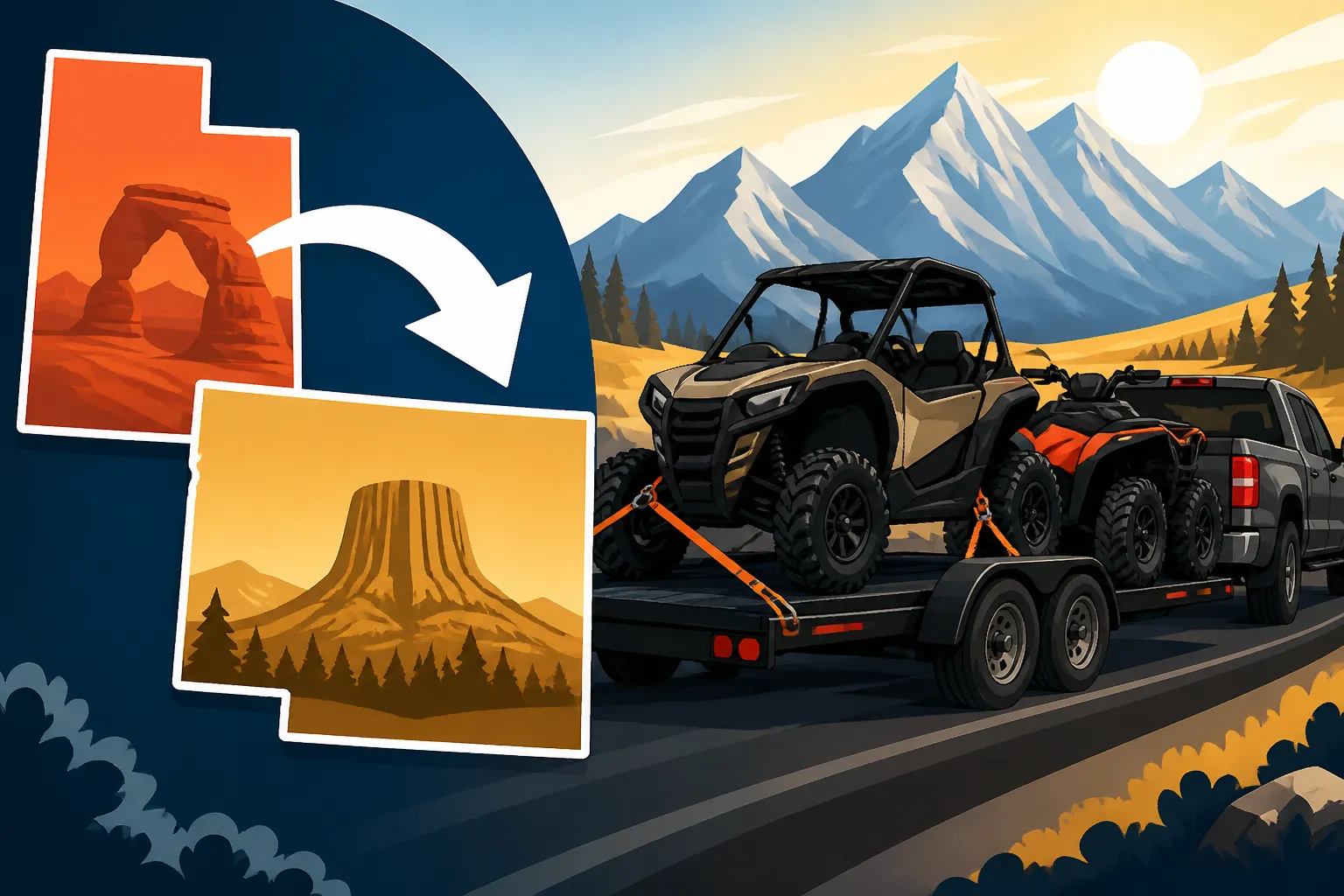
So, you've found your dream ATV or UTV in Utah, or perhaps you're just moving to Wyoming and bringing your trusty off-road companion with you. It’s an exciting prospect to hit those vast Wyoming trails! However, many riders quickly discover a common headache: Wyoming doesn't honor out-of-state registrations or permits for off-road vehicles. This guide is here to walk you through the distinct Wyoming requirements for getting your machine legally ready, whether for tearing up the trails or even hitting some designated roads.
Understanding Wyoming's Lack of Reciprocity for Out-of-State ORVs
It’s a point of frustration for many folks, especially those who frequently travel or relocate: Wyoming has a very specific stance on off-road vehicle (ORV) registration, and it doesn't include reciprocity with other states. This means that even if your ATV or UTV is perfectly legal and registered in Utah, that registration won't cut it once you cross the border into the Cowboy State for anything beyond private land use.
Why a Utah Permit Doesn't Cut It in Wyoming
When you're riding your off-road machine in Utah, you likely have a current registration and decal from that state, indicating you've paid your dues and are compliant with their local laws. You might assume, quite logically, that this would transfer or at least be recognized by a neighboring state like Wyoming. Unfortunately, that's not how it works here. Wyoming law mandates that every off-road vehicle operating on public lands or designated trails within its borders must carry a current Wyoming ORV permit decal. There's no exemption for out-of-state registrations, making [No Reciprocity in Wyoming, Stated Plainly] a crucial point to understand from the outset.
This isn't about disrespect for other states' systems; it's simply how Wyoming manages its own trails program. The fees collected from these permits directly fund trail maintenance, signage, and enforcement efforts right here in Wyoming. So, while your Utah sticker is valid for Utah's trails, it serves no legal purpose on a Wyoming trail. You might even find yourself buying a permit just a few miles into Wyoming on your way to a trailhead if you haven't planned ahead.
The Cost of Ignoring Wyoming's Rules
Thinking you can just slip by with your Utah sticker? Think again. Wyoming game wardens, Forest Service rangers, and BLM officers are well-versed in the state's ORV laws. They routinely check for current Wyoming ORV decals at trailheads, along popular routes, and during patrols. If you're caught riding on public lands without the proper Wyoming permit, you could face a citation and a fine. The cost of a fine for riding without a permit can quickly outweigh the relatively low cost of the annual decal itself.
Beyond the monetary penalty, there’s the inconvenience and potential for your day of riding to be cut short. Nobody wants a fun day on the trails interrupted by a law enforcement stop. It’s always best to be prepared and ensure your machine is properly permitted before you even unload it from your trailer at a Wyoming trailhead. It's not just about avoiding a ticket; it's about being a responsible trail user and contributing to the upkeep of the very trails you're enjoying.
How Wyoming's System Differs from Utah's
While both states manage off-road vehicle use, their approaches have distinct differences. Utah has its own registration requirements and a specific program for OHVs. Wyoming, on the other hand, operates with a two-tiered system for ATVs and UTVs: the ORV permit for off-road use and the Multipurpose Vehicle (MPV) title and license plate for machines that qualify to be street-legal on designated roads.
The Wyoming ORV permit is a calendar-year permit, meaning it's valid from January 1st to December 31st, regardless of when you purchase it. [Wyoming's Calendar-Year Permit] explains this in more detail. Utah's system might have different renewal dates or multi-year options, but in Wyoming, everyone's permit expires on the same day. This uniformity simplifies enforcement and program management for the state. Understanding these differences from your home state's regulations is key to a smooth transition when bringing your machine to Wyoming.
Getting Your Machine Ready for Wyoming's Trails: The ORV Permit
For the vast majority of riders bringing an ATV or UTV from Utah, the first step will be to obtain a Wyoming ORV permit. This permit allows you to legally operate your machine on the state's extensive network of enrolled trails and designated public lands. It's a straightforward process, but knowing the specifics will save you time and hassle.
What Qualifies as an ORV in Wyoming
Wyoming's definition of an Off-Road Recreational Vehicle (ORV) is quite broad and covers most ATVs, UTVs (or side-by-sides), and dirt bikes. Essentially, if it's a motorized vehicle designed for off-highway use, it likely falls under this category. This includes machines with four wheels, three wheels, or two wheels, as long as they are primarily intended for recreational use on unpaved surfaces. Even youth machines need an ORV permit if they'll be ridden on public land.
It's important to differentiate this from a "snow machine" (snowmobile), which has its own separate permit system, or vehicles that are fully street-legal cars or trucks. For your typical ATV or side-by-side that you'd bring over from Utah, you'll be looking at the ORV permit. The state wants to ensure that all machines using the trails are contributing to their upkeep, regardless of whether they are owned by a resident or a visitor. If you're wondering [Which Machines Wyoming Counts as Off-Road Vehicles], it's generally safe to assume your ATV or UTV qualifies.
The Simple Steps to Obtaining a Wyoming ORV Permit
Getting a Wyoming ORV permit is quite simple. You don't need a Wyoming driver's license, proof of residency, or even to have your machine titled in Wyoming for this permit (though titling might be required for MPVs, which we'll cover next). You just need the machine's VIN and a method of payment. You can purchase these permits in several convenient locations. Many local powersports dealerships, some county treasurer's offices, and even some Forest Service or BLM offices act as selling agents. You can also purchase one online through the Wyoming State Parks, Historic Sites & Trails website. [Where Wyoming Sells ORV Permits] provides more detailed locations.
When you go in person, you'll fill out a simple form, provide the VIN for your machine, and pay the fee. If you're buying online, the process is similar; you enter your information, machine details, and payment. The state then mails you the decal. Remember, this is a universal permit. [Wyoming ORV Permit for Nonresidents] confirms that out-of-state riders pay the exact same fee as residents – there are no surcharges for visitors. It's all about contributing to the trails fund.
Where to Place Your New Wyoming Decal
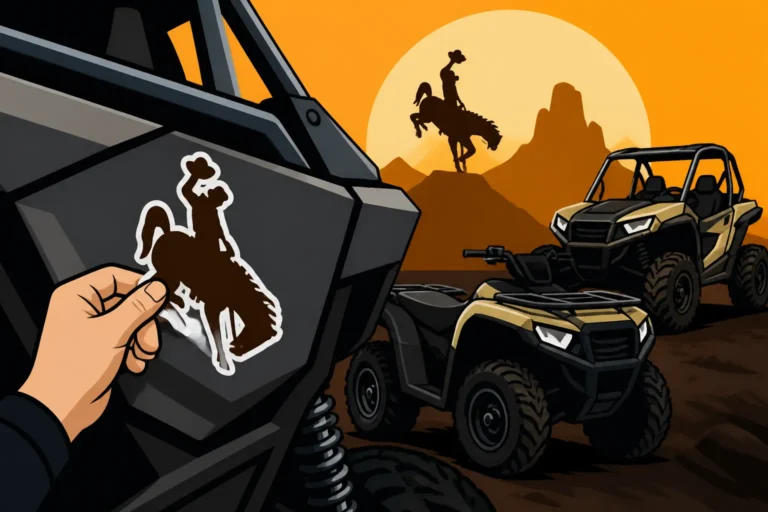
Once you receive your shiny new Wyoming ORV decal, proper placement is key. The decal needs to be clearly visible and permanently affixed to the machine. The ideal spot is typically on the left side of the machine, usually on the fender or a prominent, flat surface where it won't be easily obscured by mud, equipment, or your leg. The main goal is for a warden to be able to quickly and easily see that you have a current permit.
Make sure the surface is clean and dry before applying the decal for the best adhesion. Peeling or lost decals can be a hassle, so take the time to put it on correctly. If, for some reason, your decal gets damaged or falls off, it's important to request a replacement. Riding without a visible decal, even if you paid for it, can still lead to questions from enforcement officers. [Wyoming ORV Decal Placement] offers more specific advice on where to stick it so it lasts.
Making Your Machine Street-Legal: The Wyoming MPV Pathway
While the ORV permit gets you on the trails, you might have ambitions of riding your side-by-side on designated county roads, forest roads, or even crossing state highways in Wyoming. For this, your Utah-registered machine will need to become a Wyoming Multipurpose Vehicle (MPV). This is a more involved process than just getting an ORV permit, as it requires both titling and plating.
Deciphering Wyoming's MPV Definition
Wyoming created the Multipurpose Vehicle (MPV) class to bridge the gap between purely off-road machines and traditional street-legal vehicles. This designation allows certain ATVs and UTVs to operate on public roads where allowed, provided they meet specific criteria and are properly titled and plated. The core definition for an MPV is laid out in state statute [Wyoming's MPV Definition in W.S. 31-1-101]. Generally, an MPV must:
- Have four wheels.
- Weigh between 300 and 3,000 pounds.
- Have a seat or saddle at least 24 inches from the ground.
- Be manufactured for use on public roads.
This definition is crucial because not every ATV or UTV will qualify. For example, many traditional ATVs with straddle seats don't meet the "seat at least 24 inches from the ground" or the "manufactured for use on public roads" criteria, even if they have four wheels. Most side-by-sides, however, often fit the bill. You'll need to confirm your specific machine's characteristics.
The Two-Step Process: Title and Plate for an MPV
If your machine from Utah meets the MPV definition, you're looking at a two-step process in Wyoming. First, you need to obtain a Wyoming title, which is handled by your local County Clerk. This establishes legal ownership within the state. You'll need your Utah title (if applicable), or a manufacturer's certificate of origin (MCO), and a bill of sale. If your machine didn't have a title in Utah, or if you bought it from a private party without a clear chain of title, this step can be more complicated. LawDepot can be a helpful resource for ensuring you have a proper bill of sale or for understanding what documentation might be needed to prove ownership in a legally recognized way.
Once you have a Wyoming title, you'll then take that title to your County Treasurer's office to apply for a license plate and registration. This is the step that makes it street-legal for designated roads. Just like a car, you'll pay registration fees, and you'll be issued a Wyoming license plate for your MPV. [Titling a Multipurpose Vehicle in Wyoming] and [Wyoming MPV Plate Requirements] delve into these processes further, outlining the distinct roles of the County Clerk and County Treasurer.
Essential Equipment for a Road-Legal Machine
Simply having a title and plate isn't enough; your MPV must also meet specific equipment requirements to be road-legal in Wyoming. This is where it really starts to feel like registering a car. You'll need:
- Headlights and Taillights: Operational and properly adjusted.
- Stop Lamp (Brake Light): Must illuminate when the brakes are applied.
- Horn: A working horn is mandatory.
- Mirrors: At least one mirror showing a view of the highway to the rear and left side of the vehicle. Many riders choose to install two for better visibility.
- Windshield: While not explicitly required for all MPVs, some may benefit from one, and it's a good safety feature.
- Safety Belts: If equipped from the factory, they must be functional.
- Spark Arrester: Required for ORV use and a good idea for MPVs too.
- Muffler: Must meet sound level requirements.
In addition to these equipment needs, the driver must possess a valid driver's license with an "M" (motorcycle) endorsement or an "MR" (Multipurpose Vehicle Restricted) permit, and carry proof of liability insurance. If your machine doesn't have these items from the factory, you'll need to add them before it can truly be considered street-legal in Wyoming.
Navigating the Paperwork: What You'll Need to Bring
Whether you're just getting an ORV permit or going all the way for MPV titling and plating, having your paperwork in order is paramount. Coming from Utah, there are specific documents you'll want to have on hand to make the process as smooth as possible.
Proving Ownership: Bill of Sale and Utah Title
For an ORV permit, you primarily need the machine's VIN, but for MPV titling, solid proof of ownership is non-negotiable. If you purchased your machine in Utah, you'll ideally have a clear chain of documentation. This means your Utah title (if Utah titles ATVs/UTVs, which they generally do for most machines) and a comprehensive bill of sale. The bill of sale should clearly identify the buyer, seller, machine (make, model, VIN), purchase price, and date of sale.
If you bought the machine from a private seller, having a robust bill of sale is crucial. Resources like LawDepot can provide templates for a well-structured bill of sale, which can be invaluable, especially if the original one you received was informal or incomplete. A professional bill of sale covers all the bases and helps prevent future ownership disputes. Even if you're an existing owner moving from Utah to Wyoming, make sure you have these documents handy. [Wyoming ATV Bill of Sale Requirements] outlines what the state typically looks for in this document.
The Importance of a Clear VIN Check
The Vehicle Identification Number (VIN) is the unique fingerprint of your ATV or UTV. When bringing a machine from out of state, especially for titling as an MPV, the county clerk may require a VIN inspection. This inspection confirms that the VIN on your paperwork matches the VIN physically stamped on your machine and that the VIN hasn't been tampered with. This helps prevent theft and ensures that the machine you're trying to title is indeed the one you claim to own.
Before heading to the county office, it's a good idea to locate your VIN and ensure it's legible. Take a clear photograph of it for your records. If there's any discrepancy or difficulty reading the VIN, address it beforehand. Sometimes, a VIN check can be performed by law enforcement or designated inspection stations, depending on the county's specific requirements. This step is a safeguard for both you and the state. [Wyoming ATV VIN Check Before Buying] emphasizes the importance of verifying the VIN when acquiring any machine.
Forms and Fees: Being Prepared for the County Office
When you head to the county clerk for titling or the county treasurer for plating an MPV, or even a local vendor for an ORV permit, you'll encounter specific forms and fees. While the ORV permit form is straightforward, the MPV process will involve more detailed paperwork, including an application for title and registration. It's a good idea to check the website of the County Clerk and County Treasurer for the county you'll be residing in or frequenting to see if forms are available for download. This allows you to fill out what you can in advance.
Be prepared with the necessary fees, which can vary depending on whether you're titling, registering, or simply getting an ORV permit. Remember, these fees contribute to the state's infrastructure and services, so they're an essential part of getting your machine road- or trail-ready. Understanding the various legal documents and administrative processes can feel daunting, but platforms like LawDepot also offer general guidance on vehicle-related legal forms, which can help demystify the process for some people as they prepare.
| Requirement / Item | For Off-Road Use (ORV Permit) | For Street-Legal Use (MPV Title & Plate) |
|---|---|---|
| Wyoming Permit | Required (Decal) | Required (Decal) + License Plate |
| Out-of-State Reg. | Not Honored | Not Honored |
| Proof of Ownership | VIN for permit | Utah Title (if applicable), Bill of Sale |
| Wyoming Title | Not required | Required (from County Clerk) |
| Wyoming Plate | Not required | Required (from County Treasurer) |
| Equipment | Spark Arrester, Muffler | Headlights, Taillights, Stop Lamp, Horn, Mirrors, etc. |
| Driver's License | No specific endorsement needed | M Endorsement or MR Permit |
| Insurance | Not required | Required for road use |
| Fees | Annual ORV permit fee | Title fee, registration fee, plate fee |
This article is for general informational purposes only and does not constitute professional advice. Laws, prices and regulations vary by location and change over time. Consult a qualified professional for guidance on your specific situation.