Why a Road Opens Only When Two Agencies Agree
It’s a scenario many of us have faced: you’re out on a fantastic ride in the Wyoming backcountry, cruising along a dirt road, feeling the freedom that only this state can offer. Then, suddenly, the road you thought was open becomes a forbidden zone, or you pass a turn-off that looks perfect for your side-by-side, but you have no idea if it’s legal to ride. It’s frustrating, confusing, and can honestly take some of the joy out of planning an adventure. This guide is here to clear up one of the most common head-scratchers for ATV and UTV riders: why certain roads in Wyoming only become available for off-road vehicle use after two or more agencies give their official stamp of approval.
The Layered Landscape of Wyoming's Roads
Wyoming is vast, beautiful, and boasts an incredible network of roads and trails. But this very vastness also means a complex tapestry of land ownership and management. Understanding who is in charge of what piece of dirt is the first step to understanding why opening a road for your ORV isn't as simple as one person saying "yes."
Federal, State, and County Jurisdictions
Think about a typical multi-day riding trip. You might start in a state park campground, ride out onto a Bureau of Land Management (BLM) two-track, cross a county road, and then venture deep into a National Forest. Each of these different areas – state, federal, and county – operates under its own set of rules and regulations. The U.S. Forest Service manages national forests and grasslands, the Bureau of Land Management oversees its vast public lands, the Wyoming Department of Transportation (WYDOT) handles state highways, and each of Wyoming's 23 counties has jurisdiction over its local road networks. It's not a single "Wyoming" decision; it's a series of decisions made by these individual entities.
When you're out there, it's easy to see a dirt road as just a dirt road. But in reality, each one is often like a property line, with different rules applying on either side. A road managed by the Forest Service might be perfectly open for your ATV, but the moment it crosses into a section managed by the county, the rules can change entirely, requiring a different type of designation or even specific equipment. This patchwork means that coordinating access becomes a dance between multiple governmental bodies.
Even within federal lands, you'll find variations. Some areas are managed for multiple uses, including recreation, while others might prioritize wildlife habitat or grazing, leading to different access restrictions. This is why you can be in the same general area, say near the Bighorn National Forest, and find that some roads are clearly marked for ORVs, while others are closed off or restricted to specific types of vehicles. It all comes down to the individual management plans and the designations those specific agencies have made.
The "Enrolled" Route System
In Wyoming, it’s not just about what land agency manages the road; it’s also about whether that road has been "enrolled" into the state’s ORV program. This is a crucial concept for riders. Having your [Wyoming's Annual ORV Permit] sticker on your machine is a must for riding public lands, but that permit doesn't automatically grant you access to every road or trail. Instead, it allows you to ride on routes that have been specifically designated, or "enrolled," for ORV use.
The process of enrollment means that the managing agency — be it the Forest Service, BLM, State Parks, or even a county — has formally agreed to open that specific route to ORV traffic and has received approval through the proper channels. This often involves careful consideration of environmental impacts, potential conflicts with other users, and ensuring the route is sustainable for ORV use. If a route isn't enrolled, even if it looks like a perfect trail, it's often off-limits.
This system exists to help protect our natural resources, minimize user conflicts, and ensure that ORV use is managed responsibly. It means that while you might be staring at a beautiful two-track winding through sagebrush, unless it's designated and marked as an open route on official maps, it's best to assume it's closed to your machine. Checking official maps and signage is absolutely paramount before you head out, because that "enrolled" status is what truly unlocks the freedom to ride.
Why Cooperation is Key: The "Two Agencies" Rule
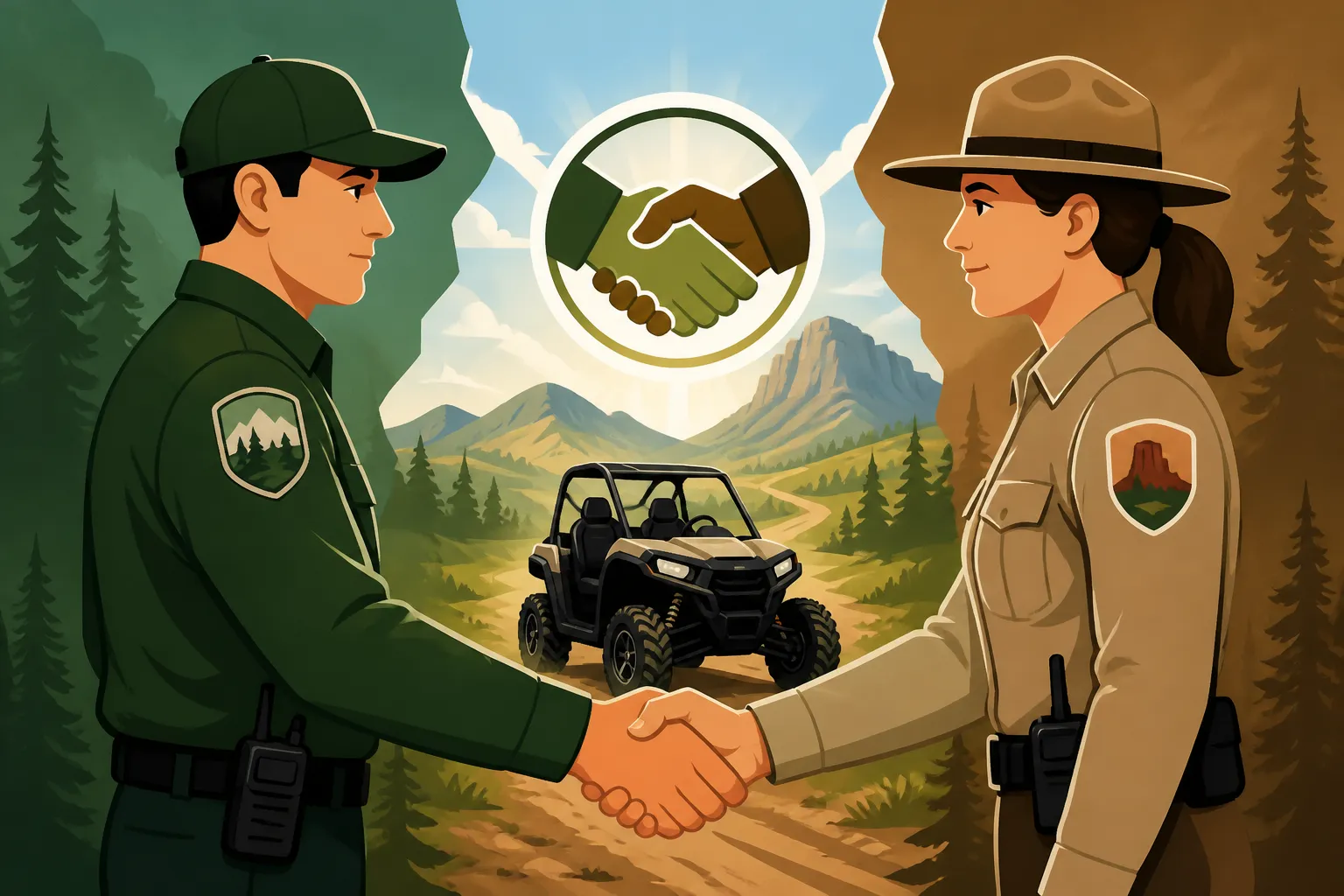
The concept of "two agencies" agreeing stems from the need to balance various interests and responsibilities across different levels of government. It's not about making things complicated; it's about ensuring safety, maintaining infrastructure, and respecting diverse community needs.
The Interplay of Land Management and Local Governance
Imagine a scenario: the U.S. Forest Service has identified a fantastic old logging road within its boundaries that would connect two popular ORV trail systems. On Forest Service land, they have the authority to manage this road. However, what if this logging road eventually feeds into a county road, or crosses a bridge that's maintained by the county, or even passes through an area where local ranchers depend on quiet access for their livestock? Suddenly, the decision isn't just the Forest Service's alone.
The land manager (like the Forest Service or BLM) focuses on their specific mandate – managing natural resources, providing recreation, protecting wildlife. But a county's concerns are broader: they're responsible for local emergency services, road maintenance budgets, managing potential conflicts between residents and recreational users, and the general welfare of their local communities. They might worry about increased traffic on a rural road, dust affecting nearby homes, or the cost of repairing roads not built for heavier ORV use. This is where the interplay becomes critical; the vision of a land management agency needs to align with the practical realities and concerns of local governance.
Without this cooperation, you could have a situation where federal lands open up a route, only for riders to hit a dead end or an unmanageable section once they reach county jurisdiction. It's about creating a seamless, safe, and sustainable experience that respects all stakeholders. This collaborative approach, though sometimes slow, is designed to ensure that when a road does open, it's been thoroughly vetted from multiple angles.
County Consent: A Prerequisite for Many Openings
If you've ever wondered [Why a County Must Say Yes First] for an ORV route to open, it boils down to local control and local impact. Many of Wyoming's most appealing riding areas, like those near the [Killpecker Sand Dunes in Southwest Wyoming], are accessed via county roads. Even if the actual riding happens on federal land, the approach often involves traveling on roads maintained by the local county. Therefore, if a land management agency wants to open a new route or expand an existing one that uses or impacts county infrastructure, the county often has to sign off.
County commissioners and public works departments are acutely aware of the condition of their gravel roads, the budget for grading, and the concerns of their constituents. They might hear from ranchers about livestock safety, from rural residents about noise or dust, or from emergency services about response times. An influx of ORV traffic, while bringing economic benefits, can also bring challenges. They might require studies on traffic volume, dust mitigation plans, or even agreements on who will bear the cost of increased road maintenance.
This local oversight acts as an essential check and balance. It ensures that the enthusiasm for a new trail doesn't inadvertently create problems for local residents or strain county resources. For instance, a proposed trail segment might look great on a map, but the county might know that particular section of road becomes impassable with spring runoff or is critical access for a local energy operation. Their consent is often the linchpin, and securing it requires transparent communication, addressing local concerns, and demonstrating that ORV use will be responsible and well-managed.
The Process of Opening a Road for ORVs
So, what exactly happens when a road or trail is considered for ORV use in Wyoming? It's a structured, often multi-stage process that involves requests, assessments, public input, and formal agreements. It's far more involved than simply putting up a new sign.
The Request and Assessment Phase
The journey to opening a new ORV road often begins with a request. This could come from a local ATV club eager to link up two existing trail systems, a business looking to expand guided tours, or even the land management agency itself identifying an opportunity. Once a proposal is on the table, the hard work of assessment begins. This isn't a quick once-over; it's a deep dive into various factors.
Agencies will conduct environmental reviews to ensure that opening the route won't harm sensitive ecosystems, wildlife habitats, or water quality. They'll consider archaeological sites, erosion potential, and the impact on endangered species. Traffic engineers might assess how increased ORV use could affect public safety, especially if the route crosses or shares segments with roads used by other vehicles. This could mean looking at sight distances, potential congestion, and the need for new signage. For riders thinking of outfitting their machines for serious backcountry travel, perhaps with robust suspension upgrades from SuperATV, this initial assessment phase ensures the route can handle the expected traffic and machine types.
Feasibility studies also come into play, examining things like terrain suitability, the need for new infrastructure (culverts, bridges, parking areas), and available funding for maintenance. For example, if a proposed route crosses a stream, the agencies need to evaluate whether a ford is suitable or if a new bridge is required to prevent environmental damage and ensure safety. This detailed analysis ensures that any decision to open a road is based on sound data and a comprehensive understanding of all potential impacts.
Public Input and Political Considerations
Beyond the technical assessments, the human element plays a significant role in opening ORV routes. This is where public input, and sometimes even local politics, come into play. When a new route is proposed, land management agencies and counties will typically hold public meetings, workshops, or open comment periods. This gives local residents, other recreational users (like hikers, equestrians, or mountain bikers), environmental groups, and ORV enthusiasts a chance to voice their opinions, concerns, and support.
It's not uncommon for these meetings to reveal passionate disagreements. Residents living near a proposed route might express concerns about increased noise, dust, or potential safety hazards. Hunters might worry about disruptions to wildlife or access to traditional hunting grounds. ORV riders, on the other hand, will often highlight the economic benefits to the local community, the recreational opportunities, and their commitment to responsible riding. This public discourse is vital for ensuring that all perspectives are heard and considered, even if it adds time to the process.
Ultimately, elected officials, like county commissioners, must weigh these diverse viewpoints. Their decisions can be influenced by constituent concerns, the perceived economic impact, and the overall vision for their community. A proposal that sails through one county might face significant hurdles in another, depending on local priorities and historical relationships with different user groups. This political dimension underscores why an agreement between agencies often requires not just technical feasibility but also broad community buy-in and a careful navigation of local interests.
Formal Agreements and Enforcement
Once all assessments are complete, public input reviewed, and political hurdles cleared, the decision to open a road for ORV use culminates in formal agreements between the involved agencies. These are often detailed legal documents, such as Memorandums of Understanding (MOUs) or interagency agreements. These documents outline responsibilities for maintenance, signage, enforcement, and any specific conditions for ORV use.
For instance, an agreement might specify that the Forest Service will maintain the forest road portion, while the county agrees to grade the connecting segment monthly during peak season. It could also outline how funds from [Registering an ORV in Wyoming] are shared or used for trail maintenance. These agreements are crucial for ensuring that once a road is open, it remains well-managed and safe for riders. They prevent ambiguity and ensure that each agency knows its role.
Finally, effective enforcement is a shared responsibility. Once a road is formally opened and clearly marked, it's up to local law enforcement, Forest Service rangers, or BLM officers to ensure riders adhere to the rules. This includes checking for required [Wyoming's Muffler and Spark Arrester Rules], valid [Wyoming Fines for Riding Without a Permit], and ensuring riders stay on designated routes. Without clear agreements, coordinated enforcement would be much harder, leading to confusion and potentially endangering riders and the environment. Knowing that multiple agencies are working together on both opening and managing these routes helps riders trust that the system is well-regulated and that their recreational opportunities are being protected.
Navigating the Open Roads: What Riders Need to Know
Understanding the multi-agency approval process is one thing, but as riders, our responsibility is to stay informed and ride respectfully. This ensures that the efforts of these agencies lead to sustainable and enjoyable opportunities for everyone.
Checking Maps and Signs Diligently
The single most important thing you can do as a rider in Wyoming is to check your maps and pay attention to signage. Just because a road looks like an ORV route doesn't mean it is. Different land management agencies provide specific maps that detail where ORVs are permitted. For federal lands, you'll often refer to Motor Vehicle Use Maps (MVUMs), which are indispensable. These maps are the official word on where you can and cannot ride. It's not enough to simply guess or rely on outdated information.
Think of it this way: just like you wouldn't drive your car down a one-way street the wrong way, you shouldn't ride your ORV down a closed trail. Always seek out the most current [Wyoming Trail Maps and MVUMs] before you head out, and download them to your phone or GPS device, as cell service can be spotty in the backcountry. On the ground, look for physical signs: "OPEN," "CLOSED," "Designated Route Only," or specific vehicle restrictions. Sometimes, a beautiful two-track might be marked for non-motorized use only, or have seasonal closures to protect wildlife. Assuming a route is open when it isn't could lead to a citation and dampen your day, potentially resulting in [What a Wyoming Citation for an Expired Decal Costs].
| Road Type | Primary Management Agency | Common Co-Approving Agencies | Typical Permit Required (Wyoming) |
|---|---|---|---|
| National Forest | U.S. Forest Service | County, WYDOT | Wyoming ORV Permit |
| BLM Land | Bureau of Land Management | County, WYDOT | Wyoming ORV Permit |
| County Road | Local County Commissioners | WYDOT, Federal (if connecting) | Wyoming ORV Permit, Vehicle Registration (MPV) |
| State Highway (Crossing/Short Segment) | Wyoming Department of Transportation (WYDOT) | County, Federal (if crossing federal land) | Wyoming ORV Permit, Vehicle Registration (MPV) |
| State Trust Land | Wyoming Office of State Lands & Investments | N/A (requires separate permit) | Wyoming Recreational Use Permit |
Understanding Equipment and Licensing
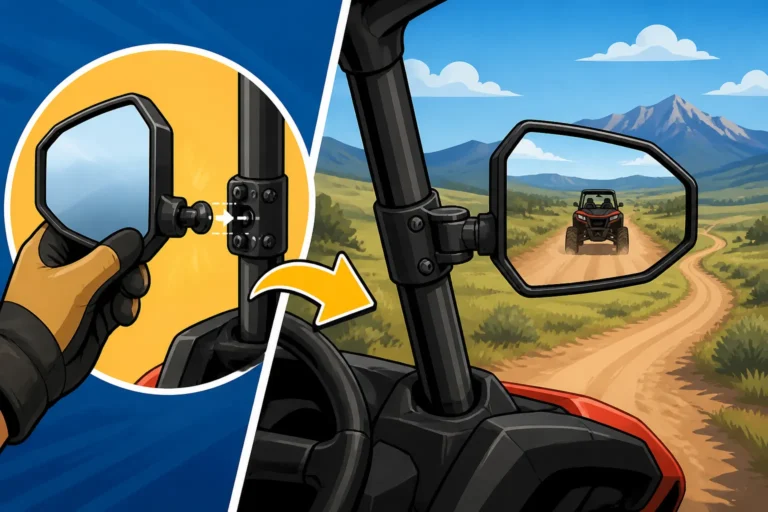
When you're riding on roads that are shared with other vehicles, even if they are designated for ORVs, you often need to meet specific equipment and licensing requirements. Wyoming has a special class of vehicle, the Multipurpose Vehicle (MPV), which can become street-legal under certain conditions. These conditions often include having proper mirrors, turn signals, headlights, taillights, a horn, and other safety features. For many side-by-sides, adding aftermarket accessories from companies like SuperATV can help meet these [Wyoming MPV Street Legal Requirements], ensuring your machine is compliant.
Beyond the machine itself, driver licensing is crucial. While you might not need a specific endorsement for off-road riding on private land, if you plan to traverse [Wyoming's Designated ORV Roads] or any public thoroughfare, you will need a valid driver's license. There are also age restrictions for operating vehicles on these types of roads. This isn't just about avoiding a ticket; it's about safety for yourself and everyone else on the road.
Always make sure your machine is up to snuff before hitting public roads, and carry your license and proof of registration (including your ORV permit) with you. These requirements are in place to integrate ORVs safely into the broader transportation network, and understanding them is part of being a responsible rider. Don't let an oversight here turn a fun ride into a costly lesson.
Respecting the Rules and the Landscape
Ultimately, the longevity and expansion of ORV opportunities in Wyoming depend heavily on the behavior of riders. When we respect the rules, stay on designated routes, and minimize our impact on the environment, we demonstrate that ORV use can be a positive and sustainable activity. This helps build trust with land managers, local communities, and other user groups.
Stay on the trail, avoid creating new "renegade" routes, and be mindful of noise levels and dust, especially when riding near residential areas or sensitive wildlife habitats. Pack out everything you pack in – leave no trace. If you encounter livestock or private property, yield to them and respect boundaries. If you plan to ride on state trust land, remember you'll likely need a [Wyoming State Trust Land Permit Cost] in addition to your ORV decal. Simple courtesies, like slowing down when passing hikers, equestrians, or other vehicles, go a long way in fostering good relationships.
Every time we ride responsibly, we become ambassadors for our sport. Conversely, irresponsible actions can lead to negative perceptions, stricter regulations, and even the closure of routes that took years to open. By understanding and respecting the intricate process behind opening roads for ORVs, and by consistently practicing responsible riding etiquette, we contribute to ensuring that Wyoming's incredible landscape remains accessible for future generations of riders.
Disclaimer
This article is for general informational purposes only and does not constitute professional advice. Laws, prices and regulations vary by location and change over time. Consult a qualified professional for guidance on your specific situation.