Wyoming Low-Speed Vehicle Rules
It’s a common scenario: you’ve got a trusty side-by-side or even a modified golf cart, and you’re dreaming of zipping down the county road to the post office, or just taking a leisurely cruise through your neighborhood without trailering your machine. You start hearing whispers about "low-speed vehicles" and think, "Aha! That's my ticket to street legality!" But hold on a minute, because Wyoming's rules for Low-Speed Vehicles (LSVs) are very specific, and they might not apply to your off-road pride and joy in the way you hope. This guide is here to untangle the legal jargon and give you a realistic picture of what an LSV is in Wyoming and how it really works on our roads.
What Exactly is a Low-Speed Vehicle (LSV) in Wyoming?
The term "Low-Speed Vehicle" often gets tossed around like a blanket category for anything slower than a regular car that can go on the road, but in Wyoming, it has a very precise legal definition. This isn't just about how fast your machine can go, but how it was originally designed and certified. Understanding this distinction is absolutely crucial before you invest time and money into trying to make your machine street legal.
Defining Characteristics and Limitations
In Wyoming, a Low-Speed Vehicle (LSV) is defined as a four-wheeled vehicle whose top speed is greater than 20 miles per hour but not greater than 25 miles per hour. This speed limitation is fundamental to its classification. It's not a vehicle that can go faster but is electronically limited; it's a vehicle whose very design and engineering prevent it from exceeding that 25 mph threshold. Think of it as a neighborhood electric vehicle or a purpose-built golf cart that has been manufactured to meet federal safety standards for LSVs.
These vehicles are typically electric, weigh less than 3,000 pounds, and are primarily intended for use on public roads with lower speed limits. They're designed for short-distance travel within communities, not for highway cruising or high-speed errands. The factory-built nature is key here; an ATV or UTV, even one equipped with street-legal accessories, is generally not manufactured to meet these specific LSV standards from the ground up. This can be a real point of frustration for riders who see their UTV as perfectly capable of low-speed road use.
The Difference Between LSVs, ATVs, UTVs, and MPVs
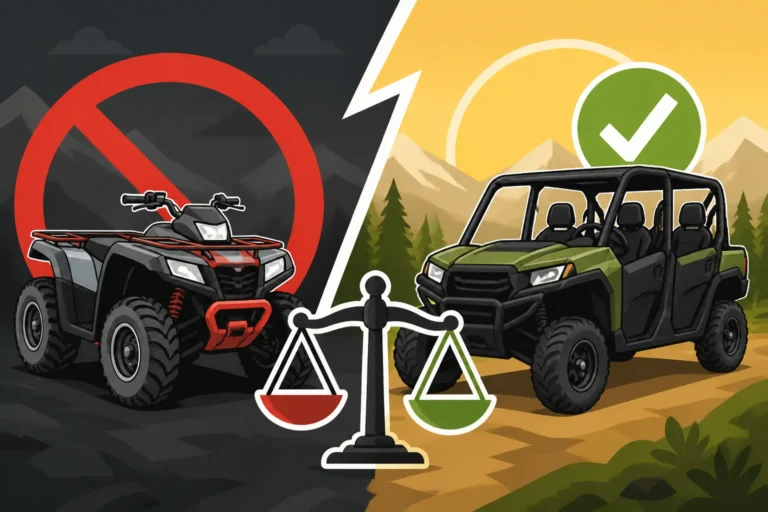
Here’s where a lot of confusion, and frankly, disappointment, comes in for many off-road enthusiasts. Your ATV (All-Terrain Vehicle) or UTV (Utility Terrain Vehicle), often referred to as a side-by-side, is built for rugged terrain, speed, and challenging environments. LSVs are built for paved, low-speed environments. They are fundamentally different machines with different design parameters and safety certifications.
An ATV or UTV, even one equipped with a full windshield, turn signals, and a horn from a company like SuperATV, is still not considered an LSV in Wyoming because it doesn't meet the core definition of having a maximum speed by design of 25 mph. Most ATVs and UTVs are capable of much higher speeds. This is why simply adding street-legal accessories to your quad won't transform it into a Wyoming-legal LSV.
For side-by-sides that riders do want to make street legal, Wyoming offers another path: the Multipurpose Vehicle (MPV) designation. An MPV is a specific class for side-by-sides that allows them to be registered for road use, provided they meet certain criteria like weight, seat height, and specific equipment requirements. This is a much more common and realistic route for UTV owners. You can read more about [Wyoming's MPV Path to the Road] and [Wyoming MPV Street Legal Requirements] to understand this alternative. It's easy to assume all small, road-going vehicles fall under one umbrella, but the law draws sharp lines based on manufacturing and capability.
Equipment Requirements for Street-Legal LSVs in Wyoming
If you do happen to own a vehicle that meets Wyoming's legal definition of an LSV—meaning it's factory-built to travel between 20 and 25 mph, not faster—then it must be outfitted with specific safety equipment to be legally operated on public roads. These requirements are in place to ensure the safety of the LSV operator and other motorists, even at lower speeds.
Essential Safety Features
For an LSV to be street-legal in Wyoming, it needs to be equipped with a suite of safety features typically found on passenger vehicles, but scaled for its specific purpose. These aren't optional upgrades; they're mandated by law.
- Headlamps: It must have headlamps that emit white light, visible from a specific distance, and capable of illuminating the road ahead. These aren't just decorative lights; they need to meet federal lighting standards for visibility.
- Tail Lamps and Stop Lamps: The vehicle needs at least two red tail lamps visible from the rear, and stop lamps (brake lights) that illuminate when the brake pedal is pressed. These are critical for alerting drivers behind you.
- Turn Signal Lamps: Front and rear turn signals are required to indicate your intentions to turn or change lanes, just like any other vehicle on the road.
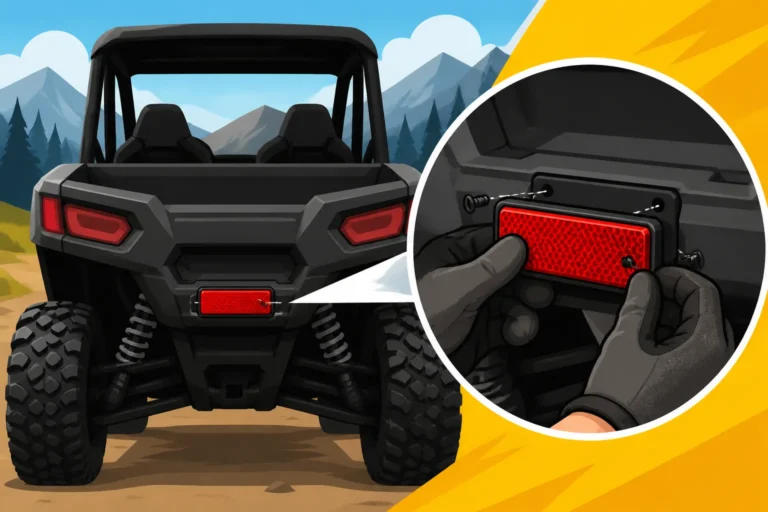
- Reflex Reflectors: In addition to lights, the LSV must have reflective devices on the rear, usually red, to enhance visibility, especially at night or in low-light conditions.
- Exterior Mirror(s): You'll need at least one exterior rearview mirror on the driver's side. Many LSVs come with a center rearview mirror as well, which is a good idea. For more detail, check out [Wyoming Mirror Requirements for Road Use].
- Seatbelts: Occupants must be restrained with seatbelts, indicating the importance of crash protection even at lower speeds.
These aren't just about having something that looks like a light or a mirror; they must be functional, properly installed, and meet applicable safety standards. Think of it as making sure your machine is predictably visible and communicates its movements to everyone else on the road.
Other Mandated Gear
Beyond the lights and mirrors, other equipment is also necessary to ensure an LSV is safe and legal for road use in Wyoming. These might seem like minor details, but they are critical for compliance.
- Horn: A working horn is mandatory for signaling other drivers or pedestrians. You might think an LSV wouldn't need one given its low speed, but unexpected situations can arise quickly, and a horn is a universal safety device. You can find more on [Wyoming Horn Requirement on a Road Machine] for general road-going vehicles.
- Parking Brake: A parking brake or emergency brake system is required to keep the vehicle stationary when parked, especially on inclines. This is a standard safety feature for any road-going machine.
- Vehicle Identification Number (VIN): Just like any other registered vehicle, an LSV must have a clearly visible and unique VIN. This is essential for registration and for tracking the vehicle's history.
- Windshield: A windshield is required, and it must be made of safety glass or a similar material that meets federal standards, providing adequate driver protection and clear visibility.
- Speedometer: While not always explicitly listed for every low-speed vehicle category in every state, a speedometer is generally a practical necessity for monitoring your speed and ensuring you stay within the allowed limits on local roads.
It’s important to remember that merely adding these components to a machine not originally designed as an LSV will not automatically qualify it as one. The base vehicle itself must conform to the speed and manufacturing criteria. This is a common misunderstanding; a SuperATV kit might give your UTV all the accessories for road use, but it doesn't change the fundamental classification or federal certification of the vehicle as an LSV.
Where Can You Actually Drive an LSV in Wyoming?
So, you've got a genuine, factory-built Low-Speed Vehicle that meets all the equipment requirements. That's a great start! But before you hit the open road, it's essential to understand the specific limitations on where these vehicles can be operated in Wyoming. LSVs aren't meant for every road, and violating these rules can lead to fines and safety risks.
Road Restrictions and Speed Limits
The primary restriction for LSVs in Wyoming revolves around the speed limit of the roads they can use. Generally, LSVs are restricted to roads where the posted speed limit is 35 miles per hour or less. This means you’ll find them operating in residential neighborhoods, small town streets, and certain designated local roads. The idea is to keep them out of faster traffic flows where their limited speed could create a hazard.
However, even within these speed limit guidelines, local jurisdictions – meaning individual cities and counties – often have the authority to impose further restrictions or even to open up specific roads to LSVs. What's legal for an LSV in one town might not be in the next. It’s crucial to check with the local city clerk or county government where you plan to ride. For instance, you might be able to drive your LSV from your home to the community park or local store in your small town, but not venture onto a main thoroughfare that serves as a connector between towns, even if parts of it are temporarily 35 mph. This local variation can be confusing, highlighting the need to do your homework. When considering [Wyoming Rules for Riding a County Road], an LSV's specific limitations are paramount.
Avoiding Common Misconceptions
One of the biggest misconceptions about LSVs is that they provide a blanket pass for street legality for any low-speed vehicle, including typical ATVs or UTVs, or that they can be driven anywhere. This simply isn't true in Wyoming, and misunderstanding this can put you in a tough spot.
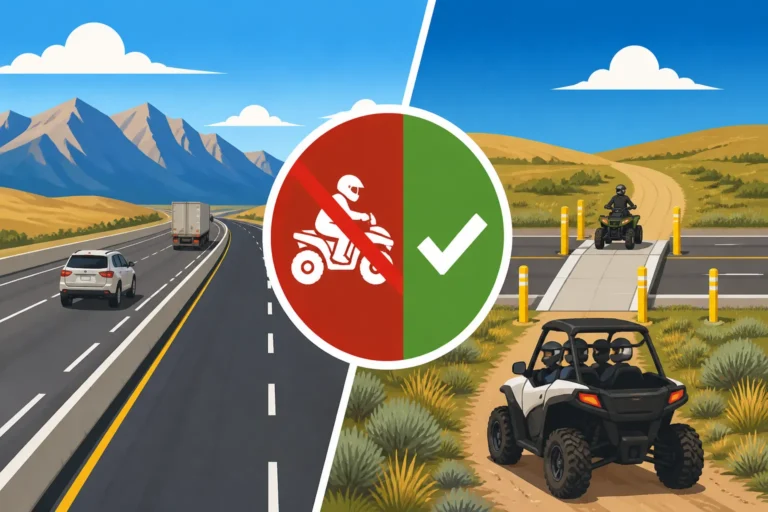
- Highways and Interstates: LSVs are absolutely not permitted on state highways or interstate freeways. Their low top speed makes them a severe safety hazard in high-speed traffic. Even if you see a road that looks quiet, if it's designated as a state highway, an LSV is typically not allowed. This is a critical distinction from Multipurpose Vehicles (MPVs), which, when properly registered and equipped, can be allowed on some higher-speed roads, sometimes even crossing interstates at designated points as outlined in [Wyoming Rules for Crossing an Interstate].
- Designated ORV Roads: While Wyoming does have a system of [Wyoming's Designated ORV Roads] and trails for off-road vehicles that have the appropriate ORV permit (like the one you'd get from [Wyoming's Annual ORV Permit]), these are for ORVs, not necessarily LSVs. An LSV is a street-legal vehicle, not an off-road machine (though some might be capable of light off-road use, their legal designation is for on-road). The rules for an LSV on a dirt road would typically follow the speed limit of that road, but if it's a designated ORV trail, it's generally for machines registered as ORVs or MPVs.
- The "Street Legal" Wish: Many UTV owners hope that by adding mirrors, turn signals, and a horn from a company like SuperATV, their machine magically becomes an LSV. As we've discussed, this isn't the case because your UTV likely exceeds the 25 mph factory design speed limit for an LSV. The MPV category is usually the more appropriate and legally viable path for street-legal UTVs in Wyoming. Don't fall into the trap of thinking all "street legal kits" make your machine a Wyoming LSV; they often aim for MPV compliance or general road-worthiness in states with different rules.
Registration and Licensing for LSVs in Wyoming
Once you've confirmed that your vehicle truly qualifies as a Low-Speed Vehicle by Wyoming's definition and it's properly equipped, the next step is to get it registered and ensure you have the correct licensing and insurance. This process is similar to registering a conventional automobile, emphasizing that an LSV is considered a legitimate road-going vehicle within its specific operating parameters.
The Registration Process
Registering an LSV in Wyoming is handled at the county level, much like other road vehicles. You won't be applying for an ORV decal; you'll be seeking a standard vehicle registration and license plate.
- County Clerk/Treasurer: Your first stop will typically be your county clerk's office for titling and then the county treasurer's office for the actual registration and plate. While [Titling a Multipurpose Vehicle in Wyoming] is a specific process for MPVs, LSVs follow a more traditional vehicle titling and registration pathway if they came with a manufacturer's certificate of origin (MCO) as a street-legal LSV.
- Required Documentation: You'll need to provide proof of ownership, such as a manufacturer's certificate of origin (MCO) or a previous title if you bought it used. This document should clearly identify the vehicle as an LSV and state its top speed. You'll also need proof of identity and residency.
- Application and Fees: You'll complete an application for vehicle registration and pay the applicable registration fees, which will vary based on your county and the vehicle's assessed value. These fees contribute to maintaining local infrastructure and services, just like for any other registered car or truck.
- License Plate: Once your registration is processed, you will be issued a standard Wyoming license plate for your LSV. This plate must be displayed prominently on the rear of the vehicle, just like any other car or truck. This is distinct from the annual ORV decal that off-road vehicles carry, as described in [Wyoming Why Wyoming Issues a Decal, Not a Plate]. The license plate is the clear indicator of its street-legal status. For more on this process, you can look into [Plates From a Wyoming County Treasurer].
It’s important to ensure all your paperwork is in order before heading to the county office. Any discrepancies in the vehicle’s classification or documentation can cause delays.
Driver's License and Insurance Requirements
Because a Low-Speed Vehicle operates on public roads, albeit at lower speeds, the state of Wyoming requires that operators meet specific driver's license and insurance requirements to ensure public safety and financial responsibility.
- Valid Driver's License: Anyone operating an LSV on public roads in Wyoming must possess a valid driver's license. This isn't a special "LSV license"; it's your standard Class C (or higher) driver's license. There are no special endorsements required for LSVs, unlike some more complex classifications such as certain MPVs that might require an M or MR endorsement depending on their design. This is a key difference from off-road riding, where [Wyoming Driver's License Rules for ORVs] might be less stringent, especially for younger riders on trails.
- Liability Insurance: Just like with any other registered motor vehicle, an LSV operating on Wyoming roads must carry the minimum required liability insurance. This insurance protects you and others in the event of an accident. You'll typically need to provide proof of insurance when registering your LSV. While off-road vehicles generally don't require insurance for trail riding in Wyoming (though it's always a good idea), once a vehicle becomes street-legal, like an LSV or an MPV, insurance becomes a legal mandate. This is similar to [Wyoming ATV Insurance Requirement] for street-legal ATVs/UTVs that fall under the MPV category.
Operating an LSV without a valid driver's license or proper insurance can lead to citations, fines, and potential legal complications in the event of an accident. It underscores the fact that while an LSV is "low-speed," it's still a full-fledged vehicle in the eyes of the law when on public thoroughfares.
| Feature | Low-Speed Vehicle (LSV) | Off-Road Vehicle (ORV) | Multipurpose Vehicle (MPV) |
|---|---|---|---|
| Primary Use | Street-legal short-distance transport | Off-road recreation | Road-legal UTV (often with ORV capability) |
| Max Speed | 20-25 mph (by design) | No inherent speed restriction for off-road use | No inherent speed restriction (follows road limits) |
| Road Use | Roads 35 mph or less (local laws apply) | Designated ORV roads/trails only; generally not street legal | Roads 45 mph or less (or higher if designated); street legal |
| Factory Built | Yes, designed to meet federal LSV standards | Yes, designed for off-road | Yes, but must meet specific conversion criteria for road use |
| Registration | Standard vehicle registration, plate | ORV decal (e.g., [Wyoming's Annual ORV Permit]) | Standard vehicle registration, plate, [Titling a Multipurpose Vehicle in Wyoming] |
| Driver's License | Required (standard) | Not always required for off-road use (age restrictions) | Required (standard or M/MR endorsement) |
| Insurance | Required (liability) | Not required for off-road (often recommended) | Required (liability) |
| Typical Examples | Golf cart conversions, purpose-built neighborhood cars | ATV, dirt bike, typical side-by-side (without MPV conversion) | Specific UTVs (side-by-sides) that meet Wyoming's MPV criteria |
Disclaimer
This article is for general informational purposes only and does not constitute professional advice. Laws, prices and regulations vary by location and change over time. Consult a qualified professional for guidance on your specific situation.