Wyoming Golf Cart Street Rules
Navigating the rules for golf carts on Wyoming streets can feel like a maze, especially when you just want to take a quick spin to the general store or visit a neighbor down the road. It’s easy to assume that a small, slow-moving vehicle like a golf cart should be welcome on local roads, but Wyoming’s vehicle laws are pretty specific, and they don't always make allowances for what seems like common sense. This guide is here to untangle the legal knots, explaining exactly when and where a golf cart might be permitted on public thoroughfares, and what it truly takes to make one road-ready in the Cowboy State.
Understanding Wyoming's Vehicle Classifications
One of the biggest sources of confusion for golf cart owners in Wyoming is how the state categorizes vehicles. It's not as simple as "it has an engine and wheels, so it must be allowed." Wyoming has very clear distinctions between types of vehicles, and golf carts often fall into a gray area that prevents them from being freely driven on public streets.
Why a Golf Cart Isn't Always a Golf Cart in Wyoming's Eyes
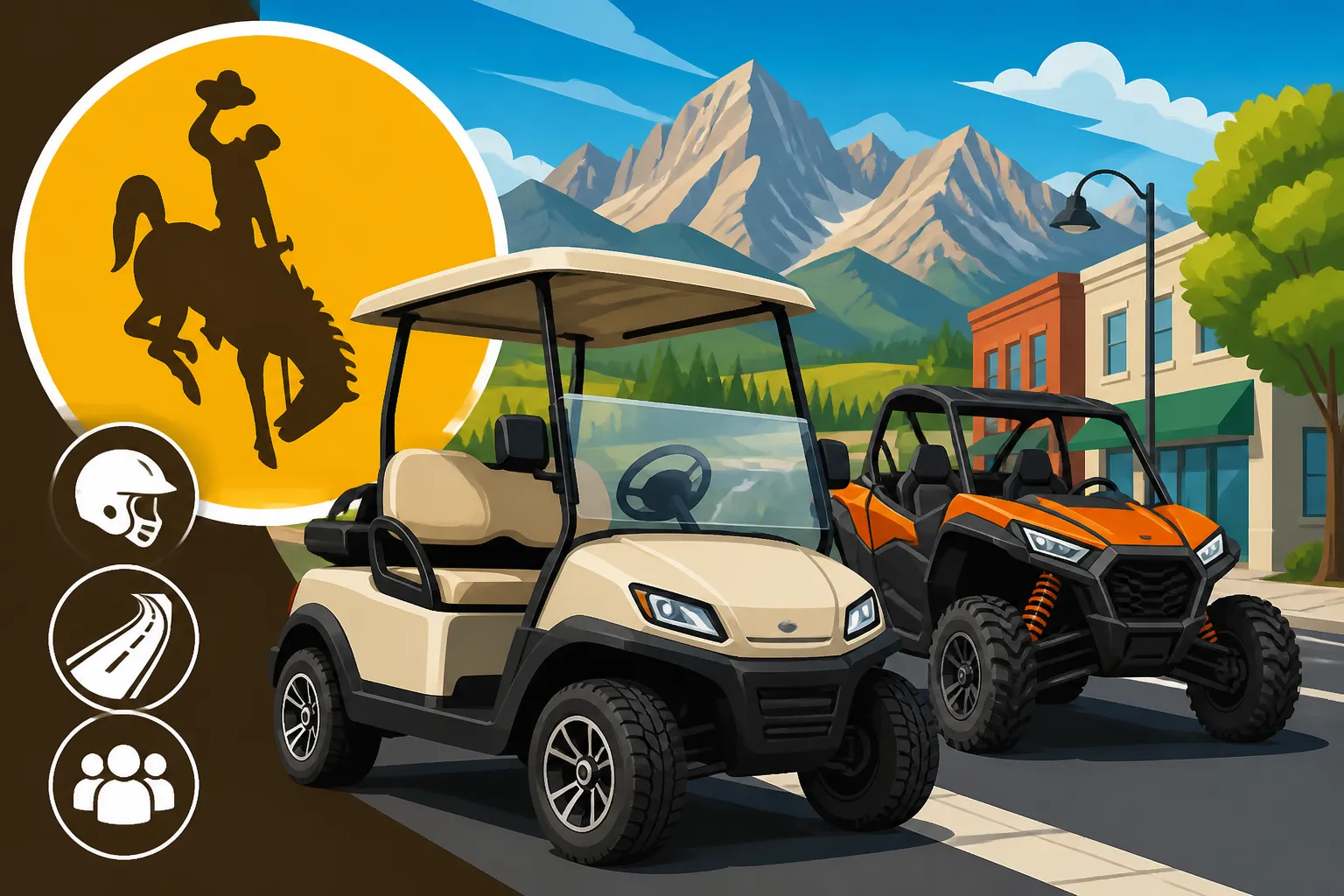
When you think of a "golf cart," you probably picture a light, open-air machine designed for leisurely travel on a golf course. And that’s precisely what it is in the eyes of Wyoming law – a vehicle intended for a very specific, off-road purpose. Unlike an Off-Road Vehicle (ORV) or a Multipurpose Vehicle (MPV), a standard golf cart doesn't typically meet the safety and equipment standards required for highway use. It lacks the robust braking systems, lighting, turn signals, and crash protection that are mandatory for vehicles sharing the road with cars, trucks, and SUVs.
The state doesn't have a specific "golf cart" classification that automatically grants street legality. Instead, golf carts are generally treated as off-road recreational devices. This means that, by default, they are not allowed on paved public roads, highways, or even most county roads unless a specific exception is made or the vehicle is significantly altered. It’s a common frustration for folks living in small towns or rural areas where a golf cart would be incredibly convenient for short errands, but the law simply hasn't caught up with that specific use case on a statewide level.
The Key Differences: ORV, MPV, and Golf Carts
To really understand why a golf cart faces an uphill battle to become street legal, it helps to look at how Wyoming defines other recreational vehicles.
- Off-Road Vehicles (ORVs): These are your traditional ATVs, dirt bikes, and even some side-by-sides primarily designed for off-pavement trails. They require a Wyoming ORV permit decal for use on designated public lands and trails. However, an ORV permit absolutely does not make a machine street legal. It's strictly for off-highway recreational use.
- Multipurpose Vehicles (MPVs): This is where things get interesting for some side-by-sides, and potentially for a heavily modified golf cart. Wyoming created the [Wyoming's Multipurpose Vehicle Class] specifically for machines that can meet certain criteria to be titled and plated for road use. MPVs are generally required to weigh between 300 and 3,000 pounds and have a seat at least 24 inches high. They also need full street-legal equipment like headlights, taillights, turn signals, mirrors, and a horn.
- Golf Carts: As mentioned, these are typically purpose-built for golf courses. They usually don't meet the weight or seat height requirements for an MPV, and they almost always lack the necessary safety equipment right off the factory line.
This table helps illustrate the basic distinctions:
| Feature/Category | Standard Golf Cart | Typical ORV (ATV/Dirt Bike) | Multipurpose Vehicle (MPV) |
|---|---|---|---|
| Intended Use | Golf courses, private property | Off-road trails and recreation | On-road and off-road |
| Street Legal (Default) | No | No (unless designated road) | Yes (with title/plate/equipment) |
| Wyoming Permit Req. | No (unless used as ORV on state land) | Yes (ORV decal for public trails) | Yes (standard vehicle registration) |
| Weight Range | Generally < 300 lbs | Varies, often > 300 lbs | 300 lbs – 3,000 lbs |
| Seat Height | Varies, often < 24 inches | Varies, often > 24 inches | At least 24 inches |
| Required Safety Gear | Basic (lights often optional) | Basic (some models have lights) | Full street-legal equipment |
| Title/Plate | No | No (except for some MPVs) | Yes (for road use) |
As you can see, a golf cart typically starts far from the MPV requirements. It’s not just a matter of adding a few lights; it's about fundamental design and legal definitions.
When Can a Golf Cart See Wyoming Streets? Local Ordinances and Limited Use
While the state of Wyoming generally doesn't consider golf carts street legal, there's a crucial caveat: local control. This is where the rules can become a bit of a patchwork, making it essential to understand the specific regulations in your area.
The Power of Local Control: City and County Ordinances
In Wyoming, individual cities, towns, and even counties have the authority to create their own ordinances regarding the use of golf carts on local roads. This means that while you might not be able to drive your golf cart on a state highway anywhere in Wyoming, your small town might have specific streets or areas where it's perfectly legal.
These local ordinances are usually designed to accommodate the unique needs and slower pace of smaller communities. For instance, a town might pass a rule allowing golf carts on roads with a speed limit of 25 mph or less, typically during daylight hours. They might restrict usage to within a certain radius of the owner's home or designate specific routes to access community amenities like parks or grocery stores. Some towns might even require a local permit or a special sticker, along with basic safety equipment like lights, mirrors, and a slow-moving vehicle emblem.
The key takeaway here is that you cannot assume. Just because you see golf carts on the street in one Wyoming town doesn't mean it's allowed in another, or even on all streets within that same town. Before you ever roll your golf cart off your private property and onto a public road, you absolutely must check with your local city or county clerk's office. They can provide you with a copy of any specific ordinances that apply. This due diligence is critical to avoid fines or other legal headaches.
Designated Crossing and Short-Distance Travel
Even in areas without broad golf cart allowances, there are sometimes very limited exceptions for crossing a public road or traveling a minimal distance. This isn't about general street legality; it's about practical necessity.
Imagine your property is split by a low-traffic county road, or the only way to get from your house to a neighborhood trail is to cross a quiet street. Some local jurisdictions might allow such brief crossings under very strict conditions, such as yielding to all traffic, using appropriate hand signals, and perhaps only during daylight. These allowances are typically for safety and convenience, ensuring residents aren't forced to trailer their golf cart for a 50-yard trip.
It's vital to differentiate this from being "street legal." A designated crossing permission is not an invitation to cruise around town. It's a highly restricted use, and any deviation could put you in violation of the law. Always be aware of your surroundings, drive defensively, and make these crossings as quickly and safely as possible. Remember, these are exceptions, not a green light for general road use. [Wyoming Rules for Crossing a Highway] lays out general requirements for crossing, which would apply to any vehicle, including a golf cart.
Modifying a Golf Cart for Road Use: The Path to MPV Status
If local ordinances don't meet your needs, or you want the flexibility to use your golf cart on a wider range of public roads in Wyoming, you might consider converting it into a Multipurpose Vehicle (MPV). This is a significant undertaking, essentially turning your golf cart into a low-speed, street-legal vehicle under Wyoming law.
The MPV Route: What it Takes to Qualify
As we touched on earlier, [Wyoming's Multipurpose Vehicle Class] is the key to getting a recreational machine like a side-by-side or a heavily modified golf cart onto the pavement legally. For a golf cart to qualify as an MPV, it needs to meet stringent state requirements regarding weight, seat height, and safety equipment.
First, the machine must weigh between 300 and 3,000 pounds. Many standard golf carts are lighter than 300 pounds, so you might need to add significant components or ballast to reach this minimum. Second, the lowest part of the driver's seat must be at least 24 inches from the ground. This often means modifications to the suspension or seat mounting, potentially including a lift kit. You can refer to [Weight Between 300 and 3,000 Pounds] and [A Seat at Least 24 Inches Up] for more details on these specific requirements.
Once those basic physical attributes are met, the real work begins: equipping the cart with all the necessary street-legal features. This isn't just a suggestion; it's a legal mandate to ensure the safety of both the golf cart operator and other road users. This conversion process is typically where companies like SuperATV shine, offering a wide array of aftermarket parts and conversion kits designed to transform off-road vehicles into compliant street machines.
Essential Equipment for MPV Conversion
Converting a golf cart to an MPV means bringing it up to the safety standards of a low-speed street vehicle. This is a comprehensive list, and every item is critical:
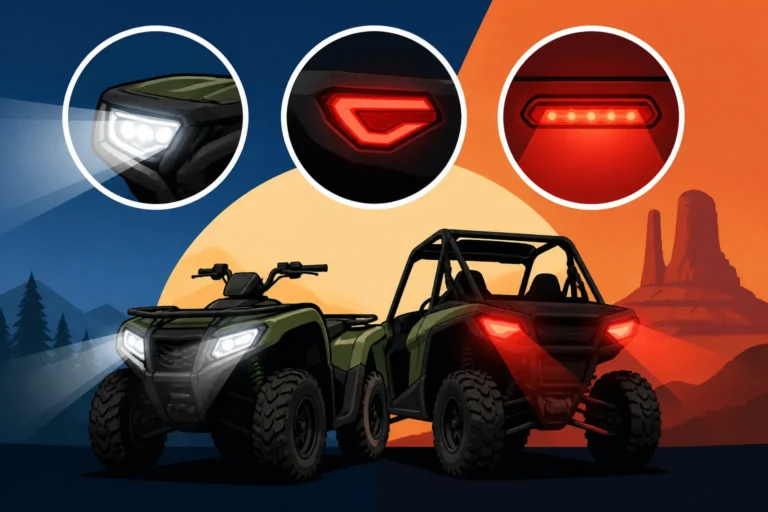
- Headlights, Taillights, and Stop Lamps: You need proper headlights for night visibility, taillights that are always on with your headlights, and brake lights that illuminate when you apply the brakes. These need to be bright enough to be seen from a legal distance. Check [Wyoming Lighting Requirements for ORVs].
- Turn Signals: Both front and rear turn signals are required to clearly indicate your intentions to other drivers.
- Mirrors: You must have at least one rearview mirror mounted on the left side of the vehicle, and often a right-side mirror is recommended for full visibility, especially if your cart is enclosed. [Wyoming Mirror Requirements for Road Use] details this.
- Horn: A functional horn that can be heard from at least 200 feet away is essential for alerting others. [Wyoming Horn Requirement on a Road Machine] specifies the need.
- Windshield: A safety glass or equivalent windshield is necessary to protect the operator from debris.
- Seatbelts: Functional seatbelts for all seating positions are mandatory.
- Fenders: All wheels must have fenders to prevent road spray and debris from being thrown up.
- Brakes: The vehicle must have a fully functional braking system on all wheels.
- Tires: Your tires must be DOT-approved for street use. Standard golf cart tires are generally not.
- Reflectors: A red rear reflector is typically required.
- VIN: Your converted golf cart will need a Vehicle Identification Number (VIN) if it doesn't already have one, or a state-issued VIN will be assigned during the titling process.
After installing all this equipment, you'll need to go through the process of titling and registering your newly minted MPV. This involves filling out specific forms, often including the [What the MPV and ORV-MC Checklist Form Asks], and presenting your vehicle for inspection. This path truly transforms your golf cart from a recreational amenity into a legitimate road vehicle, enabling you to get [Wyoming MPV Plate Requirements] and a [Titling a Multipurpose Vehicle in Wyoming] from the county clerk.
Important Considerations Before Taking Your Golf Cart to the Road
Even after meticulously modifying your golf cart to meet MPV standards or confirming local ordinances, there are still several vital steps and practical considerations to keep in mind before you hit the pavement. Ignoring these can lead to legal trouble, significant financial penalties, or even dangerous situations.
Insurance, Licensing, and Other Requirements
Getting your golf cart physically ready for the road is only half the battle; the other half involves all the bureaucratic necessities that come with operating any street-legal vehicle in Wyoming.
- Driver's License and Endorsement: If your modified golf cart qualifies as an MPV, the operator will need a valid driver's license. Depending on the specifics of the machine, an M (motorcycle) or MR (multipurpose vehicle restricted) endorsement might also be required on your license. This is not optional; driving without the proper endorsement can result in fines and citations.
- Mandatory Insurance: Just like any other vehicle on Wyoming roads, an MPV (including a converted golf cart) must carry current liability insurance. This protects you and others in case of an accident. Without it, you're not only breaking the law but exposing yourself to immense financial risk. Always have proof of insurance readily available.
- Title and Registration: As part of the MPV conversion, your vehicle will be titled through the county clerk and registered with the county treasurer, just like a car or truck. This means paying registration fees and receiving a license plate that must be affixed to the rear of the vehicle. [Wyoming MPV Title Requirements] and [Wyoming MPV Plate Requirements] are non-negotiable for road legality.
- Ongoing Compliance: Even after initial registration, you'll need to keep your registration current and ensure all safety equipment remains in good working order. Regular checks of your lights, horn, and mirrors are crucial.
Ignoring these legal requirements is a surefire way to run into trouble with law enforcement. A quick trip to the county office and a conversation with your insurance agent are essential steps to ensure you're fully compliant.
The Practicalities: Speed, Safety, and Enforcement
While a modified golf cart can technically become street legal as an MPV, it's critical to remember its inherent limitations and operate it safely.
- Speed Limitations: Even an MPV-converted golf cart is a low-speed vehicle. It's not designed for high speeds or major highways. Stick to roads with lower speed limits where your vehicle can keep up with the flow of traffic without becoming a hazard. Expect maximum speeds in the range of 20-25 mph. This is why [Wyoming Low-Speed Vehicle Rules] exist; to regulate such machines and ensure they operate safely within their capabilities.
- Vulnerability on the Road: Golf carts, even modified ones, offer significantly less protection than a standard automobile. You're more exposed in a collision, and your smaller size can make you less visible to other drivers. Always drive defensively, assume other drivers don't see you, and avoid busy roads or times of high traffic.
- Enforcement and Fines: Law enforcement in Wyoming takes vehicle registration and safety seriously. If you're caught operating a golf cart illegally on public roads—whether it's an unmodified cart where it's not allowed, or an MPV without proper registration, insurance, or equipment—you could face citations, fines, or even have your vehicle impounded. [Wyoming Fines for Riding a Closed Road] gives a good indication of the penalties for operating vehicles where they shouldn't be. Troopers and local police officers are trained to identify vehicles that don't meet street-legal standards. Don't risk it; always be certain you're operating within the confines of the law.
- Weather and Road Conditions: Golf carts are not designed for adverse weather. Rain, snow, ice, or even strong winds can make operation hazardous. Their lighter weight and open design make them much more susceptible to challenging road conditions. Exercise extreme caution and consider leaving the golf cart at home if the weather isn't ideal.
Ultimately, while the path to making a golf cart street legal in Wyoming through MPV conversion exists, it requires a substantial investment in parts (perhaps from a reputable provider like SuperATV), time, and adherence to legal requirements. Even then, it's crucial to operate it responsibly and safely, always mindful of its limitations. The convenience of a street-legal golf cart is undeniable, but it comes with a serious commitment to safety and compliance.
Disclaimer
This article is for general informational purposes only and does not constitute professional advice. Laws, prices and regulations vary by location and change over time. Consult a qualified professional for guidance on your specific situation.