Why a County Must Say Yes First
It can feel incredibly frustrating to hit a beautiful stretch of gravel or a paved county road with your ATV or side-by-side, only to realize that despite your machine being fully equipped, you're not legally allowed to ride it there. Wyoming has a unique system for opening up its vast network of roads to off-road vehicles (ORVs) and multipurpose vehicles (MPVs), and a critical part of that system revolves around local county approval. This guide will walk you through exactly why your local county's "yes" is the first and most important step in expanding your riding horizons onto those tempting public roads.
The Foundation of Local Control: Why Counties Hold the Keys
You might assume that once the state of Wyoming passes a law allowing ORVs or MPVs on certain roads, that's the end of the discussion. However, Wyoming operates on a principle of local control that gives individual counties significant authority over their road systems. This isn't just a bureaucratic hurdle; it's rooted in practical considerations and the direct impact on local communities.
Each county in Wyoming has its own unique landscape, population density, road maintenance challenges, and resident concerns. What works for a sparsely populated county with hundreds of miles of remote dirt roads might not be suitable for a county with more residential areas and heavier traffic. Granting local control ensures that decisions about road access for off-road vehicles are made with specific community needs and resources in mind. It allows local commissioners to weigh factors like road wear, noise, safety for other motorists, and the wishes of their constituents directly. It’s a way to ensure that the expansion of riding opportunities doesn't inadvertently create problems for the very people who live and pay taxes in that area.
Understanding the Dual Designation: It's Not Just a State Matter
When we talk about making a road "street legal" for an ORV or MPV in Wyoming, it's rarely a single, sweeping declaration. Instead, it's often a two-part process involving both state and local entities. The state, primarily through the Wyoming State Parks, Historic Sites and Trails division, manages the state's "enrolled" trail and road system. These are the routes officially designated for ORV/MPV use. However, for a county road to become part of this enrolled system, it almost always requires explicit approval from the county commissioners. This concept of shared responsibility is crucial to grasp. [Why a Road Needs Two Designations] explains this in more detail.
The state system provides the framework, sets the general rules, and manages the overall program, but it's the county that holds the ultimate say over whether their specific roads will be included. This is a powerful check and balance, preventing state mandates from overriding local preferences or legitimate local concerns. For instance, a county might have a road that technically meets all the state's criteria for designation, but if that road runs through a quiet residential area where residents have concerns about increased traffic or noise, the county commissioners might choose not to approve its enrollment.
The County's Criteria for Road Enrollment
So, what factors do county officials consider when deciding whether to open a particular road to ORVs or MPVs? It's not a simple checklist, but rather a holistic review that often involves public input.
Traffic Safety and Flow: One of the foremost concerns is always safety. Will allowing ORVs and MPVs on a specific road create undue hazards for cars, trucks, cyclists, or pedestrians? This involves looking at speed limits, road width, visibility, and traffic volume. A narrow, winding county road with blind curves and moderate car traffic might be deemed unsafe for shared use. Conversely, a wide, straight gravel road with very low traffic might be an ideal candidate.
Road Maintenance and Impact: Off-road vehicles, especially heavier side-by-sides, can contribute to road wear, particularly on gravel and dirt roads. Counties are responsible for maintaining their infrastructure, and they need to assess if the increased use will lead to higher maintenance costs or faster degradation of the road surface. This is a practical and financial consideration that directly impacts local budgets.
Community Impact and Public Opinion: This is where local control truly shines. County commissioners are elected representatives, and they are highly responsive to the concerns and opinions of their constituents. If a significant number of residents along a particular road object to ORV/MPV access due to noise, dust, privacy concerns, or perceived safety risks, the commissioners are likely to take those sentiments seriously. Public meetings and opportunities for comment are often part of this decision-making process.
Alignment with Local Recreation Goals: On the flip side, many counties recognize the economic and recreational benefits of opening roads to ORVs and MPVs. It can draw tourists, support local businesses, and provide additional recreational opportunities for residents. If a proposed road connects to existing trail systems or opens up access to public lands for recreation, it can be a strong argument in favor of enrollment.
The Process of Getting a County Road Enrolled
Let's imagine you're a passionate rider living in Wyoming, and there's a county road near your home that would perfectly connect you to some incredible trails. How does a county road go from "off-limits" to "open for adventure"?
Step 1: The Request or Proposal: Often, the process begins with a request, either from local citizens, a riding club, or even the State Parks division itself. This proposal typically outlines which specific roads are being considered, why they would be a good fit, and addresses potential concerns. For example, a local ATV club might propose a route that links a town to a Bureau of Land Management (BLM) riding area, detailing how it would benefit tourism and local riders. [Asking State Parks to Enroll a Road] sometimes initiates this process from the state side.
Step 2: County Commissioner Review: The proposal then goes before the county commissioners. They will review the request, possibly consult with their road and bridge department, sheriff's office, and other relevant county entities. This stage is crucial for gathering initial feedback and assessing feasibility.
Step 3: Public Comment and Hearings: If the commissioners are considering moving forward, they will usually schedule public meetings or hearings. This is the community's chance to voice opinions, ask questions, and raise concerns. It's a vital democratic step to ensure all voices are heard before a decision is made. As a rider, this is your opportunity to advocate for responsible riding and highlight the benefits.
Step 4: County Approval and Resolution: If, after review and public input, the commissioners decide to open the road, they will pass a formal resolution. This resolution legally designates the specific county road (or segment of a road) for ORV/MPV use. This is the "yes" that the article title refers to.
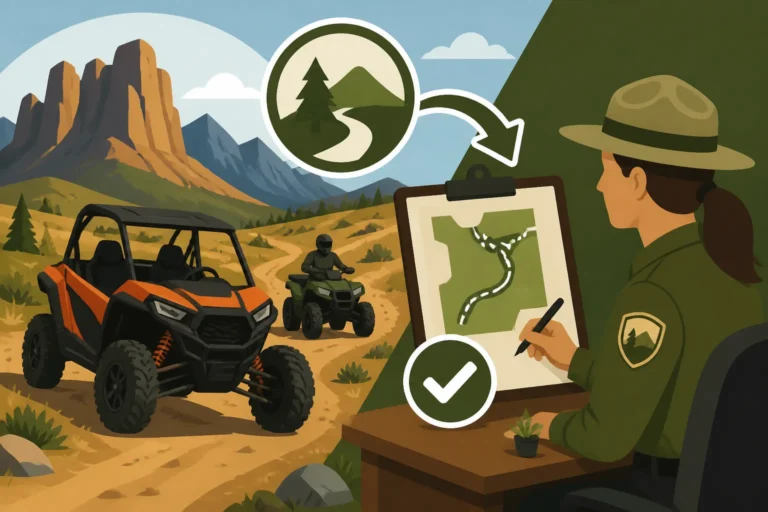
Step 5: State Parks Enrollment: Once the county has given its approval, the road can then be formally enrolled into the statewide system by the Wyoming State Parks, Historic Sites and Trails division. This enrollment process makes it an official part of the state's designated ORV/MPV routes. Only then will it appear on official maps and be recognized statewide as a legal riding route. You can often find these designated routes on [Finding an Enrolled Road on a Forest Map] or BLM maps.
Step 6: Signage and Enforcement: Finally, appropriate signage must be placed along the designated road segments to clearly indicate that ORV/MPV use is permitted. Law enforcement (county sheriffs and state troopers) then have clear guidelines for enforcement. Without this clear designation, riding on county roads remains illegal.
What This Means for You as a Rider
Understanding this county-first approach is incredibly important for any ATV or UTV rider in Wyoming. It means that even if your machine qualifies as an MPV with all the necessary equipment (like a horn, mirror, lights, and spark arrestor – items readily available from aftermarket specialists like SuperATV), you cannot simply ride it on any county road. You must ensure that the specific road segment you wish to ride has been formally designated and enrolled.
Always Check the Maps: Before you head out, always consult the most current travel management maps from the Forest Service, BLM, or Wyoming State Parks. These maps clearly mark which roads are open to specific types of vehicles. Relying on outdated information or assumptions can lead to citations and fines. [Wyoming Fines for Riding Without a Permit] or on closed routes can be costly and put a damper on your adventure.
Know Your Machine's Classification: Remember, not all off-road machines are created equal in the eyes of Wyoming law. A "street-legal" machine generally refers to an MPV, which has specific requirements beyond just an ORV decal. An MPV typically needs to weigh between 300 and 3,000 pounds and have a seat at least 24 inches high. [Wyoming's MPV Definition in W.S. 31-1-101] details these requirements, and you'll interact with your [Wyoming County Clerk Title Process] and [Wyoming County Treasurer Plate Process] to get it properly titled and plated. If your machine is just an ORV, it's generally limited to enrolled trails and certain designated ORV roads, not all county roads. [Are ATVs Street Legal in Wyoming?] provides a concise answer.
Advocate for Responsible Riding: If you want more roads opened in your area, getting involved at the local level is key. Attend county commissioner meetings, join local riding clubs, and express your interest in expanding safe, legal riding opportunities. Always emphasize responsible riding practices, adherence to noise limits, and respect for private property. [Wyoming Rules for Riding a County Road] exist for a reason – follow them!
Summary Table: Agency Roles in Road Designation
| Agency Role | Primary Responsibility | Key Action for Road Access |
|---|---|---|
| County Commissioners | Governing body for county roads; local infrastructure and safety. | Must approve county roads for ORV/MPV use via resolution. |
| Wyoming State Parks, Historic Sites and Trails | Manages the statewide enrolled trail and road system. | Enrolls county-approved roads into the state system. |
| U.S. Forest Service / BLM | Manages federal lands and their travel management plans. | Designates roads/trails on federal land for specific uses. |
| Local Riders/Clubs | Advocates for riding access; proposes new routes. | Initiates requests and provides public input to counties. |
This table clearly illustrates the pivotal role the county plays in the chain of command. While state and federal agencies manage their respective lands, the moment a route crosses onto county jurisdiction, local approval becomes paramount.
Equipping Your Machine for Designated Roads
When a county road finally gets the green light, you'll want to ensure your machine is ready to meet any additional requirements for street legality, beyond just the ORV permit. This is where quality aftermarket parts come into play.
Many riders, for example, choose to upgrade their lighting systems for better visibility, especially if they anticipate riding during dawn, dusk, or nighttime hours on designated county roads. Companies like SuperATV offer a range of LED light bars, headlights, and taillights that significantly enhance safety and compliance. Similarly, a proper horn is a non-negotiable item for road use, allowing you to alert others to your presence. Investing in a sturdy, compliant mirror is also crucial, as [Wyoming Mirror Requirements for Road Use] specify.
Beyond these basic necessities, you might also consider accessories like windshields, turn signals, and even full enclosure systems if your machine is primarily a side-by-side and you plan to use it regularly on designated roads in varying weather conditions. While not all are strictly required for all designated county roads, they contribute to a safer and more comfortable riding experience, making your machine more versatile once it has the necessary county and state approval to hit the pavement or gravel. [Wyoming MPV Street Legal Requirements] covers these in detail.
Looking Ahead: The Future of Road Access
The push for more off-road vehicle access on designated public roads is ongoing in Wyoming. As the popularity of ATVs and UTVs continues to grow, so does the demand for seamless connections between trails, public lands, and even small towns. The careful, deliberative process involving county commissioners is a testament to Wyoming's commitment to balancing recreational opportunities with local community needs and safety.
By understanding that a county's "yes" is the first critical step, riders can better engage with the process, advocate effectively, and ensure they are always riding legally and responsibly on Wyoming's diverse network of roads. It's a journey that starts with local conversations and local decisions, paving the way for more adventures on wheels.
Disclaimer
This article is for general informational purposes only and does not constitute professional advice. Laws, prices and regulations vary by location and change over time. Consult a qualified professional for guidance on your specific situation.