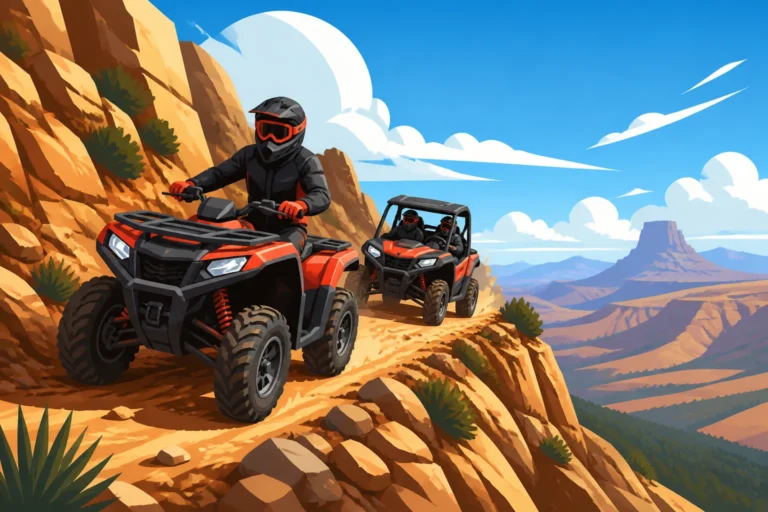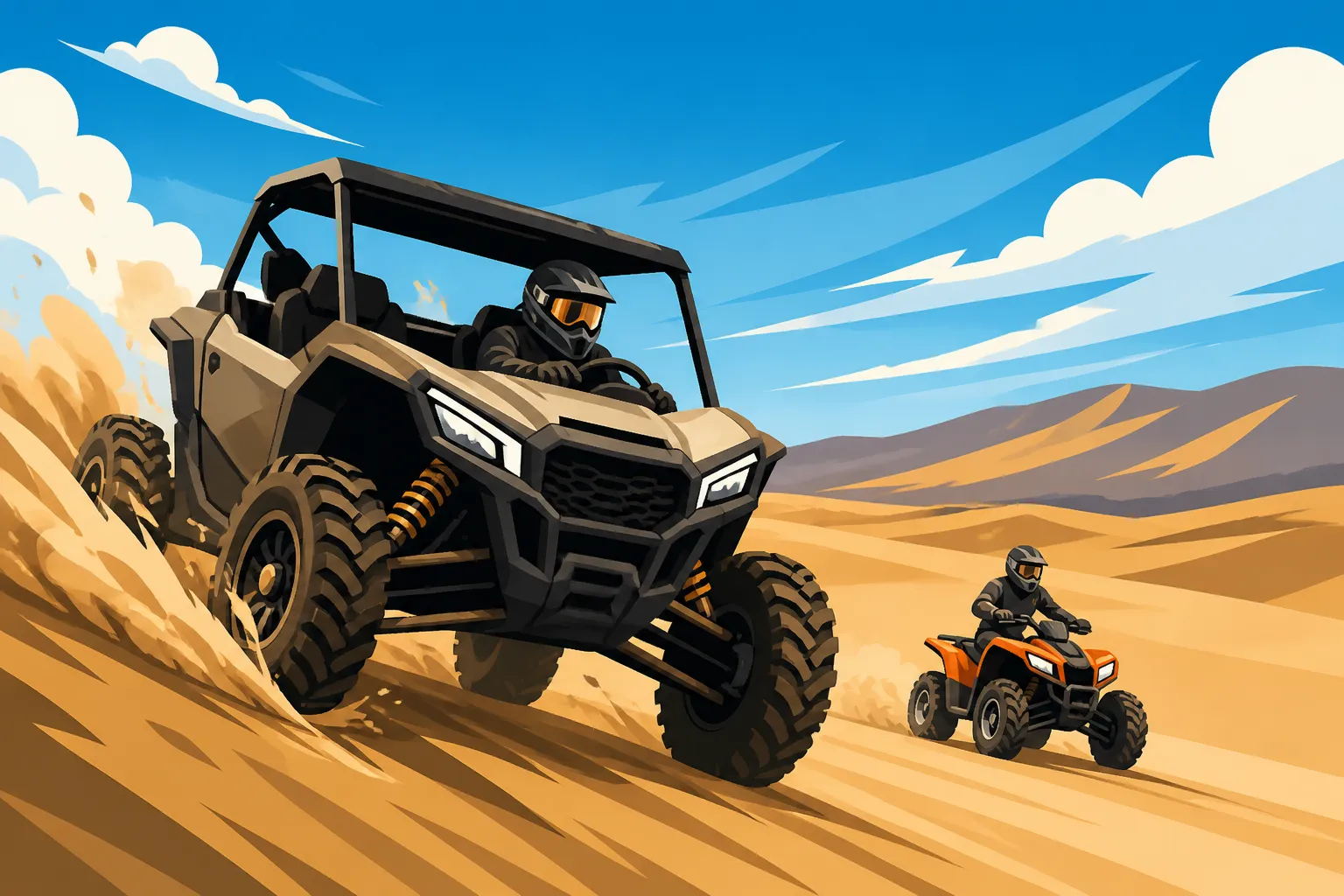
Riding the Open Play Area at Killpecker Dunes
Killpecker Dunes can look like a wide-open playground, but sand, wind, changing tracks, and unclear boundaries can turn a fun ride into a tiring recovery. This guide explains how to prepare for the open play area, choose sensible routes for your machine and group, ride with care, and avoid common mistakes around the dunes near Rock Springs.
Understand the open play area before you unload
Open riding does not mean every route is open
At Killpecker, the phrase “open play area” is easy to take too literally. It does not mean that every patch of sand, nearby two-track, or tempting ridge is automatically available for riding. The boundaries and rules that apply to the dunes are tied to land management and designated access, so check current local information before you set off. A marked route, a posted closure, and a line on a map can all matter more than tire tracks left by earlier visitors.
That distinction is especially important when the sand makes it hard to tell where a route begins or ends. A faint track may have been made by someone who got lost, was avoiding soft sand, or simply rode where they should not have. Do not treat existing tracks as proof that an area is open. Start with the official travel information for the area and confirm which routes and riding zones are open for your visit. For broader context, see [Wyoming's Enrolled Roads and Trails] and [Wyoming Rules for Riding BLM Land].
It is also worth separating the open play area from routes used to reach it. A road that takes you toward the dunes is not necessarily a place to ride off the road, and not every road or two-track in the surrounding landscape is open to motorized travel. That matters if your group wants to explore beyond the main sand. Check where the designated area ends before you follow a track that appears to lead deeper into the country.
Plan for the desert setting around Rock Springs
Killpecker Dunes sit in a dry, exposed landscape near Rock Springs. You may be able to see a broad sweep of sand from the staging area, but the view can be deceptive: dunes hide dips and soft pockets, wind can reduce visibility, and distances are harder to judge when there are few trees or buildings to use as landmarks. A short-looking ride can take longer than expected if your route crosses loose sand or your group has to pause for a stuck machine.
Treat the trip as an outing in remote country, not a quick lap around a local OHV park. Before leaving town, fuel up, pack drinking water, and make sure everyone knows the meeting point and the plan for regrouping. Cell coverage can be inconsistent away from developed areas, so do not assume that a map app or phone call will work everywhere. A route downloaded in advance can help, but it should complement—not replace—an understanding of the area and its posted rules.
You can find practical information about the staging area in [Camping Free Below the Dunes]. If your plan includes camping, check what facilities are actually available and bring the supplies you need rather than counting on water, fuel, or services at the site. The surrounding area is remote enough that a small planning oversight—like arriving with low fuel or no spare tire equipment—can become a much bigger inconvenience.
Choose a route that matches your machine and your group
Read the sand before committing to a dune
Sand does not behave like packed dirt. The surface can be firm in one stretch and soft a short distance away, and a slope that looks manageable from below may be difficult to climb if your tires begin to dig in. Before taking a line uphill, look for the angle of the slope, the amount of room to turn around, the traffic already on the dune, and what lies beyond the crest. Never charge over a blind crest when another rider could be approaching from the other side.
For a first visit, spend time on easier, open ground before attempting taller or steeper dunes. Let the rider with the least experience set the group’s pace. If that rider is struggling to maintain momentum or keep the machine straight, the answer is usually to choose a simpler route—not to pressure them into a harder climb. On sand, a calm throttle and smooth steering are generally more useful than abrupt corrections. Avoid sharp turns at speed, especially on a side slope, where a machine can lose traction or tip.
Riders often arrive eager to reach the biggest-looking dune, but a conservative first loop gives you a chance to learn the surface and see how your machine responds. It also gives the group time to get comfortable with hand signals and spacing. If you want ideas for planning a broader visit, [Riding Killpecker in Spring] and [Wind and Shifting Sand on the Dunes] cover conditions that can change the feel of a ride.
Match the route to the machine, not just the rider
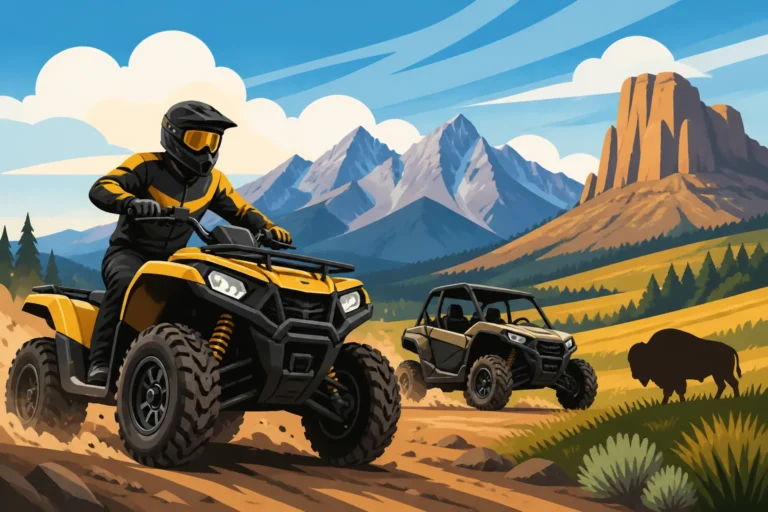
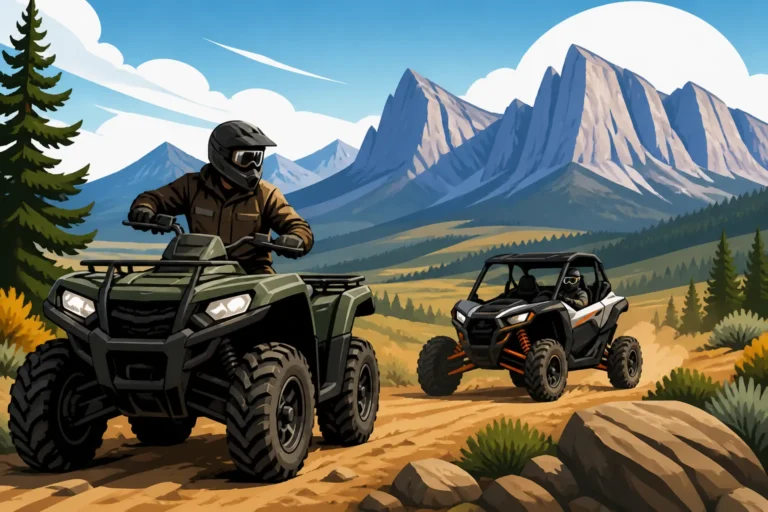
An ATV and a side-by-side can both be useful at Killpecker, but they do not handle the same way. A lightweight quad may be easier to maneuver in tight spaces, while a wider, heavier UTV needs more room to turn and may respond differently when the sand is loose. Tire condition, ground clearance, load, and the experience of the operator all affect what is sensible. A route that feels straightforward on one machine might be a poor choice for another.
Before setting out, consider how much gear and how many passengers your machine is carrying. Extra weight can make a machine feel less responsive in soft sand, and a packed cargo area can make it harder to recover if you become stuck. Keep passengers seated and belted in a side-by-side, and make sure everyone understands when to stay inside rather than stepping out near moving machines. On an ATV, ride within your ability and do not carry a passenger unless the machine is designed and equipped for one.
A simple way to make a route decision is to compare what you can see with what your group can safely handle:
| Riding option | A sensible fit | Main things to watch |
|---|---|---|
| Firm access road or established route | A cautious warm-up, regrouping, and travel between areas | Stay on the route and watch for other traffic |
| Broad, open sand | Riders who are comfortable controlling their machines on loose ground | Soft patches, changing tracks, and limited landmarks |
| Steeper dune face | Experienced riders with a clear line and a safe runout | Blind crests, cross-slope travel, and other riders |
| Unfamiliar area beyond the main riding zone | Only after confirming it is open and appropriate for your machine | Closures, boundaries, navigation, and recovery distance |
Use the table as a planning aid, not permission to ride a particular slope or route. Local restrictions and posted signs take priority. The safest line is often the one that leaves room to stop, turn around, and help another rider without forcing the rest of the group into the same difficult spot.
Prepare for sand, wind, and recovery
Carry the basics before you need them
A dune ride can be enjoyable right up until a machine digs in or a tire loses pressure. Pack a basic recovery setup suited to your vehicle, along with a tire repair kit, inflation equipment, gloves, and enough water for the group. Bring tools that fit your machine rather than assuming a generic kit will cover every repair. If you are travelling with multiple machines, agree on who carries which supplies so you are not left with three tire gauges and no suitable tool for a simple adjustment.
A stuck machine is not a reason to crowd around it. First stop other traffic from approaching the recovery area, then assess the machine and the sand before anyone pulls, pushes, or tries to dig it out. Keep people clear of tensioned straps and moving wheels. Do not attach a recovery line to a point that is not intended for recovery, and do not use a tow method that exceeds the equipment’s limits. If the situation is beyond your group’s skills or gear, avoid turning a minor problem into a damaged machine or an injury.
Before leaving the staging area, make sure the machine is in good working condition. Check tires, controls, lights, fuel, and any safety equipment required for your trip. Clear sand from parts that need to move freely, and secure loose cargo. If you are unsure how your machine behaves in soft sand, practice on an easy, open stretch before committing to a longer route or more difficult terrain.
Expect the dunes and conditions to change
Wind is part of the experience at Killpecker, but it can also make navigation and visibility more challenging. Sand shifts, tracks become less distinct, and the shape of a familiar-looking area can change between visits. Gusts can blow sand into eyes and equipment, so goggles and face protection are not just comfort items. Bring layers as well: an exposed ride can feel very different once the wind picks up or the temperature changes.
Plan your ride with enough time to return before fatigue sets in. Tired riders make poorer decisions, and a group that is trying to beat fading light may take risks it would avoid earlier in the day. Set a turn-around time, choose a clear regrouping point, and check that everyone can follow the return plan. If your group separates, do not keep riding in different directions hoping to reconnect. Stop somewhere safe, use the agreed communication plan, and regroup deliberately.
A navigation app such as onX Offroad can help you review routes and mark useful waypoints before you arrive, especially if you download information for offline use when you have a connection. Still, an app should not be treated as the authority on closures or as a guarantee of signal. Compare what you see on your screen with official land-management maps and signs on the ground. If a sign says a route is closed, do not follow an older digital track instead. For more on map reading, see [Wyoming Trail Maps and MVUMs] and [Carrying a Travel Management Map in Wyoming].
Ride considerately in a shared recreation area
Give other riders room and keep sightlines clear
The open sand can feel spacious, but that does not mean every direction is clear. Riders may approach from behind a ridge, cross a broad flat, or turn into the same area from another access route. Keep a predictable line, leave room between machines, and slow down when you cannot see what is beyond a rise. Avoid stopping just below a crest, where an approaching rider may not have enough time to react.
Group spacing matters on dunes. If machines are too close together, dust and blowing sand can make it difficult to see, while one rider’s sudden stop can surprise the person behind. Let each machine complete a climb or descent before the next rider enters the same line. If someone needs help, move the rest of the group to a safe, visible place rather than gathering several machines on a narrow slope.
A hand signal or a quick conversation before the ride can prevent confusion. Agree on where to stop, how to signal that someone needs assistance, and what to do if a rider loses sight of the group. Keep speeds appropriate for visibility and traffic; the goal is not to prove how fast a machine can cross the sand. Sharing the area responsibly also means yielding where appropriate and avoiding dusting people who are stopped or setting up camp.
Protect the place you came to enjoy
Stay on routes and within riding areas that are open to motorized use. Cutting around a boundary, driving over sensitive ground, or creating new tracks can damage land and contribute to further restrictions. If an area is marked closed, do not try to find a workaround. A closure may protect wildlife, habitat, or public safety, and it can apply even when the route looks dry and easy to cross.
Pack out trash, including small items that are easy to overlook, such as food wrappers, broken straps, and plastic packaging. Keep camp and staging areas orderly, and follow local fire restrictions rather than assuming a fire is acceptable because other visitors have used one. Be mindful of other recreationists and nearby land uses. Noise carries across open country, so a loud machine can affect people well beyond the spot where you are riding.
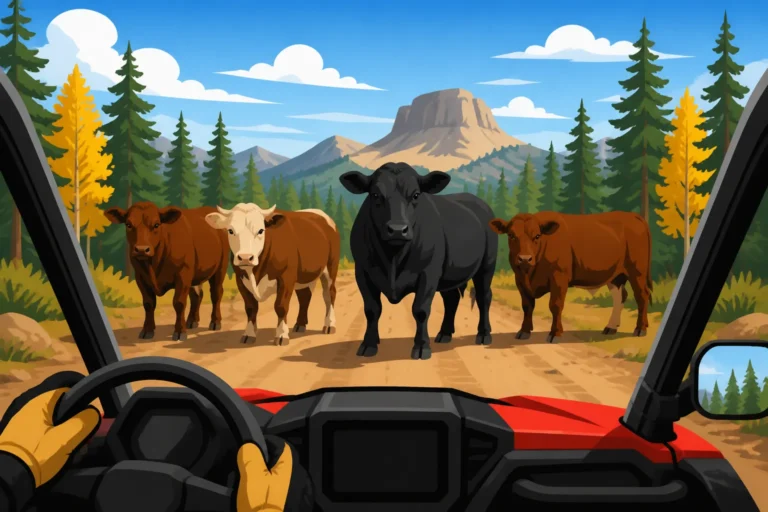
Take care around wildlife and livestock if you encounter them near access roads or the edges of the riding area. Give animals space and avoid chasing or crowding them for a closer look. If a gate is part of an authorized route, leave it as you found it unless posted instructions say otherwise. These small decisions help keep access workable for everyone who uses the area, not just riders. See [Wyoming Trail Etiquette With Ranchers] for more guidance on respectful travel in Wyoming.
Build a practical plan for your first visit
Use a simple pre-ride checklist
A good first-day plan does not need to be complicated. It does need to answer the questions that are hardest to solve once you are already out on the sand: where you are allowed to ride, how much fuel you have, what you will do if a machine gets stuck, and how your group will regroup. Write those answers down or review them together before unloading. A few minutes of preparation can spare you a long, frustrating search for a lost rider or a safe route back.
Use this checklist as a starting point:
- Confirm current access information, riding boundaries, and any posted restrictions.
- Check the machine’s tires, controls, fuel, and safety equipment.
- Pack water, eye protection, basic tools, and recovery gear appropriate for your machine.
- Share the planned route, regrouping point, and turn-around time with everyone.
- Download useful navigation information in advance, then carry an official map or other reliable backup.
- Start on easier ground and adjust the plan to the least experienced rider.
- Leave time to return before fatigue, poor visibility, or changing weather becomes a concern.
If you are visiting with a mixed group—say, an experienced UTV driver, a teenager on a smaller quad, and a first-time rider—make the first loop short and easy. Check in after that loop rather than waiting until someone is tired or uncomfortable. This gives the group a chance to adjust the route before the dunes feel demanding. For younger riders, choose a machine and riding area appropriate to their age, skill, and supervision needs; [Wyoming Rules for a Youth Machine on a Trail] is a useful starting point for understanding the broader rules.
Know when to turn around
Turning around is a skill, not a failure. If you find the sand is softer than expected, the wind is making it hard to see, the group is running low on water, or a machine is showing signs of trouble, change the plan early. It is much easier to return while everyone has energy than to push farther and discover that the route back is harder than the route in. A conservative decision can save the rest of the day.
The same goes for uncertainty about access. If your map and a posted sign appear to disagree, stop and resolve the question before proceeding. Do not assume that a visible track is authorized or that an old route layer reflects current conditions. An app such as onX Offroad may be helpful for situational awareness, but it cannot replace a closure notice or a land manager’s current guidance. Use it to support your planning, not to overrule what you see at the site.
A successful ride at Killpecker is not measured by the steepest dune climbed or the farthest point reached. It is a day when the group rides within its abilities, gets back with enough fuel and daylight, and leaves the area as it found it. If you return with a better understanding of the sand and a route you would happily ride again, that is a solid first visit—and a much better foundation for exploring more of southwest Wyoming.
Disclaimer
This article is for general informational purposes only and does not constitute professional advice. Laws, prices and regulations vary by location and change over time. Consult a qualified professional for guidance on your specific situation.