Wyoming’s 2026 Cross-State Ride
A Wyoming cross-state ATV or UTV ride can sound like one long scenic trail, but a trip from Evanston to Cheyenne is really a series of route, fuel, weather, and access decisions. This guide explains what to plan for, how to prepare your machine, and why maps, permits, and daily mileage matter just as much as the ride itself.
What the Wyoming Cross-State Ride Involves
The route is a connected trip, not one continuous trail
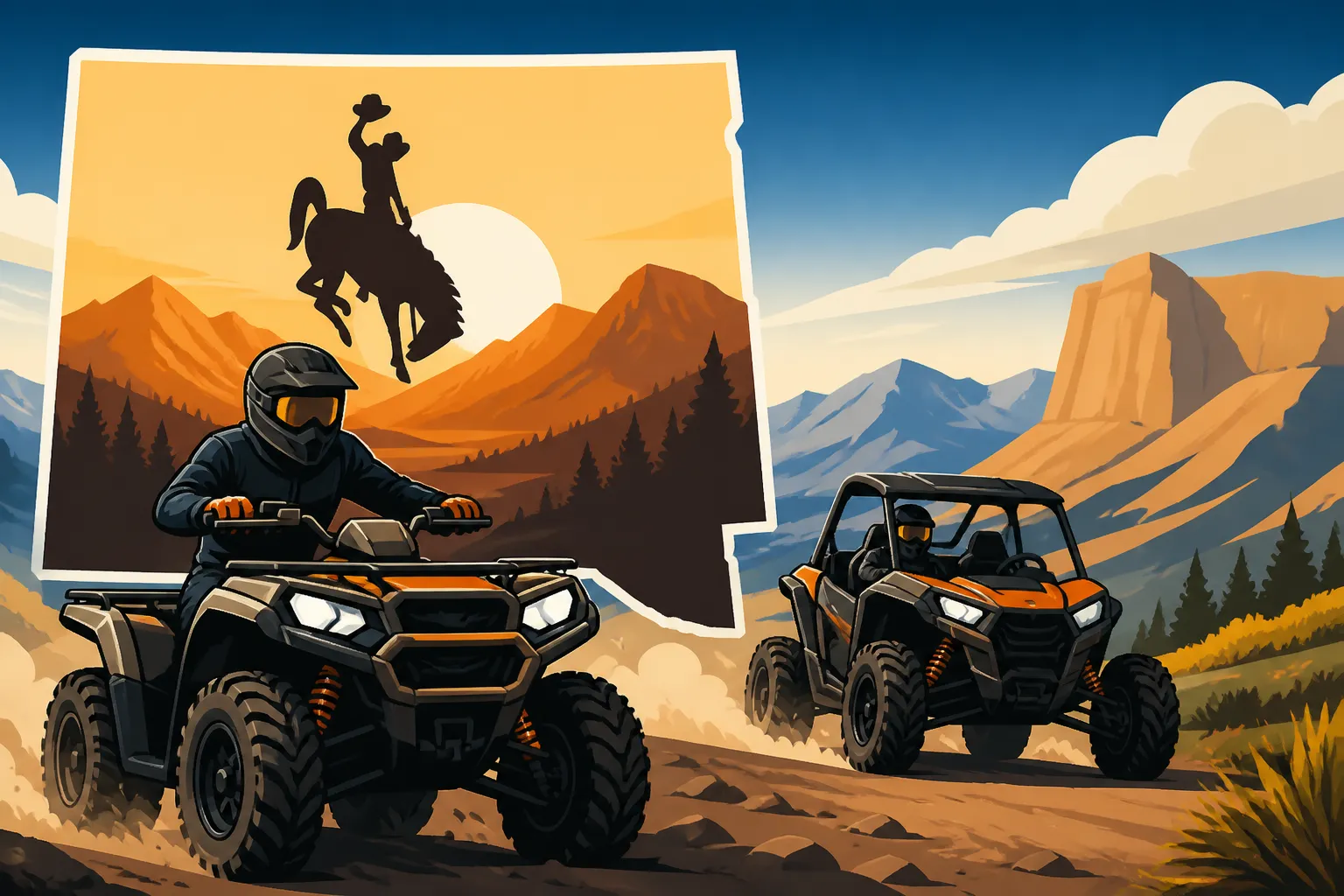
The ride is described as a roughly 350-mile journey from Evanston to Cheyenne, planned across four days. That distance gives you a sense of the scale, but it should not be read as 350 miles of uninterrupted, purpose-built ATV trail. A cross-state itinerary may use a mix of authorized roads and designated routes, with stretches that vary in surface, width, elevation, and riding conditions.
That distinction matters when you are picturing the trip. A forest trail may be narrow and winding, while a connecting road could be wider, rougher, or open to other traffic. The route may also cross areas with different land managers and seasonal rules. Before riding, get the organizer’s current route information and confirm which segments are open to your machine. A line on a screen is not, by itself, proof that a route is legal to ride.
The planned route is outlined in [Evanston to Cheyenne Across Wyoming]. If you are joining an organized event, use its official itinerary as your starting point rather than trying to recreate the route from online maps alone. For a broader look at route status and land access, see [Wyoming's Enrolled Roads and Trails].
Four days changes how you plan distance
A multi-day ride asks more of you than a long Saturday outing. You need to think about where you will finish each day, where fuel and food are available, what happens if a machine needs attention, and how much riding time remains after breaks. Even a distance that looks manageable on a map can feel very different after hours on uneven ground.
The four-day format described in [Four Days From Evanston to Cheyenne] makes daily mileage a useful planning question, but it is not the only one. A day with fewer miles can still be demanding if it involves slow terrain, a climb, a weather delay, or frequent stops. Riders should also consider how daylight, fatigue, and group pace affect the schedule. Being able to ride far is not the same as being comfortable riding that far several days in a row.
If you are comparing the journey with a single-day ride, [350 Miles in One Ride] helps put the overall distance in perspective. Build your preparation around the full trip: service the machine, test your gear, and plan for recovery and rest between riding days. A cross-state ride is more enjoyable when the group is not trying to solve basic logistics at the end of a tiring day.
A small rider cap can support event logistics
The ride information describes a limit of 50 machines. A cap can help an organizer manage group movement, communication, support, and overnight logistics, but it does not mean every participant will ride shoulder-to-shoulder or move at the same pace. Groups often need clear procedures for regrouping, mechanical trouble, and riders who want to take a break.
Read [Why the Cross-State Ride Takes Only 50 Machines] with practical expectations in mind. Ask the organizer how riders are grouped, whether there are sweep or support arrangements, and what participants should do if they become separated. If you are bringing a passenger or riding with someone who has less experience, make sure the daily pace and terrain are realistic for both of you.
A smaller event still requires personal preparation. Bring a way to communicate with your group, carry the essentials you will need between stops, and know the organizer’s instructions for emergencies. Do not assume that a group leader can carry every participant’s tools, water, or spare parts. The right approach is to be self-sufficient while following the event’s shared plan.
Registration, Costs, and What to Confirm
Check event details before making travel plans
The ride’s listed information includes a registration timing note in [Registering for the Ride by March]. Treat registration dates, eligibility, machine requirements, and lodging arrangements as details to confirm with the event organizer before booking travel. Event logistics can change, and an article or a social post may not include every requirement you need to know.
Before committing, ask what registration includes and what you need to arrange yourself. For example, clarify whether lodging, meals, fuel stops, luggage transport, recovery support, or a route file are included. Also ask what happens if a machine breaks down or a rider needs to leave the event early. These questions can feel fussy when you are excited to go, but sorting them out beforehand is far less stressful than discovering a gap halfway through the trip.
The event description includes a $100 entry figure, discussed in [What the $100 Cross-State Ride Entry Covers]. Confirm the current event-specific amount and exactly what it covers directly with the organizer. Do not assume the entry fee includes travel to Evanston, accommodations, meals, fuel, required permits, or replacement parts unless the event materials say so.
Use a simple checklist to compare costs
A cross-state ride has costs beyond the registration fee. Some are easy to overlook because they occur before or after the event: a trailer rental, a hotel night near the start, a machine service appointment, or shipping luggage to a finish point. If you are riding with family or friends, remember to include their transport and lodging needs too.
| Cost or planning item | What to check |
|---|---|
| Event entry | Confirm the amount, deadline, refund terms, and included services |
| Travel to the start | Decide whether you will tow, trailer, or arrange a shuttle |
| Lodging | Check whether nights are included or must be booked separately |
| Meals and water | Find out which meals are provided and where resupply is possible |
| Fuel | Estimate machine needs and identify planned stops |
| Machine preparation | Budget for inspection, maintenance, and wear items |
| Permits and access | Confirm what applies to your machine and the route |
| Recovery plan | Ask how a disabled machine or separated rider is handled |
This checklist is not a substitute for the organizer’s event rules. It is a way to spot the questions that tend to surface late, when availability is limited and options are less convenient. Write down answers and keep the event’s contact details somewhere accessible, both on your phone and in a backup form.
Understand the permit separately from event entry
An event registration and an off-road permit are different things. The event fee covers whatever the organizer specifies; it does not automatically mean your machine has every authorization required for public riding. Read [Wyoming ORV Permits Explained] and verify the current permit requirements for your machine, rider status, and planned route.
Also, a permit does not make every road or trail open to your ATV or UTV. The route must be authorized for the type of machine you are riding, and closures can apply for seasonal, wildlife, weather, or land-management reasons. Check the applicable rules and the organizer’s route instructions rather than relying on an assumption that an event permit or registration covers access.
If you are traveling from another state, do not assume a home-state sticker or registration is accepted as a substitute. Confirm Wyoming requirements before leaving home. Keep required paperwork with you, and make sure you know where the machine’s decal or other permit identifier must be displayed if one is required.
Route Planning and Navigation
Build your route plan from official access information
A cross-state ride may pass through areas administered by different agencies, each with its own maps, designations, and closures. A route that appears connected in a mapping app may include a road that is private, closed to motorized use, or unsuitable for your machine. Verify each segment using the relevant official travel-management information and the event’s instructions.
Digital tools can make planning easier. For instance, onX Offroad can be one way to review terrain and organize route information, but treat any app as a planning aid rather than the final authority on access. Save maps for offline use where possible, especially if you expect to travel through areas with limited cell service. Then compare the planned route with official maps and posted signs on the ground.
A useful habit is to carry more than one form of navigation. Keep the organizer’s route file or printed itinerary available, know how to view a map without a signal, and agree on a regrouping point if riders become separated. You can also read [Wyoming Trail Maps and MVUMs] for context on how motorized routes are represented. Maps are most useful when you understand what their markings mean and when they were prepared.
Plan for landmarks and communities along the way
A cross-state route is not just a line between two cities. Communities and recognizable waypoints help riders understand where they are, make practical stops, and communicate their position if plans change. Saratoga is one of the route references identified in [Riding Through Saratoga on the Route]. Ask the event organizer how that stop fits into the itinerary and whether participants should expect a fuel, meal, or overnight break there.
Do not assume every small community will have the supplies or services your group needs at the time you arrive. Check the planned stops in advance, and avoid making your fuel plan depend on a single unconfirmed option. If the route includes a town stop, use it to top up supplies and check in with the group rather than waiting until someone is nearly out of fuel or water.
Digital maps can help you follow landmarks, but phone batteries can drain quickly when devices are used for navigation all day. Carry a charging plan that works on your machine, protect devices from dust and vibration, and keep a paper note of key stops and emergency contacts. onX Offroad may help you organize route information before departure, but it should not replace the organizer’s directions or official access checks.
Treat the route file as a guide, not permission
A GPX track or navigation line is helpful because it gives riders a shared reference. It is not proof that every segment remains open. A closure sign, gate, or official notice may indicate that conditions have changed since the route was prepared. Stop and reassess rather than assuming the group should continue because a line on a screen points ahead.
When a route and a sign appear to disagree, prioritize posted restrictions and ask the organizer or relevant land manager for direction. Do not ride around a closure, cross a barrier, or detour onto private ground to stay on schedule. If a segment is unavailable, a legal alternate route may take longer or may not exist, which is why the event should have a procedure for delays and route changes.
Before the trip, learn how your navigation device displays the planned route, your current position, and nearby roads. Practice with it at home rather than trying to decipher menus in wind or dust. If you use onX Offroad or another mapping app, download the area and test offline access before travel. A phone that cannot load a map once service disappears is a poor backup.
Preparing Your Machine and Your Riding Group
Inspect the machine for several days of use
A machine that runs well for a short local ride may need closer attention before several consecutive days on the trail. Check tires for damage and suitable pressure, inspect brakes and steering, confirm lights work, and look for loose fasteners or signs of leaks. Follow the manufacturer’s maintenance guidance, especially if the machine has been sitting through a long winter or has recently been used in mud, sand, or deep water.
Carry the tools and basic spares appropriate to your machine and your own ability to use them. That might include a tire-repair kit, a compact inflator, basic hand tools, fuses, and small items that commonly work loose. The exact kit depends on the machine and the route, so ask the organizer what support will be available and what participants are expected to carry themselves.
Do a shakedown ride before the event. It gives you time to notice a weak battery, uncomfortable seat, loose cargo, or gear that rubs after a few hours. It also helps you test any storage or navigation setup. Fixing a small problem at home is usually simpler than diagnosing it at a remote stop with a group waiting.
Match your daily riding to the group
A group ride works best when everyone has a shared understanding of pace and stops. Ask how the event handles different experience levels, whether riders are expected to remain in assigned groups, and who to contact if someone needs to slow down. If you are new to multi-day riding, be honest about your experience. It is easier for organizers to plan when they know who may need a more conservative pace.
Choose clothing for changing conditions, not just the forecast at the start. Wyoming terrain can involve exposure to wind, sun, dust, and sudden weather shifts. Bring layers, eye protection, gloves, and rain protection that you can reach without unpacking everything. Pack water where it is easy to access, and take breaks before you are exhausted rather than waiting until concentration starts to slip.
Agree on simple group practices before setting out: how often you regroup, what to do if you cannot see the rider behind you, and how to signal a stop. A group can become stretched out on rough or winding terrain, and riders may not hear a shouted warning over engines. Follow the event’s communication procedures and avoid making an unplanned pass or detour that could split the group.
Prepare for altitude and changing weather
Some portions of a Wyoming ride may involve substantial elevation. Altitude can make exertion feel harder, and it may affect how a machine performs. [Altitude and Carburetion in the Mountains] offers additional context for the terrain-related planning involved. If your machine has a carburetor or other altitude-sensitive setup, consult the manufacturer or a qualified mechanic about how to prepare it for the route.
For riders, a sensible pace, hydration, and rest breaks help make long days more manageable. Do not mistake feeling fit at home for being ready to ride hard at elevation. Pay attention to headaches, unusual fatigue, dizziness, or shortness of breath, and let someone in the group know if you feel unwell. A ride schedule is never more important than a rider’s safety.
Weather can also change the character of a route quickly. Wind and rain can make exposed sections uncomfortable, while storms can affect visibility, traction, and travel time. Carry layers that can be put on or removed during the day, and follow organizer instructions about weather delays or alternate plans. Check conditions before each riding day rather than relying on a forecast you saw before the trip began.
Fuel, Safety, and Responsible Riding
Make a realistic fuel plan
Fuel range is one of the most important practical questions on a long route. The number in a machine’s manual or on a sales page may not match real-world use with cargo, a passenger, higher elevation, rough surfaces, or frequent changes in speed. Estimate your own range from experience, then leave a safety margin rather than planning to arrive at a stop nearly empty.
Use [Fuel Range Between Wyoming Towns] as a prompt to identify where the itinerary expects riders to refuel. Ask the organizer whether fuel stops are guaranteed, whether participants need to carry extra fuel, and what happens if a station is unavailable. Never carry fuel in a container or location that is not approved for that purpose. Secure any permitted fuel container properly and keep it away from heat and ignition sources.
A reliable fuel plan includes contingencies. If one machine has shorter range than the rest, the group needs to account for it rather than assuming it can keep up. If a planned stop changes, riders should know the next confirmed option. Keep enough reserve to handle delays, route changes, or a slow day without turning a routine inconvenience into an emergency.
Ride legally and respect closures
Stay on routes that are open to your machine and follow posted signs, gates, and land-manager instructions. A route may be designated for some vehicle types but not others, and an enrolled road does not automatically mean every nearby trail is open. Confirm that your ATV or UTV is allowed on each segment, including any connecting road used to reach the next part of the route.
Responsible riding also means protecting the places you pass through. Avoid widening a track, cutting across vegetation, disturbing wildlife, or leaving litter. Close gates when required, but do not assume every gate has the same purpose; follow signs and the organizer’s directions. Be courteous to other users, including hikers, cyclists, horseback riders, and people working on the land.
If a route is closed, do not bypass the closure to keep the itinerary intact. Report a problem to the organizer and wait for guidance. A safe and legal delay is better than risking a citation, damaging land, or creating conflict with a landowner or agency. Keep [Wyoming Rules for Riding a Designated Route] in mind when reviewing how access and route markings apply.
Carry safety essentials and know the response plan
Before departure, ask what emergency support the event provides and what participants must handle themselves. Clarify how the group communicates, who coordinates help, and what to do if a rider is injured or a machine becomes disabled. In remote areas, a phone may not have service, so ask whether the event recommends or requires another communication method.
Carry identification, essential medication, water, a basic first-aid kit, and any required riding paperwork. Keep them protected from dust and moisture but accessible when needed. Share your itinerary with someone who is not on the ride, and tell them when you expect to check in. If plans change significantly, update that person rather than assuming they will hear about it later.
The simplest safety plan is one everyone understands before the engine starts. Know the meeting location, the next planned stop, and the process for regrouping. If you are uncertain whether a route is open, whether your machine is permitted, or whether conditions are safe, pause and ask. That small delay can protect the whole group and help keep Wyoming’s riding routes open for future trips.
Disclaimer
This article is for general informational purposes only and does not constitute professional advice. Laws, prices and regulations vary by location and change over time. Consult a qualified professional for guidance on your specific situation.