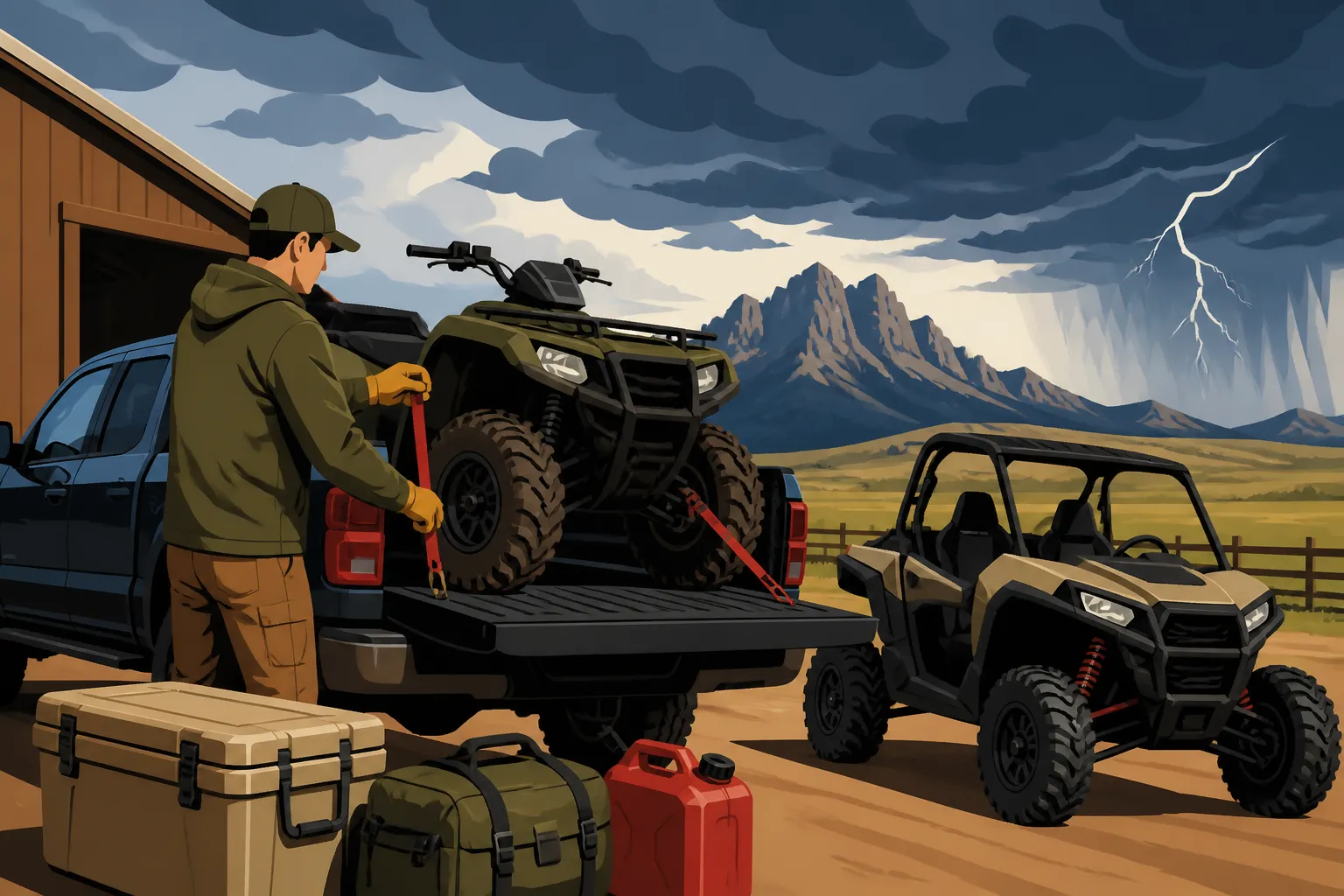
Loading Up Before an Afternoon Storm
A Wyoming ride can start under blue skies and turn into a cold, exposed slog when an afternoon storm rolls over the ridge. The tricky part is deciding what to pack, when to turn around, and how to protect people and machines without overloading your ATV or UTV. This guide walks through a practical pre-ride plan for changing mountain weather.
Why afternoon storms change a Wyoming ride
The weather can change faster than the trail
Wyoming’s open country and high elevations make weather an active part of ride planning. A route that feels comfortable in the morning may be much colder and less inviting once clouds build, wind picks up, or rain moves across exposed ground. Near the Snowy Range, the Bighorns, or the Wyoming Range, even a short ride can include a substantial change in elevation and exposure.
The risk is not just getting wet. Thunderstorms can bring lightning, hail, poor visibility, strong gusts, and sudden drops in temperature. Rain can also change the surface under your tires: loose dirt may become slippery, bentonite-heavy ground can turn into sticky mud, and low spots or small drainages may carry runoff. A route that was easy to follow on a dry morning can become difficult to navigate when landmarks disappear behind rain.
That is why “we’ll head back if it looks bad” needs a little more thought. If your turnaround point is far from the trailhead, or you are riding a remote two-track with limited shelter, waiting until the storm is visibly overhead may leave you with fewer safe choices. Plan around the possibility of weather arriving earlier than expected, not just the most convenient version of the forecast.
Before choosing a route, check conditions for the area you will actually ride, not only the nearest town. A forecast for Laramie, Cody, or Rock Springs may not describe what is happening on a high ridge or in a forest at elevation. Review current land-manager information and maps as well; Wyoming Trail Closures to Check First is a useful reminder that weather is only one part of deciding whether a route is suitable.
Build a turnaround decision into the plan
Pick a time or weather cue that means the group turns around, even if everyone feels like continuing. For example, you might agree to head back if the sky darkens over the route, thunder becomes audible, wind starts pushing the machines around, or visibility begins to drop. The exact cue depends on the terrain and how far you are from safety. The important part is agreeing before people are committed to the ride.
A turnaround time should account for the ride back, not just the distance out. A trail that takes an hour to reach may take longer on the return if the surface gets slick, a rider needs help, or the group slows down to stay together. If your route crosses high, exposed ground, leave additional margin. You do not want to make the decision while trying to estimate how long a storm will take to reach you.
Make sure everyone knows the plan. A simple pre-ride conversation can cover the route, expected return time, where the group will stop if weather builds, and who makes the final call. This helps avoid a familiar problem: one person wants to push on while another is quietly worried, but nobody wants to be the first to say so.
Pack for rain, wind, cold, and delays
Keep protective layers reachable
A rain jacket packed beneath tools, snacks, and spare parts is not much help when weather arrives quickly. Put essential layers somewhere accessible without unpacking the machine. A waterproof or water-resistant outer layer, warm mid-layer, gloves, and dry socks can make a meaningful difference when wind and rain arrive together. For children or riders who get cold easily, pack an extra layer rather than assuming they can share one.
Clothing should work for the ride, not just the forecast at the trailhead. A sunny start can encourage people to leave jackets behind, but exposed ridgelines and wet clothing can make a ride feel much colder. Avoid relying on cotton as your only insulating layer; once wet, it can feel clammy and take a long time to dry. Keep a dry change of clothes in a sealed bag at the vehicle or in camp for after the ride.
Store electronics and documents in protected bags. A phone may be useful for navigation, but rain, mud, and a depleted battery can quickly make it less dependable. A paper map or downloaded offline map gives the group another way to understand where it is. A navigation app such as onX Offroad can help riders review route options and keep offline maps available, but it should support—not replace—good route judgment and a backup plan.
Carry supplies for a slower return
Storm preparation is also delay preparation. If the group needs to travel more slowly or stop to wait out a brief weather change, everyone should have drinking water, food, basic first aid, and a light source. Bring enough for the planned ride plus a reasonable buffer. A small repair kit, tire supplies suited to your machine, and a way to contact help can be especially valuable when the trailhead is far away.
Keep a secure place for important items. Loose gear can shift, get wet, or become a distraction on rough ground. Use a dry bag or weather-resistant storage for spare layers, first aid supplies, maps, and charging equipment. Check that containers are fastened before leaving the staging area. A UTV’s storage area may seem protected, but rain can still blow in, and a bounced-open compartment can turn packed essentials into lost essentials.
Here is a practical way to divide gear by when you may need it:
| Pack location | Useful items | Why it belongs there |
|---|---|---|
| Easy-to-reach pocket or bag | Rain shell, warm gloves, map, phone, small light | These are the items you may need as conditions change |
| Protected machine storage | First aid kit, food, water, dry socks, charging cable | Keeps essentials together and better protected from moisture |
| Support vehicle or camp | Dry change of clothes, extra layers, larger repair supplies | Helpful after the ride or if the group returns wet and cold |
Before heading out, tell someone who is not riding where you plan to go and when you expect to return. Share a backup plan if your route changes. This is a small step, but it matters when a group is delayed and has no reliable cell service.
Protect the machine without overloading it
Rain gear, tools, water, food, and recovery equipment add up. Pack deliberately and keep heavy items secure and low where practical. Do not let cargo block a rider’s view, interfere with controls, or shift when the machine climbs or brakes. On a side-by-side, make sure loose items cannot slide into the footwell or become a hazard for passengers.
Think about what your machine can reasonably carry on the route you chose. A heavy load can affect handling, particularly on steep, uneven, or slippery ground. If you are carrying extra supplies for a group, distribute them rather than piling everything on one ATV. Follow the machine manufacturer’s guidance for loading and passenger capacity, and do not assume a rack can safely hold whatever fits on it.
Check the basics before the ride: tires, brakes, lights, fuel, and any straps or tie-downs. If conditions turn dark or visibility drops, working lights matter. For advice on planning routes around visibility, terrain, and permitted access, see Wyoming Trail Maps and MVUMs and Carrying a Travel Management Map in Wyoming. Maps are most useful when you review them before setting out, not for the first time in the rain.
Choose a route and riding pace that leave room for weather
Prefer routes with practical exit options
When storms are possible, a route with several reasonable ways to return may be a better choice than a long out-and-back with no easy exit. Consider how far you will be from the trailhead, whether the route crosses exposed terrain, and whether there are low spots that could become muddy or difficult after rain. Think about the least experienced rider in the group, not just the person who knows the area best.
A route can also become less suitable if your machine is wide, heavily loaded, or carrying passengers. Narrow trails, steep slopes, and rutted sections may be manageable in good weather but stressful when traction and visibility worsen. Check width restrictions and route designations before choosing a trail. Wyoming Trails for a Wide Side-by-Side and Wyoming Trail Difficulty Ratings can help frame those planning questions.
Do not treat an open-looking track as permission to ride it. Use land-manager maps and signs to confirm that a route is designated for your machine and currently open. If a sign on the ground says a segment is closed, do not continue because a digital map appears to show it as available. For more on interpreting those situations, see When a Map and a Sign Disagree.
Slow down when surfaces and visibility change
Rain makes it harder to see ruts, rocks, washouts, and loose material. Reduce speed early rather than waiting until the machine begins to slide. Leave more space between riders, avoid sudden turns or braking where possible, and communicate changes in pace to the group. If the rider behind you disappears from view, stop somewhere safe and regroup rather than continuing farther ahead.
Avoid crossing flowing water or entering a drainage when runoff is rising. Water can hide holes, loose rocks, or a changing bottom, and the safest choice may be to turn around before reaching the crossing. Do not assume a familiar drainage will behave the same way after rain. If you cannot confidently judge the depth, current, or exit, do not ride into it.
Mud deserves the same caution. A machine that loses traction can become difficult to move without making the situation worse. Spinning tires may dig deeper ruts, damage the trail, and leave the group farther from help. If the surface is deteriorating, stop in a safe place, reassess the route, and consider turning back while the return is still manageable. Wyoming Fire Season and Trail Access is another planning topic worth checking, since dry-weather restrictions and closures can affect where you can ride even before rain becomes a concern.
What to do when a storm begins during the ride
Treat thunder and lightning as a cue to change plans
If thunder is audible or lightning is nearby, do not keep riding toward an exposed ridge or open area just to reach a preferred viewpoint. Move away from exposed high ground and follow the safest available route toward a more protected location, while avoiding places that could flood. There may not be a perfect shelter on a trail, so focus on reducing exposure and making a cautious decision rather than trying to outrun the storm.
Keep the group together and use clear instructions. Riders should know whether to stop, turn around, or follow a specific route back. Avoid splitting up to retrieve gear or to scout ahead unless there is a clear safety reason and the group has agreed on how to stay in contact. If visibility is poor, slow down enough to maintain control and keep the next rider in sight where conditions permit.
A phone or radio may help the group communicate, but do not count on cell coverage across remote Wyoming terrain. A charged device and an offline map are useful backups, not a promise of rescue. If someone is injured, a machine is disabled, or conditions are becoming dangerous, prioritize immediate safety and use the communication equipment you brought. Before a trip into remote country, read Breaking Down Far From Help and Satellite Messengers in the Basin to think through what a delay might involve.
Reassess before restarting
When the worst of a storm passes, take a moment to check the group, machines, and route. Look for cold or distressed riders, loose cargo, damaged tires, and visibility that is still too poor for safe travel. Do not resume simply because the rain has eased. Thunder, wind, runoff, and poor traction may remain concerns after the heaviest shower moves on.
Choose the shortest safe route back if conditions have changed. You may need to abandon the original plan, skip a scenic loop, or return by a road you had not expected to use. That is not a failed ride. It is a sensible response to conditions, especially when the group includes children, inexperienced riders, or machines carrying extra gear.
Once back at the trailhead, dry out and review what worked. Note whether the turnaround time gave you enough margin, which layers were useful, and whether any supplies were hard to reach. Those observations make the next ride easier to plan. A little preparation before departure can turn a stressful weather surprise into a manageable change of plans—and sometimes the best riding decision is knowing when to load up and head back.
Disclaimer
This article is for general informational purposes only and does not constitute professional advice. Laws, prices and regulations vary by location and change over time. Consult a qualified professional for guidance on your specific situation.