Driving Poison Spider Road Out of Casper
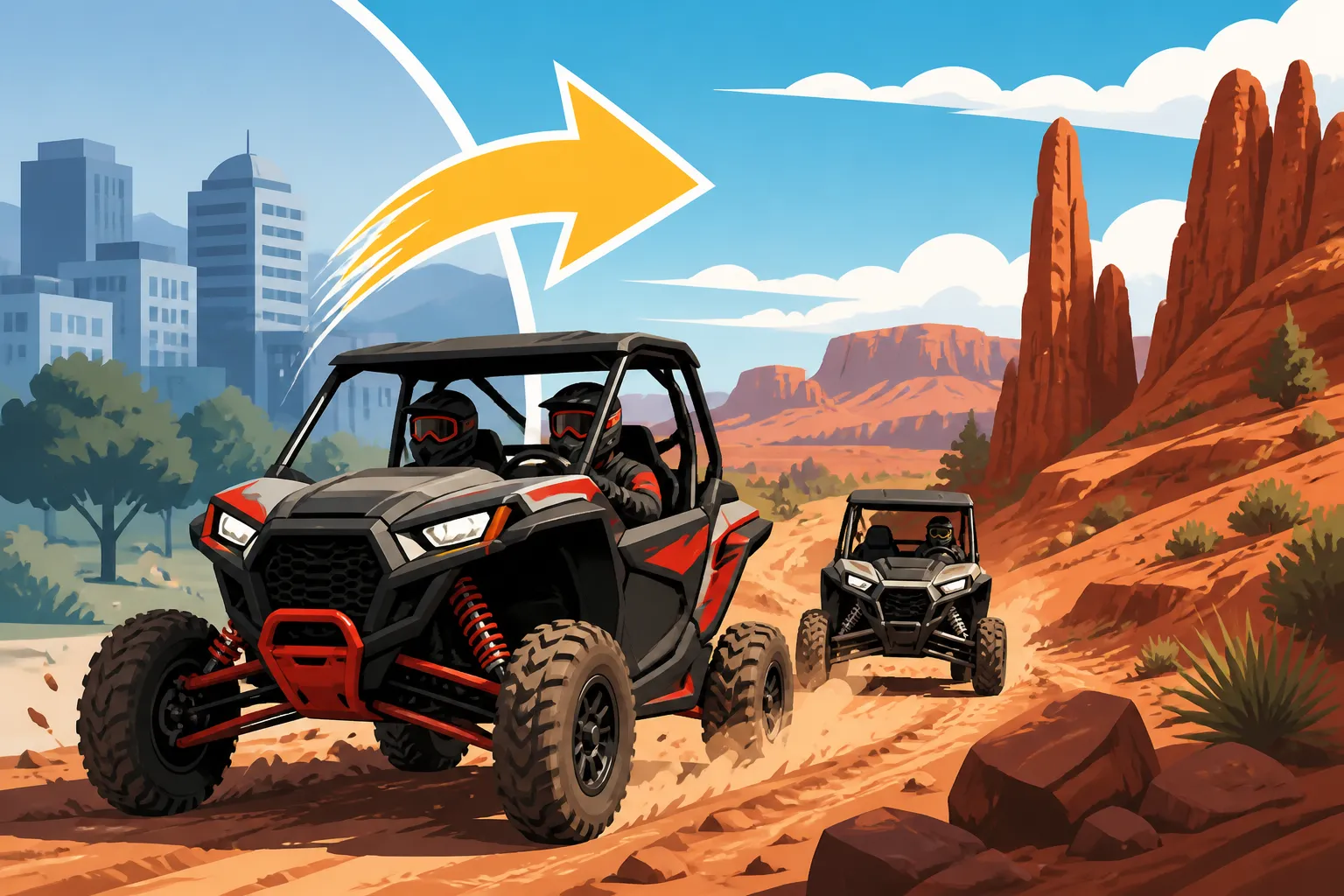
Leaving Casper for Poison Spider can look like an easy outing: load the ATV or UTV, follow Poison Spider Road, and ride. The frustrating part is that the access drive, the OHV area, and the routes you’re allowed to ride are not the same thing. This guide helps you plan the trip, arrive prepared, and avoid common map, weather, and machine-size surprises.
Planning the drive from Casper
Understand the access road and riding area
Poison Spider is a riding area outside Casper, not a trail system that begins as soon as you leave town. Poison Spider Road is part of the approach; the OHV riding area is your destination. That distinction matters if you’re towing: reaching a road with a familiar name does not automatically mean you have reached the staging area or a route where riding is permitted.
Before setting out, identify the intended entrance or staging location on a current map and check local signs as you approach. Directions can be easy to misread when a road branches, a track appears to continue past the riding area, or a map labels nearby roads more prominently than the entrance itself. The article [Driving Poison Spider Road Out of Casper] focuses on the drive, while [Poison Spider OHV Park Outside Casper] provides useful context about the riding destination.
If this is your first visit, avoid treating the drive as an opportunity to explore every side road. Some tracks may lead away from the designated riding area, onto private land, or onto routes with different access rules. Park only where signs and site conditions indicate that staging is allowed, and unload where you can do so without blocking the road or other visitors.
Build in time for the practical parts of the trip
A trip from Casper involves more than the time spent driving. You may need to stop to check your trailer, secure loose gear, confirm the route, and review current access information. Allow time for those steps rather than planning to arrive just before dark or squeezing in a ride between other commitments.
If you’re unfamiliar with the approach, save your map information before leaving town. Cell reception can be inconsistent on roads and in open riding areas, and relying on a live map alone is a poor backup plan. Apps such as onX Offroad can help you review mapped tracks and orient yourself, but use them as planning tools rather than permission to ride every line shown. Check current land-manager information and follow signs on the ground.
It also helps to tell someone where you plan to ride and when you expect to be back. A short local outing can become a long one if a machine gets stuck, a route is harder than expected, or weather changes. Make sure the person who knows your plan has a way to contact you and understands what to do if you miss your check-in.
Getting your ATV or UTV ready
Check the machine and the trailer before you leave
A small problem that would be easy to fix in a driveway can become a major nuisance at the trailhead. Before driving out of Casper, check tire condition and pressure, fuel level, fluid leaks, lights needed for the road, and any straps or latches on your trailer. Give the machine a quick look after loading, too: a loose tie-down or an unsecured ramp can turn the drive into an avoidable roadside stop.
For a UTV, think about its width, turning radius, and clearance before choosing a route. A wide machine may be perfectly suitable for an open riding area but a poor fit for a narrow route or tight turn. Riders in a mixed group should agree beforehand on which routes everyone can safely use, instead of discovering at a pinch point that the lead machine and the last machine have different limits.
Carry basic recovery and repair supplies suited to your machine and your skills. That might include a tire repair kit, tools for common adjustments, a tow strap, gloves, water, and a way to communicate when you are away from the trailhead. Pack so gear is secured and does not interfere with steering, passengers, or access to emergency supplies.
Get the permit and riding rules straight
Wyoming’s ORV permit rules are separate from your machine’s home-state registration or sticker. If you are visiting from another state, do not assume that a local registration decal replaces a Wyoming permit. Confirm the rules for the machine and the area before you unload; [Wyoming ORV Permits Explained] outlines the permit issue, and [Wyoming ORV Permit for a Visitor] is relevant if you are coming from outside Wyoming.
The permit is only one part of being ready to ride. It does not make a closed route open, authorize travel across private land, or turn a road into a legal OHV trail. Check for any route-specific restrictions, seasonal closures, and equipment requirements that apply to your planned ride. Keep the permit and other relevant information accessible rather than buried beneath tools and spare clothing.
A quick pre-ride conversation helps when more than one machine is involved. Confirm who is carrying the group’s map, who knows the planned turnaround point, and what everyone will do if the group gets separated. If someone is new to off-road riding, agree on a pace and signals before the first junction rather than trying to communicate over engine noise once the group is spread out.
Choosing routes and navigating responsibly
Use maps to plan, then follow signs
A route drawn on a phone screen can be helpful, but it is not the same as a current authorization to ride. Map layers may show roads, trails, property boundaries, or user-created tracks with different legal status. Compare your planned route with current land-manager information, and pay attention to signs at the entrance and along the route.
onX Offroad can help riders examine terrain and orient themselves before leaving Casper. It is still important to check official travel information and obey posted closures, because mapped lines and actual access conditions can differ. For a broader guide to reading route information, see [Wyoming Trail Maps and MVUMs]. Save the information you need offline, and bring a backup method that does not depend on your phone battery or signal.
Use this simple check when deciding whether to continue:
| What you see | What to do |
|---|---|
| A route shown on your app but no clear access information | Verify it against current land-manager information before riding |
| A posted closure or restriction | Stop and follow the sign, even if a digital map suggests otherwise |
| A junction with unclear markings | Pause, check your map, and avoid guessing |
| A route that becomes muddy, damaged, or unsafe | Turn back rather than making conditions worse |
| A route beyond your machine’s width or ability | Choose a more suitable route or return to the staging area |
Keep the ride within your group’s ability
Poison Spider is often described as a relatively compact OHV destination, but “compact” does not mean every route is equally easy or suitable for every rider. A family group with younger riders, a first-time driver, or a passenger may need a different plan than a group of experienced riders looking for technical terrain. Start conservatively and let the least experienced person help set the pace.
A common mistake is following a more confident rider onto a route without checking whether everyone is comfortable with the surface, obstacles, or turnaround options. Make a group rule that anyone can call a stop without having to justify it. When the route narrows or the terrain changes, pause in a safe place and make sure the whole group has caught up before continuing.
Avoid riding off-route to bypass an obstacle or reach a viewpoint. A short detour can cause erosion, damage fragile ground, or lead into an area that is not open to motorized use. If a route is blocked or beyond your ability, turn around using an appropriate spot rather than creating a new track.
Weather, terrain, and seasonal conditions
Treat bentonite mud as a serious planning factor
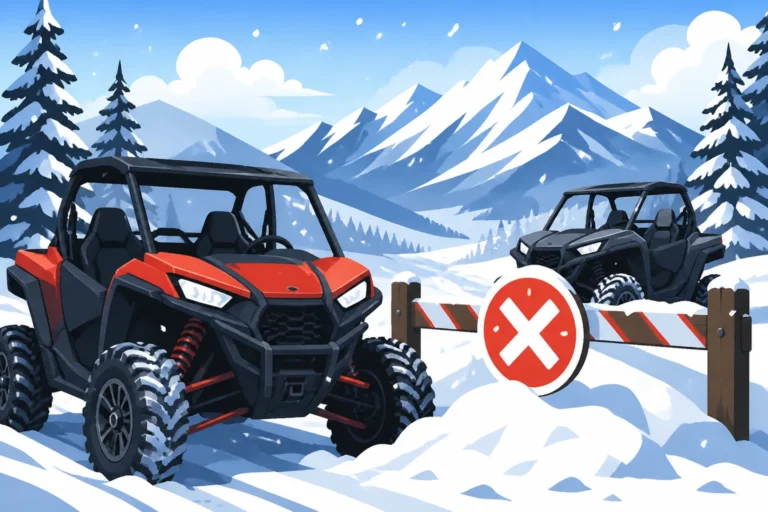
The area’s history includes bentonite mining, and the ground can behave very differently when wet than it does when dry. Mud may look manageable from a distance but quickly become sticky, slick, and difficult to cross. A machine that has no trouble on dry ground may lose traction, collect heavy mud, or become stuck after a short stretch.
Check the forecast before you leave and reconsider the outing if recent or expected rain could make the access road or riding surface difficult. Do not use another rider’s tire tracks as proof that conditions are safe; the soil may have changed since that person passed through. [How a Bentonite Mine Became Poison Spider Park] explains some of the site’s background, while [Poison Spider After Rain] is a useful related read for thinking through wet-weather conditions.
If the ground is wet, turning back early is often the best decision. Spinning tires can deepen ruts and damage the surface, while repeated attempts to power through can overheat a machine or leave a rider stuck farther from help. Once you are bogged down, stop before the machine digs in further and use a recovery method you can manage safely.
Prepare for wind, heat, and fast-changing conditions
The short drive from Casper can make the outing feel close to town, but that does not remove the need to prepare for outdoor conditions. Bring more water than you think you will need, dress for changing temperatures, and carry a layer that works if wind picks up. Dust, sun, and exposed terrain can make a few hours feel harder than expected, especially for children or riders who are not used to outdoor activity.
Check the sky as well as the forecast. If storms are building, do not wait until the first heavy rain to decide whether to head back. Wet ground may become difficult, and lightning or strong winds can make exposed areas unpleasant or unsafe. Keep enough fuel and daylight for the return to the staging area and the drive back to Casper.
In cooler weather, gloves and an extra warm layer can make a real difference, particularly if a rider is waiting while someone else handles a repair or recovery. In warmer weather, plan breaks before anyone feels exhausted. A group that is dehydrated or overheated is more likely to make poor route decisions.
A smoother trip from arrival to return
Stage, unload, and ride with a simple plan
When you reach the staging area, take a moment before unloading. Check signs, confirm that you are in the intended parking or staging location, and look over the ground for hazards. Keep the road clear, park in a way that leaves room for other visitors, and secure your trailer and loose gear before heading out.
Agree on a modest route plan: where you expect to ride, where you will turn around, and when you will return. For a first visit, a shorter route with room to learn the area is often more enjoyable than trying to cover as much ground as possible. You can always extend the ride if conditions, daylight, and the group’s energy make it sensible.
Keep track of the group at junctions. The lead rider should stop somewhere safe after a turn so the next rider can confirm the direction, rather than disappearing around a bend and assuming everyone saw the same marker. If someone is delayed, stop in a safe place and regroup; do not send one person off alone to search without an agreed plan.
Avoid the most common first-visit mistakes
The most frequent planning problems are easy to prevent: assuming a digital track is open, arriving without the required permit, underestimating muddy ground, and choosing a route that does not suit the widest or least experienced machine in the group. Each can turn a promising afternoon into a stressful one. A little preparation at home is easier than sorting out rules or recovery after you have unloaded.
Another common mistake is treating the area as if it were an unrestricted playground. Stay on routes that are open to your machine, respect signs and closures, and avoid private property. Even if a track appears well used, that alone does not establish public access. If you are uncertain, check before riding rather than trying to resolve the question after crossing a boundary.
Finally, leave enough time to clean and secure your equipment before driving back to Casper. Check that the trailer lights work, the machine is tied down, ramps are secured, and no gear has been left behind. If rain or mud has affected the machine, handle it safely at an appropriate location and avoid carrying loose mud onto public roads.
Use local resources for a better day out
Poison Spider is a convenient option for riders based in Casper, but the right plan depends on what you want from the day. If you are looking for other nearby options, [Wyoming ATV Trails Near Casper] can help you compare destinations. For background on the area’s size and setting, see [Poison Spider’s 284 Acres].
For a first trip, prioritize knowing where to stage, what routes are open, and how your group will handle changing conditions. Use onX Offroad or another mapping tool to prepare, but confirm access with current official information and signs. Before leaving town, check your fuel, permit, forecast, water, and recovery gear. Those simple checks make it much easier to enjoy the ride and return to Casper without an avoidable problem.
Disclaimer
This article is for general informational purposes only and does not constitute professional advice. Laws, prices and regulations vary by location and change over time. Consult a qualified professional for guidance on your specific situation.