How a Bentonite Mine Became Poison Spider Park
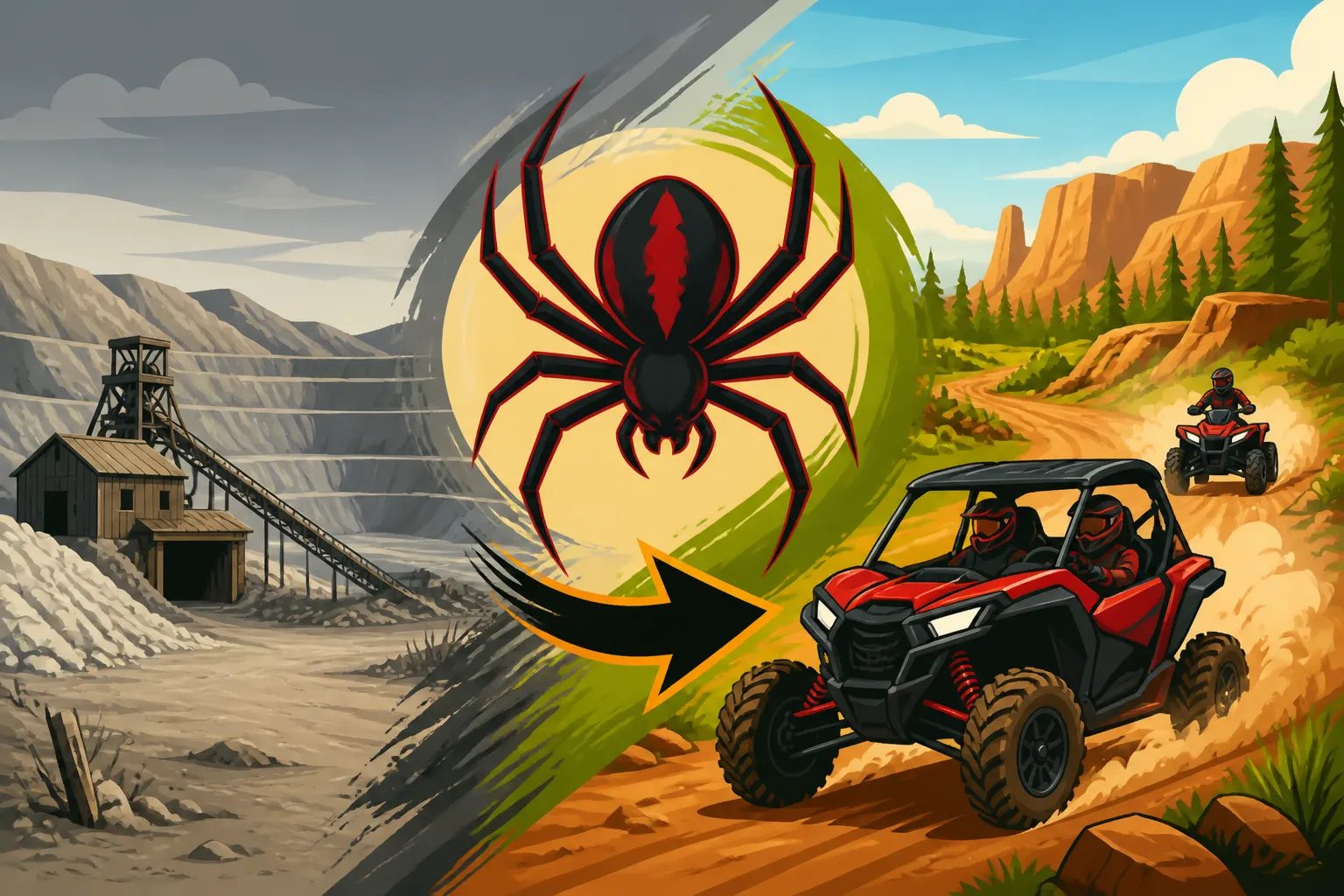
Poison Spider OHV Park west of Casper is a striking example of how a heavily disturbed industrial landscape can become a place for off-highway recreation. Its story begins with bentonite mining, but the change from mine site to riding area also reflects reclamation, public access, and the practical limits of riding on Wyoming’s dry, exposed ground. Here’s what to know before you go.
From bentonite mine to riding area
What bentonite mining leaves behind
Bentonite is a clay mined for industrial uses. Extracting it means moving earth: operators remove or reshape material to reach deposits, and the finished ground can have an uneven mix of slopes, benches, loose soil, and exposed rock. Once mining activity ends, a site may look dramatically different from the natural terrain nearby. It can also present problems that are easy to underestimate from a distance, including unstable edges and surfaces that change with weather.
That history matters at Poison Spider. The park’s riding terrain is not simply a naturally occurring trail network that happened to be designated for ATVs. Its industrial past is part of what shaped the ground riders encounter. In some places, the terrain’s irregularity can make for interesting riding; in others, it calls for slower speeds and a closer look before committing to a route.
The term “reclamation” can suggest a complete return to the landscape’s original condition. That isn’t always what reclamation means in practice. A former mine may be stabilized and adapted for a new use without becoming indistinguishable from untouched land. Poison Spider’s identity as a recreation site reflects that kind of change: a disturbed working landscape repurposed for riding rather than erased from its industrial history.
How reuse creates a different kind of park
Turning former mine ground into an OHV park can make use of land that might otherwise remain difficult to access or unsuitable for other activities. The terrain itself can offer a range of riding challenges, while a defined recreation area gives riders a place to go instead of treating every nearby track or open-looking patch of ground as fair game.
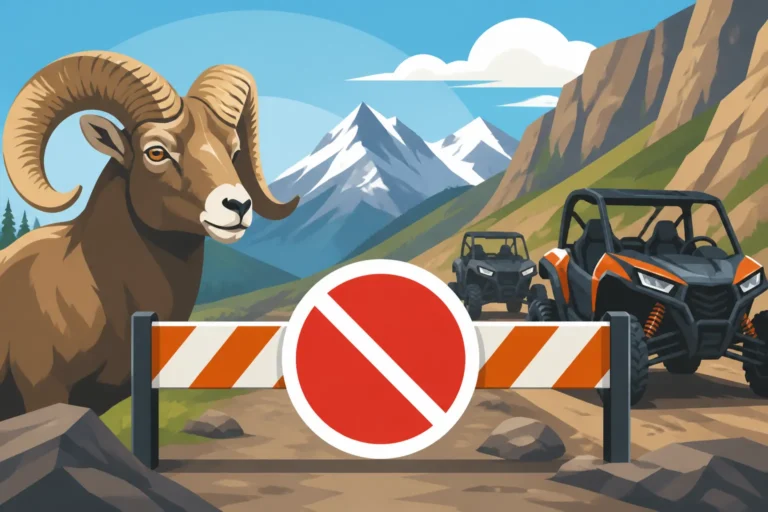
That distinction is important in Wyoming, where public access does not automatically mean every road, two-track, or open area is available to motorized travel. Riders still need to follow posted signs and applicable route rules. A map can help with planning, but it does not override a closure or make an unauthorized route legal. For a broader look at how Poison Spider fits into the Casper area, see [Poison Spider OHV Park Outside Casper](Poison Spider OHV Park Outside Casper) is not a valid link format? Wait instructions link title in single square brackets only no URL. We must write [Poison Spider OHV Park Outside Casper] plain. Ensure.
At Poison Spider, the former mine story is a useful reminder to read the place as it is today, not assume it behaves like a groomed municipal park. Ground conditions can vary across a short distance. A broad, hard-looking section may give way to loose material, sharp changes in grade, or a wet patch that holds more water than expected. That mix is part of the experience, but it also makes cautious route choices worthwhile.
What riders may find on the ground
A compact area with varied terrain
Poison Spider is a relatively compact riding area, often described as covering about 284 acres. That size can make it appealing for a short outing from Casper: you can spend time exploring without having to plan a full-day backcountry expedition. But acreage alone does not tell you how long a ride will take. A small site can still have enough variation in surface and slope to make a slow, careful loop feel substantial.
Expect the terrain to reflect its mining history rather than a single, uniform trail character. Changes in elevation, loose dirt, and exposed ground can affect traction and visibility. The route that feels easy on a dry day may be less predictable after precipitation, and a shallow-looking section can be more difficult to cross than it first appears. Give yourself room to stop and assess instead of following another machine’s line automatically.
Riders sometimes arrive expecting a traditional forest trail experience, with trees, shade, and a long route through changing scenery. Poison Spider is a different kind of outing. It is close to town and shaped by an industrial past, so the ride is more about negotiating varied terrain in a contained area than disappearing into a remote forest. For a practical overview of a short visit, [Poison Spider for an Afternoon] is a useful related topic.
Weather changes the ride
Dry ground can create its own challenge. Dust may reduce visibility, especially when several machines are moving through the same area. Leave space between vehicles, slow down if dust obscures the surface ahead, and avoid riding close behind another machine just to keep it in sight. A little patience is better than guessing where the next dip or turn begins.
Rain can change the character of the site quickly. Bentonite-rich soil can become sticky and slick when wet, and tires may pick up heavy mud that affects steering and braking. A route that was manageable on firm ground may become difficult to climb or descend after a shower. If the surface is saturated, turning around early is often the safer choice than trying to power through and getting stuck.
Before leaving Casper, check the forecast and think about what recent weather may have done to the ground. A clear sky at your starting point does not guarantee dry conditions at the park, and a brief storm can leave soft spots behind. For more on why clay terrain deserves extra respect after moisture, see [Poison Spider After Rain] and [Bentonite Mud and Why It Stops You].
| Condition | What it can mean at Poison Spider | A sensible response |
|---|---|---|
| Dry and dusty | Reduced visibility and loose surface material | Leave extra following distance and slow down when dust clouds the route |
| Recently wet | Slick clay, mud buildup, or soft ground | Avoid questionable sections and turn back if traction is poor |
| Changing weather | Conditions may differ from what you saw in town | Recheck the forecast and carry suitable layers and basic recovery gear |
| Unfamiliar terrain | Short slopes or uneven ground can hide hazards | Stop to inspect the line before committing |
Planning a visit from Casper
Getting there without treating every track as a route
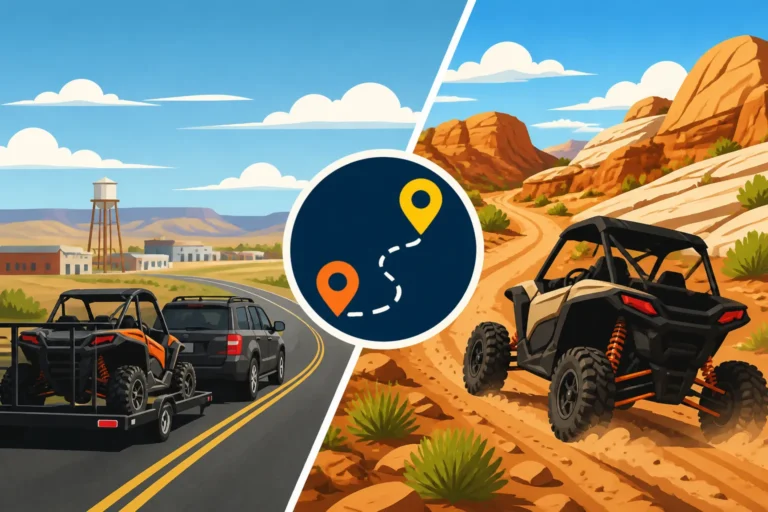
Poison Spider sits outside Casper, and the drive is part of its appeal for riders who want a manageable outing close to town. Still, the approach deserves attention. Follow the appropriate access route, watch for signs, and avoid assuming that any visible dirt track is open to public motorized use. An old mine road, private access lane, or route that looks established on the ground may have restrictions.
Navigation tools can help you understand the general area, but use them as planning aids rather than permission. Some riders use onX Offroad to review route information and orient themselves before a trip. It can be helpful to compare what you see on a map with signs and conditions on the ground, while remembering that the posted direction at a closure takes precedence over a line displayed on a screen.
It is also worth planning your arrival around the whole trip, not just the ride. Consider where you will park and unload, whether your vehicle and trailer can maneuver comfortably, and how much daylight you have for riding and loading back up. If you are new to the area, a conservative first visit gives you time to learn the layout without feeling rushed. The approach is covered in more detail in [Driving Poison Spider Road Out of Casper].
What to check before unloading
Before you head out, look for current access information and any signs at the site. Conditions and restrictions can change, and a route shown as usable in an older map may not reflect a recent closure. A tool such as onX Offroad may help you prepare by showing mapped routes and helping you keep your bearings, but it should be one part of your planning—not a substitute for checking local notices and following posted rules.
Make sure the machine suits the terrain and the ride you have in mind. Check tires, brakes, throttle response, steering, and fuel before leaving town. Bring basic supplies for a minor problem, including water, appropriate clothing, and a way to contact someone if your group becomes separated. Even a short ride can become uncomfortable if a machine develops a fault or the weather turns.
New riders should be especially honest about their comfort level. A steep or uneven section is not a good place to discover that a rider is uneasy with braking on a slope. Agree on simple group expectations before starting: keep visual contact where practical, stop in a safe spot if someone falls behind, and do not pressure anyone to attempt a line they do not want to ride. For route-planning context beyond this specific park, see [Wyoming Trail Maps and MVUMs].
Riding responsibly on former mine ground
Respect boundaries and changing surfaces
A former mine site can have hazards that are not obvious from the seat of a moving ATV or UTV. Avoid riding over abrupt edges, unstable banks, or ground that appears freshly disturbed. Do not assume a steep face is safe simply because tracks lead toward it. Another rider’s tire marks do not tell you whether the surface is stable or whether that route is still permitted.
Stay on routes intended for riding and pay attention to barriers and signs. Cutting across open ground can damage the surface, widen informal tracks, or put riders in areas that have not been designated for travel. Staying on appropriate routes helps keep the area usable and reduces the chance of unintentionally entering a restricted or hazardous section.
Keep your speed matched to what you can see. Short sightlines, dust, uneven ground, and other riders all make speed more consequential. Leave room to stop before a turn or change in slope, and slow down near other groups. If you cannot clearly see the ground ahead, treat that as a reason to ease off—not as a challenge to ride faster.
Permits, machines, and public-land habits
A riding area’s location outside town does not mean a Wyoming ORV permit is automatically unnecessary. Check which requirements apply to your machine and where you plan to ride. Wyoming’s permit rules are separate from road registration, and a permit for riding does not itself authorize travel on every road. The general rules are explained in [Wyoming ORV Permits Explained].
Machine setup matters, too. A side-by-side and a narrow ATV may experience the same terrain differently, particularly where routes are tight or surfaces are uneven. Before setting out, make sure your machine is suitable for the route and that everyone understands its controls. For a wider look at state riding areas and access, [Wyoming's Enrolled Roads and Trails] can help put local riding into context.
Noise, spark-arrester requirements, and other land-use rules may apply depending on where you ride. Do not assume that a private riding habit automatically carries over to public recreation land. Carry any required documents, follow site notices, and avoid riding in a way that needlessly affects nearby residents or other visitors. Responsible use helps protect access at sites that offer convenient recreation close to a community.
Why Poison Spider matters to Casper riders
A nearby alternative to a longer trip
One reason Poison Spider is appealing is its proximity to Casper. Riders can make a shorter outing without arranging a long drive into a forest or planning around a remote trailhead. That makes it a practical option when you have only part of a day, want to test a machine, or are introducing someone to off-road riding in a contained setting.
Being close to town does not make it a city park in the everyday sense. Riders still need to prepare for changing terrain, follow route rules, and bring what they need. The site’s industrial history also means it may not offer the shade, facilities, or natural trail feel people picture when they hear “park.” Setting expectations before you arrive helps avoid the disappointment of expecting a developed campground or a long, scenic forest ride.
For people comparing nearby options, Poison Spider offers a distinct experience from riding in the Bighorn or Medicine Bow National Forests. The terrain, setting, and scale are different, so it is worth choosing the area based on the kind of outing you want. A contained former mine site can suit a few hours of riding; a forest trip may be better for riders seeking longer designated routes and a broader backcountry setting.
A visible example of land changing use
Poison Spider’s transformation is a reminder that recreation landscapes are not always untouched landscapes. Industrial use can leave a permanent mark, but careful planning and a new use can give some disturbed land a second purpose. For riders, that history is more than a curiosity: it explains why the ground looks and behaves differently from a natural trail system.
It also invites a more thoughtful kind of visit. Treating the site as a shared recreation area means respecting its limits, staying on suitable routes, and leaving the ground as you found it. Avoid making new tracks, leaving trash, or driving through soft areas simply because no one else is nearby. Small choices matter at compact sites where repeated use can concentrate impacts.
If you want to explore further, start with the park’s setting and access, then check route information and conditions before you leave. Use a map app such as onX Offroad to support your orientation, but keep your attention on signs and the terrain around you. Most importantly, remain willing to change your plan if the ground is wet, visibility is poor, or a route looks unsafe. The best ride is not always the one that reaches the farthest point; sometimes it is the one that ends with everyone and every machine getting back without trouble.
Disclaimer
This article is for general informational purposes only and does not constitute professional advice. Laws, prices and regulations vary by location and change over time. Consult a qualified professional for guidance on your specific situation.