Camping Free Below the Dunes
Camping below the Killpecker Sand Dunes can make a riding trip near Rock Springs feel wonderfully simple: park your rig, set up camp, and wake up close to the sand. The tricky part is knowing what “free camping” actually provides, how to reach the area, and what to bring when services are scarce. This guide covers the practical details before you leave town.
What to expect when camping below Killpecker Sand Dunes
Free camping with limited facilities
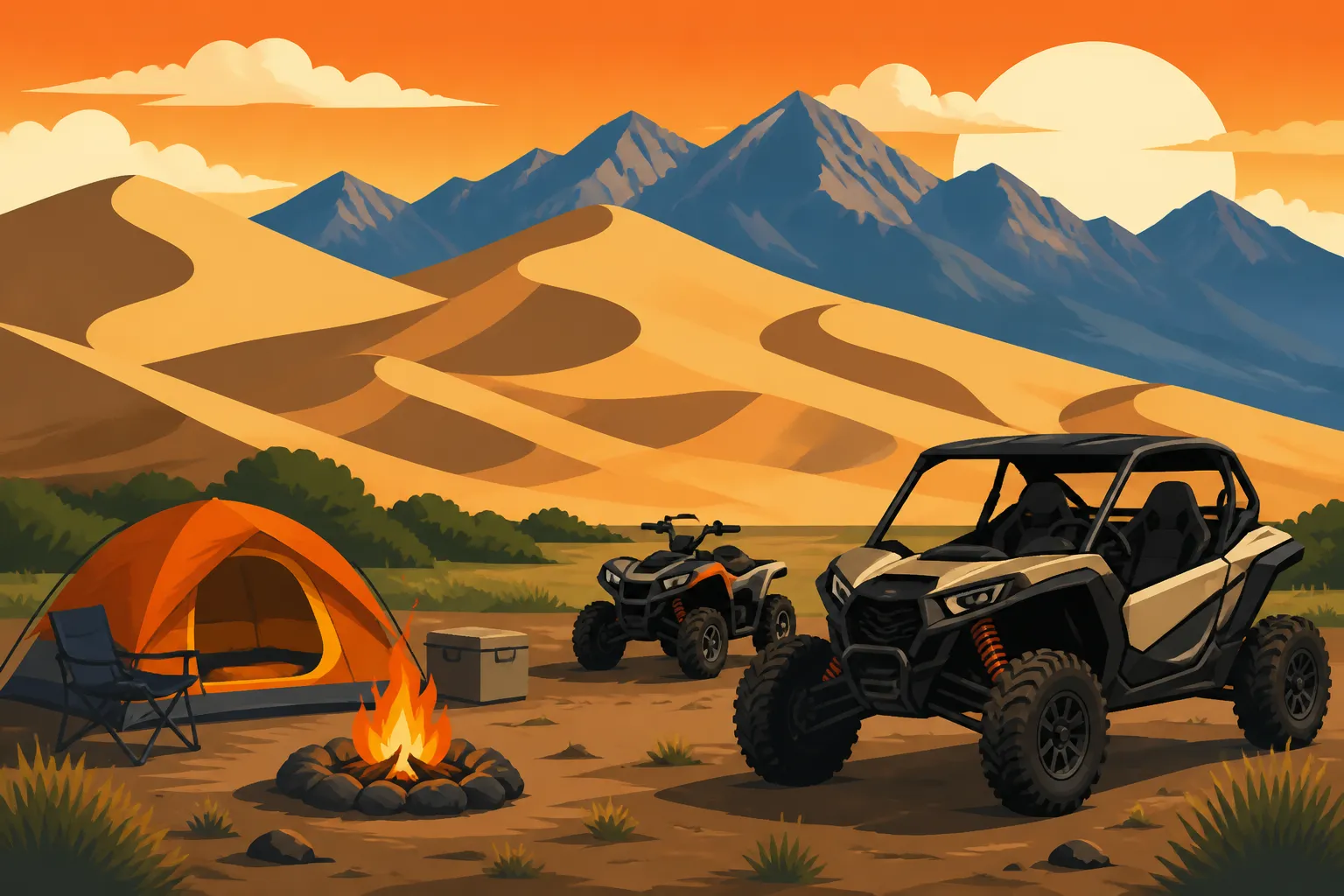
The camping area below the dunes is a convenient base for riding, but it is best approached as a simple, no-frills stop rather than a developed campground. Expect a basic place to camp, not a full-service facility with hookups, showers, a store, or potable water. That can be a welcome trade-off if you want to spend more time riding and less time driving between camp and the dunes.
Some basic amenities are associated with the area, including vault toilets and fire rings. Still, facilities can be limited, and a toilet is not the same as a water source or a place to dispose of every kind of waste. Bring enough drinking and cooking water for your whole group, plus a little extra for dusty rides, hot weather, or an unplanned delay.
It is also worth arriving with a plan for rubbish and food storage. Pack out your trash, secure food from wildlife, and leave the site as you found it. A quiet evening beneath a big Wyoming sky is much better when you are not making a late-night run back to Rock Springs because someone assumed there would be water or supplies at camp.
For a realistic picture of the amenities, see [Two Vault Toilets and Nothing Else] and [Wyoming Riding Areas With No Water]. They’re useful reminders to build your own comfort and water plan instead of relying on campground services.
What “free” does and does not mean
Free camping does not mean every part of the trip is automatically free or unrestricted. You still need to confirm that the spot you choose is open for camping, follow posted rules, and have the permits required for riding where you plan to go. A camping area and a nearby riding area can have different rules, so do not assume that permission to camp settles the question of where your ATV or UTV may travel.
If your route uses Wyoming public trails or roads open to off-highway vehicles, check the permit requirements before unloading. Wyoming’s permit rules are separate from another state’s registration or sticker. Start with [Wyoming ORV Permits Explained] and confirm which routes are open for the kind of machine you’re bringing.
Likewise, fire rings do not guarantee that a campfire is permitted on the day you arrive. Restrictions can change with conditions, and an established ring is not a substitute for checking current fire rules and signs. If a fire is prohibited, do not light one just because you see a ring. Review [Wyoming Fire Restrictions That Close Trails] as part of your trip planning, and bring a stove only if its use is allowed under the applicable restrictions.
| Trip detail | What to plan for |
|---|---|
| Camping | Confirm the specific area is open and camping is allowed there |
| Water | Bring all drinking, cooking, and washing water you will need |
| Toilets | Expect basic facilities, not a full-service campground |
| Fire | Check current restrictions before using a fire ring or stove |
| Riding | Verify routes, access rules, and permit requirements separately |
| Supplies | Buy fuel, food, and essentials before leaving Rock Springs |
Getting to camp and preparing for the dunes
Planning the drive from Rock Springs
Killpecker Sand Dunes are near Rock Springs in southwest Wyoming. Many visitors approach the area using US 191 and County Road 4-17, but conditions and the exact access point matter. Do not treat a map’s shortest line as a guarantee that a route is suitable for your vehicle, trailer, or RV. Check the access directions and road conditions before leaving town, especially if you are towing a wide trailer or driving a low-clearance vehicle.
The last part of a trip can feel more remote than the highway miles suggest. A missed turn, slow travel on rough ground, or a trailer issue can eat into daylight quickly. Top off fuel and pick up groceries in Rock Springs rather than counting on services near camp. If you are towing, check tire pressure, tie-downs, lights, and the spare before leaving pavement.
For route context, read [12 Miles Up US 191] and [Driving County Road 4-17 to the Sand]. Use directions alongside current road and access information, and pay attention to posted signs when you arrive. A route that looks straightforward on a phone screen may be different on the ground because of closures, weather, or local conditions.
Maps, access, and route checks
Download or carry maps before you lose dependable service. The area around the dunes can feel exposed and remote, and it is unwise to make your only navigation plan depend on a live phone connection. onX Offroad can be one useful mapping tool for reviewing routes and saving map information for offline use, but it should not replace land-manager maps, posted closures, or signs at the trailhead.
Use [Wyoming Trail Maps and MVUMs] to think through what your map needs to show. A route displayed in an app does not automatically mean it is open to motorized travel. Check the map’s date and source, compare it with official travel information, and look for on-the-ground notices before riding. Keep a paper backup or another offline option in case your phone battery dies or the device is damaged.
Before the trip, mark your likely camp location, the way back to the highway, fuel stops, and a few alternate routes. onX Offroad may help you organize those saved locations, but do the route review at home while you have time to compare information. At the dunes, confirm that the planned route is still open and appropriate for your machine. If an app and a posted closure disagree, take the closure seriously and do not ride through it.
Camping comfortably in a remote riding area
Water, food, and waste
Water is the most important item to plan carefully. Estimate what each person needs for drinking, meals, handwashing, and basic cleanup, then add a reserve. Riding in sun and wind can leave people thirstier than expected, and sand on hands, gear, and food containers creates extra demand for washing. If you have children or pets with you, plan for their needs separately rather than assuming the group’s general supply will cover everyone.
Keep food and rubbish contained, particularly overnight. Store food securely rather than leaving coolers open or snacks scattered around camp. A tidy camp is also easier to manage when wind picks up, which can happen quickly in open country. Before you leave, check the ground around your site for small pieces of litter, food scraps, and anything that could blow away.
Think through wastewater and toilet needs before arrival as well. Vault toilets are helpful, but they are not a reason to leave hygiene supplies, wipes, or rubbish behind. Pack a small cleanup kit with bags, hand sanitizer, and any personal items your group may need. If you are planning a longer stay, review [Camping Near Wyoming Trailheads] and [Wyoming Dispersed Camping for Riders] for broader considerations about low-service camping.
Wind, sand, and camp setup
Wind and shifting sand are part of the setting, not minor inconveniences. Fine grit can get into food, sleeping gear, vehicle interiors, and mechanical parts. Keep bags zipped, cover cooking supplies when they are not in use, and avoid leaving loose items where a gust can carry them away. A groundsheet and well-secured tent can make a noticeable difference when the weather turns breezy.
Choose your camp setup with the terrain and other visitors in mind. Park in a stable, appropriate spot and avoid blocking access routes, trail entrances, or areas that need to remain clear for emergency vehicles. If you are in a group, agree on where vehicles and trailers will go before everyone starts unloading. That small conversation can prevent camp from spreading into a travel lane or making it difficult for another party to pass.
For riding days, protect your machine from sand as much as practical. Check the air filter and other routine maintenance points according to the manufacturer’s guidance, and bring the tools and supplies you would need for a basic trail-side problem. [Wind and Shifting Sand on the Dunes] offers more context on what the conditions can feel like once you leave camp and head toward the riding area.
Making a safer and smoother riding trip
Match the plan to your machine and group
A dune trip can be a very different experience from an easy forest-road ride. Sand can slow a machine, increase effort, and make a short distance take longer than expected. Keep the first ride conservative, especially if anyone in your group is new to dunes or is riding a machine they have not used before. It is easier to extend a ride after everyone is comfortable than to manage fatigue far from camp.
Talk through the basics before you start: who is leading, who is bringing navigation, where the group will regroup, and what to do if someone gets separated. Set a turnaround time rather than riding until the day’s light is nearly gone. Carry water and a basic repair kit on the machine, not just in the trailer back at camp.
Make sure each rider understands that open-looking terrain is not an invitation to ride anywhere. Stay on routes and areas where motorized travel is allowed, and follow signs and closures. If a trail or access point is marked closed, choose another route rather than trying to skirt the closure. For more on the riding experience and conditions, see [Riding the Dunes at Killpecker] and [Riding the Open Play Area at Killpecker Dunes].
A practical checklist before leaving home
A few checks can prevent the most frustrating problems: arriving after dark without a clear camp plan, discovering you have too little water, or finding out that your preferred route is closed. Confirm access, camping rules, riding requirements, and fire restrictions shortly before departure. Pack for a basic campsite, not a resort, and leave enough time to reach camp and set up before sunset.
Use this checklist as a starting point:
- Confirm the route to the camping area and review any access notices.
- Verify that camping is allowed at your intended location.
- Check permit requirements and make sure your planned riding routes are open.
- Bring drinking water, food, fuel, first-aid supplies, and basic repair gear.
- Check fire restrictions before using a fire ring or camp stove.
- Download maps for offline use and carry a backup navigation option.
- Tell someone your general route and expected return time.
- Pack out rubbish and leave the campsite clean.
onX Offroad can help you keep route notes and saved locations together, but use it as one part of a bigger plan that includes official maps and signs. The best setup is the one you can still use when cell service is poor, a route changes, or the group needs to turn around.
Disclaimer
This article is for general informational purposes only and does not constitute professional advice. Laws, prices and regulations vary by location and change over time. Consult a qualified professional for guidance on your specific situation.