Riding the Dunes at Killpecker
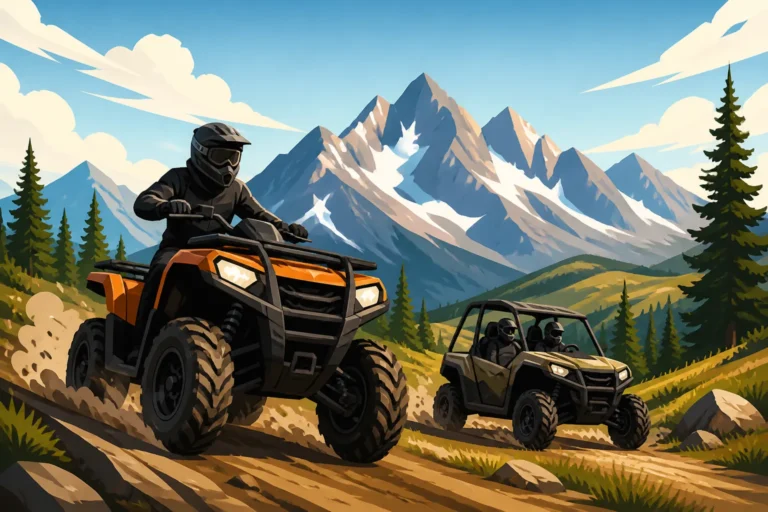
Killpecker Sand Dunes can look like a wide-open playground, but the ride goes better when you know where the open riding area begins, how to reach it, and what the shifting sand can do to a machine. This guide covers access, preparation, permits, camping, and practical ways to ride near Rock Springs without turning a fun day into a recovery job.
Planning a Ride at Killpecker Sand Dunes
Where the dunes are and how to reach them
Killpecker Sand Dunes sit northwest of Rock Springs in southwest Wyoming. The dunes and surrounding public lands make a striking change from the sagebrush and open country along the way, but getting there is part of the outing: riders generally travel from town toward US 191 and use local roads to reach the riding area. The final approach can feel remote, so plan your route before leaving pavement rather than expecting reliable cell service or convenient services at the dunes.
Before setting out, check current land-management information and confirm the route you intend to take is open to your vehicle. A road that appears on a general navigation app is not automatically open to motorized use, and an open road does not necessarily mean you can ride off it wherever you like. Carry a paper map or save useful map data for offline use. Tools such as onX Offroad can help with route planning and offline navigation, but use land-manager maps and posted signs to confirm access rules.
The dunes are a destination, not a drive-through attraction with services around every bend. Fuel up in Rock Springs, check your trailer and tie-downs, and make sure you know how to get back to your staging area. If you are unfamiliar with the area, take a moment to review [How to Drive From Rock Springs to Killpecker] and [Driving County Road 4-17 to the Sand]. Those route details can help you avoid the frustrating experience of reaching an unfamiliar junction and realizing your phone has no signal.
Choose a ride that suits your group
The open sand may tempt everyone to head straight for the tallest-looking slope, but riders do not have to treat the dunes as a contest. A first visit is often more enjoyable when you spend time learning how the sand behaves, choosing manageable terrain, and keeping your group within sight. The landscape can make it surprisingly easy to lose track of another machine once riders spread out over ridges.
Think about the least experienced person in the group before choosing where to ride. A newer rider may be comfortable on firm, gentle slopes but uneasy when the surface becomes steep, soft, or heavily rutted. Keep the pace flexible, agree on a meeting point, and avoid pressuring anyone to follow a route they do not feel ready for. For more ideas on timing and conditions, see [Riding Killpecker in Spring] and [Wind and Shifting Sand on the Dunes].
| Planning question | Practical approach |
|---|---|
| Where should we begin? | Start from the established access and staging area, then get oriented before spreading out. |
| What if we lose cell service? | Save maps offline and carry a backup map with your route marked. |
| How should beginners ride? | Start on gentler terrain and build confidence before approaching larger slopes. |
| What if the wind picks up? | Reassess visibility and navigation; turn back if landmarks become hard to recognize. |
| Where can we camp? | Check the designated and dispersed camping options before arrival, and bring what you need. |
Getting Ready for Sand Riding
Prepare the machine for soft terrain
Sand creates a different workload than a forest road or hard-packed trail. Tires can dig in, machines may feel less responsive on a climb, and a rider who stops abruptly on a soft incline may have trouble getting moving again. Use the machine’s recommended setup and consult its owner’s manual before changing tire pressure or other settings. There is no single adjustment that suits every ATV or UTV, tire, load, and rider.
Inspect the machine before unloading. Look over the tires, wheels, brakes, controls, fluids, and any protective equipment you rely on. On a UTV, check that seat belts and other safety equipment are in working order. Secure loose items so they do not shift when the machine pitches or hits uneven sand. If you are hauling extra fuel or recovery gear, make sure it is carried safely and does not interfere with passengers or controls.
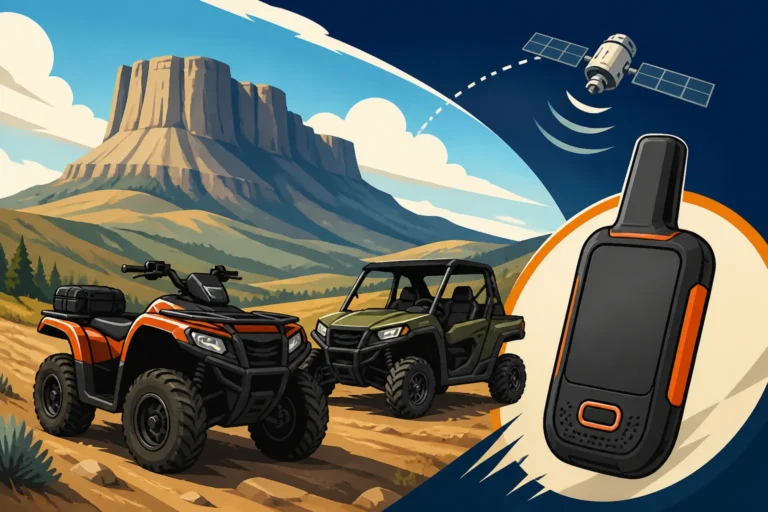
It is also worth thinking through a breakdown before one happens. Carry basic tools, water, and a way to contact help if your group has a suitable satellite communicator. A machine can become difficult to push or tow through soft sand, particularly if it is stuck on a slope or well away from the staging area. Agree in advance on how the group will respond if a machine gets bogged down; leaving one rider alone while everyone else races off to explore is a recipe for unnecessary stress.
Ride for visibility and changing conditions
Dune terrain often blocks the view beyond the next ridge. A rider coming over a crest may not see someone climbing the opposite side until the last moment. Approach blind crests cautiously, keep a safe following distance, and avoid stopping where another rider is likely to come over the slope. Stay alert for other visitors, including people walking around the dunes.
Wind and shifting sand can change the ride during the day. Strong wind may reduce visibility, soften familiar tracks, and make it harder to recognize landmarks. Sunglasses or goggles can help keep blowing sand out of your eyes, while layers and a face covering can make a long exposed ride more comfortable. Check the forecast before leaving town and be willing to shorten the day if weather makes navigation difficult.
Choose a pace that lets you respond to the terrain. Abrupt turns, hard braking, or aggressive throttle can unsettle a machine in soft sand, and a steep-looking slope may hide a difficult descent on the far side. If you are uncertain about a feature, stop somewhere visible and assess it rather than committing at speed. For a broader overview of the riding area, [Riding the Open Play Area at Killpecker Dunes] can help you think about how to approach the dunes as a riding destination rather than a single route.
Permits, Access, and Responsible Riding
Confirm the permit and route rules
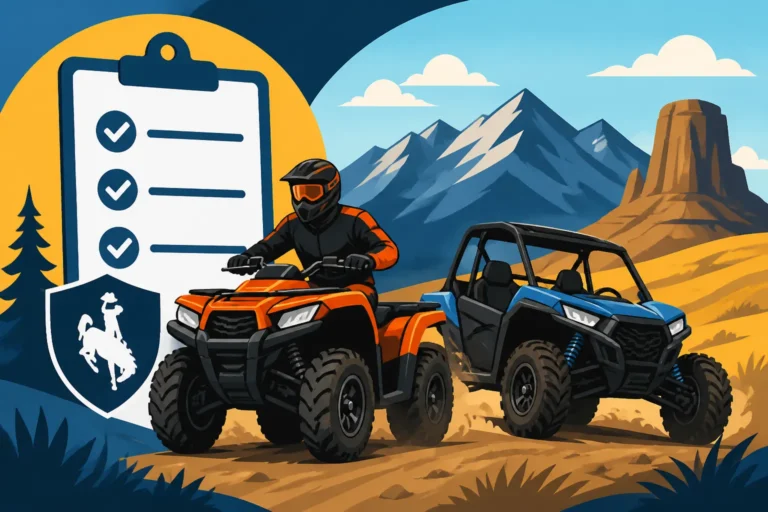
Before riding, check the permit requirements that apply to your machine and the land you plan to use. Wyoming’s ORV permit system is separate from a trail or route being open, so having a permit does not authorize riding on a closed road or outside an allowed riding area. Start with [Wyoming ORV Permits Explained] and [Wyoming Rules for Riding BLM Land], then confirm the specific access conditions for your planned route.
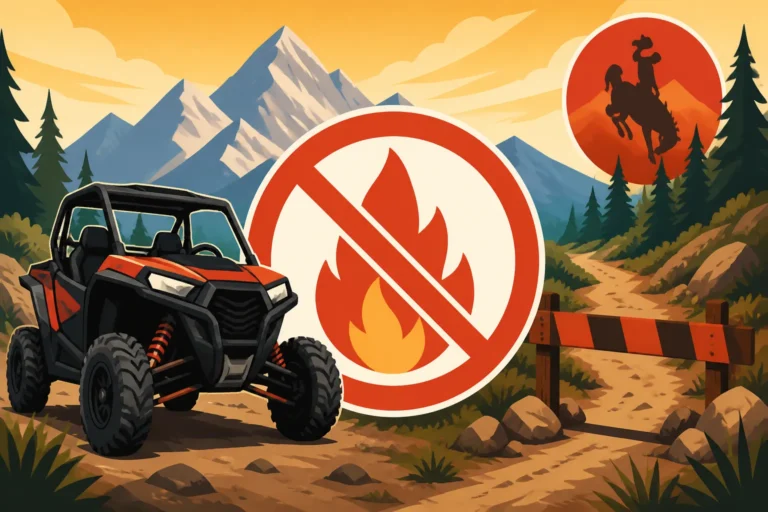
This distinction can feel inconvenient when you have driven a long way and just want to unload, but it matters. Land managers may restrict motorized use by route, season, vehicle type, or area. A map may also be older than a sign at the access point. If a posted closure conflicts with what you expected, treat the closure as the instruction to follow and check with the responsible land manager before proceeding.
Plan for every machine that will be ridden, not just the one towing the group’s gear. If you are visiting from another state, do not assume a home-state sticker substitutes for Wyoming’s requirements. The details can depend on how and where the machine will be used, so review [Wyoming ORV Permit for Nonresidents] before the trip. Keep proof of your permit accessible and attach the decal as instructed.
Keep the dunes and nearby land in good shape
The open feeling of the landscape can make it easy to forget how much impact a few machines can have. Stay within areas open to motorized use, avoid creating new tracks in restricted places, and do not use vegetation, wildlife habitat, or fragile ground as a shortcut. Follow posted signs, respect closures, and give other visitors room to enjoy the area.
Pack out everything you bring in, including food wrappers, broken straps, and small pieces of gear that can blow away. Keep noise considerate, especially near other visitors and camping areas. If you encounter wildlife or livestock, slow down and give animals space rather than chasing or crowding them. Gates and fences are working infrastructure in a landscape where public access and ranching can meet; leave gates as you find them unless signs say otherwise.
A little route discipline also makes the experience better for the next rider. Keep a map available, note where you parked, and avoid assuming that every track in the sand leads back to your trailer. If you use onX Offroad to keep your group oriented, mark the staging area and agree on a route back before splitting up. Treat that digital map as a planning aid, not a substitute for signs, land-manager information, or good judgment.
Camping and Making a Full Day of It
Decide what kind of overnight setup you need
Some visitors make Killpecker a day trip from Rock Springs, while others bring a trailer or camping setup and stay closer to the riding area. Either way, do not assume the dunes offer the supplies or facilities you would find at a developed campground. Check current camping information and access rules before choosing a spot, and arrive prepared with drinking water, food, waste bags, and a plan for managing trash.
Dispersed camping can be appealing because it lets you start riding early and avoid a long drive back at the end of the day. It also means you may have fewer conveniences, and weather can make a simple overnight feel more demanding. Keep your camp organized, use existing durable sites where allowed, and follow any restrictions on fires. A fire ring or an old fire scar does not guarantee that fires are allowed under current conditions.
For more practical trip-planning ideas, see [Free Camping at Wyoming's Killpecker Dunes] and [Camping Near Wyoming Trailheads]. Consider how close you want to camp to the riding area, how much privacy you need, and whether your vehicle can safely handle the access road with a loaded trailer. A campsite that looks convenient on a screen may be less appealing after a rough approach or a windy night.
Build a flexible itinerary
A good Killpecker day does not need to be packed from sunrise to sunset. Give yourself time to unload, check the machines, review the map, and let newer riders get comfortable. Set a turnaround time so the group is not trying to find its way back after dark, and keep enough daylight in reserve to load up without rushing.
Bring more water than you expect to use, particularly if the day is warm or windy. Dune riding can be physically tiring even when you spend most of the time seated; riders are climbing on and off machines, adjusting gear, and concentrating in exposed conditions. Snacks and regular breaks help keep the group attentive. If someone is tired, cold, overheated, or uncomfortable with the terrain, changing the plan is a sensible choice—not a failed trip.
Before leaving the area, check that everyone and every machine is accounted for, secure your load, and pack out all trash. If the route back to Rock Springs is unfamiliar, review it while you still have a signal or a usable offline map. That small pause at the end of the ride can prevent a tired group from making a wrong turn or discovering too late that a planned road is not available.
Disclaimer
This article is for general informational purposes only and does not constitute professional advice. Laws, prices and regulations vary by location and change over time. Consult a qualified professional for guidance on your specific situation.