Altitude and Carburetion in the Mountains
A machine that runs smoothly near Rock Springs can feel sluggish or rough when the trail climbs into the Snowy Range. Thin mountain air changes how much oxygen reaches the engine, and carbureted ATVs and UTVs can be especially sensitive. This guide explains what altitude does to engine performance, how to spot a mixture problem, and what to check before riding higher.
Why altitude changes engine performance
Less oxygen reaches the engine
As elevation increases, air pressure drops and the air becomes less dense. That means each intake cycle carries less oxygen into the engine than it would at lower elevation. The engine has less oxygen available to burn fuel, so it generally produces less power as you climb.
The effect can be easy to miss at first. A quad may still start and idle normally, but feel slower when accelerating, climbing a grade, or carrying a passenger. On a steep trail, that loss of response can matter: you may need more time to get moving, and a hill that felt manageable at the trailhead may demand more careful throttle and line choice.
There is no single performance-loss figure that applies to every machine. Engine design, temperature, humidity, maintenance, load, and elevation all play a part. A lightly loaded machine on a cool morning may behave differently from the same machine towing gear on a warm afternoon. Treat any rule of thumb as an estimate, not a promise about what your specific ATV or UTV will do.
Carbureted and fuel-injected machines respond differently
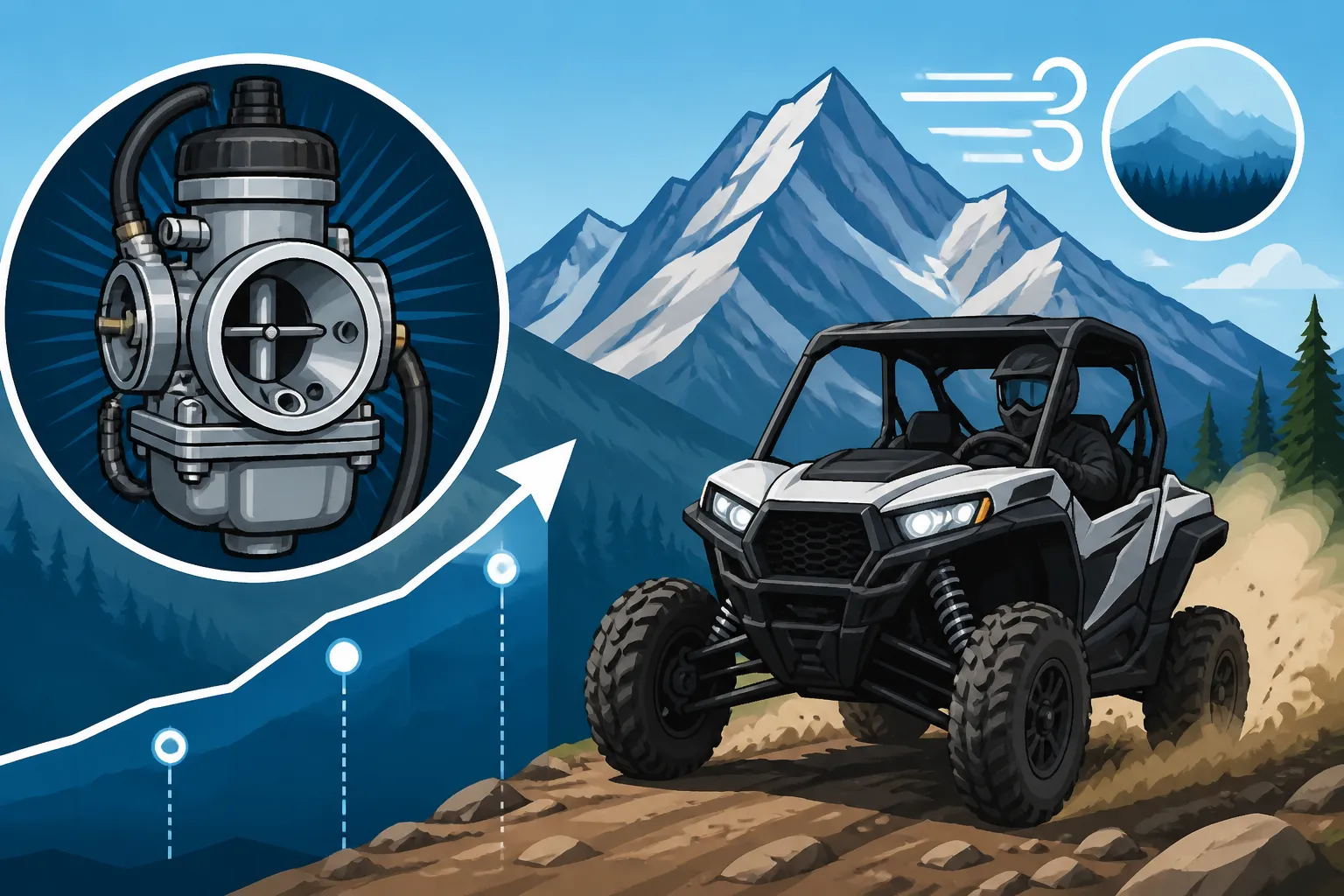
A carburetor mixes fuel with incoming air. If the amount of air changes with elevation but the carburetor continues supplying roughly the same fuel for a given setting, the mixture can become too rich at higher altitude. In plain terms, the engine may receive more fuel than it can burn cleanly with the available oxygen.
Fuel-injected machines use sensors and electronic controls to adjust fueling, so they often compensate for changing altitude more effectively. That does not make them immune to poor performance. A machine can still lose power because thinner air contains less oxygen, and fuel-injection systems have operating limits. A clogged air filter, old fuel, a worn spark plug, or a mechanical fault can also cause symptoms that resemble an altitude issue.
If you ride a mix of low and high terrain, note where the machine’s behavior changes. A carbureted ATV that runs well around town but begins stumbling higher on a mountain route may need attention. A machine that runs poorly everywhere is less likely to have an altitude-only problem. For route planning, Wyoming Riding at Altitude offers useful context on the conditions riders can encounter in the state’s higher terrain.
Recognizing an altitude-related mixture problem
Common signs of a rich-running carbureted engine
A carbureted machine that is too rich at elevation may feel dull or hesitant, especially when you open the throttle. It may stumble during acceleration, idle unevenly, or take longer to respond when you ask for power. Some riders notice a stronger fuel smell or dark, sooty deposits on the spark plug, though plug appearance alone is not a reliable diagnosis.
A rich mixture can also cause the engine to run roughly or misfire under load. Imagine climbing a forest road above Laramie with a side-by-side full of passengers and gear. If the machine begins to bog when you press the throttle, do not assume the trail is simply too steep. Ease off, find a safe place to stop, and check for obvious issues such as a blocked air intake, loose connection, or fuel leak before continuing.
Symptoms overlap with other faults. A dirty air filter restricts airflow and can worsen a rich condition. A failing spark plug, stale fuel, damaged fuel line, or carburetor problem can produce similar behavior. If the engine is unusually hot, makes unfamiliar noises, or loses power suddenly, stop riding and investigate rather than trying to “clear it out” with repeated hard acceleration.
Separate altitude effects from ordinary maintenance problems
Start with basic checks that do not require adjusting the carburetor. Make sure the air filter is clean and correctly installed, the intake is unobstructed, and the fuel is fresh and suitable for the machine. Check the owner’s manual for the recommended spark plug, maintenance interval, and any altitude guidance. If the machine has been stored for a long period, fuel-system trouble may be more likely than a sudden altitude change.
Pay attention to when the issue appears. If the engine runs well at a lower staging area and becomes noticeably rough only after a sustained climb, elevation may be contributing. If it is hard to start, misses at all elevations, or has been losing power over several rides, look for a broader mechanical or maintenance cause. A quick note in your phone about elevation, temperature, load, and symptoms can help a mechanic reproduce the problem.
Avoid changing multiple settings at once. Random carburetor adjustments can make diagnosis harder and may create poor running when you descend to lower elevations. If you are unsure which component to adjust, or do not have the right tools and service information, a qualified powersports technician is a safer choice than experimenting on a remote trail.
| What you notice | Possible explanation | Sensible first step |
|---|---|---|
| Hesitation mainly at higher elevation | Mixture may be too rich for the thinner air | Check the manual and inspect the air filter |
| Poor running at every elevation | Maintenance issue or mechanical fault | Check fuel, plug, intake, and recent service history |
| Sudden loss of power or unusual noise | Possible fault beyond normal altitude effects | Stop in a safe place and inspect before riding on |
| Symptoms change after a long descent | Carburetor setup may not suit the full elevation range | Avoid further random adjustments; get model-specific advice |
Preparing a carbureted ATV or UTV for mountain riding
Check the manual before changing jets or settings
Some carbureted machines have manufacturer guidance for operation at different elevations, including recommendations that may involve jetting or other carburetor adjustments. The right setup depends on the exact model, engine, and expected elevation range. Do not copy a jet size from a different machine or assume that advice for one model applies to another.
A change that improves operation near a high trailhead could make the engine run poorly after you descend. That matters in Wyoming, where a ride may move between noticeably different elevations over the course of a day. Before heading out, read the owner’s manual and ask a dealer or qualified technician about the elevation range you expect to ride. Bring the machine’s model and year information so the advice can be specific.
If you do make a manufacturer-recommended adjustment, test the machine close to home before relying on it far from help. Pay attention to starting, idle, throttle response, and operation under load. Keep a record of the original setup and any changes, so you can restore the previous configuration if conditions or plans change.
Pack and plan for a slower, more demanding ride
Reduced power can affect more than acceleration. It may make a loaded machine slower on climbs and leave less reserve for passing obstacles or recovering from a poor line. Travel with a sensible load, avoid overloading racks, and give the engine time to respond. If a hill feels wrong for the machine’s condition, turn around or choose another route rather than committing to a climb that leaves no safe way back.
Check the route, access rules, and current closures before you leave. A mapping tool such as onX Offroad can help you review route options and keep track of where you intend to ride, but confirm that the route is open and legal with the relevant land manager. The Wyoming Trail Maps and MVUMs guide can help explain why the map you use should match the area and land manager.
Build in extra time for delays, weather, and a machine that is not climbing as quickly as it does at lower elevations. Tell someone your plan, carry water and basic recovery equipment, and do not rely on cell service in remote areas. Routes in the Riding the Medicine Bow National Forest area, for example, can involve changing conditions and elevation, so check route details and seasonal access before setting out.
Riding safely when elevation and weather change
Adjust your riding style on climbs and descents
On a climb, use a steady approach and select a suitable line before you reach the steepest section. Sudden throttle changes can unsettle the machine, while stopping halfway up may make restarting difficult. Keep passengers and cargo balanced, and avoid forcing an underpowered machine up a slope simply because it managed the same grade at lower elevation.
On descents, control speed and leave room between machines. Engine braking may feel different if the engine is running poorly, and a loaded UTV can build momentum quickly on a long downhill. Use the braking method recommended in the owner’s manual, and do not coast in a way that reduces control. If the engine begins to stumble, stop somewhere safe rather than continuing into a more difficult section.
Elevation can make a ride physically demanding for people as well as machines. Take breaks, drink water, and watch for unusual fatigue, headache, dizziness, nausea, or shortness of breath. Those symptoms can have different causes, but they are a reason to stop and reassess rather than push on because the group has a schedule.
Prepare for Wyoming’s fast-changing mountain conditions
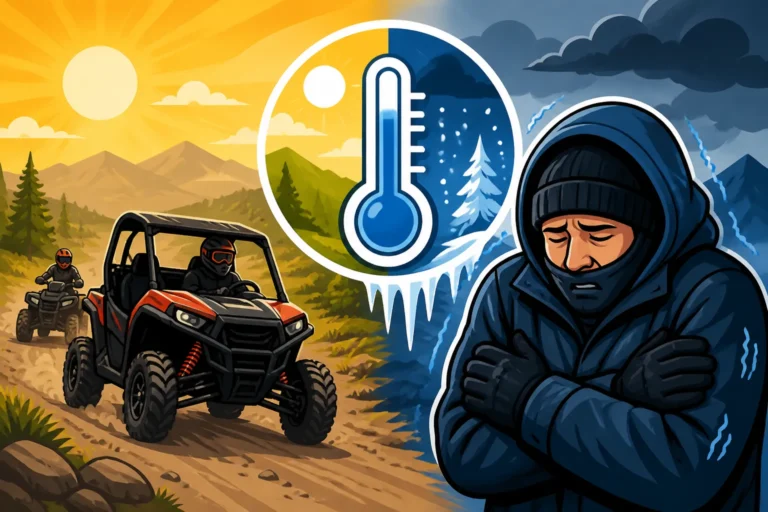
A carbureted engine’s performance is only one part of a mountain ride. Temperature can fall quickly, wind can build on exposed ridges, and storms can make a familiar road slick or difficult to follow. Pack layers and rain protection, and check the forecast for the route’s elevation rather than only the nearest town.
Keep your route conservative if you are riding with children, inexperienced operators, or a machine carrying a full load. Decide in advance where the group will turn around if the weather worsens or a machine begins running poorly. The Wyoming Trails Closed by Snow and Afternoon Thunderstorms in the High Country guides can help frame the kinds of seasonal and weather disruptions to plan around.
Before leaving, make sure everyone understands the plan for a breakdown. Carry a charged phone, but do not assume it will have service; a satellite messenger may be appropriate for remote trips. Review your intended route in onX Offroad or another mapping resource before you lose reception, and keep a separate way to navigate if your device battery runs low. For a broader look at ride preparation, Breaking Down Far From Help and Fuel Range Between Wyoming Towns address two practical concerns that are easy to underestimate.
The key is to treat a change in engine behavior as useful information, not a challenge to overcome with more throttle. Check simple causes first, follow model-specific guidance for carburetor adjustments, and plan routes around the machine’s condition, the elevation, and the group’s experience. If a machine continues to bog or misfire, have it inspected before relying on it for a remote mountain ride.
Disclaimer
This article is for general informational purposes only and does not constitute professional advice. Laws, prices and regulations vary by location and change over time. Consult a qualified professional for guidance on your specific situation.