Bear Spray on a Machine
A bear encounter can turn a relaxed Wyoming trail ride into a frightening scramble, especially when your spray is buried in a dusty pack or strapped somewhere you can’t reach. This guide explains where to carry bear spray on an ATV or UTV, how to keep it accessible and protected, and what to practice before riding in bear country.
Choose a Carry Position You Can Reach Quickly
Keep the canister on your body
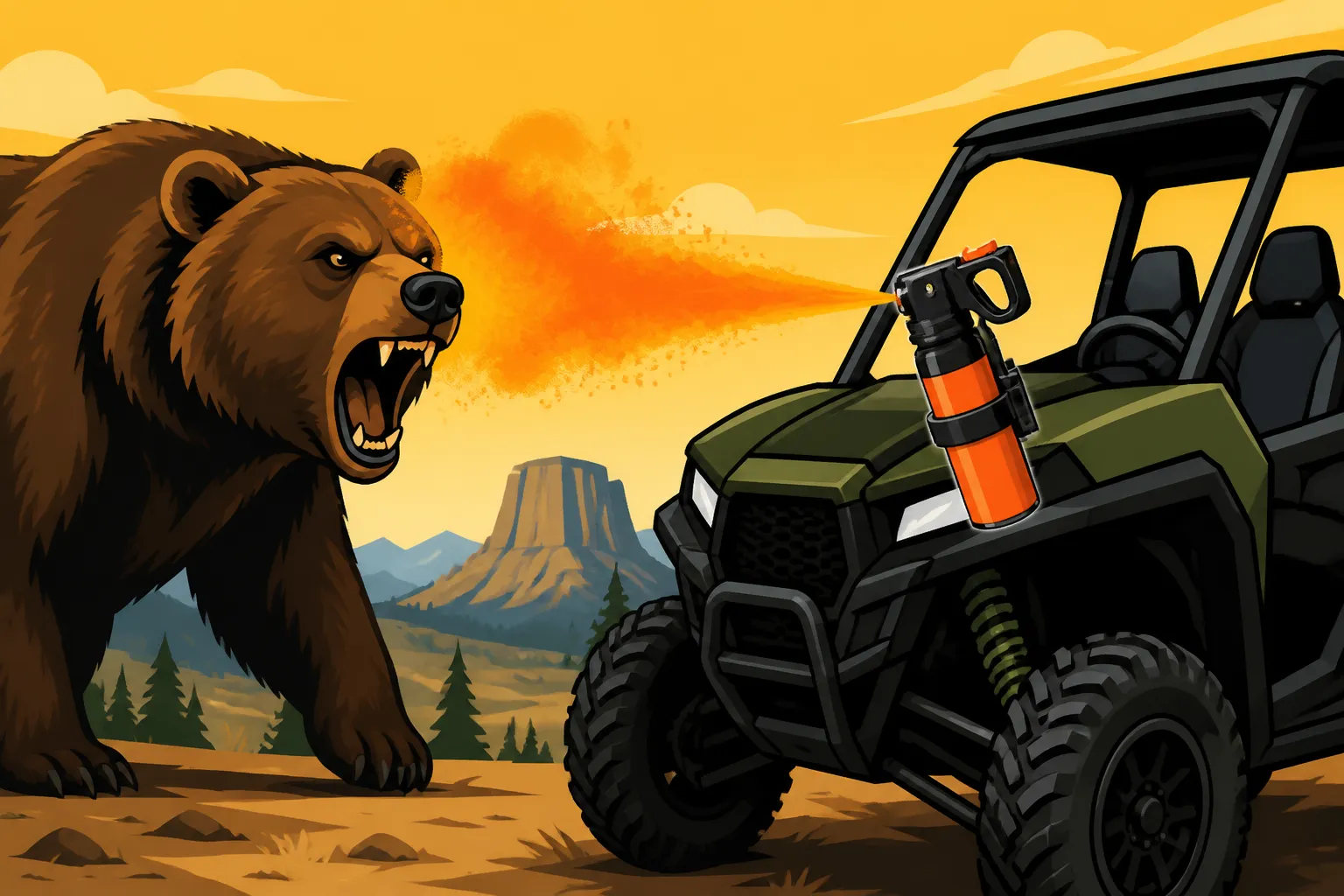
The safest place for bear spray is usually in a holster attached to your body, where it stays with you if you step off the machine or the ATV tips. A belt or chest holster can work, provided it holds the canister securely without making it hard to draw. Choose a position you can reach with either hand, and check that the canister does not snag on a jacket, pack strap, or seat belt.
That “stays with you” detail matters. A canister clipped to the handlebars may be easy to grab while you’re seated, but it can be out of reach after a rollover, a fall, or a sudden stop. A spray stored in a cargo box is even less useful if you have to dismount, open a lid, and search through other gear during a close encounter.
Before heading out, sit in your normal riding position and practice reaching for the canister without looking down. Try it with your gloves on and with the clothing you expect to wear. If you ride with a passenger, make sure their spray is also accessible to them; don’t assume they can reach yours from their seat.
Use machine-mounted storage only as backup
A mounted holster or quick-access pouch can be a useful backup, particularly in a UTV where the driver and passenger may each want a separate canister. But the mount needs to hold the spray firmly over rough ground, and it should not interfere with steering, throttle, controls, seat belts, or getting in and out. Avoid placing it where a hand could hit it accidentally or where a passenger’s legs could knock it loose.
Think about what happens when the machine is muddy, wet, dusty, or tilted. A spray canister that slides under a seat or disappears into a soft bag may be “on the machine,” but it isn’t readily available. Check the mount before every ride, and inspect it during breaks if the route has been especially rough.
| Carry option | Main advantage | Main drawback | Best use |
|---|---|---|---|
| Belt or chest holster | Stays with the rider when dismounted | Must fit securely and stay clear of riding gear | Primary carry for most riders |
| Quick-access machine mount | Easy to reach while seated | May be inaccessible after a fall or separation from the machine | Backup storage or an additional canister |
| Cargo box or backpack | Keeps spray protected from dirt and weather | Can take too long to open and search | Spare canister, not the primary one |
| Loose in a pocket | No separate mount needed | Can be difficult to draw and may snag or fall out | Avoid unless the pocket is designed for secure carry |
When planning a route through known bear habitat, a mapping app such as onX Offroad can help you understand where your ride goes in relation to terrain and access points. A map is useful for planning and navigation, but it cannot tell you whether a bear is nearby or replace local closure notices and trailhead information. For more on riding in bear habitat, see [Wyoming Rules for Riding in Grizzly Country] and Grizzly Country in the Northwest.
Protect the Canister From Trail Conditions
Keep it secure, clean, and easy to inspect
ATV and UTV rides expose gear to vibration, grit, branches, rain, and temperature changes. Choose a holster that fits the canister and protects the trigger area without covering the safety mechanism. The canister should stay in place when you bounce over ruts, yet come out smoothly when you deliberately draw it. Test that balance before leaving home rather than discovering a problem on a narrow trail.
Dust and grit around the safety clip or nozzle can make handling awkward. Keep the canister clean, and check that the nozzle is not blocked by dirt, fabric, or debris. Don’t modify the canister or its trigger assembly to make it fit a homemade mount. Follow the manufacturer’s instructions for storage, inspection, and replacement, and check the label for use and temperature guidance.
A canister can look fine and still be poorly positioned. After loading your machine, sit down and make sure the holster hasn’t been covered by a jacket, a hydration hose, a seat belt, or other gear. If you change layers during the ride, check access again. The small habit of confirming placement at each stop can prevent a frustrating search later.
Avoid leaving spray in a hot or exposed spot
Bear spray is a pressurized product. Keep it away from direct heat and follow the storage directions on its label. A closed cargo box or vehicle can become very warm in the sun, while a canister strapped beside an exhaust or left exposed on a parked machine may face conditions it was not designed for. Don’t assume that a spot is safe just because it is shaded for part of the day.
At the other extreme, cold conditions can affect how equipment performs. If you’re riding in chilly weather, check the product instructions and avoid leaving the canister out where it may be exposed to harsh conditions for long periods. The goal is not to wrap it so thoroughly that you can’t reach it; it is to protect it while keeping the holster practical and accessible.
Carry a spare only if you can store it according to the label and keep it separate from objects that could press or damage the trigger. Before setting off, inspect the canister for obvious damage, make sure the safety is in place, and confirm that you know how to use that specific product. For broader trip preparation, Camping Beside a Machine in Bear Country and Food Storage Rules at a Trailhead cover other ways to reduce problems around camp and staging areas.
Practice for a Real Trailside Encounter
Learn the instructions before you ride
Read the canister’s directions before your trip, not while trying to work out the safety clip in an emergency. Bear spray products may differ in their operation, so learn how yours is carried, how its safety is released, and how the manufacturer instructs you to deploy it. Practice the draw with an inert training canister if you have one. Never practice by spraying a live canister into the air; wind can carry the spray back toward you or other people.
A useful practice routine is simple: start in your normal riding gear, keep your hands in your usual position, then draw the canister and orient it as directed by the label. Repeat while seated and while standing beside the machine. If you ride as a group, each person should practice independently rather than relying on the driver to manage everyone’s equipment.
Bear spray is a defensive tool, not a reason to approach wildlife or take risks for a closer look. If you see a bear, give it space, avoid crowding it with machines, and follow current wildlife-agency guidance for the situation. Don’t assume that a running engine will make a bear leave. If a bear is on or near the trail, stop at a safe distance, communicate calmly with your group, and avoid blocking the animal’s route.
Decide who carries what before the group leaves
Every rider should know where their own spray is. In a UTV, the driver and passenger should each consider carrying a canister they can reach without leaning across the other person or unbuckling a seat belt. In a larger group, agree on a clear plan for stopping and communicating. Shouting, crowding around one machine, or rushing forward to film can make a tense encounter harder to manage.
Keep in mind that people may need to get off a machine for many reasons: to move around a blockage, help a rider, or deal with a mechanical problem. A body-mounted canister remains available during those moments. A machine-mounted canister can be a backup, but make sure riders know exactly where it is and how to retrieve it without reaching across hot parts or interfering with controls.
Route planning can also reduce surprises. onX Offroad may help you review your intended route and identify where you are relative to trail connections, but it does not replace checking land-manager maps, posted signs, or local guidance. Wyoming routes can cross different landscapes and jurisdictions, so review the relevant information before riding. For map basics, see Wyoming Trail Maps and MVUMs and Which Travel Map You Must Carry in Wyoming.
Build Bear Awareness Into Your Wyoming Ride Plan
Treat habitat and trail conditions as part of preparation
Wyoming riders may travel through open sagebrush, forest, creek bottoms, and remote mountain terrain in one outing. The setting can change quickly, and a quiet stretch of trail may limit how far ahead you can see or hear. Make a habit of watching the terrain as well as the machine in front of you, particularly near thick vegetation, water, or a blind bend.
Before departure, check for area-specific warnings, closures, and seasonal guidance from the relevant land manager. A route shown in an app is not necessarily open today, and a mapped trail does not mean wildlife is absent. onX Offroad can help you keep track of a planned route, but use official maps and signs to confirm access. If a trail is closed or a sign conflicts with your plan, respect the posted restriction and turn around.
A practical pre-ride check can include:
- Confirm the route and access rules with the relevant land manager.
- Tell someone where you plan to ride and when you expect to return.
- Check that each rider has accessible spray and knows how to use it.
- Keep food, trash, and scented items secured at camp or the trailhead.
- Agree on where the group will stop if wildlife is spotted.
- Carry a reliable way to communicate if the group becomes separated.
Don’t let safety gear distract from the basics
Bear spray is only one part of a sensible ride plan. Keep a safe distance from wildlife, avoid feeding animals, and never leave food or trash where bears can reach it. At camp, store food and scented items as required for the area and follow posted rules. If you’re traveling far from help, think through what you’ll do after a breakdown or separation from your group; Breaking Down Far From Help offers more on preparing for remote problems.
Be especially cautious about assuming that another person’s spray solves your own access problem. A passenger may be unable to reach the driver’s canister, and a group may become separated if one machine stops. Each rider should know where their own spray is, how to retrieve it, and who to contact or follow if the group needs to stop.
If you spot a bear, don’t pursue it, surround it, or ride closer for a better view. Give it room to move away, keep your group together when safe to do so, and follow the relevant wildlife authority’s guidance. A calm, planned response is more useful than a canister buried in a gear bag. onX Offroad can support navigation during a trip, but safe wildlife behavior and local rules still guide the decisions you make on the ground.
Disclaimer
This article is for general informational purposes only and does not constitute professional advice. Laws, prices and regulations vary by location and change over time. Consult a qualified professional for guidance on your specific situation.