Weight Between 300 and 3,000 Pounds
Trying to figure out Wyoming's rules for ATVs and UTVs can sometimes feel like trying to navigate a backcountry trail without a map. There are so many details, and one of the most perplexing can be the weight requirements for certain types of machines. You might have heard whispers about a 300 to 3,000-pound limit, and if you're scratching your head wondering why your beloved side-by-side or quad would need to fall within such a specific range, you're not alone. This guide is here to untangle that knot for you, explaining exactly why weight matters in Wyoming, especially if you're hoping to take your machine on the open road.
The Big Picture: Why Weight Matters in Wyoming
It might seem arbitrary at first glance, but the weight of your off-road machine in Wyoming isn't just a number on a spec sheet. It's a critical factor that can determine how your vehicle is legally classified, whether it can be titled, and ultimately, where you're allowed to ride it. The state has specific definitions for different types of off-road vehicles, and these definitions are designed to ensure safety, regulate usage on public lands, and delineate between machines intended purely for trails and those that might see some street use. Ignoring these distinctions can lead to frustration, denied registrations, or even citations.
Understanding Wyoming's Machine Classifications
Wyoming's legal framework for off-road vehicles differentiates between several categories, but for many riders, the primary distinction is between an "Off-Road Recreational Vehicle (ORV)" and a "Multipurpose Vehicle (MPV)." Your machine's weight, alongside other characteristics, is key to placing it into the right box, which then dictates your responsibilities as an owner and rider.
Off-Road Recreational Vehicles ORV
Most traditional ATVs and UTVs fall under the general ORV classification in Wyoming. These are the machines we typically think of when we picture tearing up dirt trails or traversing rugged terrain. For these vehicles, the state primarily requires an annual ORV permit to ride on designated public lands and trails. While there are general safety regulations and rules about where ORVs can operate, there isn't a strict weight range like the 300 to 3,000 pounds that would impact their ability to get this basic permit. You just need to have one, and make sure it's properly displayed. [Wyoming's Annual ORV Permit] covers the ins and outs of getting your decal. The focus for ORVs is primarily on safe, responsible off-road use.
The Multipurpose Vehicle MPV Class
Now, here's where the 300 to 3,000-pound rule truly comes into play. The Multipurpose Vehicle (MPV) class is a special designation in Wyoming for off-road vehicles that meet specific criteria, allowing them to be titled and registered for limited street legal use. This is a game-changer for many riders who want the convenience of riding from their camp to a trailhead without having to trailer their machine, or to access services in a small town. Without the MPV classification, your side-by-side or ATV is strictly off-road. The state created this classification to bridge the gap between traditional off-road machines and street-legal vehicles. [Wyoming's Multipurpose Vehicle Class] dives deeper into what this means for riders.
The path to getting your machine recognized as an MPV, and thus able to get a plate, is paved with several requirements. The unladen weight of 300 to 3,000 pounds is just one piece of the puzzle, but it’s a non-negotiable one. If your machine falls outside this range, it simply won't qualify as an MPV, regardless of any other modifications you've made. This can be a real bummer if you've invested in a super-heavy duty UTV for ranch work or a feather-light sport quad, hoping to plate it for quick trips into town.
What Wyoming Law Says About MPV Weight
Wyoming Statute 31-1-101 is the legal bedrock for the Multipurpose Vehicle definition, outlining the specific characteristics a machine must possess to be considered an MPV. It's not just about weight; seat height and wheel count also come into play. But for our purposes today, let's zero in on that crucial weight component.
The statute defines a "multipurpose vehicle" as a machine that is:
- Not more than sixty-five inches in width.
- Has an unladen weight of at least three hundred pounds but not more than three thousand pounds.
- Is equipped with a seat or seats for the use of an operator and passengers.
- Has a grab bar to hold onto.
- Has a steering wheel or handlebars.
- Is designed to travel on four or more non-highway tires.
This clear definition is why you can't just slap a license plate on any off-road vehicle. The weight range specifically targets machines that are robust enough for road use but not so heavy as to pose significant safety concerns or infrastructure strain on public roads. It's about finding a balance, and that balance is enshrined in law.
The Specifics of the 300 to 3,000 Pound Rule for MPVs
When we talk about the 300 to 3,000-pound weight requirement for Multipurpose Vehicles, it's not just a suggestion; it's a hard line. Your machine must meet this specific criterion for titling and plating as an MPV. This rule often catches people off guard, especially if they're coming from other states with different regulations, or if they've purchased a machine without fully understanding Wyoming's unique MPV class.
The "Unladen" Weight Defined
One crucial term in the weight requirement is "unladen." This isn't just a fancy legal word; it has a very specific meaning. "Unladen weight" refers to the weight of the vehicle itself, without any cargo, passengers, or fuel. Think of it as the weight of the machine in its ready-to-ride state, but empty. This distinction is vital because adding accessories, a full tank of gas, or gear can significantly increase the total weight, potentially pushing a machine outside the range if you're not careful.
For example, a side-by-side might have an advertised dry weight of 1,200 pounds from the manufacturer. But once you add fluids (oil, coolant, a full tank of gas), a winch, an aftermarket bumper, a roof, and perhaps a spare tire, its operating weight could easily climb another few hundred pounds. When assessing for MPV classification, however, the state is interested in that initial "unladen" figure. This is where having the manufacturer's specifications handy, or even a certified weigh slip, can be incredibly helpful.
Why This Specific Range? The MPV Sweet Spot
So, why 300 to 3,000 pounds exactly? It's all about striking a balance for a machine that can perform off-road but also safely operate on public roads.
-
Under 300 Pounds: Machines lighter than 300 pounds are generally considered too small, too lightweight, or perhaps too specialized (like some youth quads or highly specialized dirt bikes) to safely share the road with larger vehicles. Their handling characteristics, stability, and ability to be seen by other motorists might be compromised. They simply don't have the mass or robust construction typically expected of a road-worthy vehicle, even one with limited road access. [Machines Under 300 Pounds Cannot Become an MPV] provides more context.
-
Over 3,000 Pounds: On the other end of the spectrum, vehicles exceeding 3,000 pounds unladen weight start to approach the territory of small cars or light trucks. At this point, they typically fall into other vehicle classifications with more stringent safety, emissions, and registration requirements. Wyoming's MPV class isn't intended for full-fledged road vehicles, but rather for a specific niche of recreational machines that can temporarily traverse public roads. A machine over 3,000 pounds might also put undue stress on certain types of rural roads or trails not designed for heavier vehicles, or it might pose a greater hazard in a collision with a lighter ORV.
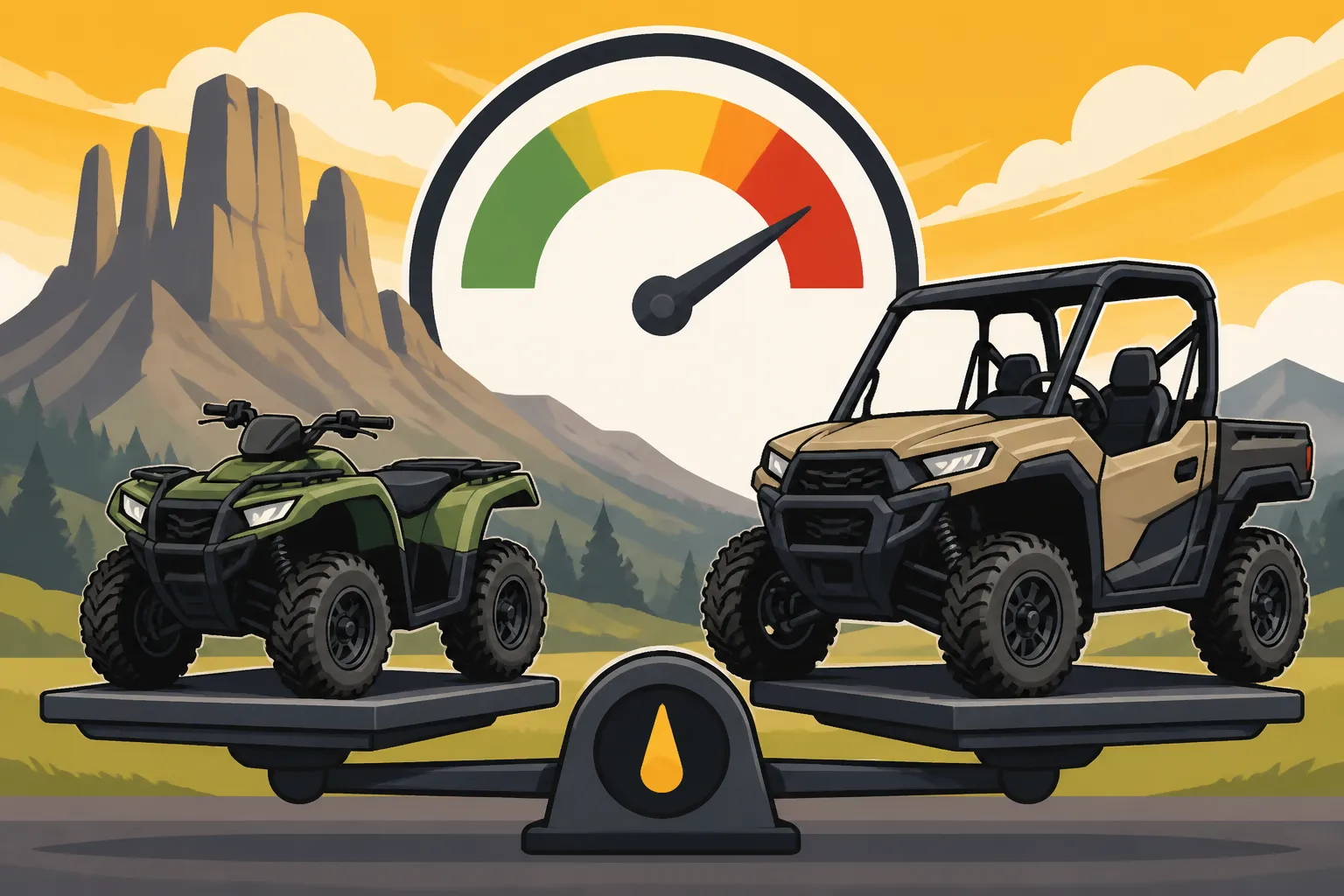
The 300 to 3,000-pound range effectively carves out a "sweet spot" for vehicles that are robust enough to meet the demands of limited road use without becoming full-fledged automobiles. It allows for a wide array of side-by-sides and larger ATVs to qualify, offering riders greater flexibility.
The MPV Rule That Started in 2008
This specific classification, and its associated weight and other requirements, didn't always exist in Wyoming. The MPV rule came into effect in 2008, a response to the growing popularity of larger, more capable side-by-sides and the desire among riders to have greater flexibility in using their machines. Before 2008, the lines were much blurrier, and the option to legally operate an ATV or UTV on public roads was far more restricted. This change was a significant win for the off-road community, opening up new possibilities for riding areas and access. Understanding [The MPV Rule That Started in 2008] helps to appreciate the thought and effort that went into creating this unique vehicle class. It was a forward-thinking move to accommodate the evolving landscape of powersports.
How to Accurately Weigh Your Off-Road Vehicle
Okay, so you understand why the 300 to 3,000-pound rule exists for MPVs. But how do you actually figure out if your machine falls within that crucial range? Many riders just assume, or go by a manufacturer's "dry weight" spec, which can sometimes be misleading. Getting an accurate "unladen" weight is paramount to avoid issues down the road when you go to title your machine.
Using a Certified Truck Scale
The most accurate and reliable way to determine your vehicle's unladen weight is to use a certified truck scale. These scales are typically found at truck stops, quarries, recycling centers, or even some agricultural co-ops. The process is usually straightforward:
- Prepare Your Machine: Ensure your vehicle is truly "unladen." This means removing any tools, spare parts, coolers, extra fuel cans, and especially any passengers. Make sure the fuel tank is full, as "unladen" technically includes fluids but not cargo.
- Locate a Scale: Search online for "public truck scales near me." Call ahead to confirm they are open to the public and if there's a small fee (usually minimal).
- Drive On: Carefully drive your ATV or UTV onto the scale. Ensure all wheels are on the weighing platform.
- Get Your Slip: The attendant will typically give you a weight slip or a printout, which serves as official documentation of your machine's weight.
Having this official documentation can be incredibly valuable when you're dealing with the County Clerk's office for titling. It removes any guesswork and provides concrete proof that your machine meets the unladen weight requirement.
Home Weighing Methods and Their Limitations
While a certified truck scale is the gold standard, you might be tempted to try weighing your machine at home. Be aware that these methods are often less accurate and might not be accepted as official proof by the state. However, they can give you a ballpark idea if you're close to the limits.
- Bathroom Scales and Planks: For lighter ATVs, some resourceful folks use multiple bathroom scales placed under each wheel, with sturdy planks distributing the weight. You'd sum the readings from all scales. The challenge here is ensuring the scales are perfectly level, calibrated, and can handle the weight without being damaged. This method is highly susceptible to error and is generally not recommended for official purposes.
- Trailer Weighing Method: If you have a trailer, you can weigh your truck and trailer combined, then weigh your truck and empty trailer. The difference is the weight of your machine, plus the weight of anything else on the trailer. This is slightly better than bathroom scales but still not ideal for precise "unladen" weight of just the machine itself. You'd need to subtract the trailer's weight carefully.
The biggest limitation of home methods is the lack of certification. The state wants reliable, verifiable data, and a personal bathroom scale simply won't cut it when it comes to legal classifications. Always default to a certified scale for official purposes related to MPV titling.
Factors That Affect "Unladen" Weight
Even after a machine leaves the factory, its unladen weight can change. It's not just about what you load onto it.
- Aftermarket Accessories: A heavy-duty winch, a full roll cage, robust bumpers, additional lighting, or upgraded wheels and tires can all add significant pounds. While these are often considered permanent fixtures, they contribute to the unladen weight as they become part of the vehicle's base structure. If you add these after purchase, your machine's weight may have shifted.
- Fluids: While the "unladen" definition technically includes necessary fluids like oil, coolant, and a full tank of fuel, it's worth noting how much these contribute. A large UTV might hold several gallons of fuel, adding tens of pounds. When you go to weigh your machine, ensure all fluid levels are topped off as they would be in operational readiness, but without any extra cargo.
- Modifications: Any structural changes, engine swaps, or material upgrades (e.g., swapping plastic fenders for metal ones) will alter the vehicle's unladen weight. It's crucial to re-weigh after any substantial modifications, especially if your machine was originally close to the 300 or 3,000-pound thresholds.
Being mindful of these factors helps you understand why the manufacturer's spec might differ from your current machine's actual unladen weight, and why getting an up-to-date weigh slip is so important.
Impact of Weight on Registration and Titling
Now that we've dug into what the 300 to 3,000-pound rule is and how to measure it, let's talk about the practical implications for you as an owner. This specific weight range directly impacts whether your machine can obtain an MPV title and, consequently, a license plate for limited road use. Without meeting this crucial requirement, that dream of cruising down a county road to your favorite trailhead might remain just that—a dream.
Titling vs. Permitting: The MPV Distinction
For most ORVs in Wyoming, you don't actually get a title in the traditional sense. You get an annual ORV permit (a decal) that allows you to ride on designated trails. This is where many people get confused because they expect a title for any vehicle they purchase. However, the state recognizes that many off-road machines don't have a specific title history like cars do. [Why No Title for an Off-Road Machine in Wyoming] explains this common situation in detail.
The MPV class changes this. If your machine meets all the criteria, including the 300 to 3,000-pound unladen weight, you can apply for an actual title for it through your county clerk. This title is a legal document proving ownership, similar to a car title. Once you have a title, you can then proceed to register your MPV and get a license plate through the county treasurer. This two-step process, involving two different county offices, can sometimes be a bit of a bureaucratic dance. [Two Counters for One Machine] helps clarify which office handles what.
The weight requirement is the gatekeeper for this entire process. If your machine is outside the 300-3,000 pound bracket, the county clerk will not issue an MPV title, and without that title, the county treasurer cannot issue a license plate. It's a fundamental hurdle that must be cleared. [Titling a Multipurpose Vehicle in Wyoming] is a must-read if you're considering this path.
Road Use Implications for MPVs
The whole point of getting your machine classified as an MPV and obtaining a license plate is for limited road use. But it's vital to understand what "limited" truly means. An MPV plate doesn't magically turn your side-by-side into a car that can go anywhere.
Wyoming's MPV rules allow these plated vehicles to operate on certain public roads, typically county and state highways that are not interstates, unless specifically prohibited or unless an interstate crossing is specifically designated. This means you can often ride to a trailhead, access small towns, or connect between different riding areas without needing to load your machine onto a trailer. This offers a huge convenience, especially for folks who live in rural areas or frequent large riding zones. [Wyoming's MPV Path to the Road] delves into the specifics of where you can and cannot ride a plated MPV.
However, even with a plate, you'll still need to ensure your MPV meets other equipment requirements for road use, such as proper lighting, mirrors, and a horn. You'll also need to carry proof of insurance and potentially have a motorcycle endorsement on your driver's license. The weight requirement is merely the first step to unlock this expanded access.
The MPV and ORV-MC Checklist Form
When you go to title your machine as an MPV, you'll likely encounter a specific form: the MPV and ORV-MC Checklist. This form is designed to ensure your machine meets all the statutory requirements, not just the weight. It asks for details about your machine's width, seat height, number of wheels, and yes, its unladen weight.
This checklist is your guide to what the state expects. You'll need to accurately fill it out, potentially providing documentation like the weigh slip we discussed earlier. If any of the criteria are not met, including the weight, your application for an MPV title will be denied. It’s crucial to go through this checklist thoroughly before you even head to the county clerk's office. [What the MPV and ORV-MC Checklist Form Asks] breaks down each section of this important document.
Remember, the county clerk isn't just taking your word for it. They're verifying that your machine legally qualifies for this special class. Being prepared with accurate information, especially regarding that crucial unladen weight, will make the process much smoother and prevent frustrating delays.
Common Mistakes and Misconceptions About ORV Weight
Even with clear rules, it's easy to get tangled up in misunderstandings when it comes to ATV and UTV weight. These misconceptions can lead to wasted time, unexpected expenses, or even legal trouble. As a fellow rider, I've seen these pitfalls firsthand, and it's always better to be informed than surprised at the county counter or by a roadside warden.
Relying Solely on Manufacturer's "Dry Weight"
One of the most frequent mistakes riders make is relying solely on the manufacturer's "dry weight" specifications found in brochures or online. While these figures are a starting point, they are often not the "unladen weight" as defined by Wyoming law for an MPV.
- What "Dry Weight" Usually Means: "Dry weight" typically refers to the weight of the vehicle without any fluids – no oil, no coolant, no fuel. It's essentially the machine stripped down to its bare components.
- What "Unladen Weight" Means for MPVs: As we discussed, "unladen weight" for Wyoming MPV purposes includes all operating fluids and any permanently attached accessories, but no cargo or passengers. This subtle but significant difference means that a machine advertised at 290 pounds dry might actually be over 300 pounds once you add oil, coolant, and a full tank of gas. Conversely, a machine listed at 2,900 pounds dry might easily exceed 3,000 pounds unladen with fluids and a heavy winch.
Always assume you need to verify the actual unladen weight for MPV titling, even if you have the manufacturer's specs. A quick trip to a certified scale is cheap insurance against a denied application.
Miscalculating or Estimating Weight
Another common pitfall is attempting to estimate the weight of your machine, or using unreliable home methods that provide inaccurate figures. It’s easy to think, "Oh, it feels about right," or to try the bathroom scale trick. However, when it comes to official state requirements, estimates won't pass muster.
The state needs verifiable, accurate data. An application for an MPV title that states an estimated weight, or a weight that is clearly inconsistent with the known models, will likely raise red flags and lead to further investigation or rejection. Imagine driving all the way to the County Clerk's office, waiting in line, and then being told your application is incomplete because your weight figure isn't legitimate. That's a frustration we all want to avoid!
This is also where good record-keeping comes in. If you're buying a used machine, especially from a private seller, you want to be sure you have clear documentation of its specifications. A properly drafted bill of sale can be crucial here. Services like LawDepot can help you create a robust bill of sale that includes all the necessary details, including the machine's VIN and its declared weight, offering some peace of mind for both buyer and seller. While it doesn't replace a weigh slip, it adds to the paper trail. [Checking a Frame Number Before You Pay] is another good practice to ensure you're getting what you expect, and to verify the machine's identity when buying used.
Ignoring the Weight Rule Altogether
Perhaps the most costly mistake is simply ignoring the weight rule, either out of ignorance or a mistaken belief that it doesn't apply to your specific machine. Some riders assume that if their UTV looks like a street-legal vehicle, it automatically qualifies for a plate. Others might believe that since they only plan to use it occasionally on a road, the rules are more relaxed. Unfortunately, that's not how it works in Wyoming.
The 300 to 3,000-pound unladen weight requirement is a foundational element of the MPV classification. If your machine doesn't meet it, it cannot be titled as an MPV, and therefore cannot legally obtain a license plate for road use. Trying to ride an un-plated machine on a public road where an MPV designation is required can result in significant fines and legal issues. It’s not worth the risk.
It's always better to do your homework upfront, verify your machine's weight, and understand all the requirements for MPV titling and registration. This proactive approach will save you headaches, time, and money in the long run, ensuring you can enjoy your machine legally and safely on Wyoming's diverse terrain and designated roadways.
| Feature / Criteria | Off-Road Recreational Vehicle (ORV) | Multipurpose Vehicle (MPV) |
|---|---|---|
| Primary Use | Designated trails, off-road areas | Designated trails, limited public road use |
| Wyoming State Title | Generally No (unless MPV qualified) | Yes (required for road use) |
| Wyoming License Plate | No | Yes (required for road use) |
| Wyoming ORV Permit | Yes (required for public land/trail use) | Yes (required for public land/trail use, even if plated) |
| Unladen Weight Range | No specific lower/upper limit for trail permit | At least 300 lbs but not more than 3,000 lbs |
| Width Limit | No specific width limit for trail permit | Not more than 65 inches in width |
| Seat Height Requirement | No specific minimum for trail permit | At least 24 inches from the ground (for operator's seat) |
| Steering Type | Handlebars or steering wheel | Handlebars or steering wheel |
| Road Equipment Needs | Not required for off-road use | Headlights, taillights, stop lamps, horn, mirror, etc. (for road use) |
| Driver's License / Endorsement | Not required for off-road trail riding (age restrictions apply) | Required for road use (M or MR endorsement often needed) |
| Insurance | Not required for off-road use | Required for road use (liability) |
This table clearly illustrates the key differences and highlights why the weight criterion is so specific and important for MPVs.
Taking the Next Steps with Your Wyoming ORV or MPV
Navigating the nuances of Wyoming's off-road vehicle laws, especially when it comes to specific details like the 300 to 3,000-pound unladen weight requirement, can feel like a lot to take in. But understanding these rules is crucial for legal and enjoyable riding in our beautiful state. Whether you're a seasoned rider with a new machine or a newcomer looking to hit the trails, taking the time to confirm your vehicle's classification and proper documentation will save you from potential headaches down the line.
Ensuring Your Paperwork is in Order
Beyond the physical attributes of your machine, the paperwork is equally important. If you're pursuing an MPV title, make sure you have all the necessary documents, including proof of ownership (like a manufacturer's certificate of origin or a prior title) and that all previous sales have been properly recorded. When buying or selling a used machine, a robust bill of sale protects both parties. As mentioned, services like LawDepot can be a valuable resource for creating legally sound documents like a bill of sale, ensuring all the critical details, including the machine's VIN and any agreed-upon weight specifics, are correctly captured. This step can prevent future disputes and make the titling process smoother.
The titling process for an MPV requires specific forms and a visit to your County Clerk. Remember, they are the ones who handle titles. Once you have your title, you then move on to the County Treasurer for the actual registration and license plate. [Wyoming Paperwork for an MPV Title] goes into greater detail about the forms and records you'll need to prepare. Having everything in order before you visit the office is a surefire way to avoid extra trips and frustration.
Verifying Other MPV Requirements
While we've focused heavily on the unladen weight, remember that it's just one piece of the MPV puzzle. To qualify for a title and plate, your machine must also meet other criteria, such as:
- Width: Not more than 65 inches in width. Measure from the widest points, usually the outside of the tires.
- Seat Height: The operator's seat must be at least 24 inches from the ground. This often means some sportier ATVs with lower seating won't qualify. [A Seat at Least 24 Inches Up] highlights this specific requirement.
- Safety Equipment: For road use, your MPV needs specific equipment like headlights, taillights, brake lights, a horn, and at least one mirror on the left side. These are not optional if you want to operate on public roads.
Before you even think about weighing your machine, give it a good once-over against the entire checklist. There's no point in getting a weigh slip if your machine is too wide or doesn't have the proper seat height.
Staying Up-to-Date on Regulations
Laws and regulations can change, even in Wyoming. While the core MPV rules have been relatively stable since [The MPV Rule That Started in 2008], it's always a good practice to periodically check with the Wyoming Department of Transportation (WYDOT) or your local county clerk's office for any updates. The world of off-road vehicles is constantly evolving, with new models and technologies, and the state's rules occasionally adapt.
Being a responsible rider means more than just knowing how to operate your machine; it also means understanding and adhering to the legal framework that allows us to enjoy our passion. By paying close attention to details like the 300 to 3,000-pound weight requirement and ensuring all your ducks are in a row, you can confidently and legally explore all that Wyoming's incredible landscape has to offer, both on and off the designated roads.
Disclaimer
This article is for general informational purposes only and does not constitute professional advice. Laws, prices and regulations vary by location and change over time. Consult a qualified professional for guidance on your specific situation.