Wyoming Rules for Riding Near Cattle
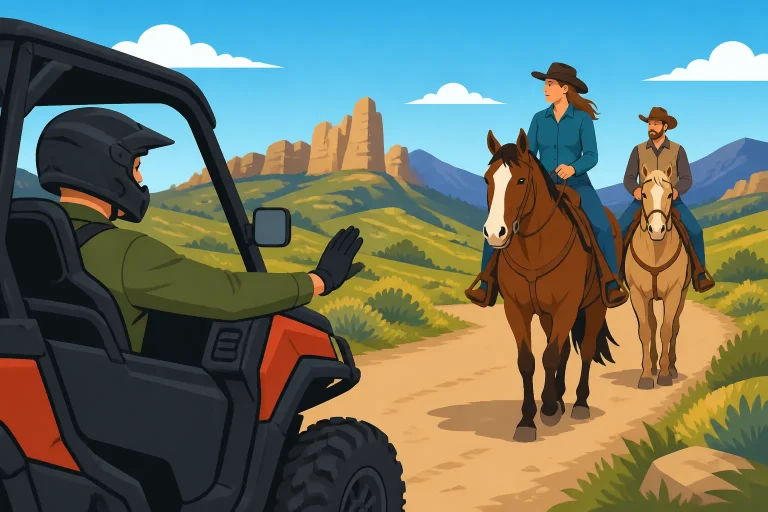
Cattle are part of many Wyoming riding areas, and meeting a herd on a trail or two-track can be unsettling if you are unsure what to do. The safest approach is to stay on a route that is open to your machine, slow down early, and give livestock space to move without pressure.
Before You Ride Near Cattle
Plan for livestock as part of the route, not as an unexpected obstacle. Cattle may be spread across a pasture, gathered near water, or standing on a road. Their presence does not, by itself, tell you whether a route is public or closed. Check the current land-manager map and signs, and follow any temporary closure instructions. If a map and a sign conflict, use the more restrictive direction until you can confirm the route’s status. When a Sign on the Ground Says Closed
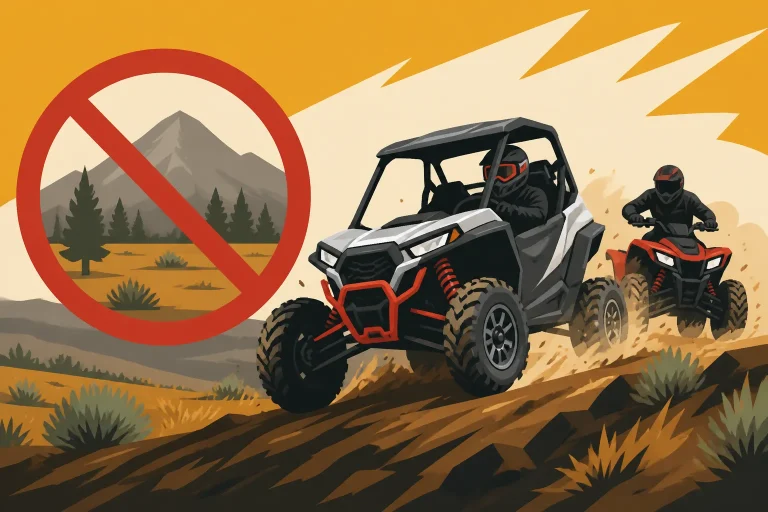
This matters because a public route can cross working land without giving riders permission to roam around the surrounding pasture. A road or trail may be open while the land beside it is not. Do not turn off the route to go around a herd, take a shortcut, or get a closer look. Wyoming Rules for Riding a Designated Route
The land type affects what access means. A route across private ground may require permission, while a federal grazing allotment has its own access conditions and closures. A grazing lease is not a general invitation to ride wherever cattle are grazing. Check the rules for the specific land and route before setting out. Wyoming Rules for Crossing Private Ground Wyoming Rules for Riding a Grazing Allotment Wyoming Rules for Riding a Grazing Lease
| What you encounter | Safer response |
|---|---|
| Cattle standing on an open route | Slow well before the herd, stop if needed, and give the animals time and room to move |
| Cattle beside the route | Stay on the route and pass calmly without steering toward them |
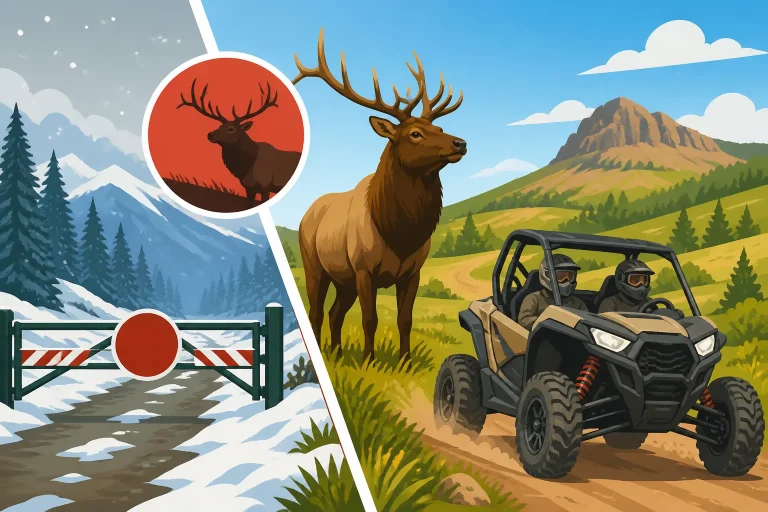
| A closed sign or barrier | Stop and follow the closure; do not ride around it |
| A gate across the route | Follow posted directions and leave it as you found it |
| A herd blocking a narrow passage | Wait at a safe distance rather than squeezing through or pushing cattle aside |
Before you leave, make sure everyone in the group understands the plan. Agree on a pace, a stopping place, and a way to signal other riders if cattle appear. Keep enough space between machines to avoid a sudden stop causing a collision. A little preparation is especially useful for a group with young or inexperienced riders.
What to Do When You Meet a Herd
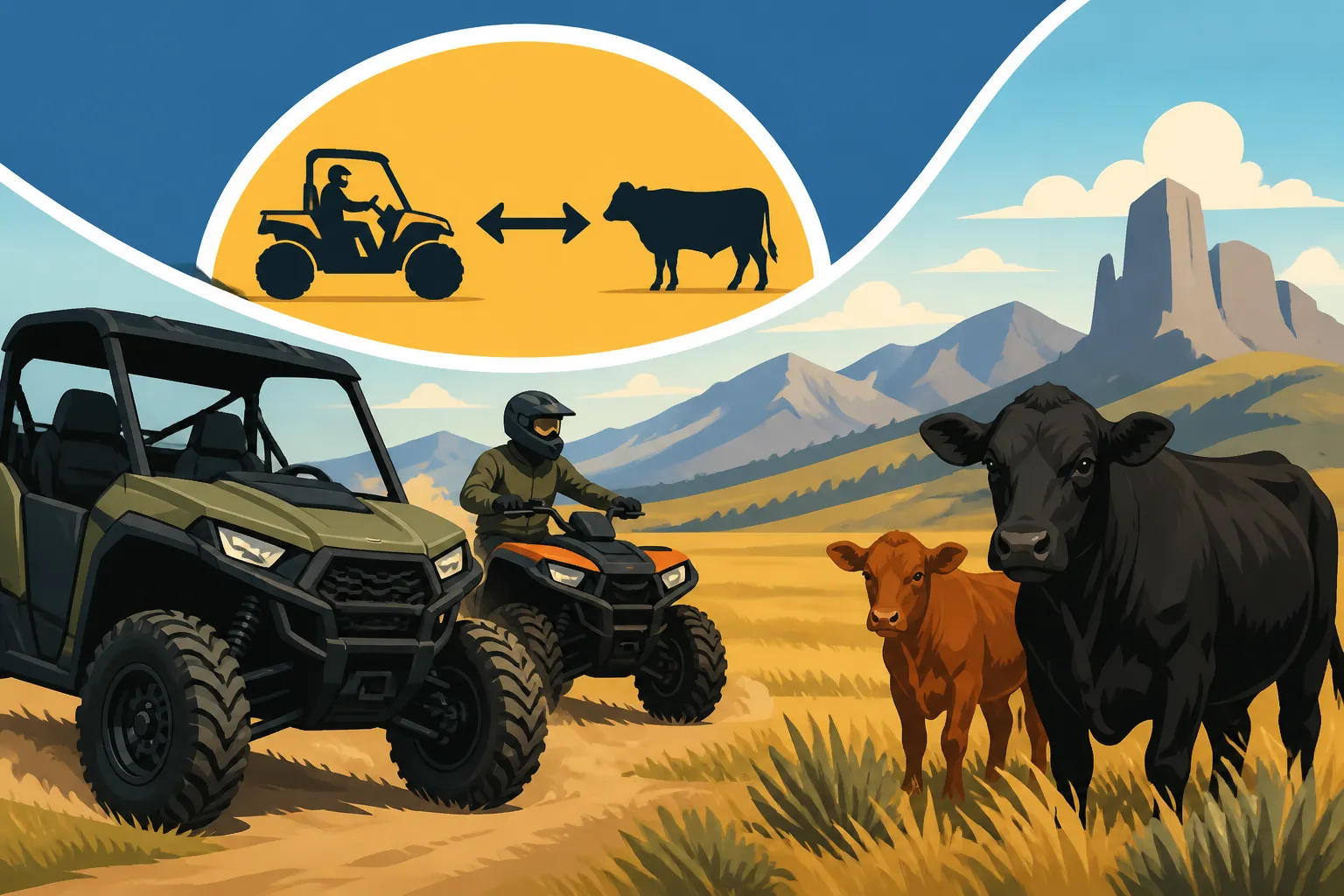
Reduce speed early and avoid sudden movements. If cattle are near the route, slow before you reach them rather than braking hard beside them. Keep your machine pointed along the route, and leave a wide buffer. If the animals begin moving, stop and let them choose where to go. Do not try to steer them, split the herd, or pass through the middle.
Engine noise can startle livestock, particularly when riders accelerate, rev repeatedly, or approach from behind. Use a steady, quiet throttle and avoid unnecessary horn use or shouting. If a cow or calf is close to the route, wait for it to move away rather than trying to rush past. Calves may follow their mothers or move unpredictably when separated from the herd.
If the herd does not clear the route, wait where you are safely out of the way. Do not ride off the road into grass or brush to get around it. That can damage vegetation, disturb livestock, and put you on land where you do not have permission to ride. If the route remains blocked, turn back only if you can do so without leaving the permitted route, or contact the land manager for guidance.
A simple response checklist can help:
- Slow down before reaching the cattle.
- Stop at a distance where the animals have room to move.
- Keep the group together and avoid crowding the herd.
- Wait quietly for a clear path.
- Pass slowly only when there is ample space and the animals are moving away.
- If there is no safe passage, turn back or seek direction from the land manager.
Do not try to “help” by chasing stragglers or driving around the herd to push it forward. A machine can make livestock scatter, and scattered animals may run onto another road, into a fence, or away from their group. The rider’s job is to stay predictable and give the animals time.
Riders should be especially cautious when visibility is limited. A bend, crest, dust cloud, or thick vegetation can hide cattle until you are close. Ease off the throttle in areas where livestock may be present, and keep enough distance behind the rider ahead to stop if the route suddenly becomes blocked.
Gates, Pastures, and Narrow Two-Tracks
A gate is not just an obstacle; it may be part of how a rancher manages livestock. Follow signs and any instructions posted at the gate. If you are authorized to use a route and the gate is meant to be opened, pass through carefully and leave it in the position you found it unless signage or the land manager directs otherwise. A gate left open can let cattle move into the wrong pasture or onto a road. Which Gates You Are Required to Close What Happens If You Leave a Gate Open
Never assume that an open gate means the land beyond it is open to riding. The route may continue through the gate, or it may lead onto private property or a restricted area. Confirm access from the map, signs, or land manager. If you are not sure whether you have permission, do not enter and ask before riding. Riding a Two-Track Across a Pasture
On a narrow two-track, do not squeeze between cattle and a fence or try to pass through a tight gap. Stop before the herd, keep the machine on the established route, and allow enough time for the cattle to move. If the ground beside the track is soft or vegetated, riding onto it to pass can leave ruts or damage the surface as well as disturb the livestock.
When a group meets cattle, the lead rider should stop in a place where following machines can also stop safely. Riders farther back should not continue forward to get a better view. Keep voices low, avoid revving, and leave the animals an open direction to move. Once the path clears, proceed one machine at a time at a slow, steady pace.
Cattle may be near a water source, fence crossing, or gate, where there is little room to pass. In that situation, waiting is usually better than attempting a close maneuver. If the animals remain in place, do not try to push them with the machine. A route’s availability does not guarantee that it will be clear of livestock at every moment.
If you encounter damaged fencing, an open gate, or cattle that appear to be in danger, do not attempt to repair fencing or move the animals unless the land manager has asked you to do so and you can do it safely. Note the location and contact the appropriate land manager or landowner when practical. A brief report can help someone responsible for the area address the problem.
Riding Responsibly Around Working Land
Respecting cattle starts with staying on the route and following the access rules for that land. Wyoming riding areas can include a mix of public roads, designated trails, private parcels, and grazing land. An established track on the ground is not automatically open to public riding. Check the travel map, look for signs, and confirm access where the route crosses private ground or a grazing area. Wyoming Trail Etiquette With Ranchers
Keep speed conservative near livestock even when the route is wide and visibility is good. Dust can reduce visibility for other riders and may bother animals. Avoid spinning tires, making abrupt turns, or stopping in a way that blocks a gate or livestock crossing. If you are riding with others, remind the group to pass calmly rather than treating cattle as a reason to race or take a shortcut.
Dogs can add another complication. Keep a dog controlled and close to your group, and do not let it approach or chase cattle. If a dog cannot be kept under control around livestock, leave it at home. A dog running after cattle can cause the same kind of disturbance as a machine, and it may put itself and the animals at risk.
If cattle are moving along the road ahead of you, do not follow closely or try to overtake them in a confined area. Give the herd room and wait for an opportunity to pass only if there is a clear, safe route that does not take you off the permitted track. If the road is too narrow, remain back until the animals move away.
Be considerate when asking for help or reporting a problem. If you need to contact a rancher, land manager, or agency, describe the location and what you observed without assuming who is responsible for the cattle or the road. For a route-access question, ask the land manager whether riding is allowed on that specific segment, not whether the general area is open.
The core rule is straightforward: stay on the authorized route, keep distance from livestock, and do not make cattle move for your convenience. If you cannot pass without crowding, chasing, or leaving the route, wait or turn back. That small delay protects the herd, the land, and your access to ride there in the future.
Disclaimer
This article is for general informational purposes only and does not constitute professional advice. Laws, prices and regulations vary by location and change over time. Consult a qualified professional for guidance on your specific situation.