A Forest Service Rated Arrester in Wyoming
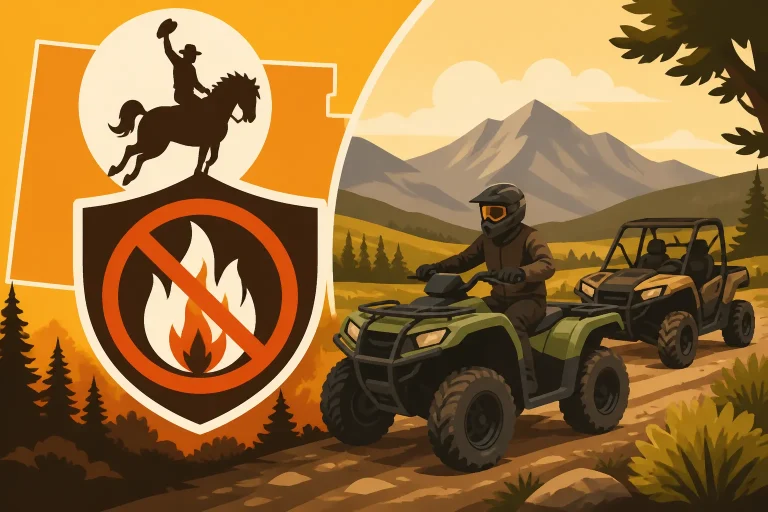
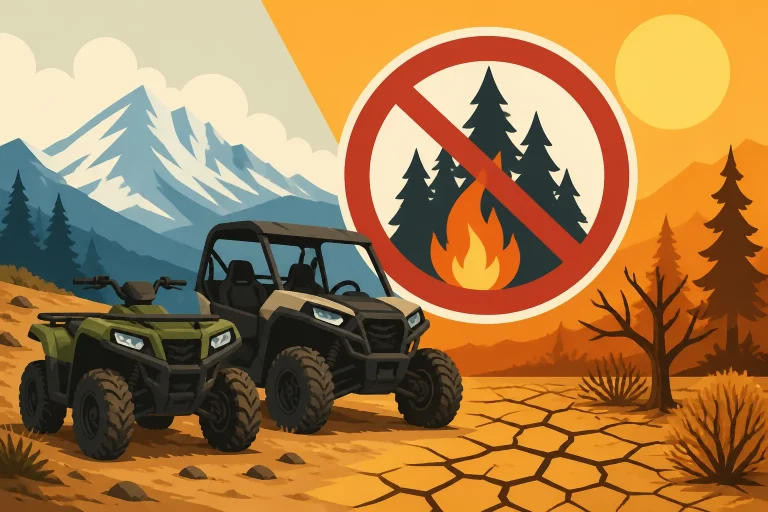
A Forest Service rated arrester in Wyoming is not just a part to check when a machine is new. Riders need a working, approved spark arrester and a muffler that meets the rules for the route they plan to ride. Here’s how to check your setup, avoid confusing a product label with route approval, and prepare for riding on Bighorn National Forest roads and trails.
What “Forest Service rated” means for a Wyoming ride
In everyday shopping, “Forest Service rated” is often used to mean that a spark arrester is approved for use on public land. The important practical point in Wyoming is that a product description alone does not establish that a machine meets the applicable requirement. Wyoming State Parks, Historic Sites, & Trails says ORVs must have a muffler with an approved spark arrester when operated on roads and trails. The Forest Service also requires riders on Bighorn National Forest routes to have a Wyoming off-road recreational vehicle decal.
Check the exact wording carefully. A listing that says “spark arrester,” “screen,” or “fire screen” may not tell you whether the device is approved for the use you have in mind. Nor does a muffler being quiet, new, or made for an off-road vehicle automatically prove that its arrester meets the local requirement. Confirm the requirement for your riding area with the Forest Service or the relevant land manager, and check the product documentation for a clear statement about the arrester’s approval.
The same distinction applies to a machine’s original equipment. If your ATV, UTV, or dirt bike came with a spark-arresting muffler, that is a useful starting point, but it is still worth inspecting the equipment and checking the machine’s manual. A damaged, modified, missing, or clogged component may not perform as intended. If a previous owner changed the exhaust, do not assume the replacement kept the original arrester or its approval.
This is a separate issue from the Wyoming ORV permit. A permit does not certify a muffler, and an approved spark arrester does not replace the permit. Wyoming State Parks, Historic Sites, & Trails requires a state ORV permit on enrolled roads, routes, and trails designated for ORV use, and says there is no reciprocity for out-of-state ORV or OHV registrations. A visitor’s home-state registration alone therefore does not satisfy the Wyoming permit requirement.
For a broader overview of the equipment rule, see Wyoming Spark Arrester Requirement. If your plans include national forest ground, Wyoming Rules for Riding a National Forest can help you separate the equipment question from the route-access question.
How to check the arrester before you leave
A useful check begins with the machine, not the sales listing. Identify the muffler and arrester currently installed, then compare that setup with the manufacturer’s documentation and the rules for the specific area. If you cannot tell whether a part is approved, ask the land manager or a qualified service shop before heading out. A vague product description or verbal assurance from a seller is not a substitute for confirmation.
Use this practical sequence:
- Identify the installed equipment. Check the machine manual, service records, or part markings to determine which muffler and spark arrester are fitted. If the exhaust has been modified, try to identify each replacement part rather than relying on the original manual alone.
- Look for visible damage or missing components. Check that the arrester is present and seated as designed. Look for loose fittings, damaged screens, cracks, or evidence that someone has removed or altered part of the assembly. Do not ride with a damaged or incomplete setup.
- Check for obstruction and maintenance needs. Carbon, debris, or other buildup can interfere with exhaust flow and normal operation. Follow the machine maker’s maintenance instructions; do not poke through or remove a component in a way that changes the equipment.
- Confirm approval, not just fit. A part that bolts onto the machine may still be the wrong part for the required standard. Ask the manufacturer, dealer, or land manager to clarify the approval status if the documentation is unclear.
- Recheck after repairs or modifications. Exhaust changes can affect the arrester setup. Keep the replacement part information and service records with your machine paperwork so you can identify what is installed.
If you shop online, including on Amazon, treat the listing as a way to locate a possible part, not proof that it is accepted on a particular Forest Service route. Compare the exact make and model fitment, read the manufacturer’s documentation, and confirm the approval language. If the listing is vague, contact the seller or manufacturer before buying. Do not rely on reviews, a product photo, or a broad phrase such as “for off-road use” to settle a compliance question.
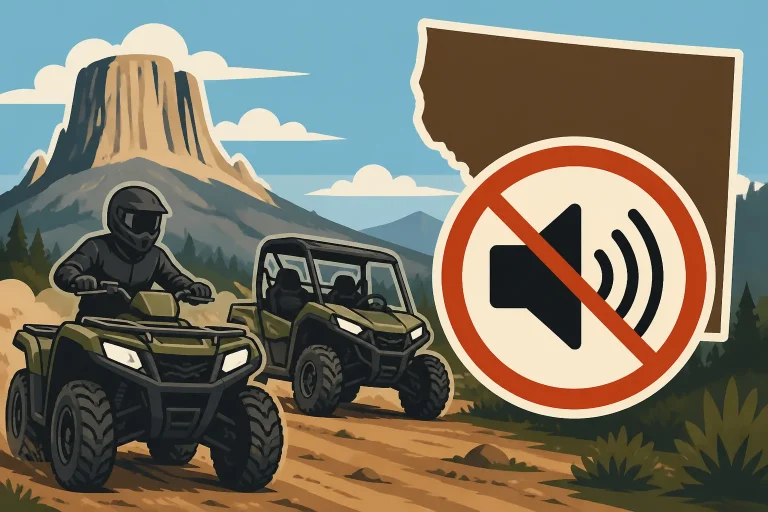
A muffler also needs to be maintained. Wyoming State Parks, Historic Sites, & Trails says motorized vehicle users should maintain mufflers to keep noise to a minimum, and ATVs and trail bikes must have approved and operating spark-arresting mufflers and comply with sound regulations. A machine that has the right part but is excessively noisy or poorly maintained can still create a problem. For guidance on a blocked component, see Replacing a Clogged Spark Arrester; if you are concerned about sound checks, What a Trailside Sound Check covers that separate issue.
| Check | What to confirm | Why it matters |
|---|---|---|
| Part identity | The installed muffler and arrester match the machine and its documentation | A replacement may differ from the original equipment |
| Approval | The manufacturer or land manager confirms the arrester is approved for the intended use | A generic product claim may not be enough |
| Condition | Components are present, secure, and not visibly damaged | A missing or altered arrester may not meet the requirement |
| Maintenance | The muffler and arrester are maintained as directed | Buildup and neglect can affect operation |
| Route access | The road or trail is open to your machine | Equipment compliance does not make a closed route legal |
| Wyoming permit | The machine displays the required current state decal where applicable | Out-of-state registration alone is not Wyoming reciprocity |
The arrester is only one part of riding legally
The Forest Service equipment check is only one piece of preparation. Riders also need to confirm that their machine is allowed on the route, that the route is currently open, and that the required Wyoming permit is displayed. A route shown on a map is not necessarily open to every machine, and having a permit does not authorize travel outside the designated system.
The Forest Service says motorized vehicle travel is permitted on designated roads and trails across the Bighorn National Forest. It directs visitors to obtain a Bighorn Motorized Vehicle Use Map to identify open roads and trails. The Forest Service also limits off-highway vehicles to a maximum width of 50 inches at their widest point. Use the map for route-specific access and width information rather than assuming that every forest road or trail is open to every ATV or UTV.
Wyoming State Parks, Historic Sites, & Trails says ORVs may only be operated on roads, trails, or areas designated as open by the appropriate local land manager, such as the Forest Service or BLM. Its program requires the Wyoming ORV permit for enrolled roads, routes, and trails designated for ORV use, and the permit must be displayed while operating on public lands and other designated roads, trails, or areas. The permit is valid for a calendar year and applies equally to residents and non-residents.
The route type matters. Wyoming State Parks, Historic Sites, & Trails says a designated trail enrolled in the ORV program requires a state ORV sticker even if the machine is street legal. Enrolled roads have different conditions: vehicles must be street legal or display the state ORV sticker while meeting the program’s ORV definition requirements. A vehicle displaying only an ORV permit is limited to roadways identified as part of the Wyoming ORV Program. For the wider access picture, see Wyoming’s Enrolled Trail System and Carrying a Travel Management Map in Wyoming.
Pay attention to the machine’s width as well as its registration category. Wyoming State Parks, Historic Sites, & Trails describes Type 1 ORVs as recreational vehicles designed primarily for off-road use, with a width of 50 inches or less and an unladen weight of 1,100 pounds or less. The Forest Service separately sets the 50-inch maximum width for off-highway vehicles on the Bighorn National Forest routes covered by its rules. If your machine is close to the limit, measure it at its widest point and check that the measurement method matches the land manager’s guidance. Do not assume a manufacturer’s advertised width answers every route-access question.
A permit does not turn a closed road into an open route, and a map does not replace the required decal. Before riding, check the current map and any local closure notices. Stay on the enrolled road or trail and follow the designation posted by the land manager. If a map and a sign appear to conflict, seek clarification before proceeding. More on that situation is covered in When a Map and a Sign Disagree.
There are also special limits around recreation sites. The Forest Service says that within Forest Service campgrounds and recreation sites, vehicles may only be used for entering or leaving. This is not an invitation to use campground roads as a riding loop. Keep the machine on routes designated for motorized travel, and do not assume a road through a developed site is open for recreational riding.
Bighorn routes, permits, and a final pre-ride check
The Bighorn National Forest has a range of motorized routes, but a trail name by itself does not tell you whether it is open for your machine today. The Forest Service lists trails including Adelaide, Bald Ridge ATV Trail, Bighorn Reservoir Trail, Bishop Mine Trail, Black Mountain Lookout Trail, Bonanza Dead Swede Trail, Bonanza Lookout Trail, Boyd Ridge Trail, and Buck Creek Vees Trail. For example, the Forest Service describes the Adelaide Trail as a 5.2-mile trail along Shell Creek and the Bald Ridge ATV Trail as a 3.9-mile motorized trail. Check the current Motorized Vehicle Use Map and local notices before choosing a route.
The Forest Service says riders must possess a current State of Wyoming off-road vehicle registration decal. Wyoming State Parks, Historic Sites, & Trails administers the ORV registration program through the Wyoming Trails Program. Permits are available online and in person, including through local selling agents such as ATV and motorcycle dealers, local businesses, selected Forest Service and State Park offices, and some county treasurer offices. For options and the process, see Buying a Wyoming Permit Online or Buying a Wyoming Permit at a Dealer.
If you are visiting from another state, do not treat your home registration sticker as a substitute. Wyoming State Parks, Historic Sites, & Trails says there is no reciprocity for out-of-state ORV or OHV registrations, so non-residents operating in Wyoming must purchase a Wyoming ORV permit when required. The calendar-year permit applies equally to residents and visitors. The visitor-specific details are in Wyoming ORV Permit for Nonresidents.
Before loading the machine, use a final check that covers both the equipment and the ride plan:
- Confirm that the installed muffler has an approved, operating spark arrester, and that no part is missing, damaged, or altered.
- Check the manufacturer’s maintenance guidance and deal with any blockage or repair before riding.
- Confirm that the machine meets the relevant width and vehicle requirements for the route.
- Check the current Bighorn Motorized Vehicle Use Map and local land-manager information for open roads and trails.
- Make sure the required Wyoming decal is current and displayed on the machine.
- Keep travel to designated open roads and trails; do not use a permit as permission to go off-route.
- Avoid using campground and recreation-site roads for riding beyond entering or leaving.
The safest interpretation of “Forest Service rated” is not to guess from a product label. Confirm that the arrester itself is approved, keep it in good condition, and verify that the route is open and appropriate for your machine. That way, the spark arrester, permit, vehicle dimensions, and land-access rules all line up before the ride begins.
Sources
- Wyoming State Parks, Historic Sites, & Trails — Wyoming State Parks, Historic Sites, & Trails – ORV Permits – Trails (checked November 3, 2026)
- Forest Service — Bighorn National Forest | Off-Highway Vehicles (OHV) | Forest Service (checked November 3, 2026)
- Wyoming State Parks, Historic Sites, & Trails — Wyoming State Parks, Historic Sites, & Trails – ORV Rules & Regulations – Trails (checked November 3, 2026)
- Wyoming State Parks, Historic Sites, & Trails — Wyoming State Parks, Historic Sites, & Trails – ORV Requirements – Trails (checked November 3, 2026)
Disclaimer
This article is for general informational purposes only and does not constitute professional advice. Laws, prices and regulations vary by location and change over time. Consult a qualified professional for guidance on your specific situation.