Filming on BLM Ground in Wyoming
Filming on BLM ground in Wyoming takes more than finding a scenic two-track. If ATVs or UTVs are part of a shoot, you may need to sort out both riding requirements and permission for the filming activity. The right steps depend on the location, whether the project is commercial, and what your crew plans to do on the land.
First, separate riding permission from filming permission
A Wyoming ORV decal and permission to film are not the same thing. The decal addresses the machine’s riding requirements; it does not automatically authorize a commercial shoot, a group activity, equipment staging, or other use that needs the land manager’s approval.
That distinction is easy to miss. A production team might have its machines properly permitted and still need to contact the Bureau of Land Management (BLM) about the filming plan. Conversely, getting approval for a shoot does not automatically make a closed road or trail available to ride.
Start by identifying the exact route and the land manager responsible for it. A road that looks continuous on a map may cross land managed by different agencies or include private property. BLM maps and local office information can help, but confirm the specific route and its status with the appropriate office. Wyoming Rules for Riding BLM Land explains the riding side, including why a route must be open for the use you have in mind.
For routes that fall under Wyoming’s off-road permit rules, check that every machine in the shoot meets the applicable requirements. Do not assume that a permit or registration from another state substitutes for Wyoming’s decal. Wyoming ORV Reciprocity Rules covers why an out-of-state credential may not be enough, while Wyoming ORV Permit for Nonresidents focuses on visiting riders.
Think of the requirements as separate questions:
- Can the machine ride there? Check the route’s designation, seasonal restrictions, width limits, and land-manager rules.
- Does the machine need a Wyoming permit? Check the state permit requirements for the machine and the planned riding.
- Does the filming activity need authorization? Ask the BLM office responsible for the location, especially for commercial production or organized activity.
- Can the crew set up and operate as planned? Confirm where people, vehicles, cameras, support trucks, and other equipment may go.
A “yes” to one question does not answer the others. A Wyoming decal is not a filming permit, a filming approval is not a trail opening, and a route shown on a map is not necessarily open to every vehicle or activity.
When to contact the BLM about a shoot
The important issue is not simply whether a camera will be present. It is what the production is doing, how it uses public land, and whether the activity goes beyond ordinary recreation. A rider casually recording a personal trip is different from a crew producing commercial content with planned scenes, multiple vehicles, hired staff, staging, or equipment set up on the ground.
The line can depend on the circumstances, so do not make a permit decision based only on whether the finished video will earn money. A branded production, paid project, or organized shoot is a good reason to contact the relevant BLM office before settling the schedule. Explain the actual plan and ask whether authorization is needed. Wyoming Rules for Filming on Federal Land provides broader context on filming requirements.
When you call or write, be specific. “We want to film in the area” does not give the office enough information to assess the request. Include:
- The location and proposed route, using map references or other details that help identify it.
- The planned dates or date range, including whether you need alternate dates.
- The number and type of machines, and whether they will be ridden on roads, trails, or other designated routes.
- The size of the crew and the number of support vehicles.
- Whether the production is commercial, sponsored, editorial, documentary, or personal.
- What equipment you plan to bring, such as tripods, lighting, drones, or temporary structures.
- Whether you intend to stop, stage, block, mark, or otherwise occupy any part of a route.
- Any planned interaction with wildlife, livestock, other visitors, or nearby landowners.
Ask whether the activity requires a special recreation permit or another form of authorization, what materials are needed to apply, and whether there are conditions on the proposed location or dates. Do not assume the process, fees, or review time will be the same at every BLM office. Requirements can depend on the location and details of the production, so get current instructions from the office managing the land.
If the shoot is an organized ride, group event, or guided production rather than a small crew filming along the way, raise that point directly. Organized activities can bring additional coordination and permit questions. Wyoming Rules for an Organized Ride and Federal Permit for a Wyoming Event can help frame the difference between riding as a small group and arranging an event on public land.
| Production plan | What to check before going |
|---|---|
| Personal footage during a recreational ride | Confirm the route is open and follow the machine’s permit and land-use rules. Ask the local office if the filming activity is more than incidental. |
| Commercial or sponsored shoot | Contact the BLM office early with the production details and ask whether authorization is required. |
| Crew with staging or equipment | Explain where equipment and support vehicles will be placed, and ask what areas may be used. |
| Organized ride or group production | Ask about event or recreation-permit requirements and any limits on participants or route use. |
| Drone footage | Check the rules for both the airspace and the land activity, and ask the land manager about local restrictions or conditions. |
The table is a planning aid, not a substitute for a decision from the BLM office. The same project can raise different issues at different sites, and the land manager may need to consider resource protection, visitor use, safety, and access.
Plan the route and production footprint carefully
A filming plan should show not only where the camera will point, but also how the crew will get there and operate without creating an unauthorized route or disrupting other users. Check the relevant travel management information and confirm that the specific road or trail is open to the machines you intend to use. Carrying a Travel Management Map in Wyoming explains why having the right map matters, while Why a Land Manager Must Mark a Route Open covers the need to verify route status rather than infer it from appearance.
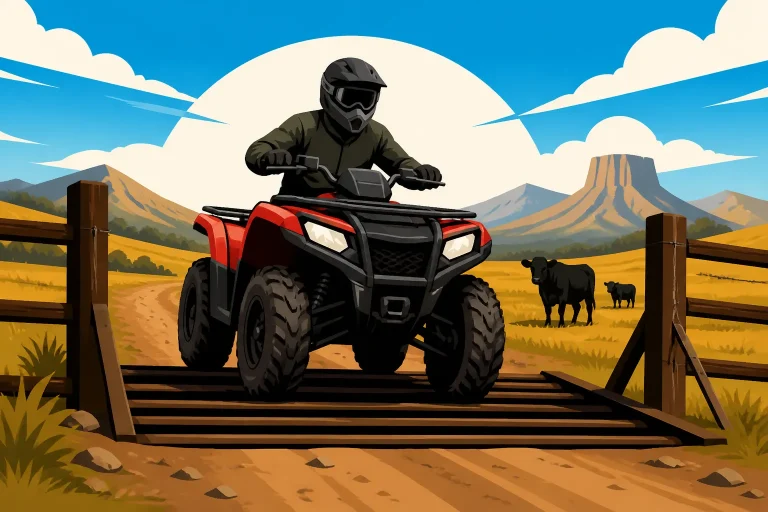
Keep the crew on designated routes unless the land manager has specifically authorized another activity. Riding around a barrier, following an unmarked track, or cutting across open ground to get a shot can create problems even if it seems like the shortest way to a filming position. A route may be closed seasonally, restricted by vehicle size, or limited to certain uses. If a sign and a map appear to disagree, pause and get clarification rather than treating the less restrictive information as permission.
Build the shoot around the land’s limits, not the other way around. Consider the following before confirming a location:
- Machine width and access: Check whether the route allows the full width of each ATV or UTV. A route suitable for a quad may not be suitable for a wide side-by-side.
- Seasonal and temporary closures: Ask about closures, fire restrictions, wildlife protections, or other conditions that could affect the planned dates.
- Traffic and other visitors: Avoid taking over a road or trail for repeated passes. Do not assume the public route can be closed for filming.
- Staging and parking: Identify legal places for trailers, support trucks, and crew vehicles. A wide shoulder or pullout is not automatically a staging area.
- Land boundaries: Verify whether the route crosses private land, state land, or another agency’s jurisdiction. BLM approval applies only to the land and activities it manages.
- Environmental impacts: Avoid widening tracks, disturbing soil or vegetation, damaging signs, or leaving gear and waste behind.
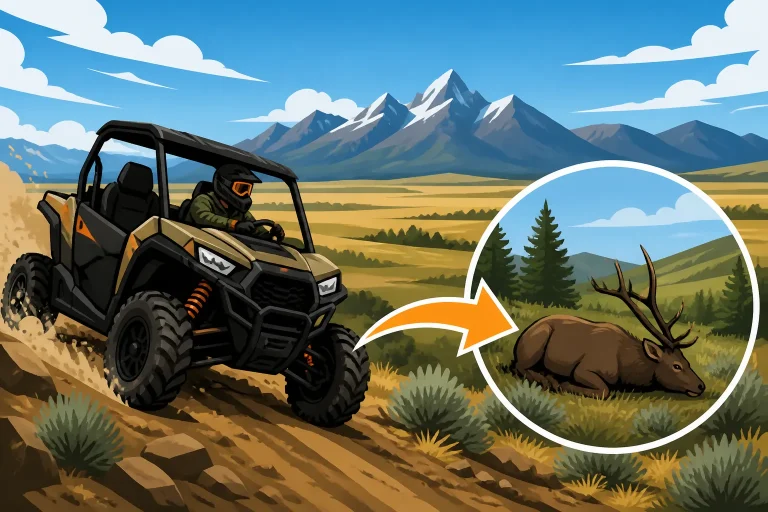
- Livestock and wildlife: Keep distance, minimize disturbance, and follow closures or instructions for the area. Do not build a shot around approaching animals or driving off-route.
If you plan to use a drone, treat it as a separate planning issue. Check the applicable aviation rules and ask the BLM office whether the proposed launch, landing, or filming activity has location-specific restrictions. Permission to ride a machine on a route does not resolve every question about flying or filming from the land.
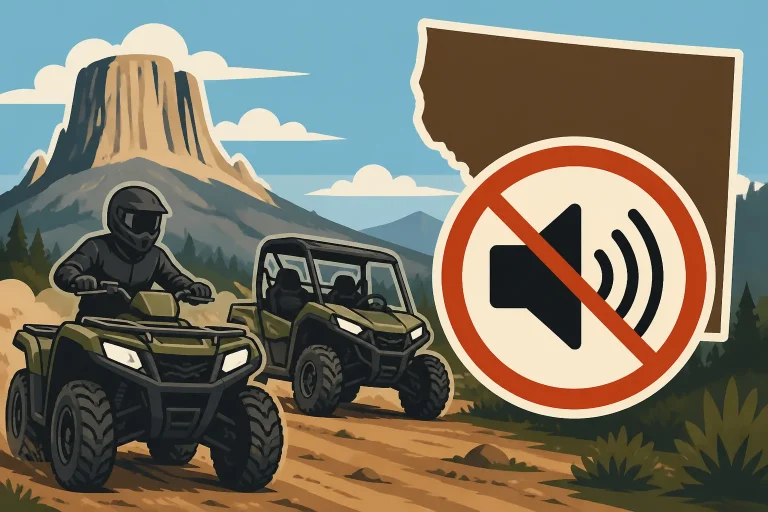
Sound and vehicle equipment are also worth checking before production. A machine that is loud, has a modified exhaust, or lacks required equipment can create compliance problems and disrupt other users. Review Wyoming Spark Arrester Requirement and Mufflers and Sound on Wyoming Public Land for related riding considerations. If the production depends on engine sound, make sure the plan does not rely on operating equipment in a way that conflicts with land rules or safety conditions.
A practical pre-shoot checklist
The safest sequence is to confirm the location and rules before booking a crew, hauling machines, or promising a client a specific shot. Give the BLM office enough detail to respond to the real plan, and keep its instructions with the production paperwork.
- Choose a specific location. Identify the proposed roads, trails, and filming areas. Avoid relying on a broad place name when the route itself determines access.
- Confirm who manages the land. Check whether the route is on BLM ground for its full length. If it crosses another jurisdiction, contact the relevant manager or owner as well.
- Verify that the route is open. Check current maps, signs, seasonal limits, machine-width restrictions, and any temporary closures. When the information is unclear, ask the local office.
- Describe the production. Tell the BLM whether the project is commercial or sponsored, how many people and machines are involved, what equipment will be used, and whether the crew needs staging or repeated takes.
- Ask what authorization applies. Confirm whether a filming or recreation authorization is needed, what application information is required, and whether other approvals or conditions may apply.
- Sort out each machine’s riding requirements. Confirm that every machine has the required Wyoming ORV permit for the intended riding. Do not count on an out-of-state decal or registration to satisfy Wyoming requirements.
- Plan for safety and contingencies. Set a meeting point, establish communication for the crew, account for changing weather, and identify a safe way to stop or leave if conditions change.
- Carry the relevant paperwork. Keep any authorization, route information, permit records, and contact details accessible to the person leading the shoot.
- Follow the conditions on site. Stay on approved routes, respect closures, and adjust or stop the shoot if the land manager’s instructions or conditions require it.
Permits, approvals, or other authorizations may involve costs, insurance requirements, application materials, or review time. Those details can vary, so ask the responsible office directly rather than budgeting from an old project or another location’s process. If a deadline matters, contact the office early and do not treat an unanswered inquiry as approval.
A clear, modest plan is usually easier to assess than a vague request. If you can describe exactly where the machines will travel, where the crew will stand, and how the production will avoid blocking access or disturbing resources, the office can give you more useful guidance.
Most importantly, do not treat filming as a reason to bend ordinary riding rules. A planned shot does not authorize off-route travel, trespass, or entry into a closed area. If a location cannot be used legally, change the shot or find another route rather than risking a citation or damage to public land. What a BLM Ranger Can Write You Up For outlines common riding issues to keep in mind.
Disclaimer
This article is for general informational purposes only and does not constitute professional advice. Laws, prices and regulations vary by location and change over time. Consult a qualified professional for guidance on your specific situation.