Wyoming MPV Seat Height Rule
Many an excited off-road enthusiast in Wyoming has purchased a brand-new side-by-side or a robust utility ATV, dreaming of getting it registered for road use, only to hit a wall when they learn about the specifics of the state's Multipurpose Vehicle (MPV) classification. It's a frustrating moment to realize your machine, which seems perfectly capable of handling the open road, doesn't quite meet a particular measurement. This guide will help you understand the crucial Wyoming MPV seat height rule and what it means for getting your machine legally on the pavement.
What Even Is an MPV in Wyoming?
It's easy to assume that if you have a larger off-road machine, especially a side-by-side, it automatically qualifies as a "street legal" vehicle. However, Wyoming has a very specific definition for what constitutes a Multipurpose Vehicle (MPV), and it's far more detailed than just having four wheels and a steering wheel. Many riders get swept up in the excitement of a new purchase, envisioning cruising down a county road to reach their favorite trailhead, only to discover that the state's classification system has some surprising nuances. It's not enough for a machine to simply look the part; it has to fit the legislative mold.
Beyond Just a "Side-by-Side" Label
When you talk about a "side-by-side" or "UTV," most people have a clear picture in their minds: a rugged, often sporty machine with seats arranged side-by-side, a steering wheel, and a roll cage. They're fantastic for work, recreation, and exploring our vast landscapes here in Wyoming. The issue arises when you try to bridge the gap between their off-road prowess and on-road legality. Wyoming's MPV classification isn't just a generic term; it's a precise legal designation with specific criteria that must all be met. This is where the rubber meets the road, quite literally, and where many assumptions about "street legal" status often fall apart. Just because a machine is powerful or popular doesn't mean it's an MPV in the eyes of the law.
The Core Definition: Weight, Wheels, and That All-Important Seat
For an off-road machine to be classified as a Multipurpose Vehicle (MPV) in Wyoming, and therefore eligible for titling and registration for public road use, it must meet several distinct criteria. These aren't suggestions; they are mandates. The criteria include the number of wheels, the weight range, and, most importantly for our discussion today, the seat height. To qualify as an MPV, your machine needs to have four or more wheels, not counting any tracks. It must also have an unladen (empty) weight of at least 300 pounds but no more than 3,000 pounds. This [Weight Between 300 and 3,000 Pounds] range is critical, as many heavy-duty utility UTVs or even very light sport quads might fall outside of it.
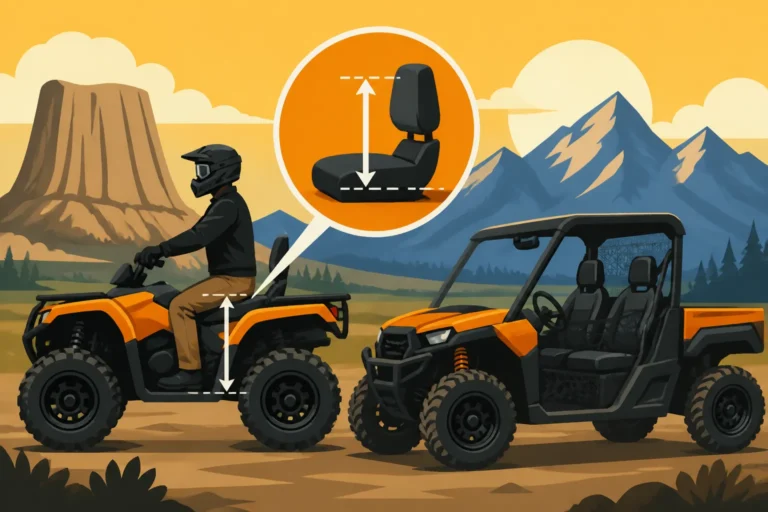
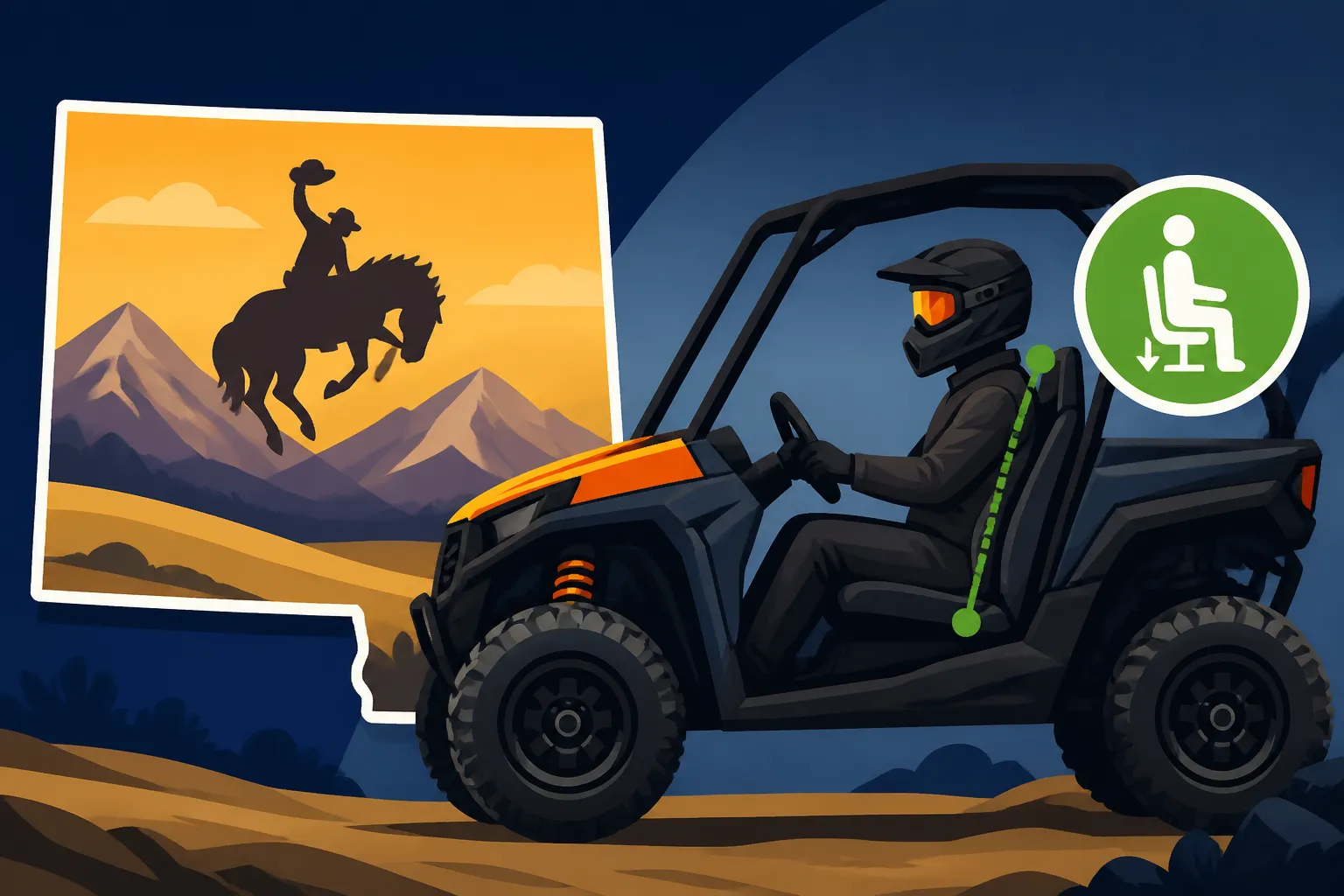
But the real sticking point for many, and the focus of this guide, is the third criterion: the machine must have a seat or seats at least 24 inches in height from the ground. All three of these requirements must be met simultaneously. If your machine fails on even one of these points, it cannot be registered as an MPV, regardless of how perfectly it meets the others. This is the definition enshrined in [Wyoming's MPV Definition in W.S. 31-1-101], and it's what local county clerks and treasurers will be looking for.
Unpacking the Wyoming MPV Seat Height Rule
That 24-inch seat height requirement might seem a bit arbitrary at first glance, but it's a specific and non-negotiable part of Wyoming's Multipurpose Vehicle definition. It’s one of those details that can make or break your plan to get your machine legally plated for road travel. Many riders discover this rule deep into the registration process, often after they've already invested in accessories like mirrors and turn signals, only to find their machine doesn't quite measure up.
The "At Least 24 Inches Up" Mandate
So, what exactly does "at least 24 inches up" mean for your machine? It means that when your side-by-side or qualifying ATV is sitting on a flat, level surface with its tires properly inflated, the lowest point of any seating surface must be a minimum of 24 inches from the ground. This isn't measuring to the top of the roll cage, or the handlebars, or even the highest point of the seat's backrest. It's specifically about the part of the seat you sit on.
Imagine trying to explain this to a buddy who just bought a sleek, low-slung sport side-by-side. He might measure from the footwell to the seat and get a number that feels right, only to find out he's supposed to measure from the ground. This seemingly small distinction can be the difference between getting an MPV plate and being limited to off-road trails. It's a common point of confusion, and frankly, a bit of a letdown for those whose machines just barely miss the mark. For clarity, think of it as the base of the seat cushion, directly above the chassis, measured vertically to the ground. [A Seat at Least 24 Inches Up] is a specific, measurable requirement.
Why the Seat Height Matters for Road Legality
You might wonder why such a specific measurement for seat height is so important for a machine's road legality. While the exact legislative reasoning can be complex, these types of rules are generally tied to several factors, including safety, visibility, and the intent to differentiate these vehicles from traditional off-road machines.
A higher seat often translates to better visibility for the operator, allowing them to see over traffic and obstacles more effectively when sharing public roads with cars and trucks. It can also relate to the vehicle's center of gravity and handling characteristics, making it more stable and predictable on paved surfaces at road speeds, which differ significantly from trail speeds. Furthermore, the rule helps define a class of vehicle that bridges the gap between traditional off-road recreational machines and conventional on-road vehicles. It suggests a design that, at least in part, considers road-use ergonomics and safety profiles. Without these distinctions, any large ATV or UTV could potentially be considered street legal, which could create a whole host of new safety concerns for all road users.
Measuring Your Machine and What Comes Next
Now that we understand why the seat height rule exists, the next crucial step is to accurately measure your machine. Don't just eyeball it; a precise measurement can save you a lot of time, effort, and potential disappointment at the county office.
Step-by-Step Measurement Guide
Getting an accurate measurement for your MPV's seat height is straightforward, but it requires a little attention to detail. Here’s how you can do it:
- Find Level Ground: Park your machine on a flat, hard, and level surface. This is critical for an accurate reading. Avoid grassy areas or inclines.
- Ensure Proper Tire Pressure: Make sure all your tires are inflated to the manufacturer's recommended pressure. Under-inflated tires can slightly lower the machine and give you an inaccurate reading.
- Empty the Machine: Remove any heavy gear, passengers, or cargo that might compress the suspension and artificially lower the machine. You want the "unladen" height.
- Measure Vertically: Using a tape measure, place one end on the ground directly below the lowest part of your seat cushion. Extend the tape measure straight up to the lowest point of the seat cushion itself. This is usually where your rear meets the seat.
- Get a Buddy: It helps to have a second person to hold the tape measure steady and read the number while you ensure the machine is level.
Record this measurement. If it's 24 inches or more, you've cleared this particular hurdle for MPV classification.
If Your Machine Doesn't Measure Up
What happens if your beloved side-by-side or ATV comes up short? It's a bummer, I know. It means that, unfortunately, your machine cannot be titled and registered as an MPV in Wyoming. It will remain classified as an Off-Road Vehicle (ORV). This doesn't mean you can't ride it, it just means its use is restricted to designated off-road trails and areas, and it won't be legal on public roads that require an MPV plate.
This is a common frustration, especially for owners of sportier side-by-sides designed with a lower center of gravity for performance, or even some larger, more aggressive ATVs that simply sit lower to the ground. You might have envisioned a road-legal machine, but the reality is that the MPV definition is quite strict. If your machine doesn't meet the height, it simply can't wear the "street legal" badge in Wyoming. However, you can absolutely still enjoy it on our fantastic trail systems, provided you have a current [Wyoming's Annual ORV Permit].
The MPV Checklist and Necessary Paperwork
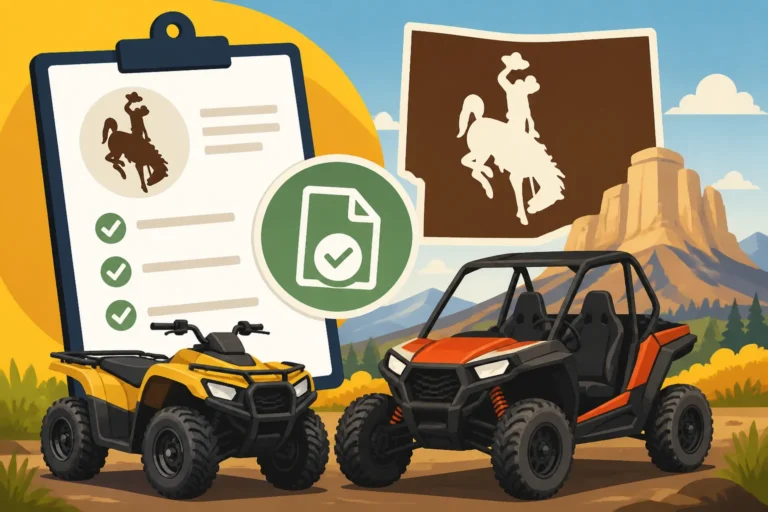
The seat height is just one item on a comprehensive checklist when you're trying to title your machine as an MPV. In addition to meeting the weight, wheel, and seat height requirements, your machine will need specific safety equipment to be road legal. This includes things like headlights, taillights, brake lights, mirrors (at least one on the left side), a horn, and a red rear reflector. You'll also need proper proof of ownership, such as a manufacturer's certificate of origin or a bill of sale, especially if you bought it used.
The state provides a checklist form—often called the "ORV/MPV Checklist"—that you'll fill out and submit. This form confirms that your machine meets all the necessary specifications. Getting all your documentation in order is key. If you recently purchased your machine, a well-drafted bill of sale is essential for proving ownership. Resources like LawDepot can be helpful for generating standardized legal documents, including a bill of sale, ensuring you have the correct information for your purchase. Having all your ducks in a row with the paperwork can prevent delays and headaches. [What the MPV and ORV-MC Checklist Form Asks] will outline everything you need.
The Difference Between an MPV and a Standard ORV
Understanding the distinction between an MPV and a standard ORV is fundamental to riding legally and safely in Wyoming. Many riders, especially those new to the state or new to the sport, often confuse the two, leading to potential fines and frustration. It's more than just a name; it's about classification and, ultimately, where you are legally allowed to ride.
Off-Road Vehicle Status: Trails vs. Roads
An Off-Road Vehicle (ORV) in Wyoming is exactly what it sounds like: a machine primarily designed and intended for off-road use. This category includes most ATVs, dirt bikes, and even many side-by-sides that don't meet the MPV criteria. These machines are built for rugged terrain, trails, and open play areas like the Killpecker Sand Dunes. When you ride an ORV, you are expected to stick to designated trails and public lands where off-road vehicle use is permitted.
For an ORV, you'll need to purchase and display a [Wyoming's Annual ORV Permit]. This permit is essentially your ticket to ride our fantastic network of trails across national forests, BLM lands, and state parks. However, an ORV permit does not grant you permission to ride on public roads, highways, or city streets. Trying to use an ORV on a public road without proper MPV classification and registration can result in fines and legal issues. The distinction is crucial: ORVs are for the dirt, MPVs are for the road (with conditions). [Wyoming ORV Permits Explained] fully covers the ins and outs of this.
MPV Road Privileges and Limitations
Once your machine is successfully classified, titled, and registered as an MPV, you'll receive a special license plate from your County Treasurer, allowing it to be used on some public roads. This is a huge step for many riders, opening up opportunities to connect trails, access fuel, or simply enjoy a scenic drive down an enrolled county road. However, it's vital to understand that an MPV plate does not mean your machine can go absolutely anywhere a regular car can.
Wyoming's MPV rules come with significant limitations. For instance, MPVs are generally prohibited from interstates and freeways. They are also typically restricted to roads that have been specifically "enrolled" or designated for off-road vehicle use by the appropriate authority (county, Forest Service, BLM, etc.). You still can't just cruise down Main Street in Cheyenne or park your MPV on a city sidewalk unless the local municipality has specifically allowed it. [Wyoming's MPV Path to the Road] is a journey with specific rules. Always check local ordinances and carry detailed maps of enrolled routes before you venture out. It's about enjoying your machine with responsibility, ensuring you stay within the bounds of the law to avoid any unwelcome surprises from law enforcement.
Here's a quick comparison of key differences between an ORV and an MPV in Wyoming:
| Feature | Off-Road Vehicle (ORV) | Multipurpose Vehicle (MPV) |
|---|---|---|
| Primary Use | Designated trails, off-road areas, private land | Designated public roads, trails (with ORV permit), private land |
| Wyoming Permit Required | Yes (Annual ORV Permit decal) | Yes (Annual ORV Permit decal for trail use) |
| Titling & Registration | No title generally required, no road registration | Title required (from County Clerk), road registration (plate from County Treasurer) |
| Seat Height Rule | Not applicable for ORV status | Must be at least 24 inches from the ground |
| Weight Limits | No specific unladen weight limits for ORV status | Unladen weight between 300 lbs and 3,000 lbs |
| Wheel Count | Variable (2 for dirt bikes, 3, 4 for ATVs/UTVs) | Must have 4 or more wheels |
| Required Equipment | Spark arrester, muffler | Headlights, taillights, brake lights, mirrors, horn, reflector, spark arrester, muffler |
| Public Road Use | Generally prohibited | Permitted on enrolled public roads (no interstates) |
Disclaimer
This article is for general informational purposes only and does not constitute professional advice. Laws, prices and regulations vary by location and change over time. Consult a qualified professional for guidance on your specific situation.