Replacing a Decal Peeled Off by Sun and Sand
There's nothing quite as frustrating as noticing that little off-road vehicle decal you just bought for your Wyoming adventures has started to peel, fade, or simply vanish thanks to the relentless sun, abrasive sand, or maybe even an overzealous power washer. It's a tiny sticker, but it's mighty important for hitting those incredible trails without a hitch. This guide is here to walk you through exactly how to replace that worn-out or lost decal so you can get back to riding legally and worry-free.
Why Your Wyoming ORV Decal Might Give Up the Ghost
Wyoming is a land of extremes, and while those extremes make for some breathtaking scenery and epic rides, they can be tough on our gear—especially something as seemingly simple as a vinyl decal. You're not alone if your sticker starts looking ragged long before its expiration date.
The Battle Against Sun and UV Radiation
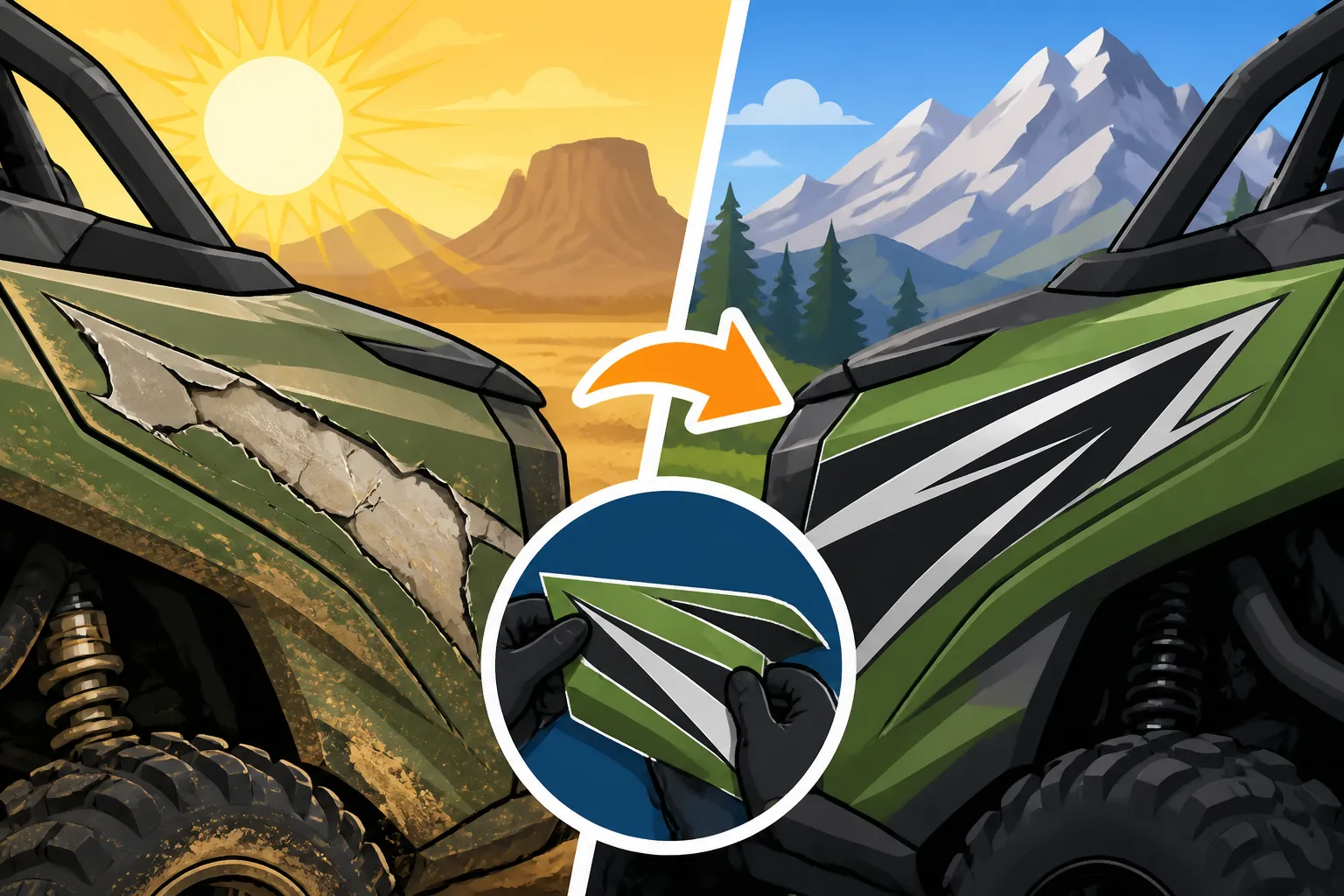
Think about the intense sun exposure your machine gets when you're out riding the Killpecker Sand Dunes or exploring the Bighorn Mountains. That high-altitude sun, combined with long summer days, can be incredibly harsh. UV rays are vinyl's worst enemy, breaking down the material and the adhesive over time. What might start as a vibrant, clear decal can quickly become faded, brittle, and cracked, making it prone to peeling at the edges. It’s not just an aesthetic issue; a decal that's impossible to read or has started to disintegrate might raise questions if a warden pulls you over for a routine check. You want that decal to be crisp and clear, just like the mountain air after a rain shower.
The Gritty Reality of Sand and Abrasion
Then there's the sand and grit that define so much of Wyoming's landscape. Whether you're kicking up dust on a BLM road or battling the windswept plains, tiny abrasive particles are constantly bombarding your machine. This constant bombardment, especially at speed, can act like sandpaper on your decal. Add in things like branches scraping along the sides of your ATV on a tight trail, or even the intense spray from a pressure washer when you're trying to clean off the day's mud, and that decal doesn't stand a chance. It's a small target, but it takes a beating out there. This kind of wear often leads to edges lifting, tears, or a general dulling of the color and text, making it harder to identify.
Accidental Damage and Wear and Tear
Beyond nature's assault, sometimes life just happens. Maybe your gear shifted in the trailer and scraped across the decal, or a rock flew up and nicked it just right. Perhaps you had a minor tumble, or perhaps the machine has seen many seasons of hard work on the ranch. These everyday knocks and scrapes, combined with the elements, contribute to its demise. Even something as simple as pulling off a cover can snag a fragile edge and start the peeling process. It's a testament to how much our machines endure, and a reminder that even the smallest components need a little attention now and then.
How to Get a New Wyoming ORV Decal: The Practical Steps
Okay, so your decal is looking worse for wear. Don't sweat it! Getting a replacement is a straightforward process, designed to get you back on the trails with minimal fuss. Wyoming understands that things wear out, especially for hard-working off-road enthusiasts.
The Process for Ordering a Replacement Sticker
The good news is that replacing a lost or damaged Wyoming ORV decal is fairly simple. You'll typically go through the same channels as you did when you first purchased your permit. The Wyoming State Parks, Historic Sites & Trails division oversees the ORV program, and they have a system in place for these situations.
Your primary options for ordering a replacement usually involve:
- Online Portal: The state's website for ORV permits is often the most convenient route. You'll navigate to the permit section, indicate you're requesting a replacement, and follow the prompts. This usually involves searching for your original permit information using your machine's Vehicle Identification Number (VIN) or previous permit number.
- Contacting a Selling Agent: Remember those local businesses, like powersports dealers, Forest Service offices, or county offices, where you might have bought your original permit? Many of these authorized selling agents can also help you with a replacement. They often have the necessary forms and direct contact with the state system. This can be particularly helpful if you prefer face-to-face assistance or have questions. You can find a list of [Where Wyoming Sells ORV Permits] on the state's website.
- Mail: In some cases, you might be able to mail in a request form with the required information and payment. While slower, it's an option for those who might not have easy online access or a local agent nearby.
Whichever method you choose, the key is to clearly state that you are requesting a replacement decal due to damage or loss, rather than trying to buy a whole new permit.
What Information You'll Need
When you go to order your replacement decal, you’ll need to have some key pieces of information handy. This ensures they can accurately link the new decal to your existing registration and machine.
Here’s a typical checklist of what you'll need:
- Your Machine's VIN: The Vehicle Identification Number is crucial. This unique identifier confirms which machine the decal belongs to. Make sure you have the correct VIN, as a wrong number could delay your replacement.
- Previous Permit Number (if available): If you still have a record of your original permit number, even from a faded decal, this can speed up the lookup process.
- Your Personal Information: This includes your name, address, phone number, and sometimes an email address. They need to know who the registered owner is and where to send the new decal.
- Reason for Replacement: Be prepared to briefly state why you need a replacement – whether it's faded, peeled, lost, or damaged.
- Payment Information: You'll need a method to pay the replacement fee.
Having all this information readily accessible before you start the process will make it much smoother. It's always a good idea to keep a digital or physical copy of your original permit information with your important vehicle documents, just in case. When you're dealing with vehicle ownership, having a clear [A Wyoming Bill of Sale for an ATV] on file is good practice for all sorts of situations, even if it's not directly needed for a decal replacement.
The Cost and How Long It Takes
Now, let's talk about the practicalities: how much it will set you back and how long you'll be waiting.
The Cost:
The good news is that replacing a decal typically costs much less than purchasing a brand-new annual permit. There's a nominal fee associated with replacements, designed to cover the administrative costs and the decal itself. It's usually a small, flat fee, consistent for everyone, whether you're a resident or a visitor needing a [Wyoming ORV Permit for Nonresidents]. You won't be charged the full price of an annual permit again if you're just getting a replacement for the current permit year. Always check the official Wyoming State Parks, Historic Sites & Trails website or contact a selling agent for the most up-to-date fees.
How Long It Takes:
The turnaround time can vary based on how you submit your request and current processing volumes.
- Online Orders: Often the fastest, as the system can process your request electronically. However, the physical decal still needs to be mailed. Expect a period for processing and then standard mail delivery time, which could be several business days to a week or more, depending on where you live in relation to the issuing office. Some riders report that [How Long a Decal Ordered Online Takes to Arrive] can be anywhere from 7-14 days.
- In-Person at a Selling Agent: If the agent has blank decals on hand and the authority to issue them immediately, you might walk out with your replacement on the spot. Otherwise, they'll process the request, and it will still be mailed to you.
- Mail Orders: These will naturally take the longest, as both the submission and the return mailing rely on postal services.
It's always a good idea to factor in a bit of buffer time, especially if you have a specific riding trip planned. Don't wait until the day before your big adventure to realize your decal is gone!
| Method of Replacement | Typical Cost | Estimated Arrival Time | Convenience Factor |
|---|---|---|---|
| Online Portal | Nominal fee | 7-14 business days | High |
| Selling Agent (in-person) | Nominal fee | Immediate (if stocked), else 7-14 business days | Medium-High |
| Mail-in | Nominal fee | 2-3 weeks | Low |
Before Your New Decal Arrives: What to Do (and Not Do) on the Trails
So, you've ordered your replacement, but there's that waiting period. You're itching to ride, and the weather's perfect. Can you still hit the trails? This is a common worry, and it's essential to understand the rules to avoid any unnecessary hassle.
Riding Legally While You Wait
Wyoming law states that your ORV must display a valid, current permit decal to legally operate on designated public lands. However, the authorities also understand that decals can be lost or damaged, and replacements take time.
The key here is proof of application. When you order your replacement, whether online or in person, you should receive some form of confirmation:
- Online: A confirmation email or a printable receipt of your replacement order.
- Selling Agent: A physical receipt or a copy of the replacement application form.
Crucially, carry this proof with you whenever you ride. Keep it in a waterproof bag with your other important documents. This documentation serves as your temporary "pass" while you await the arrival of the physical decal. If a game warden or law enforcement officer stops you, you can present this receipt along with your other identification. While it's not a guarantee that every single officer will understand or accept it without question (especially if it's just a generic email), it significantly increases your chances of a positive outcome. It demonstrates that you've made a good-faith effort to comply with the law.
Avoiding Fines for No ORV Permit
Riding without any visible decal or proof of a valid permit can lead to a citation. Wyoming takes its ORV program seriously, as the funds generated directly support the maintenance and creation of the trails we all enjoy. A fine for not having a valid permit or displaying the decal can put a damper on your whole trip. The best way to avoid this is, as mentioned, to carry that proof of replacement order.
Warden checks at trailheads or on popular routes are not uncommon, especially during peak riding seasons. They're looking to ensure everyone is properly registered and following trail etiquette. An expired decal or no decal at all is usually one of the first things they'll spot. While a warning might be issued in some cases, a monetary fine is a distinct possibility. Knowing [What a Wyoming Citation for an Expired Decal Costs] can certainly motivate you to carry that receipt!
Think of it like this: your receipt is your temporary license plate. You wouldn't drive your car without proof of registration, right? The same principle applies here.
Tips for Keeping Your Next Decal Secure
Once that shiny new replacement decal arrives, you'll want to protect it better than the last one! Wyoming's environment isn't going to get any kinder, so a few proactive steps can help prolong its life.
- Clean Surface is Key: Before applying the new decal, thoroughly clean the area where it will go. Use rubbing alcohol or a mild degreaser to remove any old adhesive residue, dirt, and oils. A clean, dry, smooth surface ensures maximum adhesion. [Sticking a Decal Where It Shows] involves finding a flat, visible spot, usually on the left side of the machine, that's not easily damaged.
- Strategic Placement: While the law dictates general visibility, consider placement that offers a bit more protection. Can you place it slightly recessed, or in an area less prone to direct hits from branches or heavy abrasion? Avoid areas that get excessively hot or are constantly exposed to direct engine grime.
- Application Technique: Apply the decal slowly and carefully, smoothing out any air bubbles as you go. Air bubbles can create weak points where peeling can begin. Use a squeegee or even a credit card wrapped in a soft cloth to press it down firmly from the center outwards.
- Edge Sealer (Optional): Some riders use clear vinyl edge sealer pens or even a thin bead of clear silicone along the edges of the decal. This creates an extra barrier against water, dirt, and peeling. Just be sure the product is safe for your machine's plastics or paint.
- Gentle Cleaning: When washing your machine, be mindful around the decal. Avoid directing high-pressure streams directly at the decal's edges, as this can easily lift them. Use a softer spray and a sponge around that area.
- Storage: If your machine is stored outdoors for extended periods, a cover can provide excellent protection from UV rays and harsh weather, prolonging not just your decal's life, but your entire machine's condition.
By taking these small steps, you can significantly extend the life of your replacement decal and keep enjoying Wyoming's trails without interruption.
The Importance of a Valid Decal for Your Wyoming Adventures
It might seem like a small piece of sticky paper, but that Wyoming ORV decal is much more than just a regulatory formality. It's a crucial part of maintaining the vast network of trails and riding areas that make Wyoming an off-road paradise.
Why Wyoming Cares About That Little Sticker
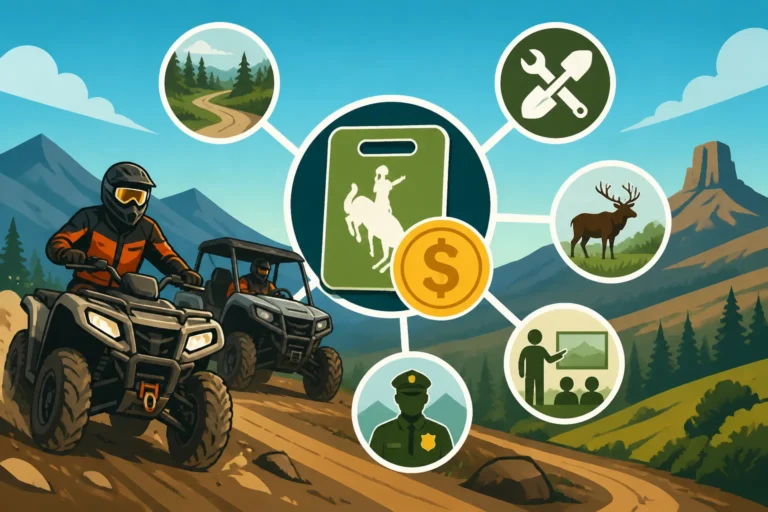
Every time you purchase a Wyoming ORV permit, that fee goes directly back into the system to benefit you, the rider. This isn't just about collecting money; it's about sustainable recreation. The funds generated from these permits are channeled into the Wyoming Trails Program. This program is responsible for a huge range of activities that enhance your riding experience, including:
- Trail Maintenance: Fixing erosion, clearing fallen trees, repairing bridges, and generally keeping trails safe and passable.
- New Trail Development: Expanding the network and creating new opportunities for exploration.
- Signage: Ensuring trails are well-marked, helping riders navigate and stay on designated routes.
- Facilities: Contributing to the upkeep of amenities like trailheads, parking areas, and even vault toilets at popular spots. Knowing [How Decal Money Pays for Trailhead Toilets] definitely makes you appreciate that permit more!
- Enforcement: Funding the personnel who patrol the trails, educate riders, and ensure compliance, which ultimately helps protect the natural environment and maintain access for everyone.
So, when you replace your decal, you're not just complying with a rule; you're directly contributing to the preservation and improvement of the trails you love. It's a small investment with a big return for the entire riding community.
The Trailhead Checkpoints: What to Expect
Don't be surprised if you encounter wardens or law enforcement officers conducting checks at popular trailheads, forest service roads, or other access points. This is a routine part of ensuring compliance and educating riders. They're not out to ruin your day, but to make sure everyone is riding responsibly and legally.
When you're stopped, here's what you can typically expect:
- Decal Check: The first thing they'll look for is that current, visible ORV decal. Make sure it's mounted correctly, usually on the left-hand side of your machine, in an easily visible spot. This is why [Wyoming ORV Decal Placement] is important.
- Operator Identification: They'll ask for your driver's license or other identification to verify who you are.
- Proof of Insurance: If you're riding an MPV on an enrolled road, they might also check for proof of insurance, as it's required for street-legal operation.
- Basic Safety Gear: They might quickly check for required safety gear, especially for younger riders, such as helmets for those under a certain age.
- Trail Courtesy: Sometimes they'll offer advice on local conditions, remind you of trail etiquette, or provide maps.
If your physical decal hasn't arrived yet, this is where your printout or digital copy of the replacement order becomes your best friend. Present it clearly and politely explain the situation. Most officers are reasonable and understanding when presented with clear proof that you've fulfilled your obligation. The goal is to educate and ensure safe riding, not just to write tickets. By being prepared and understanding the rules, you help ensure a smooth and enjoyable experience for yourself and everyone else on the trails.
Disclaimer
This article is for general informational purposes only and does not constitute professional advice. Laws, prices and regulations vary by location and change over time. Consult a qualified professional for guidance on your specific situation.