Buying From a Seller With No Paperwork at All
It’s a scenario many of us have faced or worried about: you've found what looks like a fantastic deal on an ATV or UTV in Wyoming, but the seller claims they have "no paperwork" for it. Maybe they inherited it, bought it years ago from a friend, or just never bothered to keep track of the documents. This situation can be incredibly frustrating and nerve-wracking, leaving you wondering if it's worth the risk or even legal. This comprehensive guide will walk you through the complexities of buying an off-road machine in Wyoming when the paper trail is non-existent, helping you understand the risks, what steps you can take to protect yourself, and how to eventually get your new-to-you machine ready for the trails.
The Risky Reality of Paperless Transactions
Buying anything of significant value, especially a vehicle, without proper documentation is a gamble. When it comes to ATVs and UTVs in Wyoming, while some paperwork requirements are different than for street vehicles, the absence of any record can lead to a heap of headaches down the line. It's easy to get caught up in the excitement of a good deal, but stepping back to understand the foundational issues is crucial.
Why Paperwork Matters So Much
At its core, paperwork for a vehicle—whether it's a title, a bill of sale, or even a previous registration card—serves as proof of ownership. Without it, you’re essentially buying a machine that, on paper, belongs to no one, or worse, to someone else entirely. Imagine this: you buy a quad from a seemingly nice individual, ride it for a season, and then try to sell it. The next buyer asks for a bill of sale, and you can only produce one you scribbled on a napkin. Suddenly, your own ownership is questioned, making your machine nearly impossible to sell legally or for a fair price.
Beyond resale, there are significant legal implications. If the machine was stolen, even if you bought it in good faith, you could be implicated in receiving stolen property and lose both the machine and your money. If the original owner had a loan on it, a bank could still hold a lien, meaning they could repossess the machine even after you've paid for it. Or, perhaps the seller isn't the sole owner; maybe it's part of an estate dispute. All these scenarios underscore why having a clear, verifiable chain of ownership is paramount, protecting you from future legal battles, financial loss, and emotional stress.
What "No Paperwork" Truly Means in Wyoming
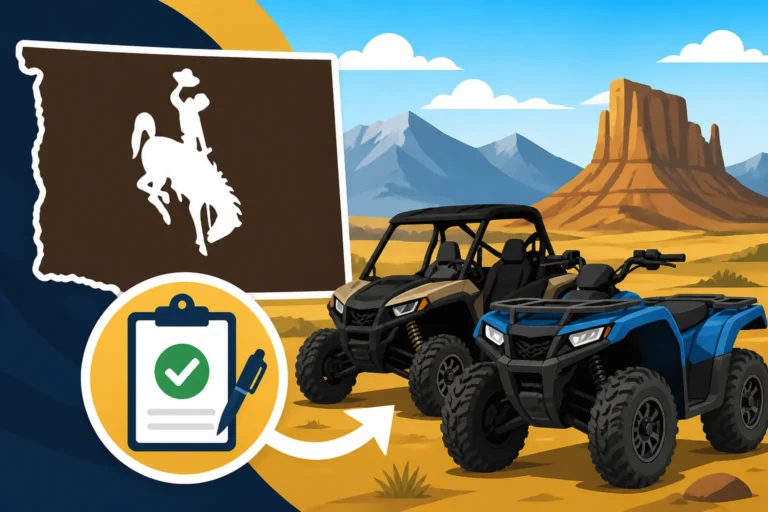
In Wyoming, the term "no paperwork" can be a bit nuanced because not all off-road vehicles (ORVs) require a title in the first place. For many standard ATVs, dirt bikes, and even some side-by-sides that are strictly used off-road, Wyoming is one of the states that does not issue titles. This might be a surprise to those accustomed to titling every vehicle they own. [Why No Title for an Off-Road Machine in Wyoming] For these machines, a robust bill of sale is typically the primary document proving ownership.
However, "no paperwork" is a different beast if you're dealing with a Multipurpose Vehicle (MPV) – a specific classification for larger, heavier side-by-sides that can be legally registered and titled for street use in Wyoming. These machines absolutely require a title, just like a car or truck. If a seller tells you there's "no paperwork" for an MPV, that's a massive red flag indicating a potentially stolen vehicle, a machine with an outstanding lien, or simply a seller trying to offload something without proving they legitimately own it. Understanding this distinction is key to assessing your risk. Is the seller saying they never got a title because the machine doesn't require one, or are they hiding the fact that a necessary title is missing?
Navigating the Purchase When Paperwork is Scarce
While it's always safest to walk away from a deal with absolutely no proof of ownership, sometimes the deal is too good, or you're confident in the seller's story. If you decide to proceed, you need to be extraordinarily diligent and proactive in creating your own records and verifying everything you possibly can. This isn't just about covering yourself; it's about establishing a legitimate paper trail from scratch.
Essential Due Diligence Without Formal Documents
Before you even think about handing over cash, your detective hat needs to come on. The most critical step is to conduct a thorough VIN check. Every ATV and UTV has a Vehicle Identification Number, usually stamped on the frame. This 17-character code is unique to that machine. You can often find it on the frame near the front suspension, under the seat, or on the lower left side of the engine. Once you have this VIN, run it through an online database designed to check for stolen vehicles or existing liens. While these services sometimes cost a small fee, it's a minimal investment compared to the potential loss of your entire purchase price. A clean VIN check is non-negotiable. [Wyoming ATV VIN Check Before Buying]
Beyond the VIN, verify the seller’s identity. Ask for their driver's license and take a photo of it (with their permission, of course). Ensure the name on the ID matches the person you're dealing with. Meet in a public place, or if at their home, make sure someone else knows where you are. Be wary of sellers who insist on meeting in obscure locations or who are vague about their residence. Avoid cash-only transactions if you cannot verify the seller's legitimacy; a traceable payment method like a cashier's check or bank transfer might offer a slim layer of protection if something goes wrong, though it's still far from ideal without a clear paper trail. If the seller acts cagey about any of these requests, it’s a clear sign to walk away. Trust your gut feeling.
Creating Your Own Proof of Sale
Since the seller has no paperwork, you must create the paperwork. The absolute minimum you need is a detailed, legally sound bill of sale. This document becomes your primary proof of ownership, especially for machines that don't require a title in Wyoming. Don't just scribble something down on a receipt; take the time to create a professional document. You can find excellent templates online from reputable sources, such as LawDepot, which provides customizable legal forms for various transactions. Using a service like LawDepot ensures that your bill of sale includes all the necessary legal language and critical details.
Here’s what your bill of sale absolutely must include:
- Full Legal Names and Addresses of Both Buyer and Seller: Leave no doubt about who is involved in the transaction.
- Detailed Description of the Machine: Include the make, model, year, color, and most importantly, the full VIN.
- Purchase Price: Clearly state the amount paid.
- Date of Sale: This establishes when the transaction occurred.
- Signatures of Both Buyer and Seller: This is crucial for legal enforceability. Consider having these signatures notarized if possible, as it adds a layer of authenticity.
- "As-Is" Clause: It's wise to include language stating the machine is sold "as-is, where-is" with no warranties, especially given the lack of documented history.
- Statement of Ownership: Have the seller sign a statement asserting they are the rightful owner of the machine and have the legal right to sell it, free of any liens or encumbrances. While this isn't foolproof if they're lying, it provides an additional legal avenue if they've committed fraud.
Having a meticulously prepared bill of sale, potentially drafted with the help of a tool like LawDepot, is your best defense against future disputes. Treat it as your most important asset for the transaction. [A Wyoming Bill of Sale for an ATV]
Potential Pitfalls and Protecting Yourself
Even with all your due diligence, buying an ATV or UTV without a clear history carries inherent risks. Understanding these potential problems can help you decide if the purchase is truly worth it, and what to do if the worst happens.
The Ghost of Ownership Past
The biggest specter haunting a paperless ATV purchase is the possibility that the machine is stolen. Wyoming is vast, and machines move between states. A seemingly innocuous side-by-side might have been reported stolen in Colorado a year ago, and you wouldn't necessarily know it without a proper VIN check. If law enforcement ever runs the VIN and it comes back stolen, you will lose the machine, and you'll have little to no recourse to get your money back from the seller, who may have vanished. You might even face questions about your own involvement, even if you were an unwitting buyer. This is why the VIN check is so crucial – it's your first line of defense against this nightmare scenario.
Another "ghost" can be a previous lien or co-ownership. Perhaps the machine was used as collateral for a loan that was never paid off, or it was jointly owned by two people, and only one is selling it without the other's consent. These situations can lead to legal claims against the machine even after you've bought it, causing immense stress and potential financial loss. The "statement of ownership" clause on your bill of sale, crafted perhaps using a template from LawDepot, is a proactive step, but it doesn't guarantee the seller's honesty.
Legal Recourse and Practical Limitations
If you buy a machine with no paperwork and then encounter a major issue—like it turns out to be stolen or has a hidden lien—your legal recourse can be limited and challenging. If you have a solid bill of sale with the seller's verified information, you could pursue them in small claims court for fraud or breach of contract. However, this assumes you can find the seller, they have assets to seize, and you can prove your case. Without a strong paper trail, proving exactly what was agreed upon or what the seller knew can be incredibly difficult.
Moreover, the cost and time involved in legal proceedings often outweigh the value of the ATV or UTV, especially if it's an older model. This is why the emphasis is on prevention: do everything you can before the purchase to mitigate risk. Once the money changes hands without adequate documentation, you're largely on your own. It's a stark reminder that sometimes, no matter how appealing the price, the potential for long-term problems makes a "too good to be true" deal just that.
What Comes Next: Getting it Wyoming-Ready
Assuming you've successfully navigated the purchase and feel confident in your ownership, the next step is to ensure your machine is legally ready for Wyoming's vast network of trails. Even without a title, your new-to-you ATV or UTV still needs to comply with state regulations, primarily obtaining an ORV permit.
Registering for a Wyoming ORV Permit
In Wyoming, nearly all off-road vehicles that will be ridden on public lands—including designated trails, roads, and open riding areas—must display a current Wyoming ORV permit decal. This applies regardless of whether the machine came with a title or not. The good news is that for most ORVs, you don't need a title to obtain this permit. Your legally prepared bill of sale, which you were so diligent in creating, will serve as your proof of ownership. [Wyoming's Annual ORV Permit]
To get your permit, you’ll typically visit a county clerk's office, a state park office, or an authorized selling agent (like a powersports dealer). You'll fill out an application form, present your bill of sale, and pay the annual fee. They'll issue you a decal that must be affixed to your machine in a visible location. It's a calendar-year permit, meaning it expires on December 31st, no matter when you buy it. So, if you purchase an ATV in October with no paperwork, get that bill of sale secured, and then immediately seek out your permit. Don't wait, as riding without one can lead to fines.
Here’s a quick overview of what you’ll likely need:
| Document Type | Purpose | Notes |
|---|---|---|
| Bill of Sale | Proof of Ownership | Essential if no title. Must include buyer/seller info, VIN, price, date. Consider using a template from a service like LawDepot for completeness. |
| Photo ID | Verifying Buyer's Identity | Your valid driver's license or state ID. |
| Machine VIN | Identification of Vehicle | You'll need to provide this for the permit application. Ensure it matches your bill of sale. |
| Permit Fee | Payment for Annual Decal | A flat fee applies to all ORVs, residents and non-residents alike. Check the official Wyoming State Parks, Historic Sites & Trails website for the current amount. |
| Application Form | Required State Documentation | You'll fill this out at the point of sale. |
Titling an MPV Without Prior Records
If the machine you purchased is a Multipurpose Vehicle (MPV) – think a larger side-by-side with specific dimensions and equipment that allows for street legality – the "no paperwork" situation becomes much more complicated. MPVs do require a title and standard vehicle registration in Wyoming if you intend to operate them on public roads. Trying to title an MPV that has never had one, or for which the title is completely missing, is a bureaucratic hurdle. [Titling a Multipurpose Vehicle in Wyoming]
Generally, if an MPV has no previous title, or if the title is lost and the seller can't provide a duplicate, you may need to apply for a bonded title. This process involves a VIN inspection by law enforcement, potentially obtaining a surety bond (which acts as insurance in case someone else comes forward with a legitimate claim of ownership), and then submitting all this documentation to the county clerk. It’s not a quick or easy process and often requires significant effort and potentially additional costs. If you find yourself in this situation, it's highly advisable to consult with your local county clerk's office as early as possible to understand the precise steps and requirements in your specific county. They can provide guidance on what documentation, inspections, and forms are needed to establish clear ownership and finally obtain that much-needed title.
Buying an ATV or UTV with no paperwork in Wyoming isn't for the faint of heart, but with careful steps, diligent research, and a commitment to creating your own robust documentation, it can be done. Just remember that prevention and protection are key.
Disclaimer
This article is for general informational purposes only and does not constitute professional advice. Laws, prices and regulations vary by location and change over time. Consult a qualified professional for guidance on your specific situation.