Why Most Wyoming Off-Road Machines Have No Title
It can be incredibly confusing when you're used to buying cars, trucks, or even snowmobiles that all come with a clear title, only to discover that your brand new or used ATV or UTV in Wyoming doesn't have one. This can leave you wondering how you prove ownership, what happens if you want to sell it, or if you're missing a crucial piece of paperwork. This guide is here to unravel the mystery, explain why most off-road machines in Wyoming operate without a traditional title, and clarify the specific situations where a title actually becomes a necessity.
The Fundamental Difference: Why ORVs Aren't Like Cars in Wyoming
When you purchase a car or truck, you expect a title – that official document issued by the state that proves who legally owns the vehicle. It's how we've always done things. But for the vast majority of Off-Road Vehicles (ORVs) in Wyoming, the system works differently. The state classifies these machines primarily for recreational use on designated trails and off-road areas, not for street legal operation. This fundamental distinction is key to understanding why a title often isn't part of the picture.
Recreational Use vs. Road Use Classification
Think about it: a dirt bike tearing up a trail in the Bighorn National Forest or a quad exploring the wide-open spaces of the Killpecker Sand Dunes isn't intended for the grocery run on Main Street. Wyoming's laws are designed to reflect this difference. Traditional ORVs like most ATVs, UTVs, and dirt bikes are seen as recreational equipment, much like a bicycle or a kayak, rather than highway-licensed vehicles. Because they aren't designed or typically allowed on public roads, the state doesn't require them to go through the same titling process as a road-going vehicle.
Instead of a title, the state focuses on a [Wyoming's Annual ORV Permit]. This permit, represented by a decal, is what allows you to legally ride on Wyoming's extensive network of enrolled trails and public lands. It's a system geared towards managing access and funding trail maintenance, not tracking individual ownership in the same way a vehicle title does. The permit shows you've paid your dues to support the trails, not that you own the machine free and clear. You can learn more about this by reading [Wyoming ORV Permits Explained].
Wyoming's Unique Approach to ORV Ownership Proof
So, if there's no title, how do you prove an ORV belongs to you? In Wyoming, the most common forms of ownership proof for an ORV are often more informal than a car title but no less important. When you buy a new machine from a dealer, you'll receive a Manufacturer's Statement of Origin (MSO) or Manufacturer's Certificate of Origin (MCO). This document is your first official proof of ownership, linking you directly to the machine from its creation. Keep this in a safe place, as it's vital for your records and if you ever need to register the machine as a Multipurpose Vehicle (MPV) later on.
For a used ORV, the ownership chain typically relies on a bill of sale. This simple yet crucial document details the transaction between the buyer and seller, including the machine's make, model, year, and Vehicle Identification Number (VIN). While it's not a state-issued title, a properly executed bill of sale acts as your legal evidence of purchase. It's always a good idea to create a thorough bill of sale that includes contact information for both parties, the date of sale, the price, and a clear statement of transfer of ownership. Services like LawDepot offer templates for such documents, making it easier to ensure all the necessary information is included for a smooth and legally sound transaction. This is particularly important because [Why No Title for an Off-Road Machine in Wyoming] is a common question, and understanding how to prove ownership without one is key.
What a Lack of Title Means for Ownership and Sales
The absence of a title for most ORVs in Wyoming might feel a bit unsettling at first, especially if you're accustomed to the traditional process for cars. However, it simply means that you need to be diligent about other forms of documentation to protect your ownership rights and facilitate future transactions. It shifts the burden of proof slightly, but it doesn't make your ownership any less legitimate.
Proving Ownership Without a State-Issued Title
Without a title, your MSO (if new) or a robust bill of sale (if used) becomes your golden ticket. Think of it as your primary deed. When you purchase a used machine, ensuring you get a clear, detailed bill of sale signed by both parties is paramount. This document should include:
- The full names and addresses of both the buyer and seller.
- The date of the transaction.
- A clear description of the ORV, including make, model, year, and VIN.
- The purchase price.
- A statement that the seller is transferring all ownership rights to the buyer.
- Signatures of both parties.
Having this documentation protects you from potential disputes and is essential if you ever need to demonstrate ownership to law enforcement, for insurance purposes, or when registering the machine as an MPV. If you're wondering [Buying a Used ATV in Wyoming], always make sure to get this critical paperwork in order. Many riders find it helpful to use a standardized form, and platforms like LawDepot can provide customizable templates for a [A Wyoming Bill of Sale for an ATV] to ensure you don't miss any vital details.
Selling an ORV in Wyoming: The Paper Trail You Need
When it's time to sell your ORV, the process again centers on the bill of sale. You, as the seller, will provide a new bill of sale to the buyer, effectively transferring your ownership. It's critical to ensure this document is as complete and accurate as possible to avoid any future headaches for either party.
You don't just hand over the machine and a handshake; you hand over a signed, dated document that details the transfer. If you were the original owner and still have the MSO, you would typically provide a copy of that along with the bill of sale. If you bought it used, you'd transfer your bill of sale to the new owner, along with the new bill of sale you're creating. This chain of bills of sale is what constitutes the ownership record for most ORVs in Wyoming. It's a direct, person-to-person transfer without state intervention in the ownership record until an MPV registration occurs. This process is a key part of [Selling an ORV in Wyoming].
| Document Type | Primary Purpose | State Involvement (ORV) | State Involvement (MPV) | Essential For |
|---|---|---|---|---|
| Manufacturer's Statement of Origin (MSO/MCO) | Original proof of new ownership | No direct recording | Required for initial title | New purchases |
| Bill of Sale | Proof of transfer between individuals | No direct recording | Required for title if no MSO | Used purchases/sales |
| ORV Permit Decal | Authorization for trail riding | Required annually | Not applicable (plate instead) | Trail access |
| MPV Title | Legal proof of street-legal ownership | Not applicable (ORV has no title) | Required for road-legal machine | Road legality |
| MPV License Plate | Authorization for road operation | Not applicable | Required annually | Road legality |
When a Title DOES Become Necessary: The Multipurpose Vehicle Exception
While most off-road machines don't need a title in Wyoming, there's a significant exception: the Multipurpose Vehicle (MPV). This is where the lines between a recreational ORV and a road-legal vehicle blur, and the requirements shift dramatically. Understanding this distinction is vital if you ever plan to take your UTV, or certain larger ATVs, onto public roads. This is [When a Title Suddenly Matters].
Understanding Wyoming's Multipurpose Vehicle Class
Wyoming created the MPV classification to allow certain types of off-road machines to be legally operated on public roads, where designated. This classification applies primarily to side-by-sides (UTVs) and some larger, heavier ATVs that meet specific criteria. The idea behind it was to give residents and visitors more flexibility in how they use their machines, bridging the gap between pure off-road recreation and practical transportation in areas where it makes sense, like rural communities or to connect trail segments.
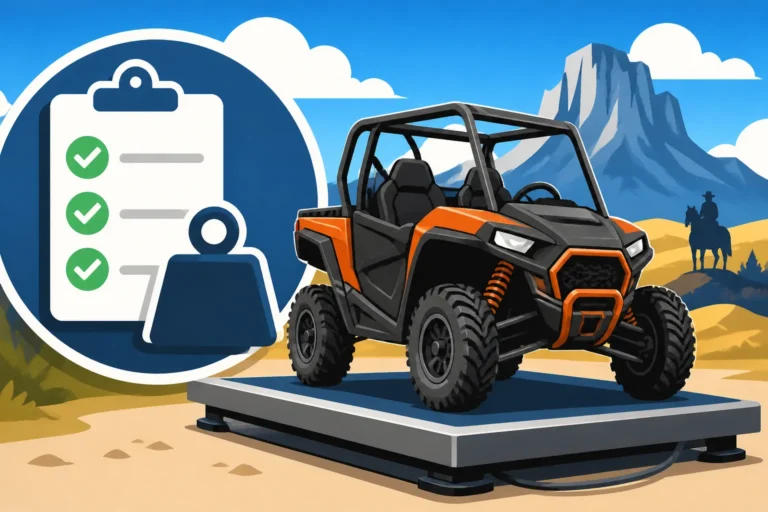
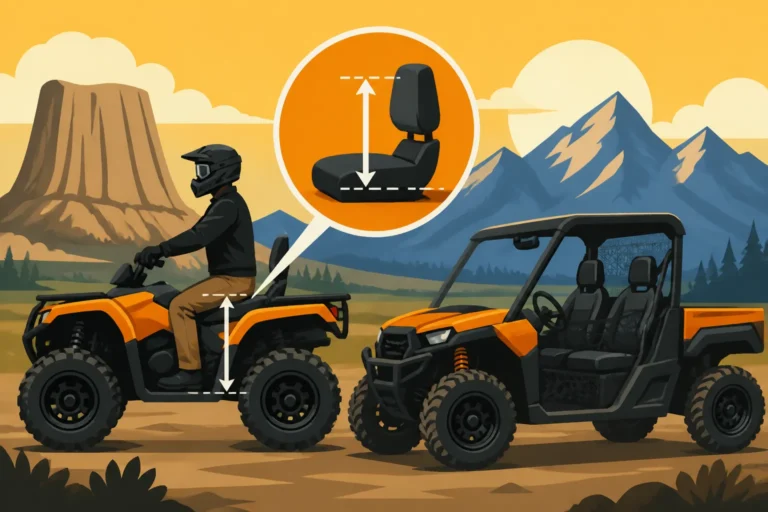
To qualify as an MPV, a machine must meet several specific requirements. These typically include being designed to travel on four or more wheels, having a weight between 300 and 3,000 pounds, and an upright seat at least 24 inches from the ground. These rules are put in place to ensure that only machines deemed reasonably safe and capable of sharing the road with other traffic can be titled and plated. The [Wyoming MPV Title Requirements] are quite specific, so it's important to check if your machine qualifies.
The Titling and Plating Process for an MPV
If your machine meets the MPV criteria and you want to ride it on Wyoming's designated public roads, you'll need to go through a two-step process: titling and then plating. This is a crucial difference from the simple ORV permit.
First, you'll apply for a title through your [Wyoming County Clerk Title Process]. This is very similar to how you would title a car. You'll need your MSO (if new) or a series of bills of sale demonstrating a clear chain of ownership. You'll also likely complete a specific checklist form to confirm your machine meets all the MPV requirements, such as [What the MPV and ORV-MC Checklist Form Asks]. Once the county clerk verifies your ownership and the machine's eligibility, they will issue you a Wyoming title.
After you have your title, you'll then take it to the [Wyoming County Treasurer Plate Process] to register the vehicle and get a license plate. This annual registration ensures your machine is recognized as a road-legal vehicle and typically involves paying a registration fee. The license plate and current registration stickers, affixed to your machine, are your visual proof that it's authorized for road use. Without both a valid title and current plates, your MPV isn't legally street-legal, even if it physically meets the equipment requirements.
Practical Steps and Important Considerations for Wyoming ORV Owners
Navigating the world of ORV ownership in Wyoming without a traditional title can be straightforward if you know what to expect and how to properly document your ownership. It boils down to understanding the system and being proactive with your paperwork.
Ensuring Your Ownership is Clear and Documented
Whether you're buying a new ORV or a used one, make sure you walk away with solid proof of ownership. For new machines, safeguard your MSO/MCO. For used machines, insist on a comprehensive bill of sale. Don't settle for a vague scribble on a napkin; a well-structured document, perhaps using a template from a service like LawDepot, provides security for both buyer and seller. This documentation is your primary defense against theft and your key to future sales or potential MPV conversion.
It's also a smart idea to keep copies of all your documentation in a safe place, both digitally and physically. Consider carrying a copy of your bill of sale (or MSO if you're the original owner) with you when you ride, especially if you're on a newly acquired machine that hasn't yet received its ORV permit decal. While the permit is the official proof for trail riding, having your ownership documents can sometimes smooth things over if there's any question about your right to possess the machine.
The Importance of the VIN
Regardless of whether your machine has a title or not, the Vehicle Identification Number (VIN) is your ORV's unique identifier and is incredibly important. Always ensure the VIN on your MSO or bill of sale matches the VIN stamped on the machine itself. Before purchasing a used ORV, consider conducting a VIN check to ensure it hasn't been reported stolen. While Wyoming doesn't title most ORVs, law enforcement can still track stolen machines through their VINs. A clean VIN check offers peace of mind and helps protect you from inadvertently purchasing a stolen machine. This is a critical step for [Wyoming ATV VIN Check Before Buying].
Deciding on ORV vs. MPV: Your Riding Intentions
Before you even buy an ORV, or soon after, think about how you truly intend to use it. If your plan is strictly for off-road trails and you have no intention of ever riding public roads, then the lack of a title for a standard ORV is a non-issue. You'll simply focus on obtaining your annual [Registering an ORV in Wyoming] and hitting the trails.
However, if you anticipate needing to connect trail systems via public roads, or if you live in a rural area where using a side-by-side for short trips on county roads would be convenient, then pursuing the MPV classification is likely in your future. This decision will dictate your paperwork path from the outset. Knowing your intentions upfront can save you time and hassle down the road, ensuring you acquire the correct documentation and follow the right steps for [Titling a Multipurpose Vehicle in Wyoming] from the beginning.
Disclaimer
This article is for general informational purposes only and does not constitute professional advice. Laws, prices and regulations vary by location and change over time. Consult a qualified professional for guidance on your specific situation.