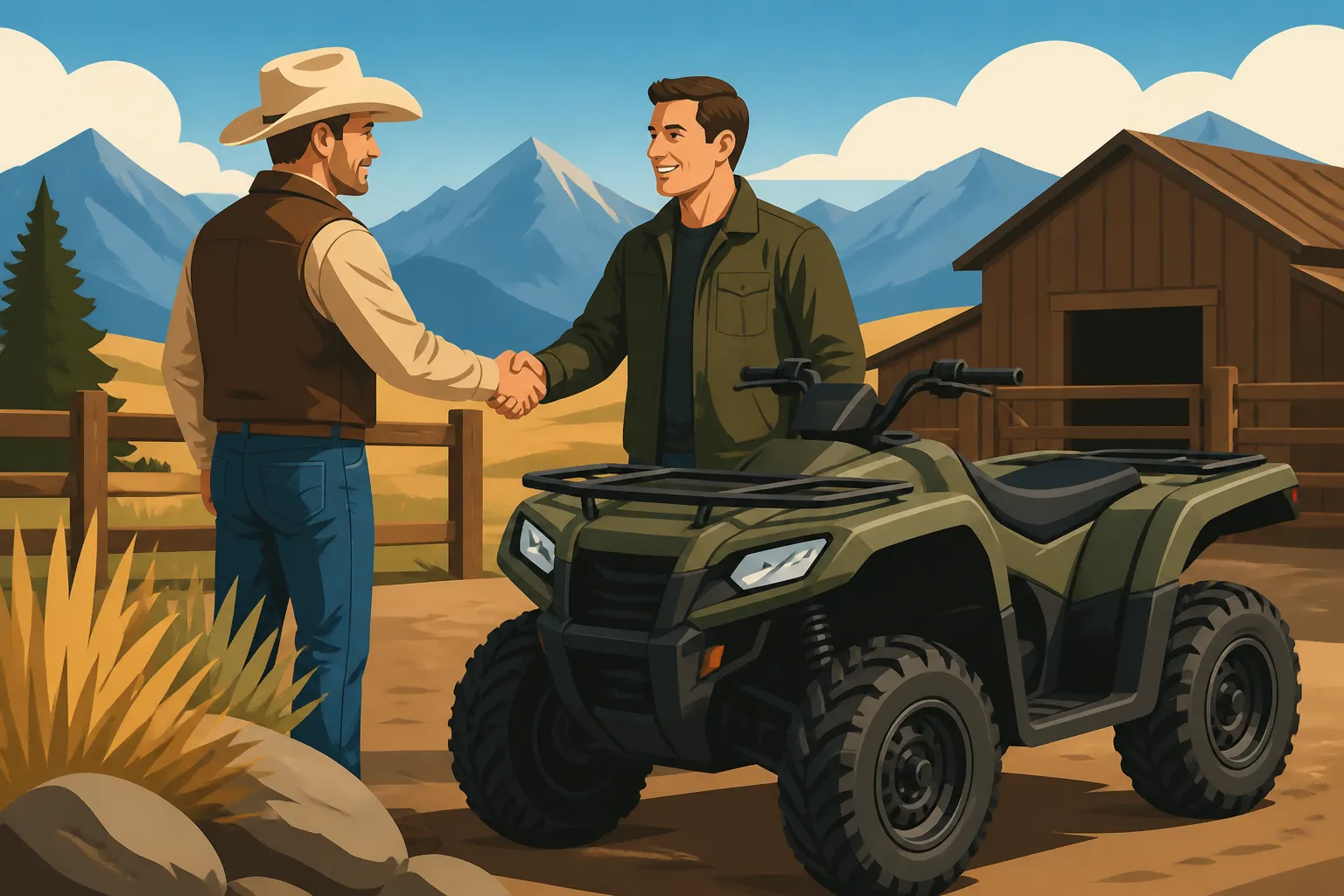
Buying a Quad From a Ranch
Buying an off-road vehicle from a private seller, especially one operating a ranch, can feel like navigating a maze of unknowns. You might stumble upon an amazing deal for a quad that’s been used for honest work, but you're also probably wondering about the paperwork, the machine’s history, and how to protect yourself in the transaction. This guide is here to walk you through every step of buying a used ATV or UTV from a rancher in Wyoming, ensuring you're informed, protected, and ready to hit the trails or put your new machine to work.
The Allure and Reality of Ranch Quads
There's something uniquely appealing about buying an ATV or UTV that's spent its life on a Wyoming ranch. These aren't always your weekend warrior machines, often boasting a history of hard work, reliability, and practical application. However, this also means they come with their own set of expectations and potential realities that differ significantly from buying from a dealership or even another private individual.
Why Ranchers Sell and What to Expect
Ranchers often sell their ATVs or UTVs for a variety of practical reasons. Maybe they're upgrading their fleet to newer models, consolidating equipment, or simply no longer need a particular machine for their operations. This can often mean you're getting a machine that, while perhaps showing its age and use, has also been consistently maintained to ensure it keeps running in rugged conditions. You might find cosmetic wear and tear – dents, scratches, faded plastics – that are simply part of a working machine's life. Don't let these superficial flaws deter you, but use them as a starting point for deeper inspection. They might tell a story about the machine's resilience.
However, you should also be realistic. A quad used on a ranch might have seen more hours, carried heavier loads, and traversed rougher terrain than a recreational machine. It might have been serviced by the rancher themselves, which could mean a meticulous maintenance log or, conversely, a more ad-hoc approach. When you're talking to a rancher, ask about its primary duties: was it herding cattle, checking fences, or hauling feed? This insight can give you a clearer picture of the kind of wear and tear the machine likely endured.
Advantages and Disadvantages of this Buying Route
The advantages of buying from a rancher can be significant. Often, you'll find these machines priced more competitively than comparable models at a dealership, mainly because they lack the overhead. There's also a certain charm to buying a machine with a story, one that's been an integral part of a working landscape. Ranchers often know their machines inside and out, offering invaluable insights into quirks, maintenance schedules, and what to watch out for. They can be incredibly honest about the machine's history because their reputation in the community often depends on it.
On the flip side, there are disadvantages. Financing can be more complex, as private sales typically require cash or a personal loan. Warranty protection is almost certainly non-existent, meaning you're buying "as-is." You also need to be prepared for the possibility of higher mileage or hours, and potentially more wear on critical components like the suspension, drivetrain, and tires. Unlike a dealer, a rancher isn't obligated to ensure the machine is trail-ready or meets any specific standards beyond what's agreed upon in the sale. It's truly a buyer-beware market, placing the burden of due diligence squarely on your shoulders.
Performing Your Due Diligence Before You Buy
Before you hand over any cash, thorough due diligence is paramount. This isn't just about kicking the tires; it's about a comprehensive assessment of the machine's condition, history, and legal standing. You want to feel confident that you're making a sound investment and not inheriting someone else's problems.
Thorough Mechanical Inspection and Test Ride
Never buy a machine sight unseen, or without a thorough inspection and test ride. When you arrive at the ranch, take your time. Start with a visual inspection: check for fluid leaks, bent frames, cracked plastics, and worn tires. Look at the suspension components for signs of excessive wear or damage. Pay close attention to the drivetrain—the chain, sprockets, drive shaft, and CV boots on a UTV or independent suspension ATV—as these areas see a lot of abuse in ranch work. Ask about recent maintenance, like oil changes, brake fluid flushes, or new tires.
Next, fire it up. Listen to the engine cold and warm. Does it start easily? Are there any unusual noises, smoke from the exhaust, or erratic idle? Check all the lights, switches, and gauges. Then, and this is crucial, take it for a test ride. Ideally, ride it on terrain similar to where it's been used. Test the brakes, acceleration, and handling. Does it pull to one side? Are the gears shifting smoothly? Is the steering loose? Does the suspension feel completely shot, or does it still have some life? Don't be shy about asking to really put it through its paces (within reason and on the rancher's property, of course). This is your last chance to uncover any hidden issues.
Verifying Ownership and Machine History
This is perhaps the most critical step in a private sale. You absolutely must verify that the seller is the legal owner of the machine and that it doesn't have any liens or outstanding financial claims against it. Start by asking for the machine's Vehicle Identification Number (VIN). Every ATV and UTV has one, typically stamped on the frame. Do an [Wyoming ATV VIN Check Before Buying] to see if it's been reported stolen. This is a quick and essential safeguard against buying a hot machine.
In Wyoming, it's common for off-road vehicles not to have a title, especially older models or those that have always been strictly off-road. You'll often find that [Why Most Wyoming Off-Road Machines Have No Title] is simply due to the nature of their classification. However, this lack of a formal title makes a clear chain of ownership even more vital. Ask the rancher for any previous registration documents, receipts from when they purchased it, or even old insurance policies. While not a title, these documents help establish their legitimate possession. If the seller can't provide reasonable proof of ownership, walk away. It’s better to miss a deal than to get entangled in legal issues over a machine you can’t prove you own.
Navigating the Paperwork: Bills of Sale and Wyoming Specifics
Even without a formal title, a robust Bill of Sale is your legal shield and proof of ownership. This document is paramount in a private transaction, especially when dealing with machines that might not have traditional registration paperwork.
Crafting a Comprehensive Bill of Sale
A Bill of Sale is more than just a receipt; it's a legal contract documenting the transfer of ownership. For a private sale, especially with a machine from a ranch, you need to ensure it's as detailed as possible. At a minimum, it should include:
- The full legal names and addresses of both the buyer and the seller.
- The date of the transaction.
- A detailed description of the ATV/UTV, including make, model, year, color, and most importantly, the full VIN.
- The agreed-upon purchase price.
- A statement that the vehicle is sold "as-is, where-is" with no warranties, explicit or implied (this protects the seller, but as the buyer, you acknowledge this limitation).
- Signatures of both the buyer and the seller.
- Ideally, a witness signature, although not always legally required, it adds another layer of verification.
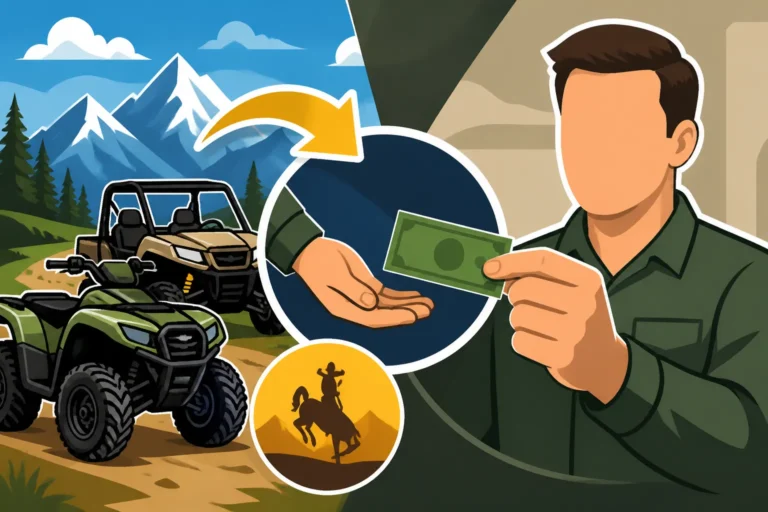
You can find templates for comprehensive bills of sale online. Resources like LawDepot, for example, offer customizable Bill of Sale forms that can be tailored to include specific details relevant to your purchase. Having this document ensures that you have legal recourse and clear proof of purchase when you go to [Registering an ORV in Wyoming]. Without a proper Bill of Sale, you could face significant hurdles later on.
Understanding Wyoming's Titling and Registration Rules
Wyoming has a somewhat unique approach to titling and registering off-road vehicles. While street-legal vehicles require a title, many ATVs, UTVs, and dirt bikes that are strictly used off-road do not. However, this doesn't mean there's no official process. For most ORVs, Wyoming issues an annual permit decal, not a title or plate, to allow legal riding on designated public lands.
If you're buying a machine that has never been titled in Wyoming (which is common for ranch-used quads), you'll need to present your Bill of Sale as proof of ownership when applying for an ORV permit. This is where a detailed Bill of Sale becomes indispensable. If the machine happens to be classified as a "Multipurpose Vehicle" (MPV) – which typically applies to side-by-sides that meet certain criteria like weight and seat height – it might be eligible for a title and street-legal registration. This is a more complex process and involves additional steps beyond a standard ORV permit. Be sure to understand the distinction, as [Titling a Multipurpose Vehicle in Wyoming] is different from the standard ORV process. Always check the current regulations through the Wyoming State Parks, Historic Sites, and Trails official resources to ensure you have the most up-to-date information.
Post-Purchase Steps and Avoiding Future Headaches
You’ve shaken hands, signed the Bill of Sale, and the quad is now yours. But the process isn't over. There are crucial post-purchase steps to ensure your new machine is legal to ride and that you avoid any unnecessary issues down the road.
Getting Your New-to-You Quad Registered and Permitted
The very first thing you need to do is get your new ATV or UTV registered with the state of Wyoming. This means obtaining the annual ORV permit decal. You’ll need your Bill of Sale (and any previous registration documentation, if available) to prove ownership when you apply. You can purchase these permits at various locations, including county offices, authorized vendors like powersports dealers, or even online through the Wyoming State Parks website. Make sure to get your [Wyoming's Annual ORV Permit] right away, as riding on designated public lands without one can lead to [Wyoming Fines for Riding Without a Permit].
The [Wyoming ORV Permit Cost] is a flat fee, regardless of whether you're a resident or a nonresident, or the type of ORV you own. Once you receive your decal, make sure to affix it properly to your machine as specified by the state regulations. You might also want to explore options for liability insurance, especially if you plan to ride on roads where it might be required, or simply for peace of mind. While the ORV permit is for off-road use, understanding the [Wyoming ATV Insurance Requirement] for on-road use (if you ever pursue MPV registration) is wise.
Common Pitfalls and How to Mitigate Them
One common pitfall when buying from a rancher is encountering a machine that has issues the seller wasn't aware of, or perhaps wasn't completely transparent about. This is why your thorough inspection and test ride are so critical. If a problem arises shortly after purchase, and you bought it "as-is," your options are limited, highlighting the importance of due diligence. Another pitfall can be incomplete paperwork; without a proper Bill of Sale or some proof of ownership, you could struggle to register the machine or resell it in the future. Always insist on a clear, signed Bill of Sale, and don't hesitate to use a reputable template from services like LawDepot if the seller doesn't have one ready.
Finally, always be mindful of where you plan to ride. Wyoming has an extensive system of enrolled roads and trails, but riding off-route or on closed lands can lead to citations. Familiarize yourself with local regulations and land manager rules. By being prepared, verifying ownership diligently, ensuring a solid Bill of Sale, and promptly registering your machine, you can enjoy your new-to-you ranch quad for years to come without unnecessary stress.
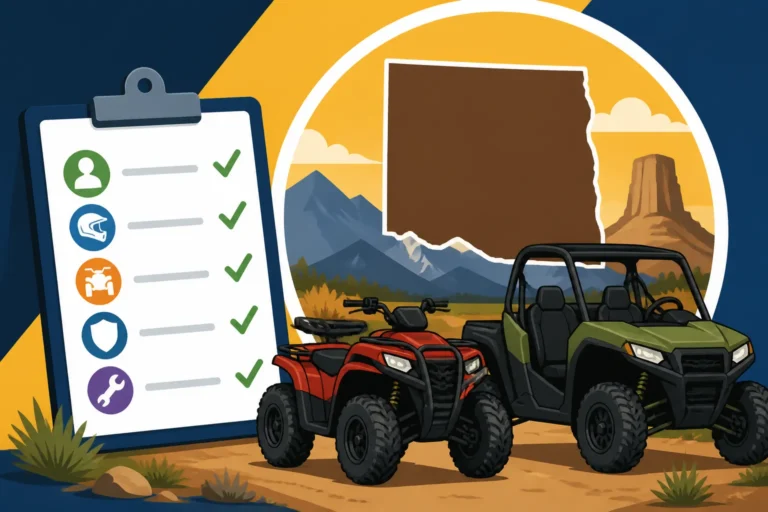
| Pre-Purchase Checkpoints | Post-Purchase Actions |
|---|---|
| Thorough Mechanical Inspection | Obtain Wyoming ORV Permit Decal |
| Extensive Test Ride | Affix Decal per State Guidelines |
| Verify VIN and Run History Check | Keep Bill of Sale and Permit Receipt Securely |
| Confirm Seller's Legal Ownership | Consider Liability Insurance |
| Discuss Maintenance History | Familiarize Yourself with Local Riding Regulations |
| Agree on "As-Is" Terms | Plan for Initial Maintenance (Fluids, Filters, etc.) |
| Draft and Review Bill of Sale (e.g., LawDepot template) | Research MPV Titling if Road Use is Desired |
Disclaimer
This article is for general informational purposes only and does not constitute professional advice. Laws, prices and regulations vary by location and change over time. Consult a qualified professional for guidance on your specific situation.