Which Agency Must Consent Before a Road Opens
Navigating the rules for riding your ATV or UTV on Wyoming's public roads can feel like trying to solve a puzzle with missing pieces. Many riders assume that if a road exists, they can use it, only to discover confusing signs or conflicting information. This guide will clarify the crucial roles various agencies play in determining which roads are open to off-road vehicles and what steps must be taken to gain that access.
The Complex Reality of Wyoming's Road Access for ORVs
You've just bought that shiny new side-by-side, maybe even kitted it out with some rugged aftermarket parts from a place like SuperATV, and you're dreaming of epic rides from your campsite straight to the trail. But then reality hits: you can't just drive it on any paved or gravel road in Wyoming. The dream of seamlessly connecting trails or running into town for supplies often crashes against a wall of regulations, leaving many riders scratching their heads. It's not as simple as "if it's a road, I can ride it."
Why Road Access Isn't a Simple "Yes" or "No"
The primary reason for this complexity is that roads in Wyoming fall under different jurisdictions: county, state, and federal. Each of these entities has its own set of laws, rules, and processes for designating roads as open or closed to off-road vehicles. What one agency allows, another might restrict, and often, you're dealing with a patchwork quilt of regulations even within a single riding area. For instance, a county road might run right into a national forest road, and the rules could change at that invisible boundary, despite the road looking exactly the same. It's a system designed to manage diverse land uses and public safety, but for the individual rider, it can feel like a bureaucratic labyrinth.
The Frustration of Conflicting Information
It's truly frustrating when you're trying to do the right thing, only to find maps that are out of date, signs that contradict each other, or local opinions that differ from official policy. You might hear from a fellow rider that a certain road is "always open," only to find a closure sign or encounter a game warden who tells you otherwise. This isn't just an inconvenience; it can lead to fines, citations, and a lot of wasted time and fuel. The challenge stems from the fact that opening a road to ORV use isn't a unilateral decision. It requires a specific process of formal designation and consent from multiple authorities, which means that unless it's explicitly marked as "enrolled" or "designated," you should assume it's not open for ORV travel, even if it looks like a perfectly rideable path.
Understanding the Legal Framework: Wyoming's MPV and ORV Designations
Wyoming has put a lot of effort into carving out pathways for off-road vehicles to legally access certain roads, but it all hinges on understanding the specific legal definitions and designations. It's not enough for your machine to simply look "road-ready"; it needs to meet specific criteria and the road itself needs to be designated for such use. This framework dictates everything from the type of machine you can ride to where you can actually put tires to pavement or gravel.
Distinguishing ORVs from MPVs for Road Use
In Wyoming, not all off-road vehicles are created equal when it comes to road use. The state makes a critical distinction between an "Off-Road Recreational Vehicle" (ORV) and a "Multipurpose Vehicle" (MPV). An ORV, like a standard ATV or dirt bike, is generally restricted to designated trails and off-road areas. While it requires a [Wyoming's Annual ORV Permit] to ride on public land, this permit does not authorize road use.
An MPV, however, is a specific class of side-by-side or UTV that meets certain criteria (like weight between 300 and 3,000 pounds, a seat at least 24 inches up, and specific equipment) and, crucially, can be titled and plated for street legality. This is the path to truly riding on certain public roads. An MPV must be registered and plated through the county treasurer's office, just like a car, and then it can operate on "enrolled" roads. This is a crucial distinction that many riders miss, thinking their ORV permit is all they need. If you're looking to modify your side-by-side to meet these requirements, companies like SuperATV offer a range of products, from lift kits to road-legal accessory kits, that can help you get there. For more on this, you can look into [Wyoming's MPV Path to the Road].
The Importance of "Enrolled" Roads
Even if your machine is a fully street-legal MPV, you can't just drive it anywhere a car can go. Wyoming law requires that any road open to ORVs or MPVs must be "enrolled" in the state's ORV program. An enrolled road is one that has been specifically designated by the relevant land management agency (county, state, or federal) and formally accepted into the Wyoming State Trails Program. This enrollment process is how these various agencies give their consent. If a road isn't enrolled, it's generally off-limits for ORV or MPV travel, regardless of how capable your machine is or how many bells and whistles you've added. This is why you'll often see signs indicating [Wyoming's Designated ORV Roads] – those signs are your best indication that a road has gone through the proper channels.
The Legislative Background of ORV Road Access
The current system for ORV road access in Wyoming hasn't always been in place. It's the result of legislative changes, often driven by a desire to balance recreational opportunities with public safety, environmental concerns, and the needs of local communities. Laws like Wyoming Statute 31-1-101 contain the specific definitions for ORVs and MPVs, as well as the parameters for their operation. Understanding this legislative background helps explain [Why a Road Needs Two Designations] – one for its primary use (e.g., county highway) and another for its specific ORV or MPV access status. These laws set the stage for the collaborative consent process between the various agencies.
The Role of Local Government: County Consent
Before any state or federal agency can even consider allowing ORVs or MPVs on a particular stretch of road, the local county government often holds the first and most critical key. This is where the rubber meets the road, so to speak, in terms of local control and community input. Without the county's buy-in, statewide or federal efforts to open roads in a particular area are largely dead in the water.
County Commissioners: The First Hurdle
In Wyoming, County Commissioners play a pivotal role in deciding the fate of ORV access on roads within their jurisdiction. These are the folks who know their local roads best, understand the concerns of residents, and often bear the brunt of any issues that arise from increased traffic. Before any county road can be submitted to the state for enrollment in the ORV program, the county commissioners must pass a resolution or ordinance explicitly authorizing ORV or MPV use on specific roads. This isn't a rubber stamp; it often involves public hearings, community discussions, and careful consideration of safety, noise, dust, and environmental impacts. Without this initial approval at the county level, the process simply cannot move forward. This highlights [Why a County Must Say Yes First].
Why Local Control is Paramount
The emphasis on local control is a cornerstone of Wyoming's approach to ORV road access. Counties are closest to the people and the land. They are best positioned to weigh the economic benefits of increased tourism and recreational access against potential negative impacts on agricultural operations, residential areas, or delicate ecosystems. Imagine a small rural county with a single paved road leading to a popular trailhead. Opening that road to ORV traffic could bring much-needed revenue, but it could also create significant safety concerns for local commuters or disrupt ranching operations. Giving county commissioners the ultimate say ensures that these unique local circumstances are considered, rather than a blanket rule being imposed from afar. It's about empowering communities to make decisions that best serve their specific needs.
Navigating County Ordinances
For riders, this means that even if a road looks like it should be open, you absolutely must check local county ordinances. Many counties in Wyoming have adopted specific rules regarding ORV use on county roads, some more restrictive than state law. A county might permit MPVs on certain gravel roads but ban them entirely from paved county highways, or impose time-of-day restrictions. Ignorance of these local rules is no excuse, and a citation from a county sheriff can be just as costly as one from a state trooper. Before planning a ride that involves any county roads, it's always a good idea to consult the county clerk's office or the county's official website for their specific ordinances related to ORV and MPV use. Understanding these nuances is key to safe and legal riding on [Wyoming Rules for Riding a County Road].
The State's Stake: Wyoming State Parks, Historic Sites and Trails
Once a county (or a federal land manager) has given its blessing for certain roads to be opened, the state of Wyoming, specifically through the Wyoming State Parks, Historic Sites and Trails agency, becomes a critical partner in the enrollment process. They serve as the central hub for the state's ORV program, ensuring consistency, managing the statewide trail system, and ultimately approving which routes become part of the official network.
Wyoming State Parks' Oversight and Collaboration
Wyoming State Parks, Historic Sites and Trails is the administrative agency responsible for overseeing the statewide ORV program, including the enrollment of roads and trails. Their role is to facilitate collaboration between various land managers (counties, US Forest Service, BLM, etc.) and ensure that proposed routes meet the criteria for safe and sustainable ORV use. They review applications, coordinate with the specific land management authority, and ultimately give the state's official nod of approval. This process helps create a cohesive and interconnected network of trails and roads for riders across Wyoming, from the high country to the sagebrush basins. They don't just grant permission; they ensure that the entire system functions effectively and safely.
The Trails Program: A Key Player
Within Wyoming State Parks, the Trails Program is specifically tasked with managing and expanding the network of trails and roads accessible to ORVs. This program works directly with counties and federal agencies to identify, evaluate, and formally enroll new routes. It's not just about opening roads; it's also about maintaining them, placing appropriate signage, and ensuring responsible use. The Trails Program also manages funds generated from ORV permit sales, which are then reinvested into trail maintenance and development. So, when you purchase your annual [Wyoming's Trail User Registration Decal], a portion of that money directly supports the very program that helps open and maintain these riding opportunities. It's a cyclical process where rider contributions directly benefit future access. You can find out more about their efforts by exploring [Wyoming State Parks, Historic Sites and Trails].
Applying for State Enrollment
For a road to officially become an "enrolled" segment for ORV or MPV use, the relevant land managing entity (e.g., a county, the Forest Service, or the BLM) must formally submit an application to Wyoming State Parks, Historic Sites and Trails. This application typically includes detailed maps, descriptions of the proposed route, and evidence of local consent (like a county resolution). State Parks then reviews the application, often conducting site visits and further consultations. It's a thorough process designed to ensure that the enrolled road will be managed responsibly and safely. As a rider, you can't directly apply for a road to be enrolled, but you can certainly advocate for your local county commissioners or federal land managers to [Asking State Parks to Enroll a Road] that you believe would be a valuable addition to the network.
Federal Lands and Their Unique Rules
Much of Wyoming's stunning backcountry is managed by federal agencies like the U.S. Forest Service and the Bureau of Land Management (BLM). These lands offer vast opportunities for off-road riding, but they also come with their own distinct set of rules and a specific consent process that overlays county and state regulations. Riding on federal land often means adhering to a complex system of travel management.
Forest Service and BLM: Different Rules, Same Goal
While both the Forest Service (FS) and the Bureau of Land Management (BLM) are federal agencies, they have different missions and, consequently, slightly different approaches to managing recreational access. The Forest Service tends to manage more forested, mountainous terrain, with a focus on timber, recreation, and watershed protection. The BLM generally oversees vast expanses of rangeland, deserts, and intermountain areas, with a mandate for multiple-use management, including grazing, energy development, and recreation.
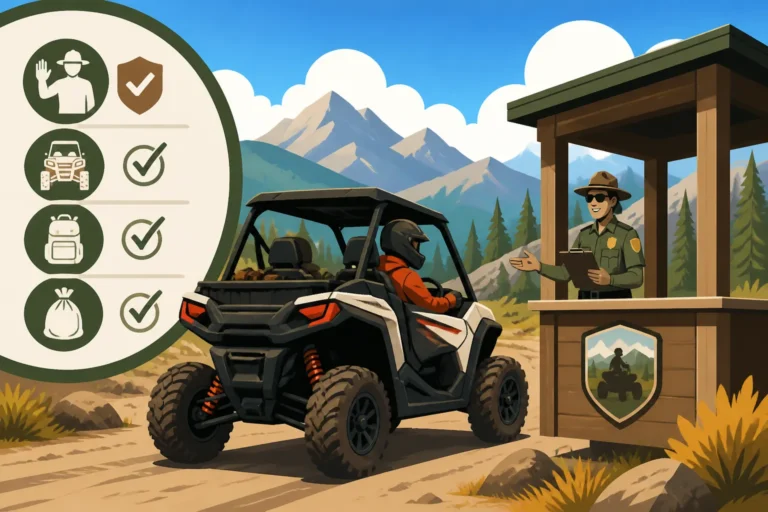
Despite their differences, both agencies share a common goal: to manage public lands for current and future generations while providing opportunities for various uses, including ORV riding. For a federal road or trail to be open to ORVs or MPVs, it must be specifically designated as such within the agency's travel management plan. This designation acts as their form of "consent." It's not enough that a road exists on federal land; it must be explicitly open. [Wyoming Rules for Riding a Forest Road] and [Wyoming Rules for Riding a BLM Road] often vary in their specifics, so it's critical to know which agency manages the land you're on.
Travel Management Plans: Your Best Friend
For any federal land, the definitive source for determining where you can and cannot ride is its Travel Management Plan (TMP). These plans are developed through extensive public input and environmental analysis, and they designate specific routes for motorized use. Every national forest and BLM field office has one. When you see a map from the Forest Service or BLM, look for the "Motor Vehicle Use Map" (MVUM). This map clearly identifies which roads and trails are open to which types of vehicles, and it's legally binding. If a route isn't on the MVUM as open for your vehicle type, then it's closed, regardless of whether there's a physical gate or sign. These maps are the federal agencies' way of formally consenting to ORV use on specific routes. Many advanced riders will load these maps onto their GPS units or tablets, ensuring they always stay on the legal path, potentially even with accessories from SuperATV that integrate with such navigation systems.
The Collaborative Process on Federal Roads
The process of opening a federal road to ORVs or MPVs often involves collaboration not only between the specific federal agency and Wyoming State Parks, Historic Sites and Trails, but also with local counties. For example, if a county wants to open a county road that connects to a Forest Service road, both the county commissioners and the Forest Service would need to give their consent and coordinate the enrollment with the state. This ensures that there are no gaps or conflicting regulations at jurisdictional boundaries. These agreements are formal and are usually documented, ensuring that all parties are on the same page regarding access, maintenance, and enforcement. This complex interplay is why a unified approach is required before [Which Agency Must Consent Before a Road Opens] becomes a clear answer on the ground.
Practical Steps for Riders and Advocates
Understanding the complex web of agencies and regulations can feel daunting, but it also empowers you to be a more informed and responsible rider. More importantly, it shows you how you can be an advocate for expanded access and safer riding opportunities. Your actions, both on and off the trail, truly matter.
How Riders Can Advocate for More Access
If you're passionate about expanding ORV access in Wyoming, you have a voice! Attending county commissioner meetings, especially when ORV-related agenda items are discussed, is a powerful way to show your support. Writing letters or emails to your county commissioners, state legislators, and federal land managers (Forest Service, BLM) can also make a difference. Join a local ATV/UTV club; these organizations often have direct lines of communication with decision-makers and can collectively advocate for new trail and road designations. When advocating, always emphasize responsible riding, safety, and the economic benefits that increased ORV tourism can bring to local communities. Remember, the agencies are often balancing many interests, so presenting a well-reasoned argument from an organized group can be very effective.
Checking Road Status Before You Ride
This is perhaps the most crucial practical step you can take. Never assume a road is open. Always verify its status before you load up your machine and hit the road.
Here’s how:
- County Roads: Check the county clerk's office website for current ordinances or contact the county road and bridge department.
- State-Enrolled Roads: Consult the Wyoming State Trails Program website, which usually has maps or lists of [Wyoming's Enrolled Roads and Trails].
- Federal Lands (Forest Service, BLM): Obtain the most current Motor Vehicle Use Map (MVUM) for the specific forest or BLM field office you plan to visit. These are often available online, at ranger stations, or at BLM field offices. Always check for temporary closures due to fire, weather, or wildlife.
A quick call or online search can save you a lot of grief and potential fines.
Understanding Equipment Requirements for Road Use
Finally, remember that even if a road is open, your machine must meet specific equipment requirements if it's operating as a street-legal MPV. This isn't just about getting a license plate; it's about making your machine safe for sharing the road with other vehicles.
Here's a quick overview of what an MPV typically needs:
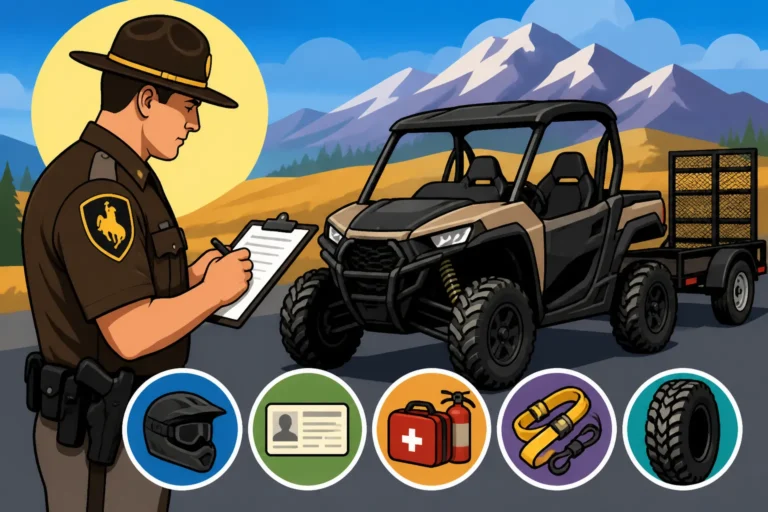
- Headlights and Taillights: Must be fully functional.
- Brake Lights: Essential for signaling stops.
- Horn: Required for alerting others.
- Mirrors: At least one left-side mirror is usually needed.
- Windshield: While not always strictly required for all MPVs, many riders opt for one for safety and comfort, especially if they've added a lift kit or other substantial modifications from a company like SuperATV.
- Seatbelts: If equipped from the factory, they must be used.
- Spark Arrester and Muffler: Your machine needs to meet sound and emission standards.
- Tires: Must be DOT-compliant.
Remember, an ORV permit does not confer street legality; it's an entirely different set of requirements. You'll also need a valid driver's license with the appropriate endorsement (usually an M or MR endorsement), and proof of insurance. Understanding these [Wyoming MPV Street Legal Requirements] is just as important as knowing which roads are open.
Agency Consent for ORV Road Opening in Wyoming
To help simplify the roles, here's a table outlining which agency must consent before a road opens for ORV or MPV use in Wyoming:
| Agency/Jurisdiction | Primary Role in ORV Road Opening | Type of Consent Required | Key Considerations |
|---|---|---|---|
| County Government | Authorizes use on county roads. | Resolution or Ordinance passed by County Commissioners | Local impact, public safety, resident concerns, agricultural use. |
| Wyoming State Parks, Historic Sites and Trails | Administers the statewide ORV program, enrolls approved routes. | Formal acceptance into the State Trails Program (after local consent). | Statewide network cohesion, maintenance, rider safety, program funding. |
| U.S. Forest Service | Designates routes on National Forest lands. | Motor Vehicle Use Map (MVUM) designation within Travel Management Plan. | Wildlife, environmental impact, timber operations, other recreational uses. |
| Bureau of Land Management (BLM) | Designates routes on BLM-managed public lands. | MVUM designation within Resource Management Plan. | Multiple-use mandate, grazing, energy development, cultural resources. |
This collaborative framework ensures that various perspectives and concerns are addressed before a road is officially opened to off-road vehicles in Wyoming.
Disclaimer
This article is for general informational purposes only and does not constitute professional advice. Laws, prices and regulations vary by location and change over time. Consult a qualified professional for guidance on your specific situation.