Riding Inside an Interstate Right of Way
For many of us who love the freedom of hitting the trails in Wyoming, the idea of getting from one fantastic riding area to another often means trailering our machines. But what happens when an interstate highway stands between you and your next adventure? The thought of navigating state laws about off-road vehicles (ORVs) on or even near these high-speed arteries can feel incredibly confusing and, honestly, a little intimidating. This guide is here to untangle the complexities of riding inside an interstate right-of-way in Wyoming, helping you understand the rules for both off-road vehicles and multipurpose vehicles (MPVs) when these major roads intersect your path.
Understanding Interstate Rights-of-Way in Wyoming
Wyoming is known for its wide-open spaces and incredible trail systems, but it's also crisscrossed by major interstate highways like I-80, I-25, and I-90. These roads are vital for commerce and travel, and as such, they come with a strict set of regulations designed to ensure the safety of everyone on or near them. For off-road enthusiasts, understanding exactly what constitutes an "interstate right-of-way" is the crucial first step.
Defining the Interstate Right-of-Way
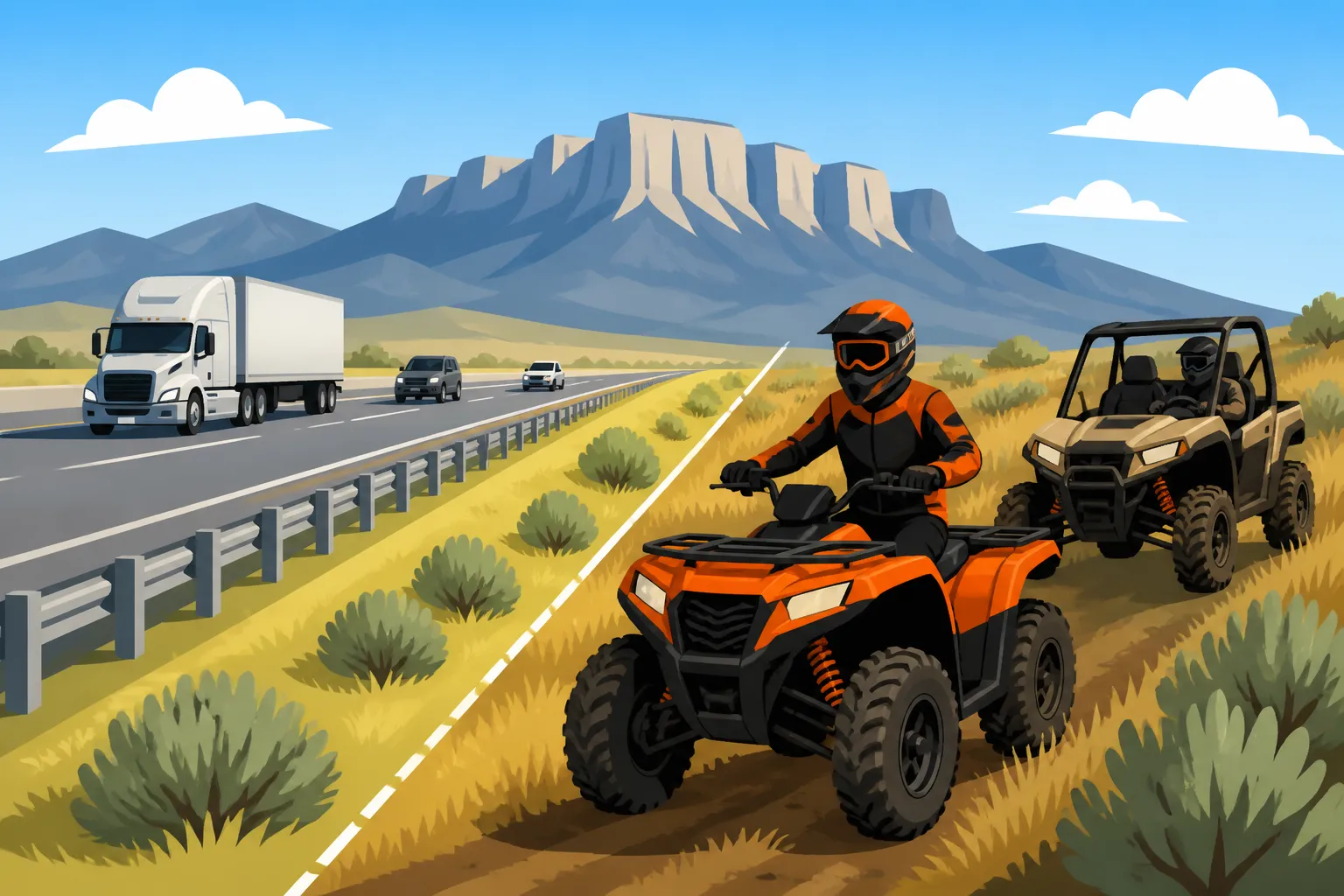
When we talk about an interstate right-of-way, we're not just talking about the asphalt lanes where cars and trucks zoom by at 75 miles per hour. This legal term encompasses a much broader area, typically including the paved driving lanes, the shoulders, the median strip, and any adjacent land that is owned or controlled by the state for the purpose of the highway. This often extends well beyond the visible road, incorporating areas for drainage, signage, and future expansion. Think of it as a protective bubble around the highway, designed to keep non-highway traffic – especially slow-moving or vulnerable vehicles – at a safe distance.
The state owns or has easements over these areas to maintain clear visibility, manage vegetation, and ensure unobstructed travel. It’s a dedicated corridor for high-speed, regulated traffic, and any deviation from these rules is taken very seriously for obvious safety reasons. Even if you're not on the asphalt, being within this defined right-of-way can still put you in violation of state and federal regulations concerning interstate access.
Why Standard ORVs Are Prohibited
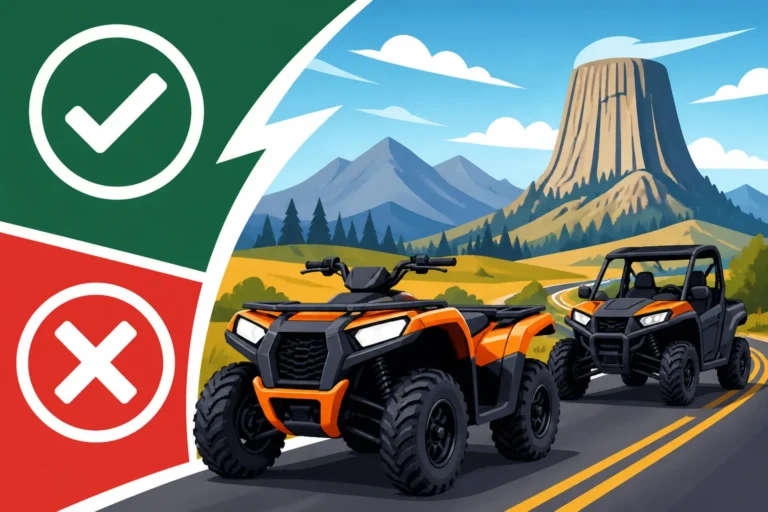
It might seem like common sense, but it bears repeating: standard ORVs like ATVs, dirt bikes, and some UTVs are absolutely prohibited from operating on or within the right-of-way of an interstate highway in Wyoming. There are several compelling reasons for this blanket prohibition, all rooted in safety and traffic flow. First and foremost is the extreme speed differential. ORVs are simply not designed to travel at interstate speeds, making them incredibly dangerous when mixed with cars and semi-trucks. Imagine trying to navigate an ATV doing 30 mph on a road where vehicles are consistently traveling two or three times that speed – it's a recipe for disaster.
Furthermore, standard ORVs lack the essential safety equipment required for highway travel. They often don't have proper turn signals, brake lights, mirrors, or the robust chassis and occupant protection found in road-legal vehicles. Their smaller profile also makes them difficult for other drivers to see, especially in adverse weather or at night. The federal government, along with the state of Wyoming, designates interstates for a specific type of vehicle traffic, and standard ORVs simply don't fit the bill. The risks of severe accidents, injury, and even fatalities are astronomically high, which is why these prohibitions are strictly enforced.
Exceptions for Multipurpose Vehicles MPVs
While standard ORVs are out of luck, Wyoming offers a specific pathway for certain off-road machines to gain limited access to public roads, including specific, controlled interstate crossings. This is where the concept of a Multipurpose Vehicle, or MPV, comes into play. An MPV is a class of vehicle that, while often starting as an off-road utility task vehicle (UTV) or side-by-side, has been modified and registered to meet specific criteria for road legality. You can learn more about [Wyoming's MPV definition in W.S. 31-1-101].
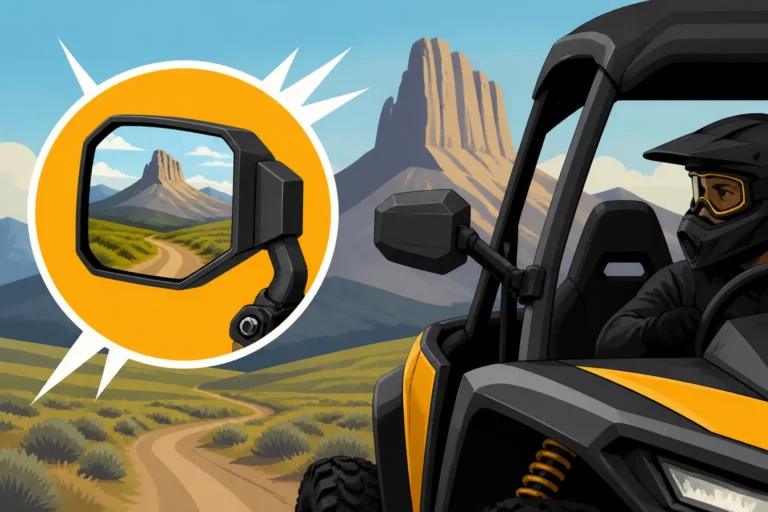
For a machine to qualify as an MPV in Wyoming, it must meet several physical requirements, such as a minimum weight, a maximum weight, and a seat height requirement. Once these physical attributes are met, the machine must then be equipped with standard road-legal features: headlights, taillights, brake lights, turn signals, a horn, mirrors (specifically, [The Left-Side Mirror Wyoming Wants]), and a red rear reflector. Only after satisfying all these equipment, weight, and seat height rules can the machine be titled by a Wyoming County Clerk and plated by a Wyoming County Treasurer, transforming it into a street-legal MPV. Even then, its access to interstates is highly restricted, limited to only designated grade-separated crossings, which we'll delve into shortly. An MPV owner also needs the appropriate driver's license endorsement and insurance coverage.
The Legal Landscape of ORVs and MPVs on Interstates
Wyoming’s approach to off-road vehicles and interstates has evolved over time, reflecting both the growing popularity of ATV and UTV riding and the need to maintain safety on critical transportation corridors. It's a nuanced area of law, and misunderstanding it can lead to serious consequences.
Historical Context of Wyoming Interstate Rules
For many years, interstates in Wyoming were an absolute barrier for off-road riders. If your trail system was bisected by an interstate, your only options were to trailer your machine around the obstacle or find a legal bridge or underpass that wasn't specifically designed for ORV use and might not even connect to another trail. This created significant headaches for riders and deeply frustrated local communities that saw their recreational opportunities divided. For example, the town of Evanston experienced this firsthand, where I-80 effectively cut off access to popular riding areas. [How the Interstate Cut Evanston Off From Its Trails] became a rallying cry for local advocates seeking a solution.
The state recognized the importance of connecting these trails for both recreational and economic purposes, but always with a paramount focus on safety. The challenge was to create a mechanism that allowed for limited crossings without compromising the integrity or safety of the interstate system itself. This historical context helps explain why the current rules, while allowing for some flexibility, are still quite stringent and specific. It wasn't an easy legislative path to open up even these limited crossing opportunities.
The WYDOT Chapter 33 Rule of 2025
A significant development in Wyoming's off-road access came with the establishment of [The WYDOT Chapter 33 Rule of 2025]. This pivotal regulation laid the groundwork for allowing registered Multipurpose Vehicles (MPVs) to legally cross interstate highways at specific, designated locations. It was a monumental shift, born from years of advocacy and careful planning between state agencies like the Wyoming Department of Transportation (WYDOT) and the Wyoming State Trails Program. The rule focuses heavily on safety, specifying that crossings must be grade-separated, meaning the MPVs either go over or under the interstate, completely avoiding direct interaction with high-speed traffic.
This rule didn't just appear overnight; it was the result of extensive studies and collaboration. It acknowledges the legitimate need for connectivity in the state's vast trail network while ensuring that the core function and safety of the interstates remain uncompromised. For riders, this means that while direct travel on the interstate remains forbidden, there's now a legal, safe, and sanctioned method to traverse these major barriers, significantly enhancing the potential for longer, more connected rides across Wyoming's diverse landscapes.
Distinction Between Riding On and Crossing an Interstate
It is absolutely crucial to understand the fundamental difference in Wyoming law between "riding on" an interstate and "crossing" an interstate. "Riding on" an interstate highway in Wyoming, whether with a standard ORV or even a street-legal MPV, is universally prohibited. This includes the main travel lanes, the shoulders, and the median. Interstates are designed for high-speed, conventional vehicle traffic, and no off-road machine is permitted to operate directly on these surfaces for any sustained period or for regular travel. Attempts to do so are illegal and extremely dangerous.
"Crossing an interstate," however, refers to the very specific, limited allowance for registered MPVs to pass over or under an interstate highway at designated points. These are not at-grade crossings where you would stop and wait for a break in traffic. Instead, they are specially constructed or repurposed underpasses or overpasses, often tunnels or bridges, that allow MPVs to move from one side of the interstate to the other without ever entering the flow of highway traffic. This distinction is paramount: one is strictly forbidden and unsafe, the other is a carefully managed, legal, and safe method for connectivity. Always ensure you are only utilizing these specific, marked crossing points if you are operating an MPV.
Wyoming's Grade-Separated Interstate Crossings
The implementation of designated grade-separated crossings represents a significant advancement for Wyoming’s off-road community, allowing for greater connectivity within the state's expansive trail network. These crossings are not just convenient; they are a testament to the state's commitment to balancing recreation with safety.
The Purpose of Grade-Separated Crossings
The primary purpose of grade-separated interstate crossings is to enable ORV and MPV riders to traverse major highways safely, without ever interacting directly with interstate traffic. Imagine trying to drive a side-by-side across a busy four-lane interstate – the risk is immense. Grade-separated crossings eliminate this risk by taking riders either completely over the interstate via a bridge or entirely under it through a tunnel or culvert. This design ensures that the high-speed flow of interstate traffic remains uninterrupted and that off-road users are protected from the inherent dangers of mixing with trucks and cars moving at highway speeds.
These crossings are not haphazard; they are carefully planned and often integrated into existing infrastructure or built specifically for this purpose. They serve as critical links between otherwise disjointed trail systems, allowing for longer, more immersive rides that were previously impossible without dismounting and trailering. For instance, imagine a trail system that extends for dozens of miles but is suddenly cut in half by I-80. A grade-separated crossing at a strategic point allows riders to seamlessly continue their journey, transforming what was once a dead end into a continuous adventure. This design also helps to prevent unauthorized, and thus dangerous, crossings.
How the 1,000 Machine a Year Cap Works
To manage the impact and monitor the effectiveness of these new crossing points, Wyoming has implemented a unique limitation: [Why Each Interstate Crossing Is Capped at 1,000 Machines] per year. This isn't just an arbitrary number; it's a carefully considered cap designed to serve several purposes. Firstly, it allows the state to pilot and evaluate the success and impact of these crossings on a manageable scale. By limiting the number of machines, authorities can collect data on usage patterns, environmental impact, and rider behavior without being overwhelmed.
Secondly, the cap helps to ensure the crossings remain safe and aren't overused, which could lead to congestion or maintenance issues. It's a way to gradually integrate these new access points into the broader trail system. Once a crossing reaches its 1,000-machine limit for the calendar year, it will typically be closed to further MPV crossings until the next year begins. This means riders must plan their routes and be aware of the status of these crossings. Information on which crossings are available and their current usage is usually provided by the Wyoming State Trails Program, so it’s always wise to check before you head out.
Funding and Development of Crossing Points
Establishing grade-separated crossings is no small undertaking; it requires significant planning, engineering, and, of course, funding. Many of these projects are the result of collaborative efforts between various state and federal agencies, often with crucial support from the Wyoming State Trails Program. This program plays a vital role in funding and developing trail infrastructure across the state, and interstate crossings are a key component of their mission to enhance recreational opportunities. You can often find information about [Why the Trails Program Pays for Crossings].
The funding can come from a variety of sources, including state appropriations, federal grants related to transportation and recreation, and dedicated funds from the sale of [Wyoming's Annual ORV Permit]. It’s a complex process that involves land acquisition, environmental impact assessments, engineering design, and construction. Often, these projects aim to utilize existing underpasses or overpasses that were not originally intended for ORV use but can be modified to safely accommodate them. Without the sustained effort and financial commitment from these entities, the development of these essential connectivity points would simply not be possible, leaving large parts of Wyoming's trail system fragmented.
Challenges and Considerations for Interstate Proximity
Even with designated, grade-separated crossings, operating an MPV in the vicinity of an interstate highway presents its own set of challenges and demands a heightened level of awareness from riders. It's not just about legality; it's about safety and responsible riding.
Safety Concerns Near High-Speed Traffic
While grade-separated crossings remove the direct interaction with interstate traffic, being near an interstate still presents unique safety considerations. The sheer volume and speed of vehicles on the interstate create a significant presence, even if you’re separated by a bridge or tunnel. The noise levels can be intense, which might startle riders or make communication difficult. There's also the potential for strong wind gusts, particularly when emerging from an underpass or riding on an elevated overpass, which can affect vehicle stability, especially for lighter machines.
Beyond the immediate physical environment, rider awareness is critical. It's easy to get distracted by the passing traffic or the imposing scale of the highway. Riders must remain focused on their own path, their machine, and their surroundings. It’s also important to remember that emergency services on an interstate are geared towards highway incidents, not necessarily trail issues that might occur just off the right-of-way. Being prepared for any mechanical issues or minor mishaps is even more important when operating in these higher-traffic, higher-stress environments.
Navigating Designated Crossing Points
Finding and correctly using designated interstate crossing points requires careful planning and attention to detail. These aren't always grand, easily spotted structures. Sometimes, they might be a subtle underpass or a dedicated trail bridge that blends into the landscape. You absolutely cannot assume that any underpass or overpass is a legal crossing. These specific routes are typically marked with official signage indicating their designation for MPV traffic, and often a gate or specific access point that confirms it's an enrolled route. Without clear signage, you should never attempt to cross.
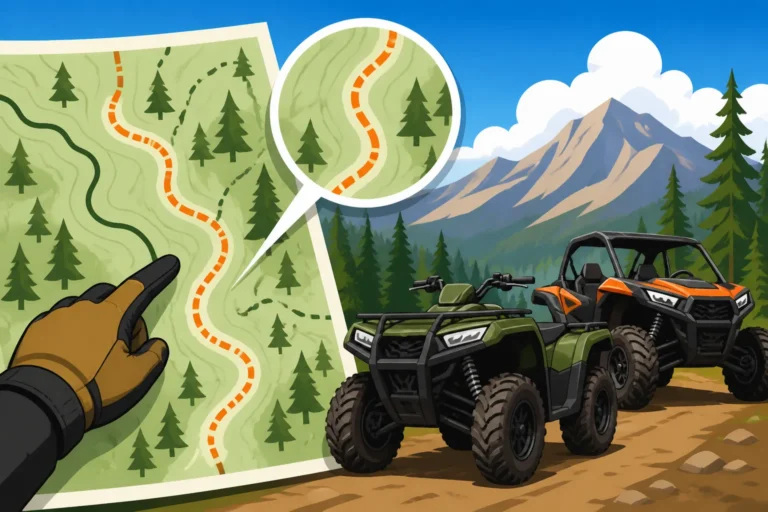
It’s imperative to consult up-to-date maps, such as those provided by the Forest Service, BLM, or the Wyoming State Trails Program, which clearly delineate enrolled roads and trail segments, including interstate crossings. Many times, these crossings connect two otherwise separated [Wyoming's Enrolled Roads and Trails]. For example, if you're [Riding Between Two Enrolled Segments], knowing exactly where the legal crossing lies is paramount. Relying on GPS alone might not be sufficient if the mapping data isn't current or precise enough. Always verify your route beforehand, pay attention to all signage, and if in doubt, choose an alternative route or turn back.
Enforcement and Penalties for Violations
Wyoming authorities take violations of interstate right-of-way rules very seriously. Riding on or attempting to cross an interstate where not explicitly permitted is not just dangerous; it can lead to significant legal repercussions. Law enforcement, including the Wyoming Highway Patrol, county sheriffs, and even federal land management rangers, patrol these areas and are vigilant about ensuring compliance. If caught, riders can face substantial fines, vehicle impoundment, and potentially criminal charges depending on the severity and circumstances of the offense. For instance, [Wyoming Fines for Riding a Closed Road] can be steep, and this applies to interstates as well.
The penalties serve as a deterrent and reflect the high risk associated with unauthorized interstate access. It's not just about a ticket; it's about preventing potentially catastrophic accidents involving high-speed traffic. Ignorance of the law is generally not considered an excuse, so understanding these regulations is your responsibility as a rider. Always prioritize legal and safe riding practices to protect yourself, your machine, and other road users. When in doubt, err on the side of caution and find an alternative, legal route for your journey.
Necessary Equipment and Preparedness for Interstate Crossings
If you plan to utilize Wyoming's grade-separated interstate crossings with an MPV, preparation is key. This isn't just about having the right machine; it's about equipping it properly and ensuring you have all the necessary documentation to legally operate on designated public roads.
MPV Road-Legal Equipment Requirements
To even qualify for an MPV title and license plate in Wyoming, your side-by-side or UTV must be outfitted with specific road-legal equipment. This includes, but isn't limited to, functioning headlights, taillights, brake lights, and turn signals to ensure you are visible to others and can signal your intentions clearly. A functional horn is also mandatory, allowing you to alert pedestrians or other vehicles to your presence. [Wyoming Horn Requirement on a Road Machine] is not just a suggestion; it's a legal demand.
In addition, your MPV must have at least one mirror on the left side, as specified by Wyoming law (refer to [Wyoming Mirror Requirements for Road Use]), and a red rear reflector to enhance visibility, especially during low-light conditions. These aren't optional accessories; they are non-negotiable legal requirements for operating an MPV on any public road where permitted, including during interstate crossings. Many aftermarket companies, like SuperATV, offer comprehensive road-legal kits designed to help convert off-road vehicles to meet these exact specifications, making it easier for riders to comply with the law. Ensuring all these components are properly installed and in good working order before you hit any paved surface is paramount for both legality and safety.
Carrying Essential Documentation
Just like driving a car, operating an MPV on Wyoming's public roads and designated interstate crossings means you must carry specific documentation. First and foremost, you need a valid driver's license with the appropriate endorsement. For MPVs, this typically means a motorcycle (M) endorsement or a motor-driven cycle (MR) endorsement, depending on the machine's classification. You can find more details on [Wyoming Motorcycle Endorsement for an MPV]. Attempting to ride without the correct license is a serious offense.
Secondly, you must carry proof of insurance. Unlike standard ORVs on trails, MPVs operating on public roads are subject to Wyoming's mandatory insurance laws. [Wyoming ATV Insurance Requirement] ensures that you are financially responsible in the event of an accident. Always keep your insurance card or declaration page with you. Finally, ensure you have your MPV's title and current registration, including the license plate, prominently displayed as required by law. Keeping all these documents in a waterproof, secure pouch on your person or within your machine is a smart practice, ready to present if stopped by law enforcement.
Planning Your Route and Contingencies
Riding an MPV on designated roads and through interstate crossings demands a meticulous approach to route planning and contingency preparation. Never assume a route is open or legal without verifying. Obtain the most current maps from the relevant land management agencies (Forest Service, BLM) and the Wyoming State Trails Program. These maps will show designated MPV routes and explicitly mark the authorized interstate crossing points. Digital maps on GPS units or phones are great, but always have a paper map as a backup, especially in areas with no cell signal.
Beyond knowing the route, plan for the unexpected. Carry a basic toolkit for minor repairs, a first-aid kit, and sufficient water and snacks. Consider a satellite messenger or personal locator beacon if venturing into remote areas, as breakdowns or emergencies near an interstate, while rare, can be complicated to resolve. Inform someone of your route and expected return time. Finally, always be aware of the weather forecast. Wyoming weather can change rapidly, and a sunny morning can quickly turn into a stormy afternoon, affecting visibility and trail conditions, especially at higher elevations or in open areas around interstates. Being prepared for varying conditions, like having appropriate riding gear for different temperatures or unexpected rain, is just part of responsible riding.
| Feature | Description | Why it's Important |
|---|---|---|
| Headlights/Taillights | Required for visibility, especially in low light or adverse weather. | Allows other drivers to see you, critical on roads. |
| Brake Lights | Illuminates when brakes are applied, signaling deceleration to traffic behind. | Prevents rear-end collisions. |
| Turn Signals | Front and rear indicators for signaling turns or lane changes. | Essential for clear communication with other road users. |
| Horn | An audible warning device for alerting others. | Crucial for safety, especially around blind corners or pedestrians. |
| Left-Side Mirror | Provides rearward visibility on the driver's side. | Required for safe merging and awareness of traffic. |
| Red Rear Reflector | Passive safety device reflecting light to enhance rear visibility. | Added visibility at night or in low-light conditions. |
| Driver's License | Valid license with M or MR endorsement. | Legal requirement for operating a motor vehicle on public roads. |
| Proof of Insurance | Documentation showing active liability coverage. | Mandated by Wyoming law for road-legal vehicles. |
| Registration/Plate | Current vehicle registration and license plate properly displayed. | Legal proof of ownership and authorization to operate. |
Disclaimer
This article is for general informational purposes only and does not constitute professional advice. Laws, prices and regulations vary by location and change over time. Consult a qualified professional for guidance on your specific situation.