Grade-Separated Interstate Crossings
It’s a tale as old as time for off-road enthusiasts: you’re out on a fantastic trail ride, exploring the vast, breathtaking landscapes of Wyoming, only to find your adventure abruptly halted by a roaring interstate. These massive ribbons of asphalt, while vital for commerce and travel, often carve through existing trail systems or block access to prime riding areas, leaving riders feeling frustrated and looking for a way around. This guide dives deep into grade-separated interstate crossings in Wyoming, explaining what they are, how they work, and how they help reconnect our beloved trails and communities.
The Challenge of Interstate Barriers
Wyoming is a state of wide-open spaces, but even here, major transportation arteries like Interstate 80 or Interstate 25 can feel like impenetrable walls to the off-road community. These interstates, designed for high-speed vehicular traffic, aren't just physical obstacles; they represent significant legal boundaries that prevent continuous trail use.
How Interstates Divide Riding Areas
Imagine you're trying to get from one section of a national forest to another, or from a scenic overlook on Bureau of Land Management (BLM) land to a cozy diner in a small town. Historically, if an interstate cut through that route, you were simply out of luck. You'd have to load your machine back onto a trailer, drive miles out of your way to the nearest designated exit, cross the interstate, and then unload again. It's a massive inconvenience that breaks the flow of a scenic ride and eats up valuable time you’d rather spend on the dirt.
A prime example of this challenge can be seen in communities like Evanston, which found itself quite literally bisected by I-80. Before solutions were put in place, residents often felt cut off from nearby recreational opportunities and even from parts of their own community by the massive highway. These interstates create a divide, forcing riders to either abandon their planned route or undertake a time-consuming detour, completely disrupting the immersive experience of off-road travel. This isn't just about getting from point A to point B; it's about the feeling of freedom and connectivity that off-roading provides. When a trail system is severed, it diminishes the overall quality of the experience.
The Limitations of "Street Legal" Solutions
You might think, "Well, if my side-by-side or ATV is street legal, can't I just drive across the interstate?" And that's a perfectly logical question. Wyoming does have provisions for making certain off-road machines, specifically Multipurpose Vehicles (MPVs), street legal to ride on designated county, state, and even some Forest Service and BLM roads. However, there's a crucial distinction to be made: "street legal" does not automatically mean "interstate legal."
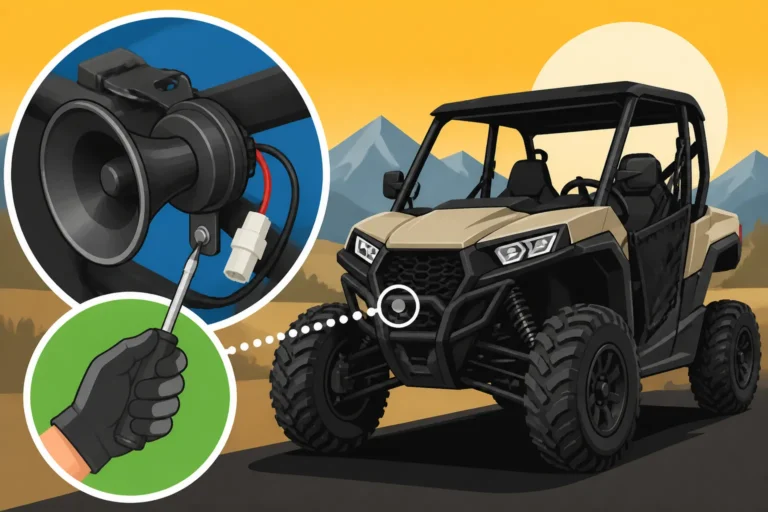
Even if your machine is properly titled as an MPV, registered, insured, and equipped with all the necessary road-legal accessories like mirrors, lights, and a horn – perhaps using quality aftermarket parts from a company like SuperATV – you generally cannot operate it on an interstate highway. The speed limits, the volume of high-speed traffic, and federal regulations all combine to make interstates unsafe and generally off-limits for most ATVs, UTVs, and even dirt bikes, even if they have been modified to be road-compliant for other paved surfaces. These aren't just arbitrary rules; they're in place for the safety of everyone on the road. For more details on this, you might find our guide [Interstates Closed to MPVs and Dirt Bikes] particularly insightful. So, while achieving street legality opens up many possibilities for connecting trails via local roads, it doesn't solve the problem of crossing an interstate directly. That's where grade-separated solutions come into play.
Understanding Grade-Separated Crossings
When you hit that interstate barrier, a "grade-separated crossing" is often the most elegant and effective solution for off-road riders. It’s a concept that significantly enhances safety and continuity for trail networks.
What Exactly Are They?
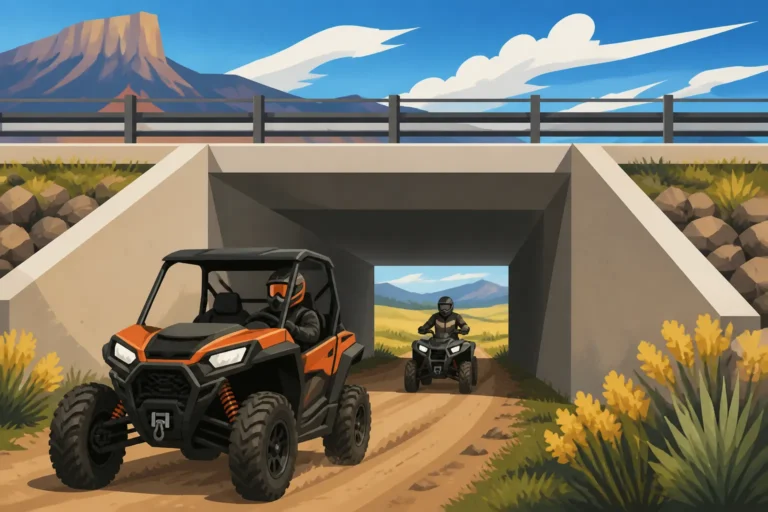
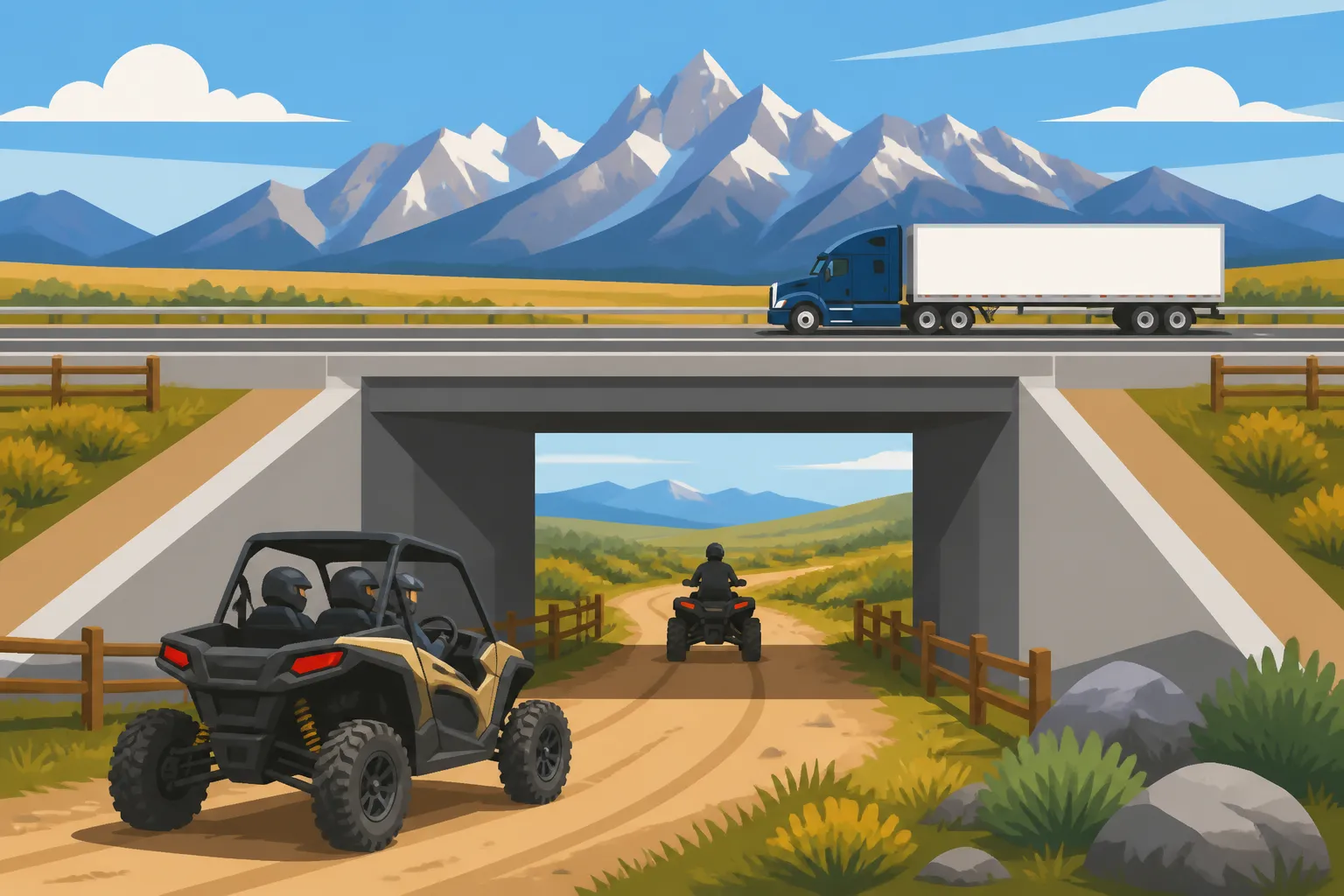
A grade-separated crossing, in simple terms, means that the paths of two different types of traffic (in this case, interstate vehicle traffic and off-road vehicle traffic) do not intersect at the same elevation. Instead, one passes over or under the other. For off-road vehicles crossing an interstate, this almost always takes the form of an underpass – a tunnel or culvert that allows ORVs to pass safely beneath the roaring highway traffic above. Less commonly, it could be an existing or specially constructed bridge over the interstate, sometimes integrated with an existing frontage road or a dedicated ORV bridge.
These structures are specifically designed to provide a continuous, safe route for off-road vehicles, cyclists, hikers, and even equestrian users. They are a world away from simply riding across a paved road at an intersection. There's no stopping for traffic, no high-speed merging concerns, and no danger of a direct collision with a semi-truck traveling at 80 miles per hour. These are dedicated corridors, often clearly marked, that seamlessly connect segments of trail that would otherwise be severed. They typically blend into the natural landscape, often utilizing existing culverts or drainage paths, but are adapted and signed for recreational vehicle use. Think of them as dedicated off-road bridges or tunnels, purely for your two or four-wheeled adventure machine, keeping you completely separate from the main highway flow. If you're wondering what it feels like to use one, check out [Crossing Under the Highway at a Grade-Separated Crossing] for a more direct description.
The Role of Collaboration in Opening Crossings
Establishing a grade-separated interstate crossing is far from a simple unilateral decision by one agency. It's a complex undertaking that requires significant collaboration, negotiation, and often, funding from multiple sources. In Wyoming, this typically involves a concerted effort between the Wyoming Department of Transportation (WYDOT), which manages the interstates, the Wyoming State Parks, Historic Sites and Trails (which oversees the state's Off-Road Vehicle Trails Program), and local county governments.
The process often begins at the local level. Communities or rider groups might identify a critical need for a crossing, perhaps to reconnect historical trails or provide better access to public lands. This grassroots effort then needs to gain traction with the local county commissioners, as they often have the first say in endorsing such projects. From there, the proposal usually moves to State Parks, which works with WYDOT to assess feasibility, engineering challenges, environmental impacts, and, crucially, funding. WYDOT's primary concern is the safety and integrity of the interstate itself, so any crossing project must meet stringent engineering and safety standards. State Parks, through the ORV Trails Program, often plays a vital role in securing grants and allocating resources, which are partly funded by [Where Wyoming ORV Permit Money Goes] – specifically, your permit fees. It's truly a testament to local initiative and inter-agency cooperation when these projects come to fruition, emphasizing that [Why a Road Opens Only When Two Agencies Agree] isn't just about regular roads, but these crucial crossing points too.
The Rules and Restrictions for Crossings
While grade-separated crossings are fantastic for connecting trails, they aren't a free-for-all. Wyoming has specific rules in place to manage their use, ensuring safety, environmental protection, and a sustainable experience for all riders.
The Annual Machine Cap (1,000 Machines)
One of the most unique and important aspects of Wyoming's grade-separated interstate crossings is the annual machine cap. Specifically, a rule was put in place – largely driven by the experiences in Evanston – that limits the number of off-road machines (ATVs, UTVs, dirt bikes, etc.) that can utilize these designated interstate crossings to 1,000 machines per year, per crossing point. This isn't just an arbitrary number; it was a carefully negotiated compromise designed to address concerns about potential overuse, environmental impact, and safety, especially when these programs were first being established.
The cap serves multiple purposes. First, it allows for a phased approach to integrate ORV traffic with existing infrastructure, giving agencies time to monitor usage and impact without immediately overwhelming a new crossing point. Second, it reflects the need to manage resources and ensure that the integrity of the interstate or surrounding areas isn't compromised. The cap helps maintain a balance between providing access for riders and protecting the environment and public safety. When a crossing reaches its 1,000-machine limit for the calendar year, it is then closed to ORV traffic until the next year. This means riders absolutely need to plan ahead and check the status of these crossings before embarking on a ride that relies on them. Understanding [Why Each Interstate Crossing Is Capped at 1,000 Machines] provides critical context for this unique Wyoming rule.
Designated Crossing Points and Usage
You can't just pick any culvert or underpass to cross an interstate. Wyoming's grade-separated crossings are very specific, officially designated, and clearly marked points within the enrolled trail system. These aren't hidden secrets; they are part of the larger network of routes that are managed and maintained for off-road use. Riders must stick to these designated routes, which are usually evident by specific signage indicating ORV use, trail markers, and often, gates or barriers that prevent unauthorized vehicles from entering.
Finding these designated points requires consulting official maps, such as the various travel management maps provided by the Forest Service, BLM, or Wyoming State Parks. These maps will clearly show the "enrolled" routes that include these special crossings. It's critical to remember that even if a tunnel looks like a potential crossing, if it's not officially designated and signed, using it would be considered trespassing or riding off-route, which can lead to fines and environmental damage. These crossings are designed for seamless passage, but riders are still expected to operate their machines responsibly, adhering to speed limits, staying on the marked path, and respecting any posted rules specific to that crossing. The expectation is that you approach the crossing, proceed safely through, and then continue on the trail system on the other side, all without interacting with the interstate traffic itself.
Vehicle Requirements for Crossing
When it comes to using these special interstate crossings, your off-road machine needs to be in good working order and generally meet the basic requirements for riding on Wyoming's public lands. While these crossings are "off-highway" paths, a few common-sense considerations apply to ensure safety and compliance.
First and foremost, your machine must have a current Wyoming ORV permit decal properly displayed. This is a non-negotiable for riding anywhere on the state's enrolled trail system, including these crossings. Beyond the permit, ensure your machine has a functioning spark arrester to prevent wildfires – this is a requirement for all public land riding. Your muffler should also be in good condition to comply with sound regulations, preventing excessive noise that could disturb wildlife or nearby residents.
While full "street legal" equipment like turn signals or license plates isn't explicitly required for the crossing itself (since you're not on the interstate or a public road), having good working headlights and taillights is always a smart idea, especially when passing through an underpass which can be dark, or if your ride extends into dusk. For added safety and to ensure your machine is ready for any part of your adventure, including designated roads that might connect to the crossing, consider equipping it with robust accessories. Companies like SuperATV offer a range of products from heavy-duty axles to sturdy skid plates that can handle varied Wyoming terrain, ensuring your machine is ready for any challenge the trail throws at it, whether it's navigating rocky sections or cruising through a dark underpass. Ensuring your vehicle is well-maintained and properly equipped for the conditions is always the best practice.
The Impact and Future of Crossings
The implementation of grade-separated interstate crossings in Wyoming represents a significant step forward for the off-road community, delivering tangible benefits to riders and local economies alike.
Connecting Communities and Trails
The profound impact of these crossings cannot be overstated. Before their existence, interstates acted as impassable barriers, isolating vast tracts of public land and effectively cutting off communities from their natural recreational playgrounds. For places like Evanston, [Evanston and the Interstate That Split It] was a very real problem, where the community and its surrounding trails were physically divided. The introduction of these grade-separated routes has literally reconnected the dots on the map, allowing riders to seamlessly traverse entire regions without the need for frustrating detours or the cumbersome process of loading and unloading machines from trailers.
This reconnection doesn't just benefit individual riders; it breathes new life into local economies. When riders can access extended trail networks more easily, they are more likely to spend more time in an area, patronizing local gas stations, restaurants, shops, and lodging establishments. It transforms a quick, isolated ride into a multi-day adventure, turning casual visitors into long-term patrons of Wyoming's small towns. These crossings are critical infrastructure that supports recreational tourism, a vital component of many rural economies in the state. They allow for the creation of grander, more ambitious loop trails and point-to-point rides that were previously impossible, creating a more cohesive and enjoyable experience for everyone.
Advocacy and Future Development
The success of existing grade-separated interstate crossings has naturally led to increased interest in developing more of these vital connectors across the state. This future development heavily relies on continued advocacy from the off-road community, local governments, and collaborative efforts among state agencies. Rider clubs, local tourism boards, and individual enthusiasts play a crucial role in identifying areas where new crossings would be most beneficial, whether to unlock new riding opportunities or to ease access to existing but fragmented trail systems.
Proposing a new crossing involves a multi-faceted process. It often starts with a formal request or proposal submitted to relevant bodies, such as county commissioners or the Wyoming State Parks, Historic Sites and Trails department. From there, feasibility studies, environmental reviews, and engineering assessments are conducted by agencies like WYDOT and State Parks. Funding is almost always a primary hurdle, with projects often relying on a combination of state funds, federal grants, and even local contributions. The Wyoming Trails Program, which you can learn more about by contacting [Wyoming Trails Program Contact], is instrumental in this process, often acting as a bridge between rider needs and governmental resources, and facilitating the [Grants That Cut New Trail] that make these projects possible. The more actively the riding community participates in these discussions and demonstrates the clear benefits, the greater the likelihood of seeing more of these crucial trail-connecting structures built in the future.
Practical Tips for Using Crossings
Using Wyoming’s grade-separated interstate crossings is generally straightforward, but a little planning and preparation go a long way to ensure a smooth and enjoyable experience.
Planning Your Route
Navigating Wyoming's vast and varied terrain often requires careful planning, and this is especially true when your route involves specific infrastructure like interstate crossings. Before you even load your machine, it's absolutely crucial to consult the most current and official maps. This means digital or paper versions of Travel Management Maps (MVUMs) from the U.S. Forest Service or Bureau of Land Management (BLM), or maps provided by Wyoming State Parks. These maps are your golden ticket, clearly marking all designated ORV routes, including any grade-separated interstate crossings. Don't rely on outdated information or anecdotal advice; routes can change, and closures can occur.
Beyond identifying the crossing itself, you must check the current status of the crossing, especially given the 1,000-machine annual cap. The Wyoming State Parks, Historic Sites and Trails website is the best resource for up-to-date information on crossing availability. There's nothing more frustrating than planning an epic ride only to discover a critical crossing is closed for the season or has reached its annual limit. Always have a backup plan or an alternative route in mind, even if it means rerouting onto designated county or state roads where your machine might need to be street-legal. For comprehensive information on how to read these crucial maps, our guide [Wyoming Trail Maps and MVUMs] can be a great starting point. Always plan for the unexpected, as conditions in Wyoming can change rapidly.
Essential Gear and Preparedness
Riding in Wyoming’s backcountry, particularly on longer routes that incorporate interstate crossings, demands a certain level of preparedness. You’re often far from services, and breakdowns or unexpected delays can quickly turn an adventure into a predicament. Beyond your usual riding gear like a helmet, eye protection, and sturdy boots, consider what you need for self-sufficiency.
Carry a basic tool kit with essentials for minor repairs, a tire patch kit, and a small air pump. Always have enough fuel for your planned route, plus a reserve. Water and snacks are non-negotiable, even for what seems like a short ride, as delays can extend your time on the trail. A first-aid kit, a communication device (especially a satellite messenger for areas with no cell service – see [Satellite Messengers in the Basin]), and navigation tools (GPS, paper map, compass) are critical. Weather in Wyoming can be unpredictable, so pack layers, rain gear, and even a compact emergency shelter.
When it comes to your machine itself, investing in durable and reliable components can drastically reduce the chances of a trailside breakdown. Companies like SuperATV offer a range of heavy-duty components, from reinforced A-arms to robust CV axles, that are designed to withstand the rigorous demands of Wyoming’s diverse terrain. Knowing your machine is equipped with reliable parts provides an extra layer of confidence, allowing you to focus on the ride and the stunning scenery, rather than worrying about mechanical failures miles from the nearest town or service center. Being prepared means you can truly enjoy the freedom and adventure that these unique crossings unlock.
Comparison of Wyoming ORV Crossing Options
| Crossing Type | Description | Legal Status for ORVs | Considerations |
|---|---|---|---|
| Grade-Separated Crossing | Dedicated underpass or overpass, physically separating ORV traffic from interstate traffic. | Legal for ORVs on designated, enrolled routes. Subject to annual 1,000 machine cap per crossing. | Safest, most seamless. Requires checking availability due to cap. Part of enrolled trail system. |
| At-Grade Highway Crossing | Crossing a state or county highway at an intersection where ORVs and other vehicles share the road. | Legal if road is designated as an ORV route and machine is street-legal (MPV) or specifically permitted. | Requires machine to be street-legal. Higher risk due to shared traffic. Adherence to traffic laws is critical. |
| Interstate Direct Crossing | Attempting to drive an ORV directly across an active interstate highway. | Illegal. Not permitted under any circumstances for ORVs. | Extremely dangerous, high risk of severe penalties (fines, citations, vehicle impoundment) and accidents. |
| Private Land Crossing | Riding across private land to connect trails, potentially including crossing a private road or gate. | Legal only with explicit, prior permission from the landowner. | Requires landowner consent. Trespassing without permission. Gates must be closed. |
Disclaimer
This article is for general informational purposes only and does not constitute professional advice. Laws, prices and regulations vary by location and change over time. Consult a qualified professional for guidance on your specific situation.