Wyoming Helmets for Riders Under 18
It can be incredibly confusing to figure out the exact rules for riding your ATV or UTV in Wyoming, especially when it comes to the safety of younger family members. Many parents worry about what's legal and what's truly safe when their kids are out on the trails or, even more critically, on roads. This guide will thoroughly break down Wyoming's specific helmet laws for riders under 18, clarifying where and when helmets are required, and what you need to know to keep your young adventurers safe and compliant.
Understanding Wyoming's Helmet Mandate for Young Riders
Wyoming has a reputation for wide-open spaces and a more relaxed attitude in some areas, but when it comes to the safety of our youngest riders on public roads, the state law is quite clear. It's not just about common sense; it's about legal requirements that every family needs to understand before hitting the pavement or even those gravel county roads. The nuances between riding on designated trails versus public roads can make all the difference in whether a helmet is legally required for someone under 18.
The Core Law: Who Needs a Helmet and Where
Let's get right to it: In Wyoming, any operator or passenger of an off-road vehicle (ORV) or multipurpose vehicle (MPV) who is under 18 years of age is required to wear a safety helmet when riding on a public road or highway. This is a critical distinction many riders miss. The law specifically targets public roads. It's not about how fast you're going or how short the distance is; it's about the classification of the path you're on.
Imagine you're taking your son, who just turned 16, for a ride on your side-by-side. You've taught him how to handle the machine, and he's a confident rider. You're planning to ride a mix of forest trails and then take a short county road section to connect to another trail system. On the designated forest trail, the helmet law for minors might not apply in the same way, but the moment your tires hit that county road, even for a quarter-mile stretch, he must have a helmet on. This isn't just a suggestion; it's a legal requirement that carries potential fines if ignored. It's about protecting minors in an environment where they're sharing space with other vehicles, often traveling at higher speeds, and where the risks of collision are significantly increased compared to a dedicated off-road trail. For more on this, you might want to look at [Wyoming Helmet Law for ATV Riders].
Differentiating Trails from Roads: Why It Matters for Helmets
This is where things can get a little tricky and often cause confusion. Wyoming's helmet law for riders under 18 specifically applies to "public roads or highways." What exactly does that mean in the vast landscape of Wyoming? It generally refers to paved or gravel roads maintained by state, county, or even some city governments, which are open to the general public for vehicular travel. Think of your typical county road, state highway, or even a city street.
Contrast this with many off-road trails on Bureau of Land Management (BLM) land, Forest Service routes, or designated ORV parks. While wearing a helmet is always a good idea for safety regardless of age or location, the legal mandate for riders under 18 specifically kicks in on those public roads. For example, if your 14-year-old is riding their dirt bike on a designated single-track trail deep in the Bighorn National Forest, the state's public road helmet law for minors doesn't directly apply on that specific trail. However, if that same dirt bike needs to cross a county road or ride a short segment of an enrolled forest road to get to another trail, then the helmet becomes legally mandatory for them. The distinction is crucial because a trail might be "open to ORVs," but if it's not also legally designated as a public road or highway, the helmet mandate for minors may not apply in the same way. Always consult local regulations and maps to confirm the status of your chosen riding areas. It's not uncommon for different jurisdictions (Forest Service, BLM, State Parks) to have their own recommendations or rules, even if they don't carry the same weight as a state law for public roads.
Passengers Under 18: Helmets Aren't Just for Drivers
A common oversight is thinking the helmet rule only applies to the person at the controls. However, Wyoming law is clear that the mandate extends to any passenger under 18 years of age as well, when riding on a public road or highway. This means if you're out with your family in a four-seat UTV, and your 10-year-old is sitting in the back, they need a helmet just as much as a 16-year-old driver would if you were on an enrolled county road. This really hits home when you're touring around and decide to take a short cut on a public road.
Consider a scenario where you're renting a side-by-side from a local outfitter for a scenic tour near Jackson. You're driving, and your 12-year-old daughter is riding alongside you. If your route includes any segments of public roads, whether paved or graded gravel, she absolutely needs a properly fitted helmet. Many rental companies will provide these, but it's your responsibility as the adult in charge to ensure everyone is compliant. It's not just about avoiding a ticket; it's about the inherent vulnerability of passengers, especially younger ones, in the event of an accident. They have less control and are often relying entirely on the driver's skill and judgment. The law is designed to provide that additional layer of protection. Learn more about the specific requirements for young passengers here: [Wyoming Helmet Law for Passengers].
Navigating the Street-Legal Landscape with Minors
The concept of a "street-legal" ATV or UTV, often referred to as a Multipurpose Vehicle (MPV) in Wyoming, adds another layer of complexity to the helmet discussion. When you upgrade a standard off-road machine to be legal on certain public roads, you're essentially transitioning it into a vehicle that shares space with cars and trucks. This change in classification brings with it a whole new set of rules, and helmet requirements for minors are a major part of that shift. It's no longer just about off-road safety; it's about highway safety standards.
When Your Machine Becomes an MPV and What Changes for Helmets
In Wyoming, an ORV can sometimes be converted into an MPV, making it eligible for registration and plating to operate on certain public roads. This conversion involves meeting specific criteria, like having a windshield, mirrors, horn, turn signals, and more. When your machine makes this leap from a pure ORV to an MPV, its operational context changes dramatically, and so do the rules for who needs a helmet.
Let's say you've invested in a quality side-by-side, perhaps from a brand like SuperATV, known for its aftermarket parts, and you've outfitted it with all the necessary components to meet Wyoming's MPV requirements. You go through the process of titling it as an MPV with the county clerk and then getting plates from the county treasurer. Now, your 17-year-old son, who has a valid driver's license with the appropriate endorsement, wants to drive this newly legal MPV to the local gas station on a city street. Because he is under 18 and operating an MPV on a public road, he is legally required to wear a helmet. The moment the machine is licensed for road use, the "under 18 helmet on public roads" rule is firmly in effect, irrespective of the machine's off-road origins. This is a critical point of transformation where safety regulations become much more stringent due to the increased risks of road travel. Understanding [Wyoming MPV Street Legal Requirements] is key here.
Designated ORV Roads vs. Public Highways and Helmet Rules
Wyoming has a system of "enrolled" roads and trails. These are routes that have been designated as open for ORV use by the responsible land management agency (like the Forest Service or BLM) and often by the county or state. However, not all enrolled roads are treated equally when it comes to helmet laws for minors. A truly "public highway" or main thoroughfare will always trigger the helmet rule for under-18s. But what about those gravel roads out in the boonies that are clearly open to ORVs?
Generally, if a road is maintained by a county or the state, and accessible to the public, it falls under the "public road or highway" umbrella, and the helmet rule for minors applies. This includes many of the scenic backroads and access roads you might find throughout the state. So, if you're taking your 15-year-old daughter on a scenic tour through the Shoshone National Forest, and part of your route is on a gravel forest road that's also an enrolled county road, she needs a helmet. It can be tricky because some forest roads might not be "county roads" in the strict sense, but if they are public access routes shared with other full-sized vehicles, it's always safest and often legally required to treat them as public roads for helmet purposes when minors are involved. Always err on the side of caution and check local regulations. For a deeper dive into road classifications, see [Wyoming Rules for Riding a County Road].
Age Restrictions for Driving and Helmet Implications
Beyond helmet rules, Wyoming also has specific age restrictions for who can operate an ORV or MPV on public roads. These age limits are intertwined with the helmet requirements, particularly for those under 18. Generally, to drive an MPV on an enrolled public road, a driver needs to be at least 16 years old and possess a valid driver's license with the proper motorcycle endorsement (or an MR permit in certain cases).
If your 16-year-old son has his driver's license and the necessary endorsement, and he's driving your MPV on a county road, he is legally required to wear a helmet because he is under 18. What about younger riders? A 15-year-old with a learner's permit can operate an MPV on public roads only if accompanied by a licensed adult, and again, they must wear a helmet. For riders under 15, operating any ORV or MPV on a public road is generally restricted, regardless of helmet use, unless it's strictly on private property with permission. The helmet rule acts as an overlay to these age and licensing requirements, ensuring that even when a minor is legally allowed to drive, they have that vital head protection. This combination of age, license, and helmet rules forms a comprehensive safety framework. Understanding [Wyoming Driver's License Rules for ORVs] is crucial for any parent.
Equipping Young Riders: Beyond the Basic Requirement
While the law sets the minimum standard, any experienced rider knows that safety goes far beyond just ticking a box. Especially for young riders, providing the right gear and fostering a strong safety culture is paramount. Helmets are just one piece of the puzzle; proper fit, additional protective equipment, and diligent adult supervision all contribute to a safer riding experience in the diverse terrain of Wyoming. You want them to be safe, not just compliant, and sometimes that means going above and beyond the letter of the law.
Choosing the Right Helmet for ATV/UTV Use
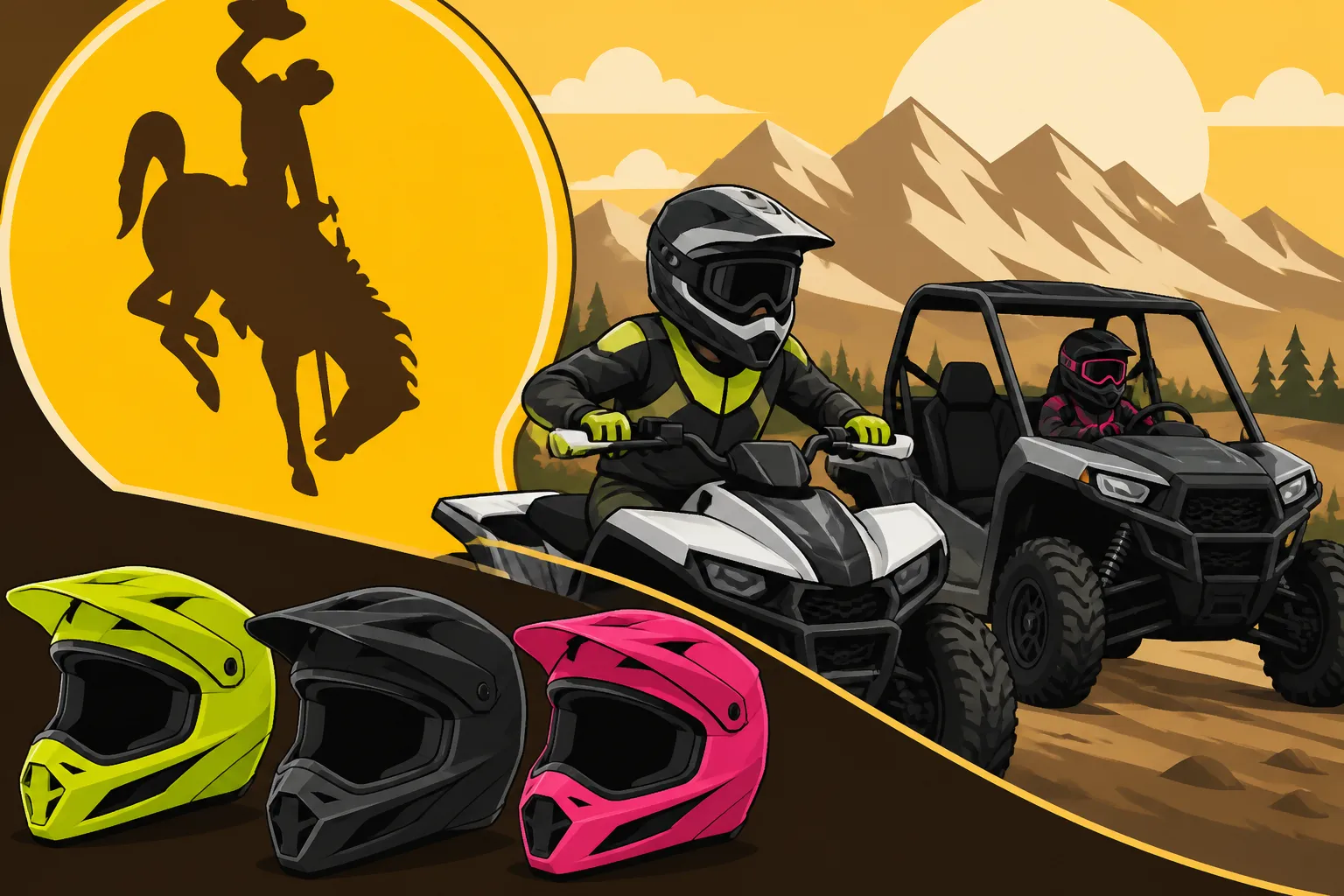
Selecting the right helmet for a young rider is critical. It's not just about size; it's about the type of helmet, its safety ratings, and how well it fits. For ATV and UTV use, a full-face off-road helmet (often called a motocross helmet) is generally the best choice. These helmets offer robust protection for the entire head, face, and chin, which is crucial in the event of a rollover or impact with obstacles. Look for helmets that meet or exceed safety standards like DOT (Department of Transportation), Snell, or ECE.
When fitting a helmet for a child, ensure it's snug but not uncomfortably tight. It shouldn't shift around easily when their head moves. The chin strap should be securely fastened, allowing only one or two fingers to fit between the strap and the chin. A helmet that is too large can be just as dangerous as no helmet at all, as it can come off or shift during a crash, exposing the head. Brands like SuperATV also offer a range of accessories that can complement safety gear, like dust masks or goggles that integrate well with full-face helmets, enhancing both comfort and protection for young riders exploring the vastness of Wyoming. Investing in a good quality helmet is an investment in your child's safety and confidence on the trails and roads.
Additional Safety Gear for Young Riders
While a helmet is the undisputed king of protective gear, it's far from the only item young riders should be wearing. A comprehensive safety setup can significantly reduce the risk and severity of injuries from falls, impacts, and debris. Beyond the helmet, consider the following:
- Eye Protection: Goggles are essential, especially with off-road helmets that don't have a visor. They protect against dust, bugs, branches, and roost from other machines.
- Gloves: Riding gloves improve grip, reduce blisters, and offer protection in a minor fall or from abrasions.
- Long Sleeves and Pants: Durable long-sleeved shirts or jackets and sturdy pants (like riding pants or heavy jeans) protect against scrapes, cuts, and sun exposure. Avoid shorts and t-shirts, even on warm days.
- Over-the-Ankle Boots: Sturdy boots protect the feet and ankles from impacts, provide good grip on footpegs, and prevent feet from slipping off.
- Chest Protectors/Body Armor: For more aggressive riding or younger, more vulnerable riders, a chest protector or body armor can provide vital protection for the torso, shoulders, and spine.
- Neck Braces: These can help prevent hyperextension injuries to the neck, especially in younger riders.
Equipping your child with a full range of protective gear, not just the legally mandated helmet, fosters a culture of safety and helps them understand the risks involved in riding. It empowers them to ride confidently, knowing they're well-protected.
The Role of Parental Supervision and Training
Even with the best gear, nothing replaces diligent parental supervision and proper training. For young riders, especially those under 16, adult supervision is almost always a legal requirement on public lands and often a smart practice even on private property. This isn't just about watching them; it's about actively teaching them good riding habits, trail etiquette, and how to react to different situations.
Consider enrolling your child in a recognized ATV or UTV safety course. Organizations often offer courses specifically designed for youth, teaching them crucial skills like proper riding posture, throttle control, braking techniques, hazard avoidance, and responsible riding practices. While Wyoming doesn't mandate a safety course for all riders, it's highly recommended, especially for minors. These courses often cover topics like [Wyoming Safety Training for Riders]. Beyond formal training, it's about leading by example: always wear your own helmet, ride responsibly, and respect the land and other users. Before heading out, conduct a thorough machine check, ensure everyone has their gear on correctly, and discuss the day's route and potential hazards. Continuous supervision means being present, aware, and ready to intervene if necessary, guiding your young rider to become a skilled and safe off-road enthusiast.
| Rider Age | Location Type | Helmet Required (Under WY Law) | Notes |
|---|---|---|---|
| Under 18 | Public Road/Highway | Yes | Applies to both drivers and passengers. |
| Under 18 | Enrolled ORV Trail | No (State Law) | Highly recommended for safety; local rules may differ. |
| Under 18 | Private Property | No (State Law) | Owner's permission needed; highly recommended for safety. |
| 18+ | Any Location | No (State Law) | Highly recommended for safety, regardless of experience. |
Common Misconceptions and Real-World Scenarios
Despite the clear language of the law, misconceptions about helmet use for minors persist. Many riders operate under assumptions that can put their children at risk and potentially lead to citations. It's easy to think a quick trip doesn't warrant full safety protocols, or that certain types of roads are exempt. Let's tackle some of these common misunderstandings with realistic scenarios to clarify Wyoming's stance on youth helmet laws on roads.
"Just a Short Ride Down the County Road": What the Law Says
This is perhaps the most common scenario where riders find themselves on the wrong side of the law without intending to. You're camping at a fantastic spot with friends, and your 14-year-old wants to ride their quad a quarter-mile down the gravel county road to their buddy's campsite. It's a short distance, low speed, and seems harmless. But legally, that quarter-mile stretch of county road is a public road.
The moment your 14-year-old (who is under 18) puts tires on that county road, they are legally required to wear a helmet. There is no distance exemption or speed limit exception in the law for minors on public roads. A Wyoming Highway Patrol trooper or a county sheriff's deputy could issue a citation. This isn't about being punitive; it's about the universal risk factors associated with any public road, regardless of how remote or short the segment. Even on a quiet gravel road, there's always the potential for an unexpected encounter with another vehicle, a blind corner, or an unforeseen obstacle. It’s imperative to remember that the rules for [Wyoming Rules for Riding a County Road] apply fully, including the helmet mandate for minors.
Riding on Private Land vs. Public Access Points
Another area of confusion revolves around private land. If you own a large ranch or have explicit permission to ride on private property, the state of Wyoming's helmet law for minors on public roads generally does not apply while you are exclusively on that private land. You're within your rights, or the landowner's rights, to set your own rules. However, even here, common sense and safety should prevail; a helmet is still highly recommended for young riders on private land.
The complication arises when private land abuts or is accessed via public roads or trails. For example, your friend owns a huge parcel of land, and the only way to get your machines onto it is to ride a mile down an enrolled BLM access road. While your 17-year-old might not need a helmet on your friend's private acreage, they will need one for that mile-long stretch on the public BLM access road. The law kicks in the moment you leave private property and enter any public thoroughfare. It's a precise distinction that can catch riders off guard, particularly when crossing boundaries between different types of land ownership and public access. Always have a clear understanding of your route and the land status, and ensure your young riders are appropriately geared up for any public road segments. Don't forget that even an ORV permit is typically required for public lands: [Wyoming ORV Permits Explained].
What to Expect from Law Enforcement Regarding Youth Helmets
Wyoming law enforcement agencies, including the Wyoming Highway Patrol, county sheriffs, and even some game wardens or forest rangers in conjunction with local law enforcement, have the authority to enforce these helmet laws. They are generally concerned with safety and compliance. If an officer observes a rider under 18 on a public road or highway without a helmet, they can stop the machine and issue a citation.
What can you expect? Usually, the first priority is to ensure the safety of the minor. This might mean requiring the helmet to be put on immediately if available, or, in more serious cases, having the machine trailered off the public road. Fines for such infractions can vary, but they are certainly an unwelcome expense and a disruption to your riding day. Repeat offenses or additional violations (like an unlicensed minor driving) could lead to more severe penalties. The best approach is always to be prepared and compliant. When you roll out of camp or off a private ranch onto any public road, double-check that every rider under 18 has their helmet securely fastened. Officers appreciate riders who are proactive about safety and follow the rules, which contributes to a positive image for the entire off-road community.
Disclaimer
This article is for general informational purposes only and does not constitute professional advice. Laws, prices and regulations vary by location and change over time. Consult a qualified professional for guidance on your specific situation.