Keeping to the Right Edge in Wyoming
It’s a fantastic feeling to take your ATV or side-by-side out for a spin, feeling the fresh Wyoming air and exploring our incredible landscapes. But sometimes, that feeling comes with a knot of anxiety about navigating the rules, especially when you need to use a county road or cross a highway. One of the most fundamental, and often misunderstood, rules for these situations is "keeping to the right edge" – and this guide is here to walk you through exactly what that means, why it's so critical, and how to stay safe and legal on our shared roads.
The Golden Rule: Why Keeping to the Right Edge is Non-Negotiable on Wyoming Roads
Picture this: You’re cruising down a gravel county road, enjoying the scenery, and suddenly a pickup truck crests a hill in front of you. How you react in that split second, and where your machine is positioned on the road, can make all the difference. In Wyoming, when your off-road vehicle (ORV) is legally operating on a designated road, the rule about keeping to the right edge isn’t just a suggestion; it’s a bedrock principle for safety and legal compliance. It's about ensuring everyone, from the rancher in their dually to the family in their SUV, can share our roads peacefully and without incident.
Safety First: Protecting Yourself and Others
Let’s be honest, our ATVs and side-by-sides are fantastic machines, but they handle differently than a car or truck, and they sit lower to the ground. This means they can be harder for other drivers to spot, especially around curves or over hills. When you consistently keep to the far right edge of the road, you're creating the maximum possible buffer between yourself and oncoming traffic. This isn’t about being overly cautious; it’s about acknowledging the realities of vehicle dynamics and visibility. It drastically reduces the chance of a head-on collision or a sideswipe, giving both you and the other driver more time and space to react. Think of it as your personal safety zone on the asphalt or gravel. It shows other drivers that you are aware, considerate, and taking every precaution to ensure a safe passage for everyone.
Legal Mandate: It's the Law, Plain and Simple
Beyond just common sense and courtesy, staying to the right edge is a legal requirement in Wyoming for vehicles like ours. When your machine qualifies as a Multipurpose Vehicle (MPV) and is properly licensed for road use, you're expected to follow the same basic rules of the road as any other vehicle – and that includes sticking to the right. [What Wyoming Law Says About ORVs on Roads] delves deeper into the specifics, but the gist is clear: veering into the center lane or riding too far to the left on a two-lane road is not only dangerous, but it's also a violation of traffic law. A highway patrol officer or county sheriff won't hesitate to pull you over for unsafe operation, and ignorance of the law is rarely an excuse that flies. This rule is particularly important when you’re on roads where the speed limit is higher than you might typically travel on a trail, or where visibility might be limited due to terrain or vegetation. Adhering to the right isn't just a suggestion; it’s how we maintain the privilege of riding our machines on these shared routes.
Respect and Responsibility: Sharing the Pavement with All Users
Our freedom to ride our ORVs on certain Wyoming roads isn't something to take lightly. It's a privilege earned through careful legislation and the understanding that we, as riders, will be responsible stewards of that access. When you ride responsibly, keeping to the right, signaling properly, and generally being predictable, you're not just protecting yourself; you're also building goodwill for the entire riding community. Every time an ATV or side-by-side rider acts courteously and safely on a public road, it reinforces the positive image of our sport. Conversely, reckless or inconsiderate riding can quickly erode public trust and lead to calls for tighter restrictions or even outright bans on road access. We want to keep our riding opportunities open, and that means demonstrating respect for all other road users, whether they’re driving a semi-truck, riding a bicycle, or simply walking their dog on the shoulder. It's about representing our community well, one safe ride at a time.
Is Your Machine Even Allowed? Understanding Wyoming's MPV Designation
Before you even think about hitting a paved or graveled road, there's a crucial step: figuring out if your machine is actually legal for road use in Wyoming. This isn't just about sticking a sticker on it; it involves a specific classification and a series of equipment requirements that many standard ORVs don't meet right out of the box. Wyoming created the Multipurpose Vehicle (MPV) designation to allow certain off-road machines to be street legal, and understanding this is fundamental to legal road riding.
Differentiating MPVs from Standard ORVs for Road Use
In Wyoming, the distinction between an ORV (Off-Road Vehicle) and an MPV (Multipurpose Vehicle) is paramount when it comes to road use. A regular ORV permit, like the annual decal you get for trail riding, does not make your machine street legal. That decal is for designated trails and specific ORV routes, not for general public roads. An MPV, on the other hand, is a specific class of vehicle that, if it meets certain criteria and is properly registered and plated, can be ridden on many public roads. Generally, these are side-by-sides (UTVs) that weigh between 300 and 3,000 pounds, have a seat height of at least 24 inches from the ground to the lowest part of the seat, and are manufactured for general recreational use. Most traditional ATVs (quads) do not meet the seat height or rider position requirements for an MPV, which means they typically cannot be made street legal in Wyoming beyond very specific, limited road crossings. So, if you're planning on using roads, you almost certainly need a side-by-side that can be titled and plated as an MPV. [Wyoming's MPV Path to the Road] goes into extensive detail on this critical difference.
Essential Equipment for Road-Legal Status (and How it Relates to Visibility)
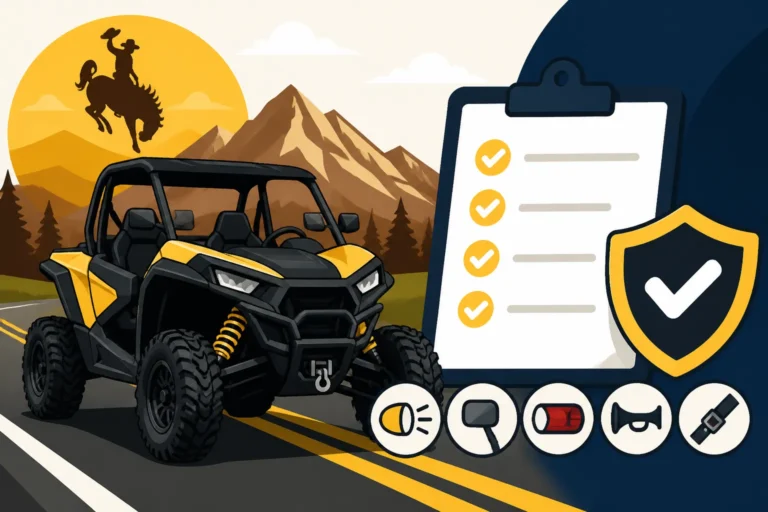
Getting your side-by-side designated as an MPV and ready for road use involves more than just a title and registration; it demands specific safety equipment that enhances your visibility and ability to interact safely with other traffic. Think of it as making your machine 'visible' and 'communicative' to the world around you. This includes:
- Headlights and Taillights: These aren't just for seeing in the dark; they make you seen during the day too. Your machine needs working headlights that illuminate the road ahead and taillights that are clearly visible from the rear, especially at dusk, dawn, or in inclement weather.
- Stop Lamp (Brake Light): Absolutely crucial for letting drivers behind you know when you're slowing down or stopping.
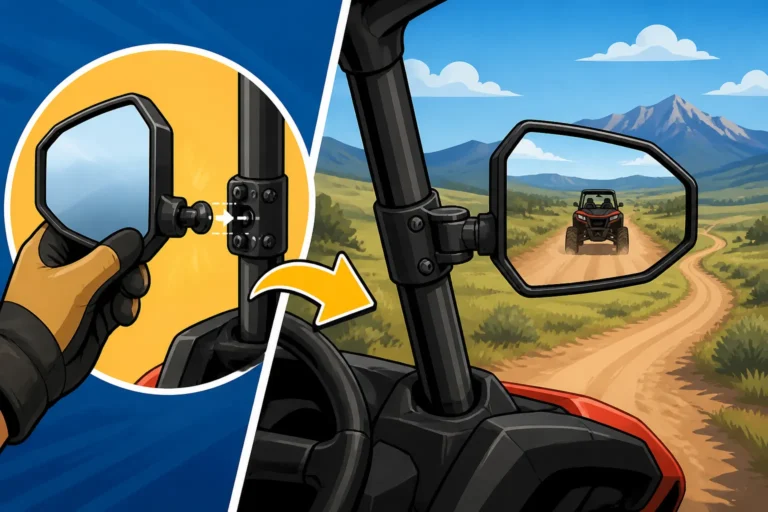
- Rear-View Mirrors: You need at least one, but frankly, two are better. A good set of mirrors, perhaps from a brand like SuperATV, allows you to monitor traffic behind and to your sides, which is essential before changing your position on the road or making a turn. [Wyoming Mirror Requirements for Road Use] outlines the specifics.
- Horn: A working horn is necessary to alert others to your presence if needed, whether it's a deer on the road or a driver who hasn't seen you. [Wyoming Horn Requirement on a Road Machine] covers this.
- Red Rear Reflector: This passive safety device provides an extra layer of visibility from the rear, especially important if your taillights somehow fail.
- Slow-Moving Vehicle Emblem: If your MPV isn't capable of maintaining the posted speed limit, particularly on roads with higher limits, you’ll need to display a slow-moving vehicle emblem. This bright orange triangle alerts faster traffic to your presence and gives them time to react. [Wyoming Slow-Moving Vehicle Emblem Rules] provides detailed guidance.
These pieces of equipment aren't just legal checkboxes; they are vital tools that allow you to operate safely and ensure that when you're keeping to the right edge, other drivers are aware of your presence and intentions.
The Registration and Licensing Hurdles for Street Legal Status
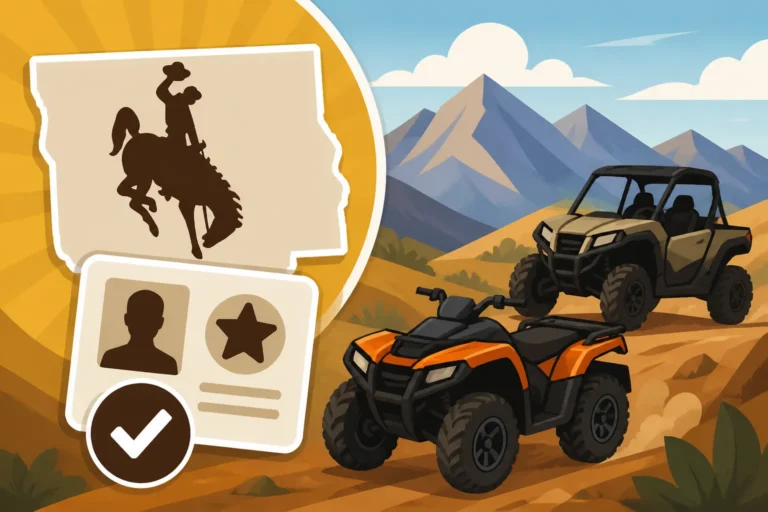
So, you have an eligible side-by-side and it's decked out with all the right gear. What's next? The bureaucratic hurdles, of course! Making your MPV street legal in Wyoming involves a multi-step process. First, your machine needs to be titled at your County Clerk's office. This establishes legal ownership and confirms its classification as an MPV. Once titled, you then take that paperwork to the County Treasurer's office to get it registered and plated. This is where you’ll receive an actual license plate, just like a car, which signifies its legal status for road use. Beyond the machine itself, you also need to be properly licensed. This means having a valid driver's license with an M or MR endorsement, similar to what's required for a motorcycle. [Wyoming MPV Street Legal Requirements] and [Wyoming Driver's License Rules for ORVs] offer comprehensive details on these steps. Without proper titling, registration, and personal licensing, even the best-equipped side-by-side is just an ORV on a road where it doesn't belong, and that could lead to significant fines. It's a commitment, but one that opens up a whole new world of riding opportunities.
Navigating the Edge: Practical Scenarios for Riding on the Right
Knowing the rule is one thing, but actually applying it safely and consistently in various real-world scenarios is another. Wyoming's roads present a diverse range of conditions, from wide-open, straightaways to winding mountain passes and busy town arteries. Each demands a slightly different approach to "keeping to the right edge" while still prioritizing safety.
Rural Roads and Low-Traffic Areas
Let's imagine you're on a less-traveled county road, maybe a gravel route heading out to a favorite fishing spot or connecting two segments of trail. It might feel tempting to drift into the middle, especially if there's no traffic in sight. However, this is precisely where "keeping to the right edge" becomes a disciplined habit, not just a reaction to other vehicles. On these roads, expect the unexpected: a rancher pulling out of a hidden driveway, a bicycle coming around a blind corner, or even livestock wandering onto the pavement. By staying consistently to the right, even when alone, you create a predictable pattern that allows others to anticipate your presence. This means hugging the shoulder, or at least the right-most third of the lane, making sure there's ample room for a vehicle to pass you safely from behind or for oncoming traffic to comfortably clear you. Remember, even a road that seems deserted can change in an instant. [Wyoming Rules for Riding a County Road] provides further insights into these specific routes.
Approaching Intersections and Turns
Intersections are always high-risk areas, regardless of what you're driving, and they demand extra vigilance when you’re on an MPV. When approaching an intersection where you intend to turn right, you should already be positioned as far to the right as safely possible. For a left turn, you'll need to move towards the center line, but only after checking your mirrors, signaling clearly, and ensuring there's no oncoming traffic. This is a critical moment where your road-legal equipment, like your turn signals and mirrors (perhaps a wide-angle mirror from SuperATV), truly shine. After completing your turn, immediately reposition yourself back to the right edge of the road. This transition from right-to-center-to-right needs to be fluid, deliberate, and well-communicated to avoid confusion for other drivers. The key is to be predictable and avoid sudden, erratic movements that could catch other drivers off guard.
Encountering Other Traffic: Cars, Trucks, and Bicycles
This is where the rubber meets the road, so to speak. When you encounter another vehicle, whether it's an oncoming car or a truck wanting to pass you, your commitment to the right edge is paramount. If a vehicle is approaching from the opposite direction, slow down slightly and move as far right as safely possible, even briefly dropping a tire or two onto the shoulder if the road conditions allow and it helps create more space. For vehicles passing you from behind, maintain a steady speed and hold your line firmly to the right. Do not swerve or try to wave them around; your predictability is your greatest asset. It's their responsibility to pass you safely, and by staying consistently to the right, you give them the maximum space to do so. The same principles apply to bicyclists and pedestrians; give them a wide berth, slow down, and always pass on the left, only when safe to do so. This mutual respect is what keeps everyone safe on Wyoming's shared thoroughfares.
Beyond the White Line: Complementary Rules for Safe Road Riding in Wyoming
While "keeping to the right edge" is fundamental, it’s just one piece of the puzzle for safe and responsible road use with your MPV in Wyoming. There's a whole suite of other regulations and best practices that, when combined with proper road positioning, create a comprehensive framework for safe operation. Neglecting these can be just as dangerous as drifting into the oncoming lane.
Signaling and Visibility: Making Your Intentions Clear
Just like any other vehicle on the road, your MPV needs to clearly communicate its intentions to other drivers. This means having working turn signals, which are an absolute must for any street-legal machine. Before you make a turn or change lanes (though lane changes should be rare for MPVs on two-lane roads), activate your turn signal well in advance. Don't wait until the last second. Beyond signaling turns, your overall visibility is key. Wearing bright, contrasting colors, especially during the day, can make a significant difference in how quickly other drivers spot you. Consider adding additional lighting, like auxiliary LED lights, to your machine for enhanced daytime visibility – many of the kits available from SuperATV can significantly improve your presence on the road. The goal is to make yourself as conspicuous as possible, minimizing any chance of another driver claiming they "didn't see you." [Wyoming Lighting Requirements for ORVs] gives more insights into what's required.
Speed Limits and the "Slow-Moving Vehicle" Designation
One common misconception is that because your side-by-side can go fast, it should go fast on every road. That's a dangerous thought process. When operating an MPV, you must obey all posted speed limits. However, there's an additional consideration: if your machine cannot maintain the minimum speed of traffic or the posted speed limit (whichever is lower, or a reasonable speed for the conditions), you're considered a "slow-moving vehicle." In such cases, you are required to display a bright orange and red triangular slow-moving vehicle emblem on the rear of your machine. This isn't a badge of shame; it's a critical safety device that warns faster traffic to exercise caution and gives them ample time to react. [Wyoming Rules for a Slow Machine on a Road] outlines when this emblem is mandatory. It's about being realistic about your machine's capabilities in traffic and prioritizing the safety of everyone on the road.
Helmets, Passengers, and Youth Rider Regulations
Wyoming has specific rules regarding helmets, passengers, and youth riders when operating an ORV or MPV, especially on public roads. While the state generally allows adults (18 and older) to ride an MPV on a road without a helmet, it's always a good idea to wear one for your own safety, especially given the open nature of many side-by-sides. More critically, any operator or passenger under the age of 18 is required to wear a helmet when riding an MPV on a public street or highway. [Wyoming Helmet Law for ATV Riders] further clarifies these requirements.
When it comes to passengers, ensure your MPV is designed to carry more than one person and that all passengers are seated properly within the vehicle's design parameters. Overloading your machine or allowing passengers to ride in unsafe positions is a recipe for disaster and can lead to hefty fines. Additionally, there are age restrictions for operating an MPV on roads. A rider must generally be at least 16 years old and possess a valid driver's license with the appropriate endorsement. Younger riders (under 16) are typically restricted to off-road areas, even with supervision. Always double-check the latest regulations regarding age, licensing, and passenger rules, as they are put in place to protect our most vulnerable riders.
| Road Safety Element | Requirement/Recommendation | Why it Matters |
|---|---|---|
| Right Edge Positioning | Stay as far right as safely possible at all times. | Maximizes buffer, reduces collision risk, fulfills legal obligation. |
| MPV Designation | Your UTV must meet specific criteria (weight, seat height) to be titled/plated as an MPV. | Only MPVs (typically UTVs, not ATVs) are generally street legal in Wyoming. |
| Essential Equipment | Working headlights, taillights, brake light, at least one mirror, horn, red rear reflector. | Ensures you can see, be seen, and communicate with other traffic. |
| Slow-Moving Emblem | Required if your MPV cannot maintain posted speed limits. | Alerts faster traffic, preventing rear-end collisions. |
| Signaling | Use turn signals well in advance of turns or lane changes. | Clearly communicates your intentions, allowing others to react safely. |
| Driver's License | Valid driver's license with M or MR endorsement required. | Legal requirement for operating a motorized vehicle on public roads. |
| Helmets (Under 18) | Required for all operators and passengers under 18 on public roads. | Critical safety measure for youth riders and passengers. |
| Passenger Seating | Ensure adequate, proper seating within the manufacturer's design. | Prevents falls, injuries, and unsafe operation. |
| Speed Limits | Obey all posted speed limits and adjust for conditions. | Prevents accidents, maintains control, respects traffic flow. |
| Visibility (Rider/Machine) | Wear bright clothing; consider additional lighting. | Increases your conspicuity to other drivers, especially in changing light. |
The Cost of Straying: Penalties and Perils of Not Riding to the Right
It’s easy to think of road rules as mere suggestions, especially when you’re out enjoying the wide-open spaces of Wyoming. But ignoring rules like "keeping to the right edge" isn't just a minor infraction; it carries significant risks, both legally and physically. For an MPV rider, straying from the prescribed path can lead to financial pain, legal headaches, and worst of all, serious injury or even death.
Financial Penalties and Legal Repercussions
Let’s be blunt: a Wyoming Highway Patrol trooper or a county sheriff isn't going to look kindly on an MPV operator who isn't adhering to basic traffic laws. Riding too far to the left, weaving, or not staying predictably to the right edge can easily be considered reckless driving or failure to obey traffic laws. This can result in costly citations, which can quickly add up, especially if you get repeat offenses. Beyond the immediate fine, points can be added to your driver's license, potentially leading to increased insurance premiums. If your actions contribute to an accident, even a minor one, you could face much more severe legal consequences, including civil lawsuits for damages and injuries. Furthermore, if you’re riding an ORV that isn't properly registered as an MPV on a road where it's not permitted, you could be cited for operating an unregistered vehicle or operating an ORV off a designated route, leading to additional fines and potentially having your machine impounded. [Wyoming Fines for Riding Without a Permit] highlights how seriously the state takes compliance. It’s simply not worth the financial and legal gamble.
Increased Risk of Accidents and Injury
While fines are certainly unpleasant, the most severe consequence of not riding to the right edge is the significantly increased risk of accidents and serious injury. Our machines, even street-legal MPVs, are smaller and lighter than most cars and trucks. In a collision with a larger vehicle, the occupants of the MPV are at a distinct disadvantage. By drifting into the center or left side of the lane, you are directly increasing your chances of a head-on collision or a sideswipe, which are often the most devastating types of crashes. Blind spots for larger vehicles can easily hide your machine, and if you're not where other drivers expect you to be, the reaction time available to avoid a crash shrinks dramatically. Even a seemingly minor accident can result in severe injuries due to the lack of an enclosed cabin, airbags, and crumple zones that traditional automobiles have. The rules are there for a reason: to minimize these very real and often catastrophic risks.
Jeopardizing Future Access for All Riders
Every time an MPV rider behaves irresponsibly on a public road, it casts a shadow over the entire off-road community. When law enforcement agencies see an increase in unsafe MPV operation or accidents, it strengthens the argument for stricter regulations, more limited access, or even outright bans on road use. Local communities, already grappling with traffic concerns, might become less amenable to allowing MPVs on their county roads. This means that a few bad apples can spoil the barrel for everyone else. Those of us who ride responsibly and enjoy the privilege of connecting trails via designated roads have a shared responsibility to ensure that this access continues. By consistently following the rules, including keeping to the right, we demonstrate that we are responsible members of the road-using public and help to preserve the riding opportunities that we all cherish. Our actions today directly impact the freedoms we'll have tomorrow.
Cultivating a Culture of Safety: Our Collective Responsibility
Riding an ATV or UTV on Wyoming's roads, even legally as an MPV, is a privilege that comes with significant responsibility. It's not just about individual compliance; it's about fostering a community-wide culture of safety and respect that ensures these opportunities remain open for all of us to enjoy for years to come. This requires a proactive approach, from preparing our machines to continuously educating ourselves and advocating for responsible practices.
Pre-Ride Checks and Equipment Maintenance
Safety on the road begins long before you turn the key. A thorough pre-ride check of your MPV is non-negotiable. This means inspecting your tires for proper inflation and tread wear (especially important for road use), checking your brakes, ensuring all lights (headlights, taillights, brake lights, turn signals) are functioning correctly, and verifying your horn works. Don't forget your mirrors – make sure they are clean, securely mounted, and properly adjusted to give you the best possible view of traffic behind you. Products from SuperATV, like their robust mirrors or enhanced lighting kits, can play a significant role in making these checks easier and ensuring your machine is up to snuff for road conditions. Regularly scheduled maintenance, beyond just these quick checks, is also vital to ensure all mechanical components are in top working order. A breakdown on a remote county road isn't just inconvenient; it can be dangerous. Taking the time to prepare your machine properly shows you're taking your responsibilities seriously.
Continuous Education and Awareness
The rules and regulations governing ORV and MPV use, especially on public roads, can change. What was true last year might have a slight modification this year. As responsible riders, it's our duty to stay informed. This means regularly checking the Wyoming State Parks, Historic Sites, and Trails website for updates, reviewing county ordinances if you plan to ride in a new area, and keeping an eye on publications that cover our sport. Sharing this knowledge within your riding group or club is also crucial. If you see a fellow rider making a mistake, a friendly, educational word can go a long way in preventing future issues. Awareness isn't just about knowing the laws; it's also about understanding safe riding techniques, adapting to changing road and weather conditions, and constantly honing your defensive driving skills. Never assume you know it all; there's always something new to learn or a skill to refine.
Advocating for Responsible Trail and Road Use
Finally, we all have a role to play in advocating for the responsible use of our trails and roads. This means leading by example every time we ride: staying to the right, obeying speed limits, having the correct permits, and ensuring our machines are properly equipped and maintained. It also means participating in local club meetings, attending public hearings on land use or ORV access, and communicating respectfully with land managers and lawmakers. When decisions are being made about where we can and cannot ride, a strong, unified voice of responsible riders is far more impactful than isolated complaints. By demonstrating our commitment to safety and respect, we help build stronger relationships with other user groups and local authorities, ultimately safeguarding and expanding our riding opportunities for everyone who wants to experience the incredible freedom of exploring Wyoming on an ATV or UTV.
Disclaimer
This article is for general informational purposes only and does not constitute professional advice. Laws, prices and regulations vary by location and change over time. Consult a qualified professional for guidance on your specific situation.