The M or MR Endorsement Wyoming Asks For
It's incredibly frustrating, isn't it? You've got this amazing side-by-side or ATV, perfect for tearing up the trails, but then you think about crossing that paved road to get to the next section of public land, or even just heading into town for gas, and suddenly a wall of rules and regulations pops up. Figuring out what kind of driver's license or special endorsement you need for your off-road machine to legally touch asphalt in Wyoming can feel like navigating a maze blindfolded. This guide is here to shine a light on Wyoming's specific requirements, breaking down the "M" and "MR" endorsements so you can ride confidently and legally.
Understanding Wyoming's Path to Street Legality for ORVs
Wyoming is a fantastic state for off-road enthusiasts, but getting your machine from the dirt to the pavement isn't as simple as just slapping on a license plate. There's a very clear distinction in how the state views different types of off-road vehicles, and this distinction directly impacts what you need to do to operate them on public roads. It’s not just about having the right machine; it’s about having the right paperwork for yourself as the operator.
The Core Distinction: ORV vs. MPV
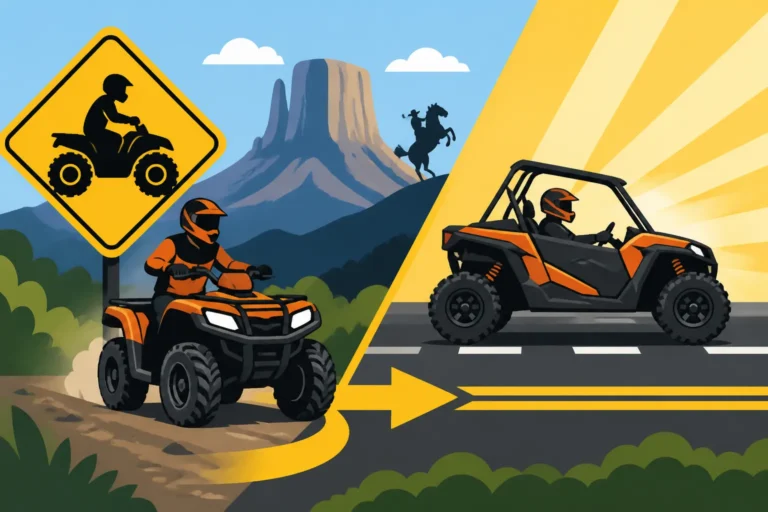
First things first, let's clear up some crucial terminology. In Wyoming, most ATVs, dirt bikes, and even many side-by-sides are initially classified as Off-Road Vehicles, or ORVs. These machines are designed primarily for off-highway use. To ride them on designated trails and public lands (where allowed), you need a Wyoming ORV permit decal, which is a separate thing entirely from road registration. It's an annual sticker that goes on your machine.
However, if you want to operate certain types of ORVs on public roads, Wyoming has created a special category: Multipurpose Vehicles, or MPVs. Not all ORVs can become MPVs. There are specific criteria that a machine must meet to qualify, such as weight, seat height, and tire configuration. Think of it this way: an ORV is born for the dirt, an MPV is an ORV that has graduated to be street-legal under specific conditions. Understanding this distinction is the absolute first step in navigating Wyoming's road rules. You can find more details in [Wyoming's Multipurpose Vehicle Class].
Why an ORV Permit Isn't Enough for Roads
This is a common point of confusion, and frankly, a source of frustration for many riders. You’ve dutifully bought your annual Wyoming ORV permit, you’ve got it displayed proudly on your fender, and you think you’re all set. But an ORV permit only grants you access to Wyoming’s extensive network of designated ORV trails and specific open public lands. It does not authorize you to ride on county roads, state highways, or city streets unless those roads are specifically "enrolled" for ORV use by the appropriate authorities, and even then, there are often conditions.
For general road use – meaning you want to operate your machine just like a car or motorcycle on any road where it's not explicitly prohibited – you need more than just an ORV permit. You need to convert your qualifying ORV into an MPV, register and title it as such, and then, as the operator, ensure you have the proper driver’s license endorsement. This is where the M or MR endorsement comes into play. Without these extra steps, taking your ORV permit-wearing machine onto a paved road can quickly lead to a citation. [What Wyoming Law Says About ORVs on Roads] further explains the legal framework.
The MPV Rule That Started in 2008
Wyoming recognized the growing popularity of side-by-sides and larger ATVs, and the desire of owners to use these versatile machines for more than just off-road recreation. Prior to 2008, options for legal road use were extremely limited, often forcing riders to trailer their machines for even short distances between trails. This was inconvenient and dampened the overall experience for many.
To address this, the state introduced legislation in 2008 that created the Multipurpose Vehicle (MPV) classification. This was a game-changer for many riders, opening up new possibilities for how and where they could use their machines. The rule laid out specific mechanical requirements (like weight, seat height, and number of wheels) and mandated that MPVs undergo a titling and registration process akin to traditional vehicles. It also required specific driver endorsements. This foresight made Wyoming one of the more progressive states in terms of recognizing the utility of these vehicles beyond just the trails. Understanding [The MPV Rule That Started in 2008] is key to appreciating the current framework.
Delving into the "M" Endorsement: Motorcycle License
When we talk about driver endorsements for riding an MPV on Wyoming's roads, the "M" endorsement is often the first one that comes to mind. It's the standard motorcycle endorsement, and for many years, it was the primary path for operators of smaller, more motorcycle-like off-road machines to gain road access. However, its applicability to larger MPVs has evolved with the introduction of the "MR" endorsement.
Who Needs a Standard M Endorsement
Historically, if your off-road machine had handlebars, a straddle seat, and two or three wheels, and you wanted to ride it on public roads where allowed, you would need a standard "M" endorsement on your Wyoming driver's license. This applies to dirt bikes, three-wheelers (if still allowed for road use and meeting MPV criteria), and some smaller, quad-style ATVs that might technically be considered motorcycles by their design. The M endorsement signifies that you've demonstrated proficiency in operating a two- or three-wheeled motorized vehicle.
Even with the rise of MPVs, some riders might still choose to pursue an M endorsement if their machine's characteristics align more closely with a traditional motorcycle, or if they simply want the flexibility to ride actual motorcycles in addition to their MPV. It's about matching your license to the type of vehicle you're operating, and some MPVs might still fall under the M category depending on their specific design and features. For more on general driver's license rules, see [Wyoming Driver's License Rules for ORVs].
The Skills Test and Written Exam
Obtaining an M endorsement in Wyoming involves both a written knowledge exam and a practical skills test. The written exam will cover traffic laws, road signs, and specific motorcycle operation knowledge. It ensures you understand the rules of the road that apply to all vehicles, plus the unique considerations for operating a two or three-wheeled machine. Many people study the Wyoming Driver Manual, paying close attention to the motorcycle-specific sections.
The practical skills test is where you demonstrate your ability to safely operate a motorcycle or qualifying machine in various scenarios, such as making turns, stopping quickly, and maintaining balance at low speeds. You typically provide your own machine for this test, and it must be street-legal and properly insured. This test can be challenging, even for experienced dirt bike riders, as road conditions and maneuvers differ significantly from trail riding. Passing both components is essential to add that M to your license.
Practical Scenarios for M Endorsement Riders
Imagine you own a dirt bike that you've converted to be street-legal with all the necessary lights, mirrors, and a horn. To ride this machine on a county road to connect two trail systems, you would need an M endorsement. Or perhaps you have a small, utility-style ATV that meets the MPV criteria but handles much like a larger motorcycle. In these cases, the M endorsement is your ticket to legal road use.
However, if you're primarily operating a larger side-by-side (UTV) with a steering wheel and bucket seats, an M endorsement might not be the most appropriate or even legally sufficient. This is where the MR endorsement typically steps in. The M endorsement truly shines for those who appreciate the agility and feel of a two-wheeled machine, even if it's technically an ORV. It means you’ve proven you can handle the specific dynamics of a motorcycle, which are different from a four-wheeled vehicle.
Exploring the "MR" Endorsement: Multipurpose Vehicle Permit
The "MR" endorsement is specifically tailored for Multipurpose Vehicles in Wyoming, making it the more common and appropriate choice for many side-by-side and larger ATV owners who wish to become street-legal. It recognizes that operating a side-by-side, while still an off-road machine, differs significantly from riding a motorcycle.
The Purpose of the MR Permit
The MR endorsement, often referred to as an "MR permit" or "Multipurpose Vehicle endorsement," was created to bridge the gap between traditional motorcycle licenses and the unique characteristics of MPVs. Its purpose is to ensure that operators of these specific four-wheeled vehicles have demonstrated the necessary knowledge and skills to safely share public roads. It acknowledges that while an MPV is not a car, it's also not a motorcycle, and therefore requires a distinct set of operating competencies.
This endorsement is added directly to your standard Wyoming driver's license, indicating that you are legally permitted to operate a qualifying MPV on public roads. It's a critical component of making your side-by-side or qualifying ATV truly street-legal, working in conjunction with proper vehicle registration, titling, and equipment. Without it, even a fully equipped and registered MPV cannot be legally driven on Wyoming roads by an unlicensed operator. [Wyoming Motorcycle Endorsement for an MPV] goes into greater detail about this specific endorsement.
Eligibility and Restrictions for the MR Permit
To be eligible for an MR endorsement, you typically need to hold a valid Wyoming driver's license. The age requirements for an MR permit are generally the same as for a standard driver's license, meaning you'd need to be at least 16 years old. However, it's crucial to verify current age requirements with the Wyoming Department of Transportation (WYDOT) or your local county office, as regulations can change.
One significant restriction or consideration is that the MR endorsement is specifically for MPVs. It does not grant you the right to operate a motorcycle (which would require an M endorsement), nor does it replace your standard driver's license for passenger vehicles. It’s a specialized addition, much like a commercial driver's license (CDL) endorsement, but for MPVs. Riders under the age of 16 cannot obtain an MR endorsement, and there are often rules about minors riding as passengers, which can vary.
Applying for an MR Permit
The process for obtaining an MR permit is similar in structure to getting an M endorsement, but with content specific to MPVs. You will typically need to pass a written examination that tests your knowledge of Wyoming traffic laws, road signs, and specific rules pertaining to MPV operation on public roads. This exam ensures you understand how an MPV interacts with other traffic, signaling requirements, and general safe driving practices.
In addition to the written test, a practical driving skills test is usually required. For this test, you'll need to provide a qualifying MPV that meets all street-legal equipment requirements and is properly titled and insured. The test will assess your ability to control the MPV, navigate turns, stop safely, and demonstrate general road competence. It's designed to confirm you can handle the unique handling characteristics of a larger, heavier off-road machine on paved surfaces.
Beyond the Endorsement: Other Road Legal Requirements
While securing the correct M or MR endorsement is crucial for you as the operator, it's only one piece of the puzzle for getting your ATV or UTV legally onto Wyoming roads. Your machine itself needs to be up to snuff, which means proper titling, registration, and equipping it with specific safety features. Overlooking any of these aspects can quickly invalidate your efforts to become street-legal.
Essential Vehicle Equipment for Road Use
This is where many off-road machines require significant upgrades. To qualify as an MPV and be street-legal in Wyoming, your machine needs to meet a set of specific equipment standards. This isn't just a suggestion; it's a legal requirement. These typically include:
- Headlights: At least one, emitting a white light visible from 500 feet.
- Taillights: At least one red taillight, visible from 500 feet.
- Stop Lamp (Brake Light): A red light activated by the brakes, visible from 500 feet.
- Rear Reflector: At least one red reflector on the rear, visible from 600 feet.
- Turn Signals: Front and rear turn signals (amber or white in front, amber or red in rear).
- Horn: A working horn, audible from at least 200 feet.
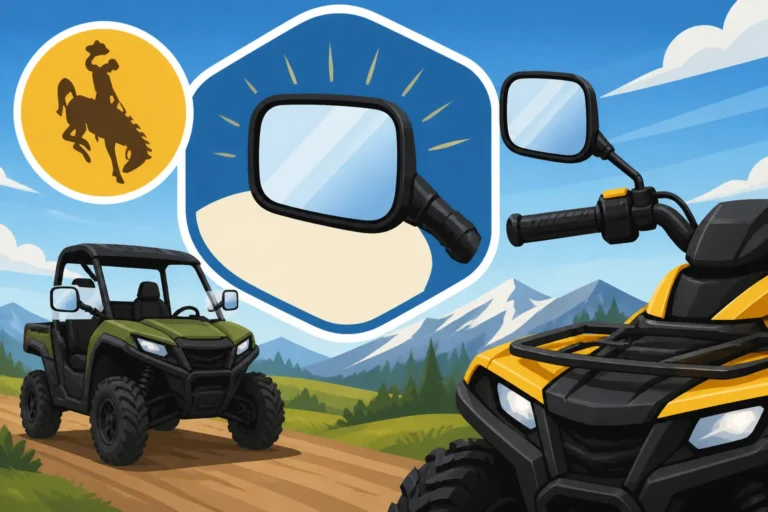
- Mirrors: At least one rearview mirror, providing a view of the highway 200 feet to the rear. Many riders opt for two for better visibility.
- Windshield: Some vehicles may require a windshield for road use, or at least eye protection for the operator.
- Muffler and Spark Arrester: Your machine must have a functional muffler to limit sound emissions and a spark arrester if it's used on public lands to prevent fires.
- Tires: Must be suitable for highway use, often implying DOT-approved tires, and not just aggressive off-road treads.
Many riders turn to aftermarket suppliers like SuperATV for these crucial upgrades. They offer a wide range of kits and individual components – from full street-legal kits with lights and horns, to windshields and mirrors – specifically designed to help convert off-road vehicles into road-ready MPVs. This can be a significant investment, but it’s non-negotiable for legal road travel. [Wyoming Lighting Requirements for ORVs] and [Fitting a Horn to a Road-Legal Side-by-Side] offer more detailed insights into these necessary modifications.
Insurance Requirements for Street-Legal Machines
Just like any other vehicle on Wyoming roads, your street-legal MPV must carry valid liability insurance. This isn't an option; it's a legal mandate. The minimum coverage amounts are set by state law and are designed to protect other drivers and their property in the event of an accident where you are at fault. Driving an uninsured MPV on public roads can lead to significant fines, license suspension, and other penalties.
Before you even think about taking your MPV out on the pavement, contact your insurance provider. You'll need to ensure your policy specifically covers your machine for road use and meets Wyoming's minimum liability requirements. Many standard ORV policies only cover off-road use, so this will likely require an update or a new policy altogether. It's a small price to pay for peace of mind and legal compliance. [Wyoming ATV Insurance Requirement] provides further information on this crucial aspect.
Age and Passenger Rules on Wyoming Roads
Operating a street-legal MPV on public roads comes with the same responsibilities and restrictions as driving any other motor vehicle, including rules about age and passengers. As mentioned, the driver must hold a valid Wyoming driver's license with the appropriate M or MR endorsement, meaning they generally must be at least 16 years old.
When it comes to passengers, general motor vehicle laws apply. All occupants should be properly restrained if the vehicle is equipped with seatbelts. Wyoming also has specific helmet laws. While riders over 18 might not be legally required to wear a helmet on an MPV that meets certain criteria, it's always a wise safety precaution. For riders and passengers under the age of 18, helmets are generally required. It's always best to consult the current Wyoming statutes or WYDOT for the most up-to-date and specific regulations regarding age, passengers, and helmet use. [Wyoming Helmet Law for ATV Riders] is a good resource here.
Navigating the Application Process and Local Agencies
So, you've got your machine equipped, you understand the endorsement you need, and you're ready to make it official. The process of titling, registering, and securing your endorsement involves a few different local government agencies in Wyoming. Knowing which office handles what, and what paperwork you'll need, can save you a lot of time and frustration.
Where to Go: County Clerk and Treasurer
Wyoming's system for vehicle registration and titling is decentralized, meaning you'll be working with your local county government, specifically two different offices:
- County Clerk: This is where you'll go to get your MPV titled. The County Clerk's office is responsible for issuing certificates of title, which establish legal ownership of your vehicle. This is a one-time process for a new vehicle or when you purchase a used one. [Titling a Multipurpose Vehicle in Wyoming] is your go-to guide for this step.
- County Treasurer: Once your MPV is titled, you'll visit the County Treasurer's office to register the vehicle and obtain your license plates. Registration is an annual process, and it's what allows your MPV to be legally operated on public roads. This is also where you'll typically pay any associated registration fees and property taxes on your vehicle.
It’s easy to confuse these two offices, but remember: title first at the Clerk’s office, then registration and plates at the Treasurer’s office. You cannot register a vehicle without a title.
Required Paperwork and Fees
When you visit the County Clerk for titling, you'll need documentation proving ownership, such as a manufacturer's certificate of origin (MCO) for a new machine, or a bill of sale and previous title (if applicable) for a used one. You'll also likely need to fill out a specific MPV checklist form that confirms your machine meets the necessary weight and seat height requirements.
For registration at the County Treasurer's office, you'll need your new MPV title, proof of insurance, and possibly a valid driver's license. Be prepared to pay fees, which can include titling fees, registration fees, and potentially a local option sales tax if you just purchased the machine. The exact costs can vary, so it's always a good idea to call ahead to your specific county offices for their current fee schedules. While this article can't provide current figures, be aware that fees are part of the process. [Wyoming MPV Title Requirements] and [Wyoming MPV Registration Cost] will help you gather what you need.
Common Pitfalls and How to Avoid Them
The most common pitfalls often revolve around misunderstanding the MPV requirements or incomplete paperwork. Here are a few tips to avoid headaches:
- Measure Your Machine Carefully: Before you even start the process, make sure your side-by-side or ATV actually qualifies as an MPV. Pay close attention to the weight and seat height rules. Many standard ATVs don't meet the MPV criteria, meaning they cannot be street-legal.
- Gather All Documents: Make a checklist and ensure you have every piece of required paperwork before you head to the county offices. Missing a single form can mean multiple trips.
- Call Ahead: Rules and procedures can sometimes have slight variations between counties or change periodically. A quick phone call to your County Clerk and Treasurer's offices can clarify any questions about current requirements or fees.
- Understand the Endorsement: Don't assume your regular driver's license is enough. If you plan to ride your MPV on public roads, you absolutely need that M or MR endorsement. Start studying for the tests early.
- Equipment Check: Double-check that all your street-legal modifications, like those from SuperATV, are installed correctly and functioning before you undergo any inspection or skills test. A faulty turn signal can derail your efforts.
By being diligent and informed, you can navigate the path to a street-legal MPV in Wyoming successfully, opening up a whole new world of riding opportunities.
| Feature | Standard "M" Endorsement | "MR" Endorsement for MPVs |
|---|---|---|
| Vehicle Type | Motorcycles, some smaller 2- or 3-wheeled ATVs/ORVs | Multipurpose Vehicles (MPVs), typically 4-wheeled side-by-sides/UTVs, larger ATVs |
| Primary Use Case | Operating motorcycles or motorcycle-like ORVs on roads | Operating qualifying MPVs on public roads |
| Required Test | Written knowledge test (motorcycle-specific) + skills test | Written knowledge test (MPV/general road rules) + skills test |
| Vehicle for Test | Applicant provides a street-legal motorcycle or qualifying ORV | Applicant provides a street-legal MPV |
| Eligibility | Valid Wyoming driver's license, minimum age 16+ | Valid Wyoming driver's license, minimum age 16+ |
| Purpose | Demonstrates proficiency in operating 2/3-wheeled vehicles | Demonstrates proficiency in operating specific 4-wheeled MPVs |
| Scope | Allows operation of motorcycles | Allows operation of MPVs |
Disclaimer
This article is for general informational purposes only and does not constitute professional advice. Laws, prices and regulations vary by location and change over time. Consult a qualified professional for guidance on your specific situation.