Can a 16-Year-Old Ride on a Learner Permit?
It's a common question we hear from families across Wyoming: "My kid is sixteen, they have their learner's permit, and they're itching to drive the side-by-side on the county road to get to the trailhead. Is that even allowed?" It's a tricky area, and the short answer is often more complex than a simple yes or no. This guide will help you understand the specific rules and regulations that apply to 16-year-old riders with learner's permits who want to operate ATVs or UTVs on Wyoming's roads, clarifying what's possible and what's definitely not.
Understanding Wyoming's Rules for Young Riders on Roads
When it comes to off-road vehicles and public roads in Wyoming, the age of the operator and their license status are critical factors. It's not just about knowing how to drive; it's about understanding the specific classifications of vehicles and the legal frameworks that govern them. Ignoring these distinctions can lead to citations, fines, and a whole lot of frustration.
The Core Distinction: ORV vs. MPV for Road Use
First and foremost, you need to understand the fundamental difference between an Off-Road Vehicle (ORV) and a Multipurpose Vehicle (MPV) in Wyoming's eyes, especially when public roads are involved. An ATV or UTV, straight off the dealer lot, is generally considered an ORV. This means it's designed for off-highway use and comes with an ORV permit requirement for trails, like the one discussed in [Wyoming ORV Permits Explained]. However, an ORV permit alone does not make it street legal.
To ride on most public roads in Wyoming, your ATV or UTV often needs to be reclassified and equipped as an MPV. This isn't just a semantic difference; it involves meeting specific criteria and undergoing a different registration process. An MPV is essentially a beefed-up ORV that has been deemed suitable for limited road use. Without this MPV classification, a 16-year-old on a learner permit is generally barred from riding their machine on anything beyond designated ORV trails or private property. Many riders purchase aftermarket parts from companies like SuperATV to help their machines meet the specific equipment requirements for MPV status, ensuring they have the necessary lights, mirrors, and other safety gear to pass inspection.
Learner Permit Limitations for ATV/UTV Operation
Now, let's talk about that learner's permit. In Wyoming, a learner's permit for a standard passenger vehicle (Class C) allows a 16-year-old to drive a car with a licensed adult present. However, this permit doesn't automatically translate to the right to operate an ATV or UTV on public roads. The rules for ORV/MPV operation are distinct from standard vehicle laws.
For an MPV to be ridden on an enrolled public road (more on "enrolled" roads later), the operator needs a valid driver's license with the appropriate endorsement. A learner's permit for a car typically doesn't cover this. Think of it this way: a learner's permit allows you to learn to drive a car; it doesn't give you permission to operate a commercial truck or a motorcycle without further specific instruction and licensing. While some states might have specific provisions for learner riders on motorcycles, Wyoming's [Wyoming Driver's License Rules for ORVs] indicate that a regular driver's license with an "M" (motorcycle) or "MR" (motorcycle restricted) endorsement is usually required for MPV road use. A 16-year-old with only a basic learner's permit would likely not possess the necessary endorsement to legally drive an MPV on the street, even with a supervising adult. The intent of a learner's permit is to learn a specific type of driving, and off-road vehicles on public roads fall into a different category.
Supervision and Age Restrictions on Public Roads
Even if an ATV or UTV could somehow be operated on a road by a 16-year-old with a learner's permit (which, as we've established, is generally not the case for MPVs), there are still significant age and supervision rules to consider. Wyoming law has specific provisions regarding [Wyoming Rules for Riders Under 16], and while a 16-year-old is past that specific threshold for certain off-road activities, operating on a public road, even one designated for ORVs, comes with higher stakes and different regulations.
When it comes to MPVs on enrolled roads, the operator generally needs to be a fully licensed driver with the appropriate endorsement, not just a learner. The idea is that these vehicles, when on roads, require a similar level of skill, awareness, and legal responsibility as a motorcycle or car. Placing a 16-year-old with only a learner's permit (and likely no specific motorcycle training) in control of an MPV on a public road, even with an adult in the passenger seat, could be seen as an unnecessary risk by law enforcement, and it very likely goes against the letter of the law. You wouldn't let a 16-year-old with a learner's permit drive a motorcycle on the highway, and an MPV on a public road often falls into a similar regulatory space.
Navigating the MPV Path to Street Legality at 16
For a 16-year-old to legally operate an ATV or UTV on Wyoming's public roads, the machine itself must first be classified as a Multipurpose Vehicle (MPV). This process involves more than just slapping a license plate on it; it requires specific vehicle modifications and compliance with Wyoming statutes.
Meeting the MPV Definition: Weight, Seat Height, and Wheels
The journey to street legality for your ATV or UTV in Wyoming starts with meeting the specific definition of an MPV. It's not enough for it to simply be a side-by-side or a quad. Wyoming Statute 31-1-101 lays out these requirements, emphasizing factors like weight, seat height, and the number of wheels. Specifically, an MPV needs [Four Wheels and an Upright Seat] and must weigh between 300 and 3,000 pounds. The seat height for the operator must be at least 24 inches from the ground.
This means if you have a youth quad that's under 300 pounds or an older ATV where the operator straddles the engine (which is characteristic of a traditional ATV, not an upright seating position), it won't qualify as an MPV. Many modern UTVs, or side-by-sides, are excellent candidates for MPV conversion because they often meet these weight and seating requirements straight from the factory. Companies like SuperATV specialize in accessories that can help ensure your machine, particularly larger UTVs, meets other MPV requirements, such as proper lighting and mirrors, which we'll discuss next. Without meeting these fundamental physical specifications, the vehicle simply cannot be titled and registered as an MPV in Wyoming, regardless of who is driving it.
Driver's License and Endorsement Requirements for MPVs
Once your machine is properly classified as an MPV, the next hurdle is the operator's license. For a 16-year-old, this is where a standard learner's permit typically falls short. To operate an MPV on an enrolled public road, a driver must possess a valid Wyoming driver's license with either an "M" (Motorcycle) or "MR" (Motorcycle Restricted) endorsement.
A learner's permit for a car (Class C) does not include these motorcycle endorsements. This means that even if the 16-year-old has completed their driver's education and passed their written test for a car, they would need to specifically pursue a motorcycle endorsement. This typically involves further testing, both written and practical, to demonstrate proficiency in operating a two- or three-wheeled vehicle, or in the case of an MPV, a vehicle that requires a similar skill set and carries similar road risks. [Wyoming Motorcycle Endorsement for an MPV] outlines these requirements. So, while a 16-year-old can get an M or MR endorsement, it's an entirely separate process from obtaining their initial car learner's permit or even a provisional driver's license. Without this specific endorsement, even a properly equipped MPV cannot be legally operated by them on public roads.
Essential Equipment for Road-Legal Operation
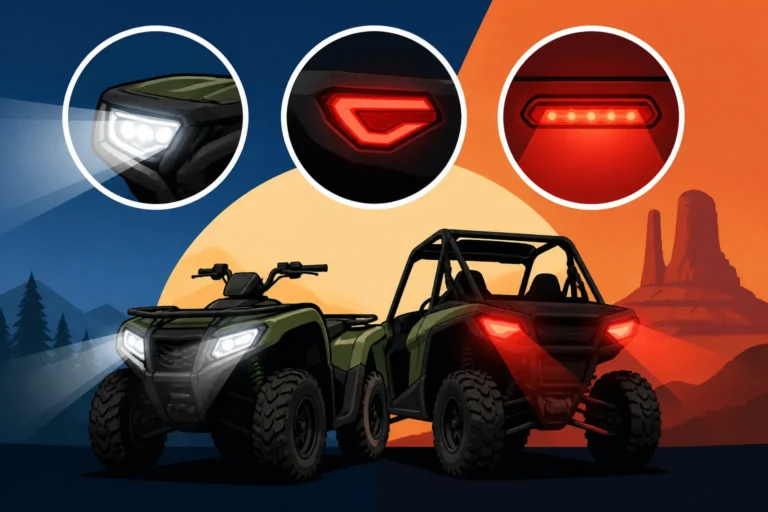
Making an ORV street-legal as an MPV isn't just about weight and seat height; it's also about equipping it to safely share the road with other traffic. Wyoming law specifies several pieces of equipment that must be present and functional for an MPV to be considered road-ready. These are laid out in detail in [Wyoming MPV Street Legal Requirements].
Here's a quick rundown of what's typically needed:
| Equipment Feature | Requirement |
|---|---|
| Headlight | Required, must be operational |
| Taillight | Required, must be operational |
| Stop Lamp (Brake Light) | Required, must illuminate when brakes are applied |
| Red Rear Reflector | Required, on the rear of the vehicle |
| Left-Side Mirror | Required |
| Horn | Required, audible for at least 200 feet |
| Muffler & Spark Arrester | Required, functional and in good working order for noise and fire prevention |
| Seat Belts | Required if factory-equipped |
| Helmets | Required for riders under 18 years old (see [Wyoming Helmet Law for ATV Riders]) |
| License Plate | Required, issued by the county treasurer after titling |
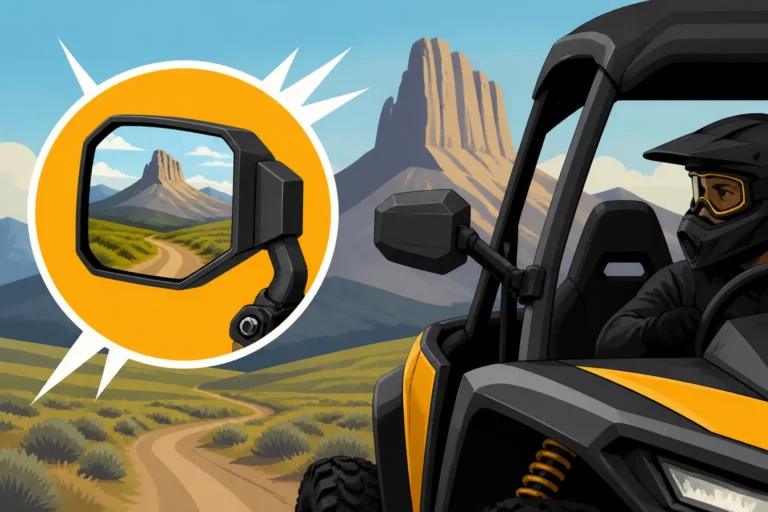
Many ORVs do not come standard with all these items, especially the horn, left-side mirror, and dedicated stop lamp. This is where the aftermarket industry, with companies like SuperATV, plays a vital role. They offer conversion kits and individual components designed to help UTVs and ATVs meet these safety standards. For example, installing a proper street-legal kit can ensure your machine has the necessary turn signals, mirrors, and an audible horn, allowing it to pass inspection and be safely operated on enrolled public roads by a properly licensed driver. Without these modifications, even a 16-year-old with the correct license and endorsement still can't legally drive the machine on the road.
Where a 16-Year-Old CAN and CANNOT Ride in Wyoming
Understanding where you can and cannot ride an ATV or UTV in Wyoming, especially for a 16-year-old with a learner's permit, is just as important as knowing the licensing and equipment rules. The landscape of roads and trails is not uniformly open to all vehicles.
Designated ORV Roads vs. Enrolled MPV Roads
Wyoming makes a crucial distinction between "designated ORV roads" and "enrolled MPV roads." This difference is vital for riders, especially young ones. [Wyoming's Designated ORV Roads] are typically routes within a national forest or BLM land that have been specifically marked and approved for off-road vehicle use, often connecting trail segments. On these designated ORV roads, even a standard ORV with just an ORV permit might be allowed, but age restrictions for operators still apply, and specific safety training might be recommended or required for younger riders, regardless of permit status.
However, for most county roads, state highways, or even some city streets, a machine must be a fully registered and equipped MPV, and the road itself must be "enrolled" for MPV use. This means the specific county or municipality, in conjunction with state agencies, has explicitly opened that segment of road to MPVs. These enrolled roads are the only places where a legally configured MPV, operated by a properly licensed driver (with the M or MR endorsement), can travel. A 16-year-old with just a learner's permit would not be allowed on either of these road types if they lack the specific MPV endorsement, nor could they operate a standard ORV on a designated ORV road if they don't meet the age and supervision requirements for that specific jurisdiction. Always check local regulations and maps for specific routes.
Crossing Highways and Interstate Restrictions
The rules become even stricter when considering major roadways, especially state highways and interstates. While an MPV might be allowed on certain enrolled county roads, the idea of casually cruising down a state highway or, even more critically, an interstate, is usually a non-starter. [Wyoming Rules for Crossing an Interstate] are very particular, often involving grade-separated crossings or very limited, highly specific circumstances where an MPV might cross, but certainly not travel on the interstate itself.
Even for crossing a state highway, there are strict rules about perpendicular crossings, yielding, and ensuring clear sightlines. A 16-year-old with a learner's permit, even if hypothetically endorsed for an MPV, would face immense scrutiny and likely legal repercussions for operating an MPV on any highway not specifically designated and enrolled for such use. Most state highways are reserved for standard registered motor vehicles, and an MPV, even when street legal, is still subject to significant limitations compared to a car or truck. The penalties for riding on closed roads or unauthorized areas can be severe, as detailed in [Wyoming Fines for Riding a Closed Road], so it's imperative to know the boundaries.
Private Land and Trail Riding Opportunities
While public road use for a 16-year-old on a learner's permit is highly restricted, there are still plenty of opportunities for riding. Private land, with the owner's explicit permission, offers the most freedom. On private property, the owner sets the rules, and as long as safety is prioritized, a 16-year-old can gain valuable experience.
Furthermore, Wyoming's extensive network of designated ORV trails, managed by the Forest Service, BLM, and State Parks, provides incredible riding opportunities. For a 16-year-old, as long as they meet the specific age and supervision requirements for that trail system and the machine has its [Wyoming's Annual ORV Permit], they can enjoy the vast backcountry. These trails are where the ORV permit truly shines, allowing access to hundreds of miles of scenic routes. It's crucial to differentiate between these designated trails and public roads. The skills learned on a private ranch or a challenging trail, navigating obstacles and varied terrain, are invaluable. However, these experiences do not automatically grant permission or legal standing to operate on a public road, especially not with a learner's permit.
In summary, while a 16-year-old with a learner's permit might be eager to explore Wyoming on an ATV or UTV, the path to legal road use is narrow and complex. It involves not only the specific classification and equipment of the machine as an MPV but also the acquisition of the proper driver's license endorsement, which goes beyond a basic learner's permit. For safe and legal riding, focusing on private land or designated ORV trails remains the most accessible and responsible option for young riders.
Disclaimer
This article is for general informational purposes only and does not constitute professional advice. Laws, prices and regulations vary by location and change over time. Consult a qualified professional for guidance on your specific situation.