Wyoming Rules for Riding a Snowy Road
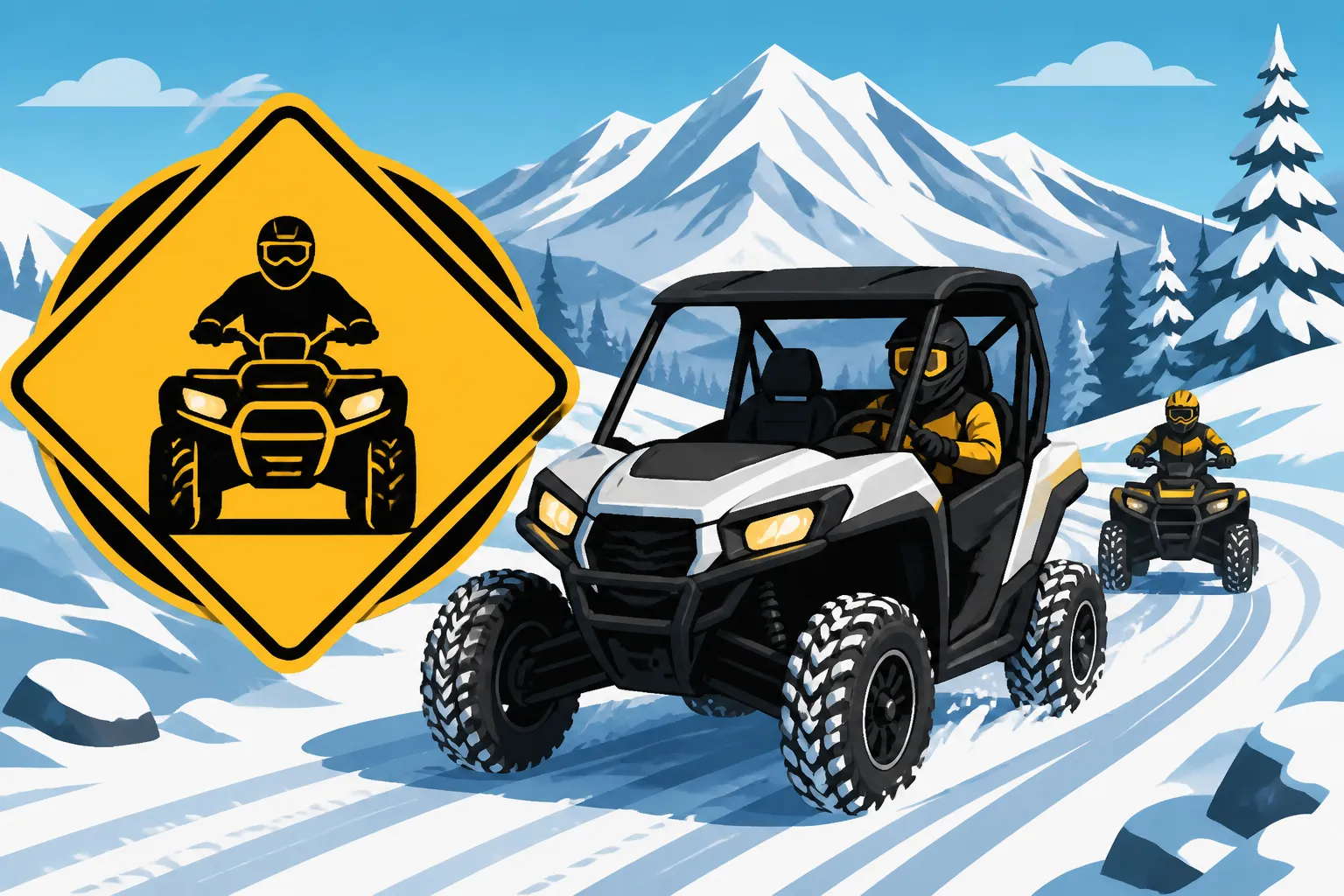
Ah, winter in Wyoming! It paints our rugged landscapes with a breathtaking, pristine white, calling out to many of us who love to explore the backcountry. But when that snow starts piling up on the roads, the rules and realities of riding your ATV or UTV can become a confusing, even dangerous, maze. It’s not just about whether your machine can handle the snow; it's also about whether you're legally allowed to be there, and more importantly, how to stay safe. This guide is here to untangle those snowy road rules, help you understand the unique challenges, and equip you with the knowledge to make smart, safe choices when winter riding beckons on Wyoming's roadways.
The Reality of Winter Riding on Wyoming Roads
Picture this: you're itching to get out on your side-by-side after a fresh snowfall, imagining the thrill of navigating a pristine, snow-covered county road. But before you even start warming up the engine, you need to understand that winter riding on roads in Wyoming isn't just a colder version of summer cruising. The rules shift, the conditions get exponentially tougher, and the risks multiply. It demands a whole new level of preparation and awareness.
The Legal Landscape: Are You Even Allowed?
This is often the first question people ask, and it's a critical one. While Wyoming is incredibly open to off-road vehicle use, that doesn't mean every snowy road is fair game for your ATV or UTV, especially in winter. Many county roads, Forest Service roads, and BLM roads are indeed open to properly registered street-legal machines, often designated as Multipurpose Vehicles (MPVs) – a topic we explore in depth in [Wyoming's MPV Path to the Road]. However, snow can change everything.
For instance, a county might have a policy that once a road is plowed, it's considered a regular vehicular road, and your MPV rules apply. But what if it's not plowed? Or what if a particular road is only maintained for snowmobile access during winter? This is where local regulations and signage become absolutely paramount. You might find that some roads, particularly in higher elevations or within certain forest areas, are subject to seasonal closures specifically to protect wintering wildlife or to transition them solely for snowmobile use. Ignoring these closures, even if the snow makes it look like an inviting trail, can lead to serious fines. Always check with the local county, Forest Service, or BLM office for specific winter road status and closure information before you head out. Riding on a closed road, whether by ignorance or intent, can result in significant penalties, as highlighted in [Wyoming Fines for Riding a Closed Road].
Understanding Road Conditions and Traction
Riding on snow-covered roads presents a vastly different traction challenge than riding on dirt or gravel. It’s not just about having four-wheel drive. Different types of snow behave in unique ways, and they can all hide treacherous conditions beneath. Fresh, light powder might feel thrilling, but it can obscure black ice or deep ruts. Wet, heavy snow can quickly bog down your machine, making steering difficult and dramatically increasing stopping distances. Then there’s packed snow and ice – these are perhaps the most dangerous, offering almost no grip for standard tires.
Consider the surface underneath the snow too. Is it a well-graded gravel road, or a paved highway? A paved road covered in a thin layer of ice is far more perilous than a well-maintained gravel road with a few inches of fresh snow. Your tires are your primary point of contact, and standard ATV or UTV tires designed for dirt and rocks simply aren't engineered for icy conditions. You'll find yourself sliding, struggling for control, and drastically increasing your risk of an accident. This is where specialized equipment like studded tires or snow chains become not just an advantage, but a necessity, especially on frozen surfaces, as discussed in [Studded Tires on Frozen Two-Track].
Equipment for Snowy Road Riding
If you're serious about riding Wyoming's snowy roads, your machine needs more than just a full tank of gas. The right equipment can make the difference between a successful, fun outing and a dangerous, frustrating ordeal. First and foremost, let's talk about tires. As mentioned, standard knobby tires are terrible on ice and packed snow. Look into purpose-built winter tires or consider adding studs. These drastically improve traction and control.
Beyond tires, consider attachments that help manage the snow itself. A snowplow attachment for your UTV can be incredibly useful, not just for clearing your own path, but potentially for helping neighbors or maintaining access to a cabin. Companies like SuperATV offer a range of robust plow systems that can transform your side-by-side into a real winter workhorse. A winch is another non-negotiable item. Getting stuck in deep snow, especially off the beaten path, can quickly turn into a survival situation. A reliable winch, mounted front and rear, can be your lifeline. Don't forget proper lighting, either. Short, dark winter days mean you'll likely be riding in low light or darkness, making bright headlights, taillights, and even auxiliary light bars crucial for visibility and safety. For more on safe night riding, check out [Wyoming Rules for Riding After Dark]. Finally, make sure your machine's cooling system is up to snuff. While overheating might seem counterintuitive in winter, working your engine hard in deep snow can still generate a lot of heat, and a clogged radiator from snow ingestion can cause problems.
Navigating Specific Road Types in Winter
Wyoming's vastness means you'll encounter a diverse range of roads, from maintained state highways to remote two-tracks. Each type presents its own set of challenges and rules when winter weather arrives, and what might be acceptable on one type could be strictly prohibited or incredibly dangerous on another. Understanding these distinctions is crucial for safe and legal winter riding.
County and Forest Roads: What Changes When It Snows?
These are often the most appealing routes for ATV and UTV riders in winter, offering access to stunning snow-covered vistas and quiet solitude. However, the designation of "road" versus "trail" can get blurry with snowfall. Many county roads, especially those leading to remote ranches or recreational areas, might not be regularly plowed. If a county road is not plowed, it might still be open to street-legal MPVs, but the responsibility for safe passage falls entirely on you. You're effectively creating your own path, facing deep drifts, and potentially crossing unseen obstacles. Always consult the county road and bridge department for their winter maintenance schedule and any specific rules regarding ORV use on unplowed roads. Some counties might designate certain roads as "closed to wheeled vehicles" during winter, converting them to snowmobile routes only.
Similarly, Forest Service roads are a popular choice. Many are designated as "National Forest System Roads" and are part of the enrolled trail system. However, specific sections or entire areas often have seasonal closures for reasons like wildlife protection (e.g., elk winter range) or simply due to lack of maintenance funding in winter. A road that was open all summer might suddenly be gated or signed as closed once the snow flies. It's imperative to consult the local Forest Service office and check their Motor Vehicle Use Maps (MVUMs) for the winter season. These maps clearly show which roads are open, which are seasonally closed, and which are designated for specific winter uses like snowmobiling. [Wyoming Rules for Riding a Forest Road] provides more general information, but remember that winter conditions often bring additional specific regulations.
On unplowed roads, deep snow can also create unique challenges. You might encounter hidden washouts, rocks, or even fallen trees that are completely obscured. This is where the ability to self-recover, perhaps with a winch from a brand like SuperATV, becomes incredibly important. Also, be mindful of private property boundaries. Just because a ranch road is covered in snow doesn't mean it's suddenly public access. Always respect landowner rights and never trespass.
State Highways and Interstates: A Different Ballgame
Let’s be direct: riding an ATV or UTV on a major state highway or especially an Interstate in snowy conditions is generally not advisable and often outright illegal, even if your machine is street-legal as an MPV. While Wyoming does have provisions for MPVs to operate on certain designated roads and even cross Interstates at specific points (a complex topic explored in [Wyoming Rules for Crossing an Interstate]), these are almost always under clear conditions, and winter weather throws a massive wrench into those allowances.
State highways are designed for high-speed, multi-lane traffic, and the presence of slow-moving ATVs or UTVs, particularly in reduced visibility or slick conditions, creates an extreme hazard for everyone. The Wyoming Department of Transportation (WYDOT) maintains these roads, and their plows often create high snow berms that make entering or exiting difficult and dangerous. Moreover, road salt and de-icing chemicals used on state routes can accelerate corrosion on your machine.
Even if a specific segment of a state highway might be technically open to MPVs in fair weather, the moment snow and ice are present, prudence should dictate your choices. Visibility drops dramatically in blowing snow, and the stopping distances for an ATV or UTV on icy pavement are immense. If you absolutely must use a paved road for a very short, specific crossing or access point, do so with extreme caution, ensure your machine has all required road-legal equipment (lights, mirrors, horn), and always yield to larger vehicles. For detailed requirements on what your machine needs to be legal on a Wyoming road, refer to [Wyoming's MPV Path to the Road]. My strong advice, however, is to avoid paved state highways and especially Interstates entirely when they are snow-covered. It's simply too risky for you and for other drivers.
Safety First: Preparing for the Unexpected
Riding ATVs and UTVs in the snow can be an incredibly rewarding experience, offering unique challenges and stunning winter scenery. However, the serene beauty of a snow-covered landscape can quickly turn into a perilous situation if you're not adequately prepared. In Wyoming, especially in winter, "the unexpected" isn't a possibility; it's practically a guarantee. Proper planning and packing aren't just good ideas; they're essential for your safety and survival.
Essential Winter Riding Gear and Supplies
Your personal gear needs to be top-notch for winter riding. Forget cotton – it holds moisture and saps body heat. Layers are your best friend: start with a moisture-wicking base layer, add insulating mid-layers like fleece or down, and top it off with a waterproof and windproof outer shell. Don't skimp on extremities: warm, waterproof gloves or mitts, insulated boots (perhaps with toe warmers), and a warm helmet with a clear, anti-fog visor are crucial. A balaclava or neck gaiter will protect your face from windburn and frostbite. Remember that even a relatively warm winter day can turn bitter cold quickly, especially if the wind picks up, which is a common occurrence on an exposed ridge road.
Beyond personal attire, a well-stocked emergency kit for your machine is non-negotiable. This isn't just a basic first-aid kit, though that's essential. Think winter survival:
- Navigation: A reliable GPS, pre-loaded with maps, and a physical map and compass as backup. Cell service is spotty at best in many Wyoming backcountry areas.
- Communication: A satellite messenger or personal locator beacon (PLB) is a lifesaver if you're out of cell range and need to call for help.
- Warmth: Extra layers, emergency blankets, and hand/foot warmers.
- Fire Starter: Waterproof matches, a lighter, and tinder.
- Tools: A small shovel, basic tool kit for your machine, tire repair kit, and a tire pump.
- Food & Water: High-energy snacks, a thermos of hot coffee or soup, and plenty of water (ensure it won't freeze).
- Lighting: Headlamps and spare batteries, in case you find yourself out longer than expected or needing to make repairs in the dark.
- Recovery: A sturdy tow strap. Even if you have a winch, a tow strap can be invaluable if another rider needs help or you need to be pulled free.
- Fuel: An extra can of fuel. You burn more fuel in deep snow.
Navigating Unexpected Hazards and Emergencies
Winter riding means facing hazards you wouldn't typically encounter in warmer months. Deep snow can hide anything from sharp rocks and stumps to frozen streams or deep ruts, any of which can cause you to get stuck or damage your machine. Be particularly wary of crossing a creek running high with snowmelt, as ice can be unpredictable and currents strong. Always scout ahead if unsure.
Avalanche danger is another serious consideration, especially if you're riding in mountainous terrain on forest roads or near steep slopes. Avalanche activity isn't limited to designated ski areas; any steep, snow-covered slope can pose a risk. Before heading into avalanche-prone areas, check the local avalanche forecast and carry appropriate gear (beacon, shovel, probe) if you have the training. If you don't have the training, avoid such areas entirely.
Getting stuck is a common winter scenario. Even with a powerful machine and specialized tires, deep, heavy snow can bog you down. This is where your winch, shovel, and recovery gear come into play. If you're riding with a group (highly recommended in winter!), you have more options for recovery. However, getting unstuck can be physically demanding and quickly lead to exhaustion and hypothermia, so knowing when to call for help via your satellite messenger is crucial.
Mechanical breakdowns are also more likely in extreme cold. Fuel lines can freeze, batteries can lose charge faster, and parts can become brittle. Regular maintenance and pre-ride checks are more important than ever. Always tell someone your planned route and estimated return time, so if you don't check in, they know where to start looking.
Know Before You Go: Checking Conditions and Closures
This cannot be stressed enough: always check conditions and closures before you ever load your machine onto the trailer, let alone hit the road. Wyoming weather is famously fickle; a beautiful morning can turn into a blizzard by afternoon. What might be open one day could be closed due to heavy snowfall or high winds the next.
Here’s a checklist of sources to consult:
- WYDOT Road Information: For state highways and major routes, WYDOT is your primary source for road conditions, closures, and advisories. Their website and traveler information services provide real-time updates.
- County Road & Bridge Departments: For county roads, contact the specific county you plan to ride in. They can provide details on plowing schedules and winter road statuses.
- Forest Service/BLM Offices: For federal lands, call the local ranger district or field office. Check their websites for Motor Vehicle Use Maps (MVUMs) and any specific seasonal orders or closures.
- Weather Forecasts: Use reputable weather services to get detailed forecasts for your specific riding area, paying close attention to temperature, wind chill, snowfall amounts, and sudden drops in temperature. Be aware of the potential for [Snow in September at Elevation] or sudden storms.
- Avalanche Centers: If riding in mountainous terrain, check the local avalanche center for conditions.
- Trail Maps & Apps: Many modern GPS units and smartphone apps can show current closures or conditions, but always cross-reference with official sources.
Never rely on hearsay or outdated information. A quick phone call or website check before you leave home can prevent a dangerous situation, a costly fine, or a ruined trip. Your safety, and the safety of anyone riding with you, depends on it.
| Factor | Summer Riding on Roads | Winter Riding on Snowy Roads |
|---|---|---|
| Legal Status | Generally clearer for MPVs on enrolled roads | Subject to additional seasonal closures and restrictions |
| Traction | Good on dry dirt/gravel, less issue on pavement | Severely reduced on snow/ice; requires specialized tires |
| Visibility | Generally good, dust can be an issue | Reduced by snowfall, blowing snow, shorter daylight hours |
| Hazards | Dust, loose gravel, wildlife, other vehicles | Black ice, deep snow, hidden obstacles, avalanches, hypothermia |
| Equipment | Basic safety gear, registration | Studded tires, winch, plow, extra lights, advanced survival gear |
| Preparation | Check fuel, basic tools | Extensive weather checks, emergency kit, communication devices |
| Risk Level | Moderate to high, depending on terrain and speed | Significantly higher due to cold, reduced traction, and isolation |
| Recovery | Easier to self-recover or get assistance | More difficult, physically demanding, risk of exposure |
Disclaimer
This article is for general informational purposes only and does not constitute professional advice. Laws, prices and regulations vary by location and change over time. Consult a qualified professional for guidance on your specific situation.