Wyoming Rules for Riding a Two-Track
Heading out into Wyoming's vast, wild landscapes on an ATV or UTV is an incredible experience, but it can also be a bit daunting when you're trying to figure out where you can legally ride, especially on those inviting, well-worn "two-track" roads. It's frustrating to pull up to what looks like a perfect route, only to second-guess if you're actually allowed to be there. This guide is all about cutting through that confusion, giving you a clear picture of Wyoming's rules for riding a two-track so you can explore with confidence and respect.
What Exactly is a "Two-Track" in Wyoming?
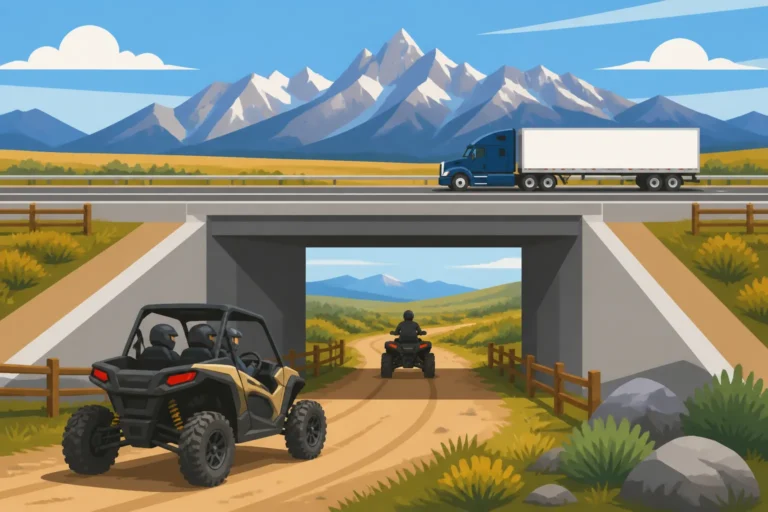
When we talk about "two-tracks" in Wyoming, we're usually referring to those unpaved, often gravel or dirt routes that are just wide enough for a vehicle, worn into the landscape by years of use. They're a quintessential part of the Cowboy State's backcountry, leading to incredible vistas, secluded camping spots, and prime fishing holes. But here's the kicker: "two-track" isn't an official legal designation, and that's where the confusion often begins.
The Informal Nature of Two-Tracks
Imagine an old ranch road, maybe a maintenance route for power lines, or simply a path that hunters and recreationists have driven for decades. These are your typical two-tracks. They’re distinct from a paved highway or even a formally designated, well-signed ATV trail. Often, they lack official signage, leaving riders to wonder if they're on a public thoroughfare or inadvertently trespassing. This informal nature means their legal status can vary wildly, depending entirely on who owns the land and how that land is managed. You might find yourself on a smooth, well-maintained dirt road one moment, and then bouncing over rocky terrain that feels more like a primitive trail the next. The key is that the "two-track" description is about its physical appearance and usage history, not its legal classification.
These routes often feel like a natural extension of the landscape, weaving through sagebrush flats, climbing into forested mountains, or paralleling a meandering creek. While they offer an unparalleled sense of adventure and access to remote areas, their very informality demands a heightened sense of awareness from riders. Unlike state-maintained roads or clearly marked trails, two-tracks can be subject to erosion, washouts, or unexpected closures, and they rarely come with detailed maps or regular maintenance schedules. This wild card aspect is part of their charm for many, but it also underscores the importance of understanding the underlying land ownership and regulations before you venture too far down any given set of tracks.
Two-Tracks on Different Land Types
The most critical factor in determining if you can ride a two-track in Wyoming is knowing whose land it's on. Wyoming is a checkerboard of public and private ownership, with vast tracts of federal land (Bureau of Land Management or BLM, and National Forests) interspersed with state lands (often referred to as State Trust Land) and immense private ranches. The rules for a two-track on private land are vastly different from those on federal land, and even federal lands have different rules depending on whether they are managed by the Forest Service or the BLM. This is where your homework really pays off, because blindly assuming a two-track is open can lead to fines, confrontation, or worse.
For example, a two-track weaving through a ranch might look inviting, but if it's on private property, you absolutely need explicit permission from the landowner. Without it, you're trespassing, plain and simple. On the other hand, many two-tracks on BLM or Forest Service land are open to ATV and UTV use, but they must be "designated" or "enrolled" for such use. This designation is crucial and often requires checking specific land management maps. State Trust Land, managed by the Wyoming Office of State Lands and Investments, has its own set of rules and often requires a separate recreational use permit in addition to your standard ORV permit. This mosaic of ownership makes riding two-tracks in Wyoming a unique challenge, demanding riders be prepared to identify the land they're on and adhere to the specific regulations that apply.
Essential Permits and Paperwork for Wyoming Two-Tracks
Okay, so you’ve identified a two-track you want to ride. Your next thought should immediately turn to what permits and paperwork you need. This isn't just a bureaucratic hurdle; it's how Wyoming manages and maintains its incredible trail system and protects its natural resources. Skipping this step isn't just risky, it's a sure way to incur fines and potentially damage the very places you love to explore.
The Wyoming ORV Permit Requirement
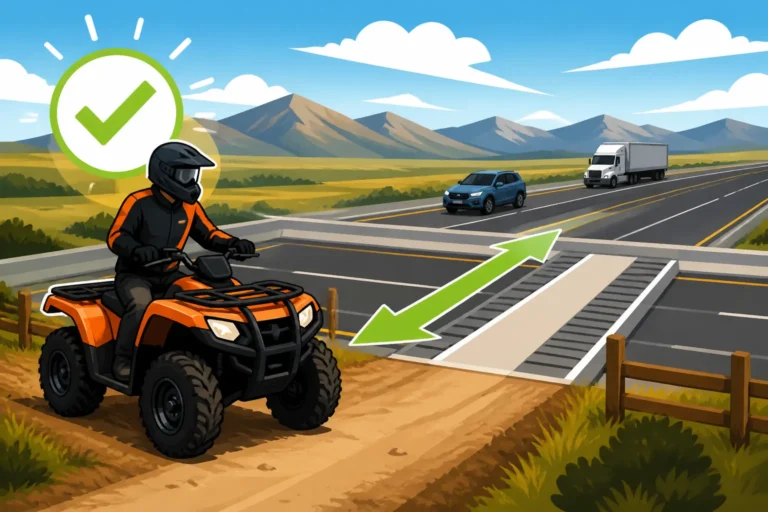
Here’s the golden rule for nearly all public riding in Wyoming: if you're on a two-track that is open to off-road vehicles, you must have a current Wyoming ORV permit displayed on your machine. It doesn't matter if you're a resident or a visitor from out of state; Wyoming issues one flat-fee permit for everyone. Many riders new to the state are often surprised that Wyoming does not honor out-of-state registrations or permits. A sticker from Colorado, Montana, or Utah, no matter how current, won't cut it on a Wyoming two-track. This permit is crucial because the fees collected directly fund trail maintenance, signage, and enforcement, ensuring these routes remain accessible for future generations.
The permit is a physical decal that needs to be affixed to your machine. The rules for [Where the Wyoming Decal Goes on a Machine] are pretty clear: it must be visible on the front half of your machine, typically on the fender or fairing, where it can be easily seen by land managers or enforcement officers. The cost is a standardized fee, which contributes directly to the Wyoming Trails Program. You can find detailed information on the [Wyoming ORV Permit Cost] through official state channels. It's a calendar-year permit, meaning it's valid from January 1st to December 31st, regardless of when you purchase it. So, if you buy it in July, it still expires at the end of December. Always make sure your permit is current before you hit the trail, or that inviting two-track could lead to an unwelcome citation.
Understanding Land Management Rules (MVUMs & Trust Land Permits)
Beyond the universal Wyoming ORV permit, you’ll need to delve into the specifics of the land you're riding on. For federal lands – those managed by the Bureau of Land Management (BLM) and the U.S. Forest Service – this means consulting Motor Vehicle Use Maps (MVUMs). These maps are your bible for understanding where you can and cannot ride. They explicitly show designated roads, trails, and areas open to specific vehicle types. A two-track might be marked as open for ATVs/UTVs, closed to all motorized traffic, or only open to full-sized vehicles. Never assume a two-track on federal land is open just because it looks like a road. Always carry the relevant MVUM for the area you're exploring, whether as a physical map or a downloaded digital version.
State Trust Land, which is managed to generate revenue for Wyoming's public schools and institutions, has its own distinct set of rules. While many two-tracks exist on these lands, you often need a separate Recreational Use Permit in addition to your standard Wyoming ORV decal. This permit allows you to access and recreate on specific State Trust Lands. The [Wyoming State Trust Land Permit Cost] is typically a modest annual fee, but it's an absolute requirement. Without it, you are trespassing on state property. This additional permit highlights the importance of truly knowing the land ownership boundaries, as you could be riding along a federal two-track and then seamlessly cross onto State Trust Land, suddenly requiring a different permit. Being prepared with both your ORV decal and any necessary State Trust Land permits is vital for a hassle-free ride. You can find information about [Wyoming's Enrolled Roads and Trails] on state and federal land agency websites, which can help clarify what's open and what's not.
Navigating Access: Public vs. Private vs. State Trust Land
Wyoming's vastness means that those enticing two-tracks crisscross a patchwork of ownership. Understanding who owns the land beneath your tires is the single most important piece of information for responsible and legal riding. It's not always intuitive, and what might seem like public access could quickly turn into a trespass situation if you're not diligent.
Riding Two-Tracks on Public Federal Lands (BLM & Forest Service)
A significant portion of Wyoming’s two-tracks are found on federal public lands managed by either the Bureau of Land Management (BLM) or the U.S. Forest Service. These lands are generally open for public recreation, but with important caveats for motorized use. The golden rule here is "designated routes only." This means that you can only ride your ATV or UTV on a two-track if it has been explicitly identified and marked as an open route on official travel management maps, known as Motor Vehicle Use Maps (MVUMs). Just because a two-track exists and looks well-traveled doesn't mean it's a legal route for your machine. It might be an old logging road, a fire break, or a route specifically designated for administrative use only.
When you're out on BLM land, you'll need to consult [Wyoming Rules for Riding BLM Land]. Generally, the BLM has historically taken a more "open unless closed" approach, but specific areas and routes are still subject to designation. Forest Service lands, on the other hand, tend to be more restrictive, often operating under a "closed unless designated open" principle. Therefore, for riding in a National Forest, familiarize yourself with [Wyoming Rules for Riding a National Forest] and always carry the relevant MVUM for that particular forest district. These maps are usually available for free at ranger stations or can be downloaded online. Ignoring them can lead to citations, as federal land managers are serious about protecting sensitive habitats and preventing resource damage. Modern GPS devices, especially those designed for off-road use, can often overlay these MVUMs, providing invaluable real-time guidance. Companies like SuperATV offer a range of accessories, from sturdy GPS mounts to robust storage solutions, which can be incredibly helpful for carrying your essential navigation tools and maps, ensuring you stay on the designated path and have what you need for a day out.
Crossing Private Land and Respecting Ranchers
This is perhaps the most sensitive area of two-track riding in Wyoming. The state is home to immense private ranches, and many two-tracks crisscross these private holdings. It's not uncommon for a public two-track to seemingly disappear onto private property, or for a "section line" – a legal boundary that can sometimes be ridden – to be bordered by private land that has no public access. The rule is absolute: you must have explicit permission from the landowner to ride on private land. This isn't just good manners; it's the law. [Wyoming Trespass Rules for Riders] are strictly enforced, and ignorance of property lines is not an excuse. Many a rider has faced a citation because they assumed an open gate or a well-worn path meant public access.
When you encounter a gate on a two-track, the general rule is "leave it as you found it." If it's closed, close it behind you. If it's open, leave it open. However, if you're unsure if you're on public or private land, it's always best to err on the side of caution and turn back rather than risk trespassing. Remember [Wyoming Rules for Opening a Gate] are simple: close it behind you unless it was already open. Even if you have permission to ride a two-track on private land, be incredibly respectful. Stay on the established path, don't disturb livestock, and be mindful of your speed and noise. Ranchers are the backbone of Wyoming, and maintaining a good relationship with them is essential for future access. For more specific guidance on routes that might weave through working ranches, consulting [Wyoming Rules for Riding a Ranch Road] can offer further insights, especially concerning common features like [Cattle Guards on a Ranch Road] which usually indicate passage through grazing lands.
Specifics for State Trust Land Two-Tracks
Wyoming's State Trust Lands are unique. Unlike federal lands, which are managed for broad public benefit, State Trust Lands are managed by the Wyoming Office of State Lands and Investments primarily to generate revenue for specific beneficiaries, mainly public education. This distinction leads to different access rules. While many two-tracks traverse these lands, they generally require a separate, annual Recreational Use Permit (RUP) in addition to your standard Wyoming ORV permit. This RUP acts as your specific permission to be on these lands for recreational purposes.
You can often purchase a RUP online through the state's land management office or at various vendors across the state. Without this permit, riding on State Trust Land is considered trespassing. It's crucial to understand that even if a two-track looks identical to one on BLM land, the underlying ownership dictates a different set of access requirements. Riders should consult [Wyoming Rules for Riding Trust Land With a Permit] to ensure they are compliant. These rules often include specific guidelines about permissible activities, seasonal closures, and minimizing impact. Always check maps to identify State Trust Land boundaries and ensure you have the correct permits before entering. It’s a small extra step that ensures you’re not only legal but also contributing to the state's educational funding through your recreational pursuits.
Responsible Riding and Safety on Wyoming Two-Tracks
Riding two-tracks in Wyoming offers an incredible sense of freedom and access to breathtaking scenery, but with that freedom comes a significant responsibility. These routes are often remote, shared with various users, and traverse fragile environments. Practicing responsible riding and prioritizing safety isn't just about following rules; it's about preserving the privilege of riding and ensuring everyone, human and animal, can enjoy Wyoming's wild beauty.
General Etiquette and Environmental Considerations
When you're out on a two-track, remember that you're a guest in nature's home. Always stay on designated routes. "Cutting your own trail" or veering off the two-track to bypass an obstacle, no matter how small, damages vegetation, contributes to erosion, and can lead to trail closure. If a two-track is too challenging or seems impassable, turn around. It's never worth destroying the landscape or getting yourself stuck. Minimize your impact by adhering to "Leave No Trace" principles: pack out everything you pack in, and perhaps even a little more. This means no trash, no food scraps, and no human waste left behind. Your machine should also be equipped with a Forest Service-approved spark arrester to prevent wildfires, a critical concern in Wyoming's dry climate. Always check [Wyoming Muffler and Spark Arrester Rules] to ensure your machine meets sound and emissions standards. Excessive noise can disturb wildlife and other trail users, leading to negative perceptions of off-road riding.
Be courteous to other trail users. Two-tracks are often shared with hikers, mountain bikers, horseback riders, and even full-sized vehicles. Always yield to horses and hikers, slow down, and give them ample space. A friendly wave goes a long way. When passing another motorized vehicle, slow down to minimize dust. Consider the time of year and conditions. Riding during muddy conditions can cause significant trail damage, so if a two-track is excessively wet and creating deep ruts, it's often best to wait for drier conditions. Your choices on the trail directly impact the future of access for all riders.
Wildlife, Livestock, and Gates
Wyoming is wildlife country, and encounters with animals, both wild and domestic, are part of the experience. Always give wildlife a wide berth. If you see deer, elk, moose, or even bears, slow down, stop if necessary, and allow them to move off the trail undisturbed. Never harass or pursue animals. Be particularly aware during dawn and dusk when animals are most active and harder to see. Many areas have [Wyoming Seasonal Closures for Wildlife] to protect breeding or wintering grounds, so always check for these before you ride.
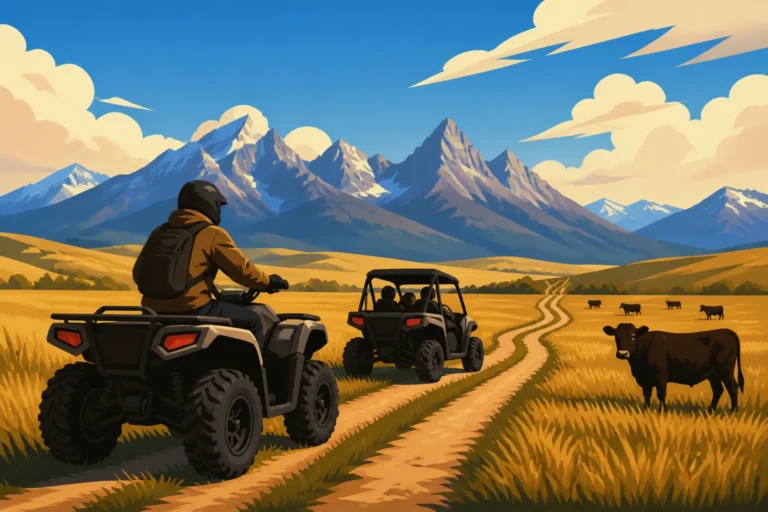
Livestock, particularly cattle and sheep, are a common sight on many Wyoming two-tracks that traverse grazing allotments. Remember, these are working landscapes. Drive slowly and quietly past livestock to avoid spooking them. If you come across a gate, the rule is simple and crucial: [Wyoming Rules for Opening a Gate] dictate that if the gate was closed, close it behind you. If it was open, leave it open. This isn't just about politeness; it prevents livestock from wandering onto highways or into areas they shouldn't be. Failing to close a gate can have severe consequences for ranchers and can damage the reputation of all off-road riders. Always be vigilant for [Wyoming Rules for Riding Near Livestock] and respect the working environment of these vast lands.
What to Carry and Be Prepared For
Wyoming’s two-tracks can take you far from civilization, often beyond cell service. Self-sufficiency is paramount. A breakdown or injury in a remote area can quickly turn into a serious situation. Always carry a well-stocked first-aid kit, enough water for everyone in your group, and extra fuel. Tools for basic repairs, a tire patch kit, and a small air compressor are also essential. Navigation is key: even if you have GPS, always carry a physical map of the area and know how to read it, as electronics can fail. Consider a satellite messenger device for emergency communication, especially if you plan to explore areas far from cellular towers, as highlighted by the importance of [Satellite Messengers in the Basin].
It’s also wise to inform someone of your route and estimated return time. Weather in Wyoming can change dramatically and quickly, even in summer. Pack layers of clothing, rain gear, and perhaps a small emergency shelter. Understand your machine's [Fuel Range Between Wyoming Towns] and plan your route accordingly; gas stations can be few and far between. Even for day trips, thinking through potential contingencies is critical. Companies like SuperATV also produce durable winch systems, robust protection accessories, and reliable lighting that can make a huge difference in challenging, remote conditions, helping you navigate difficult terrain and be prepared for the unexpected. Being prepared is the best way to ensure a safe and enjoyable experience on Wyoming's two-tracks.
Here's a quick overview to help distinguish the rules for different land types you might encounter on Wyoming's two-tracks:
| Land Type | Permit Required (Beyond ORV) | Primary Access Rule | MVUM/Maps Needed? | Key Considerations |
|---|---|---|---|---|
| Federal (BLM) | No (Wyoming ORV only) | Designated routes only | Yes | "Open unless closed" generally, but check maps. |
| Federal (Forest Svc.) | No (Wyoming ORV only) | Designated routes only | Yes | "Closed unless designated open," check specific maps. |
| State Trust Land | Annual Recreational Use Permit (RUP) | RUP required for recreational access | Yes (state maps) | Managed for revenue, separate permit is essential. |
| Private Land | None (but ORV permit for road use) | Explicit landowner permission is mandatory | No | Strict trespass laws, respect all gates and property. |
Disclaimer
This article is for general informational purposes only and does not constitute professional advice. Laws, prices and regulations vary by location and change over time. Consult a qualified professional for guidance on your specific situation.