Blaze Orange on an Autumn Ride
When the aspen trees in Wyoming start to shimmer gold and rust, and the air carries that crisp, unmistakable scent of autumn, many of us get the itch to hit the trails on our ATVs and UTVs. It’s arguably one of the most beautiful times to ride in the Cowboy State – vibrant colors, cooler temperatures, and fewer dust clouds. But as magical as fall riding is, it comes with a unique set of considerations, the most crucial of which is safety, especially concerning blaze orange. You see, autumn in Wyoming isn't just about pretty leaves; it's prime hunting season, and sharing the wilderness with hunters means making yourself as visible as possible. This guide will help you understand why blaze orange isn't just a suggestion, but a crucial component of your fall riding gear, and how to stay safe and respectful on the trails when the hunters are out.
Why Blaze Orange Becomes Non-Negotiable in Wyoming's Fall
Riding through Wyoming's backcountry in the fall is an experience unlike any other. The landscapes transform into a painter's palette of reds, oranges, and yellows, making every turn a postcard moment. However, beneath this picturesque beauty lies a critical reality: it’s peak hunting season for various big game animals across the state. This means that while you're out enjoying the trails, countless hunters are also out, focused on their quarry, often in dense cover or at dawn and dusk. Your visibility, or lack thereof, can literally be a matter of life and death, making blaze orange an essential part of your riding ensemble.
Understanding Wyoming's Hunting Seasons and Overlap
Wyoming is a renowned destination for big game hunting, attracting sportsmen and women from all corners of the country. Depending on the species and hunt area, seasons for elk, deer, moose, and antelope often begin in late August and can extend well into November or even December. This timing directly overlaps with what many of us consider prime riding weather – when the summer heat has mellowed and before the deep snows of winter set in. Hunters are frequently found in the same national forests, BLM lands, and state lands where we love to ride our machines. They might be stalking through timber, sitting in a blind, or moving quietly through sagebrush, often in remote areas far from marked trails. The chances of encountering hunters, or even being in an area where hunters are present, are significantly higher during these months. It's not just about seeing them; it's about them seeing you.
Think about it: a hunter, focused on the subtle movement of an animal, might be scanning the horizon with binoculars or a rifle scope. In natural camouflage, a rider blending into the autumn foliage could easily be mistaken for game, particularly in low light conditions or thick vegetation. The sheer volume of hunters in the field during this time means that even if you're sticking to designated trails, you're likely sharing the broader landscape with individuals intensely focused on their hunt. Understanding this overlap is the first step in appreciating why your attire needs to be as distinctive as possible.
The Critical Role of Visibility for Rider Safety
Imagine the scenario: you're cruising a two-track through a patch of golden aspen, a vibrant yellow against the deep green pines. You're wearing your favorite riding jacket, perhaps in a subtle forest green or earthy brown, designed to look great but not necessarily to stand out. Meanwhile, a hunter nearby has been patiently waiting for an elk to move through a clearing. Their eyes are trained on the tree line, anticipating the flicker of an ear or the sway of antlers. Your helmet, half-hidden by branches, or the subtle movement of your machine, could easily be misidentified. This isn't about blaming anyone; it's about the inherent risks when humans with powerful firearms are sharing wilderness spaces.
Blaze orange, sometimes called hunter orange, is scientifically designed to be the most visible color to the human eye, especially in natural settings. It doesn't occur naturally in significant amounts in the Wyoming landscape, making it a stark contrast to the browns, greens, and even autumn golds of the environment. While animals may not see it as vividly, human vision picks it up immediately, even at a distance or in challenging light. Wearing blaze orange actively reduces the chance of being mistaken for game, signaling to hunters that you are a fellow human, not a target. This small change in your gear can make a monumental difference in ensuring a safe and uneventful ride, allowing everyone to enjoy Wyoming's wild spaces responsibly.
Wyoming's Laws and Recommendations for Blaze Orange
Navigating the rules and recommendations for blaze orange in Wyoming can sometimes feel a bit like deciphering a riddle. It's not always a straightforward "wear it or get a ticket" situation for ATV and UTV riders, but that doesn't lessen its importance. Understanding both the letter of the law and the spirit of safety is key to enjoying your autumn rides responsibly. Even if the law doesn't mandate it for non-hunters, the smart rider will embrace the spirit of the recommendation for their own well-being.
What Wyoming Law Says About Hunter Orange
When it comes to official legal mandates, Wyoming's statutes primarily focus on hunters wearing blaze orange. Specifically, big game hunters (deer, elk, antelope, moose, etc.) during rifle seasons on public land are often required to wear an outer garment of fluorescent orange (or pink) that's conspicuously visible. This typically means a certain number of square inches visible from all sides. However, for non-hunting recreational users like ATV and UTV riders, there isn't a direct statutory requirement to wear blaze orange while recreating on public lands during hunting season.
This absence of a direct law for non-hunters often leads to confusion, and sometimes, a false sense of security. Just because you're not legally required to wear it doesn't mean you shouldn't. The Wyoming Game and Fish Department, along with various land management agencies like the Forest Service and BLM, strongly recommend that all recreational users, including riders, wear blaze orange during hunting seasons. This recommendation stems from a place of practical safety: to prevent accidents and ensure everyone sharing the land is easily identifiable as a human. Think of it less as a legal burden and more as an unwritten rule of the backcountry, a simple act of self-preservation and courtesy to others who are legally carrying firearms. You should always check the [Wyoming Rules for Riding During Hunting Season] before you head out, as specific areas or land managers might have additional local regulations or strong recommendations.
Practical Gear for Your Autumn Ride
So, if you’re planning an autumn ride, what does putting "blaze orange" into practice actually look like? It's more than just tying an orange bandana to your machine. The goal is to maximize your visible presence, and there are several ways to achieve this effectively without looking like a traffic cone (unless you want to, which is also perfectly fine!).
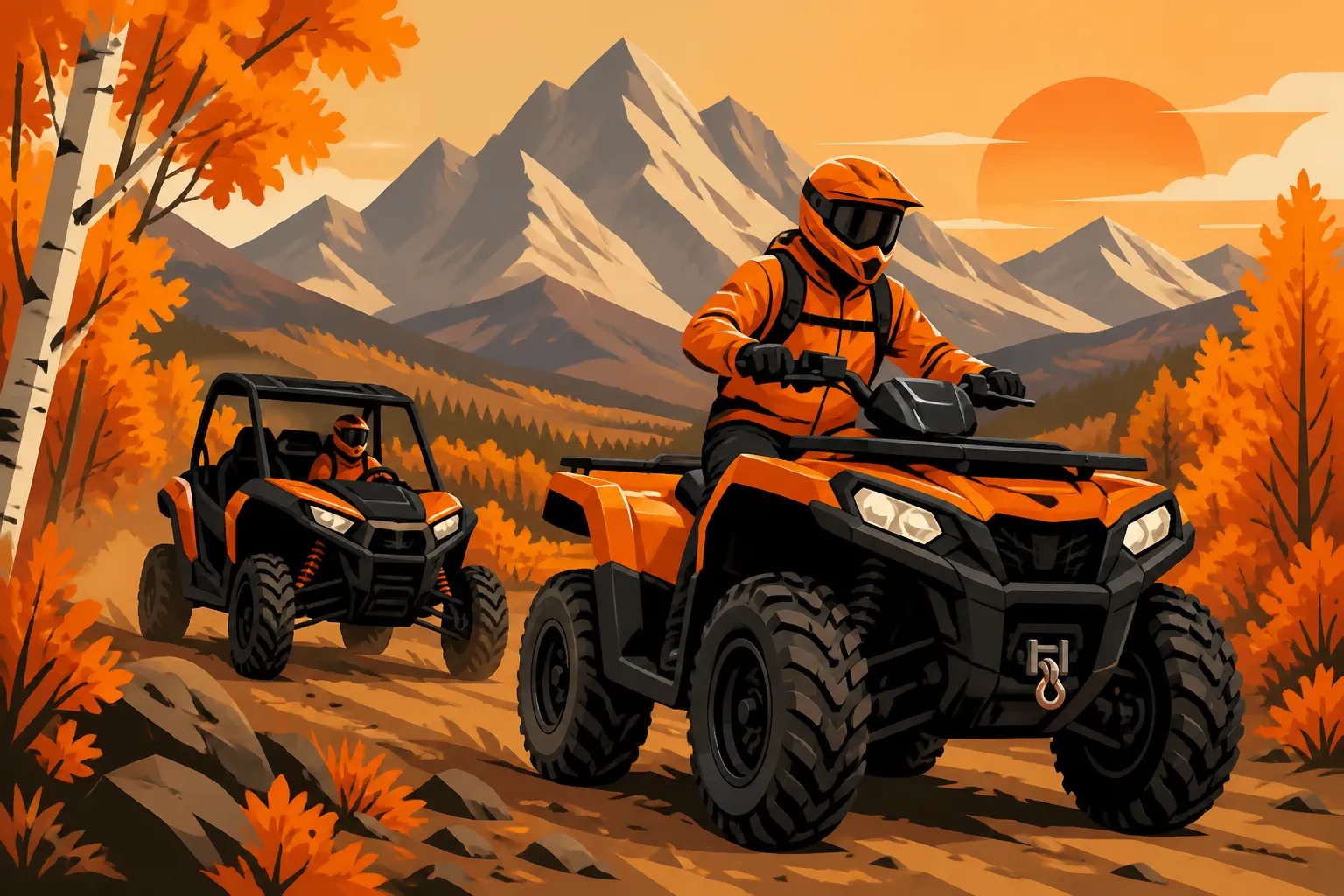
First and foremost, a blaze orange vest or jacket is a fantastic starting point. These are designed specifically for visibility and can be worn over your existing riding gear. Look for options that are lightweight, breathable, and easy to don or doff as temperatures fluctuate throughout the day. A blaze orange helmet cover or even just an orange helmet can also significantly increase your visibility, especially since your head is often the highest point of your body when riding. Some riders even go a step further, adding blaze orange accents to their machines, such as flags or decals. Companies like SuperATV offer a wide range of accessories for ATVs and UTVs, and while they might not specialize in blaze orange directly, they do provide durable gear that can withstand rugged terrain – gear onto which you could easily add reflective or blaze orange tape for enhanced visibility.
Remember, the more blaze orange you display, and the more widely distributed it is on your person and machine, the better. Consider layering: a long-sleeve blaze orange shirt under your jacket, a vest over your jacket, and a hat or helmet cover. Don't forget your passengers, especially children, who also need to be clearly visible. It’s an investment in safety that pays dividends in peace of mind for everyone out on the trails.
Here's a quick look at some key blaze orange gear and why it matters:
| Gear Item | Why It's Crucial |
|---|---|
| Blaze Orange Vest | Easy to wear over any jacket, highly visible. Often required for hunters, great for riders. |
| Blaze Orange Jacket | Provides warmth and weather protection while ensuring maximum upper body visibility. |
| Blaze Orange Hat/Beanie | Simple, effective, and keeps your head warm. Adds visibility from above and when dismounted. |
| Blaze Orange Helmet Cover | Transforms any helmet into a high-visibility piece. Essential when your helmet isn't already bright. |
| Blaze Orange Flag | Increases visibility of your machine, especially when cresting hills or in tall vegetation. |
| Blaze Orange Accents (Tape/Decals) | Can be applied to your machine, backpack, or other gear for added visibility from various angles. |
Navigating Shared Spaces: Etiquette and Awareness
Riding in Wyoming’s backcountry during hunting season isn't just about wearing the right colors; it's also about adopting the right mindset and practicing good trail etiquette. We're all out there to enjoy the natural beauty and opportunities Wyoming offers, and showing respect for other users, particularly hunters who are often engaged in a highly focused and quiet activity, goes a long way. Being a responsible rider means being aware of your surroundings and making choices that minimize disturbance and maximize safety for everyone.
Respecting Hunters and Other Trail Users
When you're out on your ATV or UTV, the sound of your engine can carry surprisingly far, especially in quiet, open country. Imagine a hunter who has spent hours, maybe days, tracking an animal, finally getting within range. The sudden roar of a passing side-by-side could easily spook their game, ruining their effort. While you have every right to be on designated trails, showing consideration for hunters is a sign of good sportsmanship and helps foster positive relationships between different user groups.
Try to keep your speed down when you see signs of hunting activity, like parked trucks, horse trailers, or even just fresh tracks off the main trail. If you see hunters, slow down, give them a wide berth, and perhaps even wave a friendly greeting. Sometimes, turning off your engine briefly if you're stopping near them can be a respectful gesture. Remember, they're often trying to be as stealthy as possible, and a loud machine can be a major disruption. It’s also crucial to be aware of [Wyoming's Enrolled Roads and Trails] and stick to them. Going off-trail might not only be illegal but could also lead you directly into a hunter's concealed position or disturb wildlife that hunters are tracking. Always check local regulations, as some areas may have specific closures or restrictions during hunting season, which you can often find on land management agency websites or at local ranger stations.
Essential Checks Before You Head Out
Preparation is your best friend for any backcountry adventure, and even more so during hunting season. Before you even load up your machine, a few crucial checks can ensure your ride is safe, enjoyable, and free of unforeseen complications. These steps go beyond just packing your blaze orange gear and ensure you're a knowledgeable and responsible visitor to Wyoming's public lands.
Firstly, always check the current hunting regulations and seasonal closures for the specific area you plan to ride. The Wyoming Game and Fish Department website is your go-to resource for this information. Game unit boundaries, hunting season dates, and any special restrictions can change annually. Some areas might have specific limitations on motorized travel or even temporary closures to minimize disturbance to wildlife during critical migration or breeding periods. Looking up information on [Wyoming Seasonal Closures for Wildlife] is paramount.
Secondly, carry detailed maps, and know how to read them. A GPS unit or a smartphone app with downloaded maps is excellent, but a physical map of the area is also a wise backup, especially if you're going into areas with no cell service. Land management agencies like the Forest Service and BLM publish Motor Vehicle Use Maps (MVUMs) that clearly delineate which roads and trails are open to motorized vehicles. Knowing your route and understanding where you are in relation to hunting areas and private property is critical. [Wyoming Trail Maps and MVUMs] are indispensable tools. Finally, ensure your ATV or UTV has a current [Wyoming's Annual ORV Permit]. Riding without one can result in a citation, and it's a simple, inexpensive way to contribute to the state's trail maintenance and management. By taking these proactive steps, you not only ensure your own safety but also demonstrate respect for the land and all who share it.
Disclaimer
This article is for general informational purposes only and does not constitute professional advice. Laws, prices and regulations vary by location and change over time. Consult a qualified professional for guidance on your specific situation.