What Changed for Wyoming Interstates in 2023
Riding ATVs and UTVs in Wyoming has always been an incredible adventure, but let's be honest, navigating the rules and regulations can sometimes feel like trying to cross a river without a bridge. For years, one of the biggest frustrations for many off-road enthusiasts was the strict prohibition on taking their machines on interstate highways, creating frustrating barriers in otherwise fantastic trail systems. This guide is here to untangle the significant changes that arrived in 2023, offering a clear roadmap to understanding how and when your machine can legally cross those once-impenetrable interstates.
The Old Guard: Why Interstates Were Off-Limits
For a long time, the mere thought of taking your ATV or UTV onto an interstate in Wyoming was simply out of the question. It wasn't just frowned upon; it was illegal, plain and simple. This wasn't unique to Wyoming, of course, as many states have similar restrictions, but for riders exploring the vast landscapes here, it presented some very real challenges.
A Strict Prohibition on Highway Use
Prior to the 2023 changes, Wyoming law explicitly barred off-road vehicles (ORVs) and even multipurpose vehicles (MPVs) from operating on interstate highways. This wasn't some minor suggestion; it was a hard-and-fast rule designed with safety in mind. Interstates are high-speed, high-volume thoroughfares, and mixing slower, less protected off-road machines with semi-trucks and fast-moving cars was deemed too dangerous. For riders, this meant that while you could enjoy miles and miles of fantastic trails, if a trail system was bisected by an interstate, your journey abruptly ended. You had to load up your machine, trailer it to the other side, and unload to continue, which, as any seasoned rider knows, is a monumental pain when you're just trying to enjoy the ride.
The Disconnect for Trail Riders
Imagine a sprawling national forest or a vast expanse of BLM land, laced with incredible two-tracks and scenic routes. You've planned an epic ride, perhaps aiming to link several different areas for a multi-day adventure. Then, you pull out the map and see a big, thick interstate cutting right through your intended path. Before 2023, that was essentially a wall. You couldn't just pop over to the other side. This created significant "dead zones" in otherwise contiguous trail networks, forcing riders into inconvenient detours or logistical headaches. Many of us felt the sting of having to cut a ride short or reroute significantly because of an interstate crossing that seemed so close yet so far. It felt like a fundamental piece was missing from the puzzle of truly exploring Wyoming's backcountry on four wheels.
Economic Roadblocks for Communities
This strict prohibition also had a tangible impact on many of Wyoming's smaller towns and communities. Imagine a town that sits right on an interstate, with fantastic riding areas on both sides. Riders coming through might fuel up, grab a meal, or even stay a night. But if that interstate acts as a barrier, effectively splitting the riding experience, it discourages through-riders. People would often bypass these towns or simply stick to one side of the highway, meaning less tourism dollars flowing into local businesses. It was a frustration shared not just by riders, but by small business owners and community leaders who saw the potential for more vibrant outdoor recreation economies hampered by these access limitations.
The Turning Point: Wyoming's Legislative Push in 2023
The frustration wasn't silent for long. Over time, a growing chorus of voices, from individual riders to local business owners and even some forward-thinking community leaders, started advocating for change. They argued that there had to be a way to balance safety with access, especially when it came to connecting crucial trail segments.
A Groundswell of Advocacy
The push for interstate access wasn't a top-down mandate; it was a grassroots movement. Communities across the state, particularly those like Evanston that were literally bisected by an interstate, felt the pinch most acutely. [Evanston and the Interstate That Split It] becomes a key example of how a community's direct experience fueled the argument for change. Riders organized, local chambers of commerce voiced concerns, and legislators began to listen. The core argument was simple: while full interstate travel was never the goal, safe, limited crossings were essential for the continued growth and enjoyment of off-road recreation in the state. This sustained advocacy highlighted a clear need to adapt laws to better serve the interests of Wyoming's residents and visitors who love to explore its natural beauty.
Crafting the New Interstate Access Rule
The legislative process for making such a significant change is never simple. It involved extensive discussions between the Wyoming Department of Transportation (WYDOT), Wyoming State Parks, the various county commissioners, and, of course, the state legislature. The goal wasn't to simply open up interstates to all ORVs; it was to create a carefully considered, highly controlled mechanism for specific, designated crossings. There were numerous safety concerns to address, traffic flow analyses to conduct, and infrastructure considerations to weigh. This wasn't a quick fix, but rather a thoughtful, collaborative effort to find a workable solution that would enhance the riding experience without compromising the safety of interstate travel.
Understanding the Specific Language of the Bill
When the bill finally passed and the changes came into effect in 2023, it was important to understand the precise language and intent. This wasn't a blanket permission slip for all ATVs and UTVs to suddenly use interstates. Instead, it carved out very specific exceptions for Multipurpose Vehicles (MPVs) to cross interstates at designated locations. The new law carefully defines what an MPV is and outlines the stringent conditions under which these crossings can occur. It's crucial for every rider to familiarize themselves with these definitions and conditions, which are often detailed in amendments to W.S. 31-1-101. [Wyoming's MPV Definition in W.S. 31-1-101] helps clarify these legal specifics, making it clear that this isn't about general road use but rather highly controlled, purposeful crossings.
The New Reality: Designated Interstate Crossings
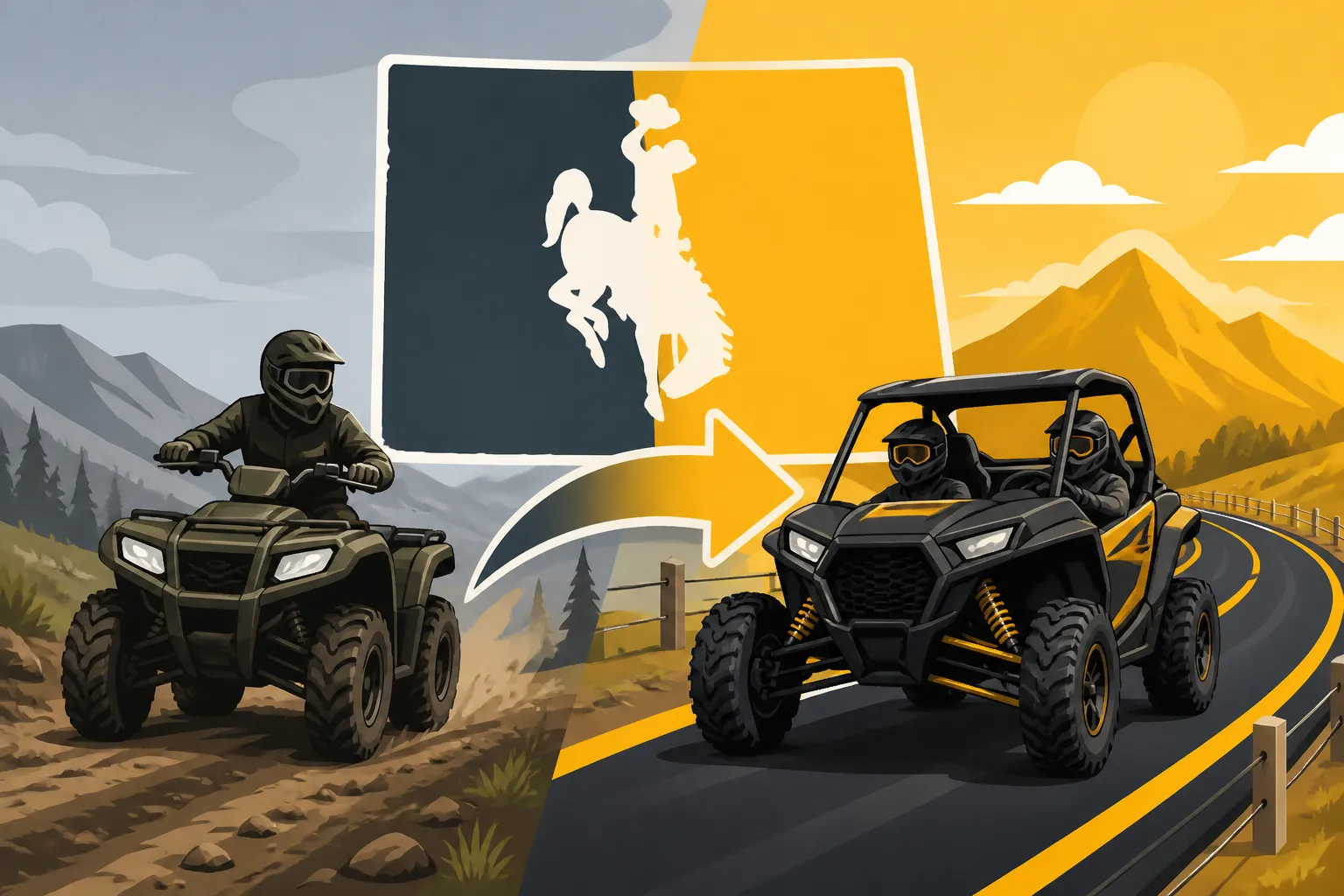
With the changes in place since 2023, Wyoming now offers a limited, but incredibly valuable, pathway for MPVs to cross interstate highways. However, it's absolutely vital to understand that this isn't an open invitation to cruise the interstates like a regular vehicle. The new rules are specific, strategic, and designed with safety as the paramount concern.
Limited, Strategic Access, Not Open Road
Let's be crystal clear: the 2023 changes do not mean you can take your MPV and drive it along the length of an interstate highway in Wyoming. That remains strictly prohibited. What the new law allows are designated crossings at specific, pre-approved locations. Think of it less as opening the highway and more like building a very particular kind of bridge. These crossings are identified and approved by both WYDOT and the local county where the crossing is located, ensuring that safety, traffic flow, and environmental impact have all been thoroughly assessed. You'll need to know exactly where these crossings are, as riding outside of them will still land you in trouble. This means careful route planning and checking official maps are more important than ever.
What "Grade-Separated" Really Means
One of the key safety components of the new interstate crossing rules is the emphasis on "grade-separated" crossings. What does that mouthful mean for you? It means that MPVs won't be merging directly into high-speed interstate traffic. Instead, these crossings are designed to go over or under the interstate. This could be an existing underpass, an overpass, or a specially constructed crossing that allows your machine to pass from one side of the highway to the other without ever actually entering the main flow of interstate traffic. This design choice is fundamental to mitigating the safety risks that previously prohibited ORVs from any interstate interaction. It ensures that the speed differential and sheer volume of interstate traffic are entirely bypassed. [Grade-Separated Interstate Crossings] explains this concept further, highlighting Wyoming's commitment to rider and motorist safety.
The Annual 1,000 Machine Cap
Another crucial aspect of the 2023 rules is the implementation of an annual cap on the number of machines that can utilize these interstate crossings. This isn't a per-rider or per-day cap, but a statewide limit of 1,000 machines per year that are authorized to use all designated interstate crossings combined. This cap is a way for the state to manage the volume of traffic and carefully monitor the impact of these new rules. Once the 1,000-machine limit is reached for a given calendar year, no further crossings are permitted until the next year. This means that if you're planning a trip that involves an interstate crossing, you'll want to ensure you're aware of the current status of the cap. [How the 1,000 Machine a Year Cap Works] provides more detail on the administration of this specific limitation, underscoring the controlled nature of this new access.
Outfitting Your Machine for Interstate Crossings: MPV Status is Key
Before you even think about approaching a designated interstate crossing, your machine needs to be absolutely squared away. This isn't just about having an ORV permit; it's about upgrading your vehicle's legal status and ensuring it meets stringent equipment requirements to be considered a Multipurpose Vehicle (MPV) capable of limited road use.
Moving Beyond Basic ORV Registration
Many of us are familiar with the standard Wyoming ORV decal. You buy it, stick it on your machine, and you're good to go for most trails and designated routes. But that decal alone won't get you across an interstate. The 2023 changes specifically require your machine to be titled and registered as an MPV. This is a different class of vehicle entirely, one that is recognized as being suitable for certain types of road use, including these limited interstate crossings. It involves a more rigorous registration process, often through your county clerk and then treasurer, to ensure it meets all state requirements for road-worthiness. While [Why Wyoming Issues a Decal, Not a Plate] talks about the ORV decal, remember that an MPV will ultimately get a plate, not just a sticker, after being titled.
Meeting the Physical Requirements: Weight, Height, and Wheels
Not every ATV or UTV can become an MPV, even if you want it to. Wyoming law has specific physical criteria your machine must meet:
- Weight: Your machine must weigh between 300 and 3,000 pounds. This immediately excludes many smaller youth quads and some extremely heavy utility UTVs.
- Seat Height: The lowest point of the operator's seat must be at least 24 inches from the ground. This generally means standard ATVs and side-by-sides will qualify, but machines designed for very low-slung riding might not.
- Wheel Count: It must have four wheels. This is pretty straightforward for most ATVs and UTVs, but it means dirt bikes and three-wheelers are out of the running for MPV status and interstate crossings.
These specific requirements ensure that only machines deemed capable of safe operation in a road-like environment can be registered as MPVs. If your machine doesn't fit these physical parameters, it simply won't qualify for interstate crossings, regardless of what equipment you add to it.
Mandatory Road Equipment for Safety
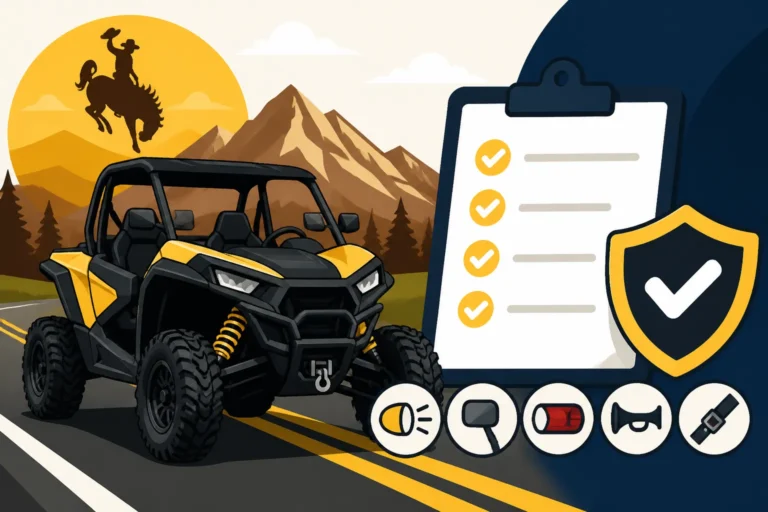
Once your machine meets the physical criteria and you've navigated the titling process, you need to equip it with specific items to make it road-legal as an MPV. This isn't optional; it's a matter of state law and highway safety. You'll need:
- Headlights: At least one, producing a white light visible from 500 feet.
- Taillights and Stop Lamp: A red taillight visible from 500 feet, and a red stop lamp (brake light) that illuminates when the brakes are applied.
- Reflectors: A red rear reflector.
- Mirrors: At least one rear-view mirror, mounted on the left side, providing a clear view to the rear for at least 200 feet. Many riders turn to aftermarket companies like SuperATV for durable and compliant mirror kits that can withstand trail riding while meeting road legal standards. [The Left-Side Mirror Wyoming Wants]
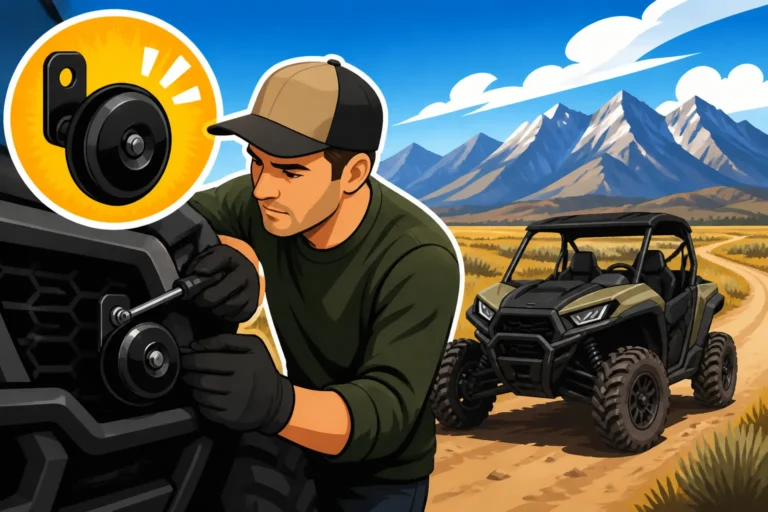
- Horn: An audible warning device, easily operated by the driver.
- Muffler and Spark Arrester: While often already present on ORVs, they must be in good working order and meet sound emission standards to be street-legal.
Meeting these equipment requirements is crucial not just for legality, but for your safety and the safety of others. When you're driving your MPV, even for a short interstate crossing, you're sharing the road with much larger and faster vehicles. Proper lighting, mirrors, and a horn are essential for communicating your presence and intentions. Companies like SuperATV offer a wide range of accessories, from full windshields that improve visibility and protection on the road to robust lighting packages, ensuring your machine is not only compliant but also safer for varied conditions. [Headlight, Taillight and Stop Lamp] goes into more detail about these specific requirements.
Driver and Passenger Readiness for Interstate Journeys
Even if your machine is a fully compliant MPV with all the right gear, you as the operator, and any passengers, also need to meet specific requirements before attempting an interstate crossing. These rules are in place to ensure everyone's safety and accountability on the road.
The Right License and Endorsement
This is where many off-road riders might face a new hurdle. To operate an MPV on any public road in Wyoming, including designated interstate crossings, you must possess a valid driver's license. But it's not just any driver's license. You need either a Class M (motorcycle) endorsement or a specific MR (motorcycle-related) endorsement added to your license. This signifies that you've demonstrated proficiency in operating a two- or three-wheeled vehicle (for the M) or a specific type of off-road vehicle (for the MR) in a road environment. It's a critical step that acknowledges the different skills required for road driving versus purely off-road trail riding. Don't assume your regular car license is enough; it won't be. [The M or MR Endorsement Wyoming Asks For] provides more specifics on these crucial licensing requirements.
Crucial Insurance Coverage
Another significant difference for MPVs compared to standard ORVs is the requirement for liability insurance. While a basic ORV used only on trails may not legally require insurance in Wyoming (though it's always a good idea!), an MPV operating on public roads, including interstate crossings, absolutely must be insured. This isn't just a suggestion; it's a legal necessity. Your insurance must meet the minimum liability coverage requirements set by the state for motor vehicles. This coverage protects you financially in the event of an accident, covering damages or injuries you might cause to others. Without it, you could face hefty fines and other legal consequences. Always carry proof of insurance with you when operating your MPV. [Proof of Insurance on a Wyoming Road] emphasizes this critical aspect of MPV legality.
Helmet Rules and Age Restrictions
Wyoming has specific rules regarding helmets, particularly for younger riders. When operating an MPV on public roads, including interstate crossings, all riders and passengers under the age of 18 are required to wear a helmet. This is a non-negotiable safety measure designed to protect vulnerable riders. For those 18 and older, helmets are not legally mandated, but they are always strongly recommended for your own protection, especially given the risks involved with sharing roads with larger vehicles. Furthermore, there are age restrictions for who can drive an MPV on a public road. Generally, you must be at least 16 years old and possess the appropriate driver's license and endorsement. For passengers, while there isn't a strict universal age limit, common sense and the machine manufacturer's recommendations for passenger age and size should always prevail. Ensuring all passengers are safely secured and able to reach footrests is paramount.
Navigating the New Interstate Crossing Procedure
Understanding the law is one thing, but actually executing a safe and legal interstate crossing is another. It requires careful planning, strict adherence to traffic laws, and readiness for potential interactions with law enforcement. This isn't a casual endeavor; it's a calculated maneuver that demands your full attention and preparation.
Planning Your Specific Crossing Point
The first, and perhaps most critical, step is knowing exactly where a crossing is permitted. These aren't just random spots you can pick out; they are specific, designated points on the map. Before you embark on your ride, consult official Wyoming State Parks, BLM, or Forest Service maps that indicate "enrolled" roads and trails. These maps will highlight the precise locations of approved interstate crossings. Remember, crossing the interstate anywhere other than a designated, grade-separated crossing is illegal and incredibly dangerous. You must have a clear route planned, including where you'll enter the crossing, how you'll traverse it, and where you'll exit back onto an enrolled ORV route. [Wyoming's Designated ORV Roads] can help you find these crucial maps and understand what to look for when planning your route.
Road Rules and Observance
When you are on an MPV at a designated interstate crossing, you are, for that brief period, operating a vehicle on a public roadway. This means all standard traffic laws apply to you. You must obey speed limits (which will be much lower than the interstate speed limit itself, as you'll be on an access road or specific crossing point), stop signs, yield signs, and traffic signals. You must also use appropriate hand signals or turn signals (if equipped) to indicate your intentions. Treat this segment of your ride with the same respect and vigilance you would any other paved road. Remember that other vehicles, including large trucks, may be using these same access points, and your machine is smaller and less visible. Maintaining situational awareness and practicing defensive driving are paramount.
What to Expect from Law Enforcement
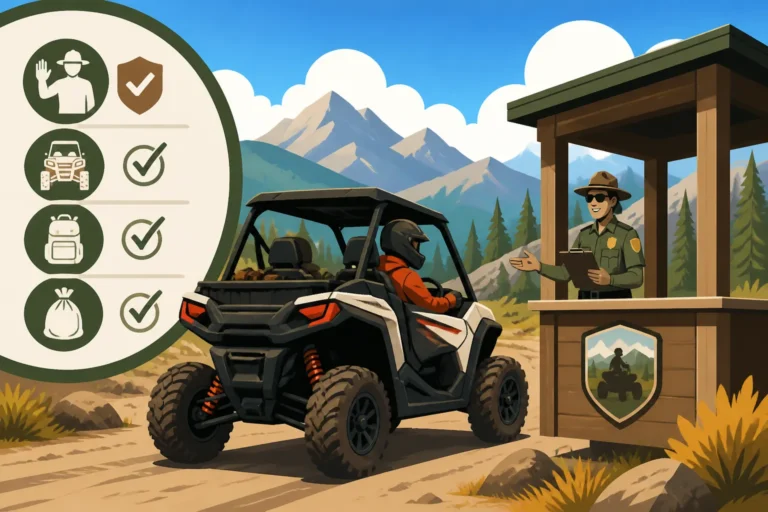
Wyoming Highway Patrol troopers, county sheriffs, and even game wardens are well aware of the new interstate crossing rules. They're also tasked with enforcing them to ensure safety. If you are stopped while making an interstate crossing, expect them to check for several key things:
- MPV Registration: Is your machine properly titled and registered as an MPV?
- Current ORV Permit: Do you have your current [Wyoming's Annual ORV Permit] decal properly displayed?
- Driver's License & Endorsement: Do you have a valid driver's license with the required M or MR endorsement?
- Proof of Insurance: Can you provide current proof of liability insurance for your MPV?
- Required Equipment: Does your machine have all the mandatory road-legal equipment (headlights, taillights, mirror, horn, etc.) in working order?
Being prepared with all your paperwork in order and your machine properly equipped will make any interaction with law enforcement smooth and quick. [What a Wyoming Trooper Checks Roadside] gives you a good idea of the kind of scrutiny you might encounter, reinforcing the need for complete compliance.
The Broader Impact: Connecting Communities and Enhancing Experiences
The changes to Wyoming's interstate access rules in 2023 represent more than just a legislative amendment; they signify a crucial shift in how the state views and supports off-road recreation. This new access has far-reaching implications, creating exciting opportunities for riders, businesses, and the very fabric of Wyoming's trail systems.
Seamless Trail Connections
One of the most immediate and appreciated benefits of these designated interstate crossings is the ability to finally link previously disconnected trail segments. Imagine a long-distance route that was once cut in half by an impassable interstate. Now, with a legal crossing point, riders can continue their journey seamlessly, opening up possibilities for much longer, more diverse, and more challenging rides. This ability to connect existing trails into grander networks enhances the overall quality and appeal of Wyoming's vast off-road offerings. It means less time spent trailering and more time actually riding, allowing enthusiasts to truly immerse themselves in the state's incredible backcountry for extended periods.
Boosting Tourism in Gateway Communities
The economic impact on communities, especially those that serve as "gateway" towns to popular riding areas, is poised to be significant. When riders can more easily connect different regions without the hassle of constantly loading and unloading their machines, they are more likely to spend more time, and thus more money, in these areas. This means more fuel sales at local gas stations, more meals at diners, more nights booked at motels, and increased business for powersports dealers and repair shops. For example, a rider might stop to grab a quick part from a local outfitter, perhaps a new mirror from SuperATV's diverse product line, if they know they can easily continue their ride across an interstate. This economic injection supports local jobs and helps sustain the vibrant outdoor recreation industry that Wyoming prides itself on.
Funding and Future Expansion
The implementation of these new rules also sparks discussions about funding for trail maintenance, development, and future expansions. The increased ease of access and potential rise in rider numbers could logically lead to more revenue generated from ORV permits, which often directly support the state's trails program. This creates a positive feedback loop: better access leads to more riders, more riders contribute to permit fees, and those fees can then be reinvested into maintaining and expanding the very trails and crossings that make these adventures possible. While the 1,000-machine cap is in place to manage initial volume, the success and safety of these crossings could potentially lead to discussions about future adjustments or the development of more crossing points, further enhancing Wyoming's reputation as a premier destination for off-road enthusiasts. This shows a forward-thinking approach to managing and growing this popular pastime responsibly.
Summary of Key Changes for Interstate Crossings in Wyoming (2023)
To help you quickly grasp the essence of the changes regarding Wyoming Interstates in 2023, here’s a breakdown of the before and after, as well as the key requirements for MPV crossings.
| Feature | Before 2023 (ORV/MPV Interstate Access) | After 2023 (MPV Interstate Access) | Key MPV Requirements for Crossing |
|---|---|---|---|
| Interstate Access | Strictly Prohibited | Permitted at designated, grade-separated crossings | MPV titled and registered, specific equipment (lights, horn, mirror), liability insurance, licensed operator with M/MR endorsement. |
| Type of Access | None | Limited to specific crossing points | Not for sustained travel; only to connect disconnected enrolled trails/roads. |
| Crossing Design | N/A | Must be grade-separated (over/under interstate) | Ensures separation from high-speed interstate traffic for safety. |
| Annual Limit | N/A | 1,000 machines statewide per calendar year | Managed by the state to monitor volume and impact. |
| Machine Type | Any ORV/MPV | Only legally registered MPVs | Must meet weight (300-3,000 lbs), seat height (>=24"), and 4-wheel criteria. |
| Required Permit | ORV Decal (for trail use) | MPV Registration & Plate (plus ORV Decal) | Requires a more comprehensive registration process and distinct identification. |
| Driver's License | Not required for private/enrolled trails | Valid driver's license with M or MR endorsement | Standard car license is insufficient. |
| Insurance | Not always required for ORV trail use | Mandated liability insurance for road use | Financial protection required for operating on public roadways. |
| Equipment | Basic ORV safety gear | Full road-legal equipment (see above section) | Headlights, taillights, stop lamp, reflectors, horn, left-side mirror are all mandatory. |
This table highlights the significant shift and the increased responsibilities that come with the privilege of interstate crossings in Wyoming. Always verify the latest regulations and designated crossing points before planning your ride.
Disclaimer
This article is for general informational purposes only and does not constitute professional advice. Laws, prices and regulations vary by location and change over time. Consult a qualified professional for guidance on your specific situation.