Registering a Ranger as a Road Vehicle
It's a familiar scenario for many of us who love the wide-open spaces of Wyoming: you've got your trusty Polaris Ranger or a similar utility terrain vehicle (UTV) ready for adventure, but you hit a snag. You want to take it just a short distance on a county road to get to a trail, or maybe even run into town for a quick supply run, and suddenly, you're faced with the legal reality that your off-road machine isn't automatically street-legal. This guide is here to help you understand Wyoming's specific rules and the clear path to registering your Ranger as a road-worthy Multipurpose Vehicle (MPV).
Understanding Wyoming's MPV Category: The Path to Street Legality
When you first bring home a side-by-side like a Ranger, most folks envision tearing up trails or helping out around the ranch. The idea of driving it on a paved road, especially one with a speed limit over 45 mph, seems like a pipe dream in many places. Wyoming, however, has carved out a unique and incredibly useful classification called a "Multipurpose Vehicle," or MPV. This isn't just a fancy name; it's a legal gateway that allows certain ORVs, including many UTVs, to be registered and operated on public roads, bridging the gap between pure off-road recreation and practical transportation.
Before the MPV designation came into full effect, navigating public roads with an off-road vehicle was incredibly restrictive. You often had to trailer your machine everywhere, even if the destination was just a mile down the road. This was frustrating for hunters, ranchers, and recreational riders alike who just wanted a little more freedom. The MPV category acknowledges the versatility of machines like your Ranger, recognizing that with a few modifications and proper registration, they can safely share the road. It means less time loading and unloading, and more time enjoying the journey, whether that's commuting to a trailhead or running errands.
It's important to understand that an MPV is distinctly different from a standard Off-Road Vehicle (ORV) in Wyoming's eyes. While a dirt bike or a typical ATV (quad) is generally classified as an ORV and requires an [Wyoming's Annual ORV Permit] for trail use, it doesn't have the inherent design characteristics that Wyoming requires for road use. The MPV category was specifically created to accommodate machines that have more in common with cars in terms of seating, steering, and stability, yet retain their rugged off-road capabilities. This distinction is crucial because it dictates the entire registration process and the equipment you'll need.
Why Your Ranger Isn't Automatically Street Legal
So, why can't you just slap a license plate on your Ranger and go? The core reason lies in how Wyoming law defines vehicles for road use. Standard ORVs, including most ATVs and dirt bikes, simply don't meet the safety and design criteria established for highway travel. They lack many of the features considered essential for safe interaction with traditional traffic, such as specific lighting, mirrors, and often, the structural integrity or weight distribution.
Imagine trying to navigate a busy highway in a machine designed primarily for dirt trails. While your Ranger feels robust off-road, the rules are in place for everyone's safety. Without these specific requirements, there would be chaos and increased risk on public roads. The legal framework ensures that any vehicle operating on state, county, or even many federal roads meets a baseline for visibility, control, and collision avoidance. That's why your machine needs to undergo a transformation, not just in equipment, but in its legal identity through the MPV process.
The MPV Rule That Changed the Game
The introduction of the MPV rule was a significant step forward for off-road enthusiasts in Wyoming. It essentially created a new pathway for machines that previously lived in a legal gray area or were simply barred from public roads. This rule, which really picked up steam and became formalized around 2008, acknowledged the growing popularity and evolving design of side-by-sides. Before this, the options were far more limited, leading to constant trailering and frustration.
For example, a rancher needing to cross a state highway between two pastures with their UTV previously faced a significant legal hurdle, often having to haul the machine for a mere quarter-mile crossing. Now, with the MPV designation, that same rancher can potentially drive their [Wyoming Rules for Riding a County Road] or [Wyoming Rules for Riding a Forest Road] directly, as long as the machine is properly registered and equipped. This change wasn't just about convenience; it was about integrating these versatile vehicles more effectively into the daily life and recreational fabric of the state, particularly in rural areas where ORV use is common. The MPV classification, as detailed in [Wyoming's MPV Definition in W.S. 31-1-101], outlines the specific characteristics a vehicle must possess to qualify for this special status.
The Core Requirements for Your Ranger to Become an MPV
To transform your Polaris Ranger from a trail warrior into a legitimate Multipurpose Vehicle in Wyoming, it needs to meet a few fundamental physical requirements. These aren't just suggestions; they are non-negotiable criteria that ensure your machine aligns with the state's definition of an MPV, which is the first step towards getting it plated for the road. Missing even one of these details can stall your entire registration process, so it's critical to verify your Ranger's specifications carefully.
These rules were put in place to differentiate MPVs from traditional ATVs or dirt bikes, ensuring that they share certain characteristics with passenger vehicles to enhance safety on public roads. It's about stability, visibility, and control in a mixed traffic environment. Many modern UTVs, like various Ranger models, come pretty close to meeting these right off the factory floor, but always double-check against the specific Wyoming requirements.
Weight Between 300 and 3,000 Pounds
One of the primary physical attributes Wyoming considers for an MPV is its weight. Your Ranger needs to have an unladen (empty) curb weight that falls squarely between 300 pounds and 3,000 pounds. This [Weight Between 300 and 3,000 Pounds] range is critical. If your machine is too light, it might be deemed unstable for road speeds and conditions. If it's too heavy, it could potentially exceed the structural capabilities of certain road surfaces or present different safety concerns.
Most Polaris Ranger models, especially the popular full-size UTVs, will likely fall within this range. However, it's always wise to check your specific model's manufacturer specifications. Don't just guess; consult your owner's manual or the manufacturer's website for the exact unladen weight. If you've added heavy accessories like plows, winches, heavy-duty bumpers, or extra cargo boxes, keep in mind that these additions can sometimes push a machine close to the upper limit, although it's usually the unladen weight that's checked. This requirement essentially ensures that the vehicle has enough mass to be somewhat stable on the road but isn't so massive that it becomes a heavy-duty truck, which falls under a different set of regulations.
A Seat at Least 24 Inches Up
Another crucial design element for an MPV in Wyoming is the height of its seat. Your Ranger must have a seat height of at least 24 inches from the ground. This rule, known as [A Seat at Least 24 Inches Up], is a key differentiator from many traditional ATVs, where the rider straddles the machine closer to the ground. The higher seat position typically means a more upright riding posture, which improves visibility for the driver and makes the vehicle more visible to other motorists.
To measure this accurately, park your Ranger on a flat, level surface. Measure from the ground up to the lowest point of the operator's seating surface. Again, most UTVs like a Ranger are designed with bench-style or bucket seats that easily clear this 24-inch mark. However, if you have a highly customized machine, or one that has been lifted or lowered, you'll need to be especially diligent with this measurement. This requirement also reinforces the idea of the MPV as a more car-like vehicle, where occupants sit in the vehicle rather than on it, contributing to a different dynamic on the road.
Four Wheels and an Upright Seat
Beyond weight and seat height, Wyoming's MPV definition specifically requires the vehicle to have four wheels. This is pretty standard for a UTV like your Ranger. You won't be registering a three-wheeler or a six-wheeler as an MPV for road use under this specific classification. The four-wheel requirement contributes to the vehicle's stability, which is essential when sharing roads with cars and trucks.
Furthermore, the vehicle must be designed for an "upright seated position." This directly addresses the type of seating found in UTVs – whether it's a bench seat or individual bucket seats – where the operator and passengers sit upright, much like in a conventional car or truck. This is in contrast to the straddle-seat position common on traditional ATVs and motorcycles. The combination of [Four Wheels and an Upright Seat] ensures that the vehicle has a stable footprint and that its occupants are positioned in a way that is conducive to safe road operation and provides good visibility for the driver. These design elements collectively contribute to the fundamental safety profile that Wyoming expects for any vehicle operating on its public road system.
Outfitting Your Ranger for Wyoming Road Readiness
Once your Polaris Ranger meets the core structural criteria to be a Multipurpose Vehicle, the next step is to ensure it's properly equipped for road use in Wyoming. Think of this as getting your machine ready for its driver's license photo—it needs to present itself correctly and safely. Many of these items are about visibility and communication with other drivers, critical aspects of road safety. Don't skip any of these, as they're not just about passing an inspection; they're about staying safe out on the pavement.
A quick note here for those who love to customize: while aftermarket parts are great for performance and aesthetics, make sure any lighting or safety equipment you add meets the spirit and letter of Wyoming's rules. Companies like SuperATV offer a wide range of accessories, from mirrors to turn signal kits, that can help you meet these requirements. Just be sure the specific components you choose are robust and clearly visible.
Essential Lighting: Headlights, Taillights, Stop Lamps, and Reflectors
For night driving or even just low-light conditions, your Ranger's lighting system is paramount. Wyoming requires functional headlights, taillights, and stop lamps. Your headlights must be capable of illuminating the road ahead effectively, and your taillights and stop lamps need to be clearly visible from the rear, signaling your presence and when you're braking. These are standard features on most modern Rangers, but always confirm they are in good working order and clean.
In addition to active lighting, you'll need at least one red rear reflector. This passive safety device ensures that your vehicle is still visible from the rear even if your taillights somehow fail. It's a small, inexpensive item but a vital one for road safety. If your Ranger doesn't have one integrated, you can easily add a stick-on or bolt-on reflector to the rear. Remember, being seen is just as important as seeing when you're operating on public roads, especially if you're pulling a small trailer or making stops along a county road.
Visibility Aids: Mirrors and Horn
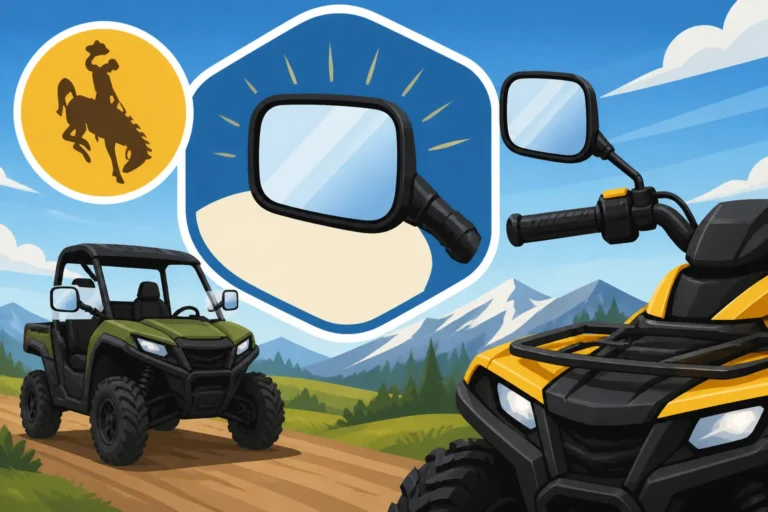
To safely navigate traffic and make lane changes (if applicable) or turns, you absolutely need proper mirrors. Wyoming mandates at least one mirror that allows the operator to see at least 200 feet to the rear of the vehicle. For a Ranger, this typically means a left-side mirror. Many riders also choose to install a right-side mirror and/or a rearview mirror for comprehensive visibility, though only the left-side mirror is legally required.
The horn is another crucial communication tool. Your Ranger must be equipped with a horn that is audible for at least 200 feet. This isn't just for dramatic effect; it's a critical safety feature for alerting pedestrians, other drivers, or even wildlife to your presence. Most Rangers come with a horn, but if yours doesn't, or if it's too quiet, you'll need to upgrade it. You can find robust, weatherproof horns from aftermarket suppliers, including those offered by SuperATV, to ensure you meet this requirement. Having a reliable horn can make a real difference in preventing incidents on a busy road.
Muffler and Spark Arrester Rules
While not directly about road legality, Wyoming has specific rules for mufflers and spark arresters that apply to all ORVs, including MPVs, when operating on public lands (which includes many county and forest roads). Your Ranger must have a muffler in good working order that effectively prevents excessive or unusual noise. Modifying your exhaust to be excessively loud is generally frowned upon and can lead to citations.
Equally important is a U.S. Forest Service approved spark arrester. This device prevents hot carbon particles from exiting the exhaust system and potentially igniting dry vegetation, a very real concern in Wyoming's often-arid environment. Most factory-installed mufflers on Rangers come with an integrated spark arrester, but if you've changed your exhaust, or if you're unsure, confirm it has the proper certification. This isn't just a compliance issue; it's an environmental responsibility we all share as riders in this beautiful state.
Navigating the Wyoming MPV Registration and Titling Process
So, your Ranger meets the physical requirements and you’ve kitted it out with all the necessary safety gear. Now comes the official part: making it legal on paper. This process involves a couple of different stops and specific forms, so it’s easy to feel a bit overwhelmed or confused. But don't worry, we'll walk through it step-by-step. Remember, the goal is to get both a title and a license plate for your MPV.
It's common for folks to wonder if they need a title for an off-road machine in Wyoming at all. Generally, ORVs don't require titles. However, because you're upgrading your Ranger to an MPV to be driven on the road, it crosses into a different category that does require a title. This title will serve as proof of ownership and is a prerequisite for getting those all-important license plates.
The MPV-ORV Checklist Form
Your journey through the MPV registration process begins with a crucial piece of paperwork: the MPV/ORV-MC Checklist Form. This form, often available on the Wyoming Department of Transportation (WYDOT) website or at your local County Clerk's office, is where you officially declare that your Ranger meets all the physical and equipment requirements we've discussed.
On this form, you'll confirm details like your vehicle's weight, seat height, number of wheels, and the presence of headlights, taillights, mirrors, and a horn. It's essentially a self-certification that your Ranger is ready for the road. You'll need to fill this out accurately, and it will be presented to the County Clerk when you apply for your title. Think of it as your declaration of compliance, ensuring that you've personally verified your machine before taking it to the official channels.
Titling Your MPV at the County Clerk's Office
With your completed MPV/ORV-MC Checklist Form in hand, your first official stop is your local County Clerk's office. This is where you will apply for the title for your newly designated Multipurpose Vehicle. The process for [Titling an MPV in Wyoming] is similar to titling any other motor vehicle.
You'll need to bring several key documents:
- The completed MPV/ORV-MC Checklist Form.
- Proof of ownership: This is usually the manufacturer's Certificate of Origin (MCO/MSO) if your Ranger is new, or a Bill of Sale if you purchased it used. Make sure this document clearly identifies your machine by its VIN. If you're buying a used machine, ensure the seller provides you with a clear, signed bill of sale that includes the VIN. Learn more about [Wyoming ATV Bill of Sale Requirements] if buying used.
- Identification: Your driver's license or other valid ID.
- Payment for title fees: While specific amounts vary, expect a nominal fee for the titling service.
The County Clerk will review your paperwork, verify your ownership, and process your application. Once approved, they will issue you an official Wyoming title for your Ranger, identifying it as an MPV. This title is critical because you cannot get a license plate without it.
Registering and Plating Your MPV at the County Treasurer's Office
After securing your title from the County Clerk, your next and final stop is the County Treasurer's office. This is where you'll complete the vehicle registration and obtain your license plates for your Ranger MPV. It's a two-step process in Wyoming because titling and registration are handled by different county departments.
When you head to the County Treasurer, make sure you bring:
- Your new Wyoming MPV title: This is absolutely essential as proof that your vehicle is legally recognized.
- Proof of insurance: Wyoming requires liability insurance for all vehicles operating on public roads. You'll need to show proof of a current policy for your Ranger MPV. This is one of the most critical [Wyoming ATV Insurance Requirement] rules for road use.
- Your driver's license: For identification and verification.
- Payment for registration fees and plates: Just like with any other vehicle, there will be annual registration fees and a cost for the license plate. The [Wyoming MPV Registration Cost] will reflect these administrative charges.
Once the County Treasurer processes your registration, they will issue you a standard Wyoming license plate and a registration sticker to display on it. Your Ranger is now officially street-legal! Remember to attach the plate securely to the rear of your machine, ensuring it's clearly visible. Now you can confidently drive your Ranger on enrolled county, state, and BLM roads where MPVs are permitted, adhering to all traffic laws just as you would in a car. You'll still need to carry your proof of insurance and registration whenever you're operating the vehicle on public roads.
Disclaimer
This article is for general informational purposes only and does not constitute professional advice. Laws, prices and regulations vary by location and change over time. Consult a qualified professional for guidance on your specific situation.