Why a Quad Cannot Qualify as an MPV
It's a common dream for off-road enthusiasts in Wyoming: to be able to jump on your favorite quad and legally cruise down the highway to the trailhead, or even just nip into town for supplies. You see side-by-sides with license plates, and you think, "Why can't my ATV do that?" The frustration is real when you realize that even with all the right lights and signals, your quad just doesn't seem to cut it for a street-legal designation in the Cowboy State. This guide is here to unravel the mystery and explain exactly why, under Wyoming law, a traditional quad (ATV) generally cannot qualify as a Multipurpose Vehicle (MPV) for street-legal registration.
Wyoming's Distinct Classifications: ORV vs. MPV
Before we dive into why your quad faces limitations, it's crucial to understand how Wyoming categorizes off-highway vehicles. It's not just a matter of "off-road machine" but a system with specific definitions that dictate where and how you can ride. Many riders mistakenly believe that getting an ORV permit makes their machine street-legal, but that's a common misconception.
The Off-Road Vehicle ORV Permit
In Wyoming, an Off-Road Vehicle (ORV) is broadly defined as a motor vehicle used off highways, primarily for recreational purposes. This includes everything from dirt bikes to most ATVs and side-by-sides that aren't otherwise registered for road use. The state requires these machines to display a [Wyoming's Annual ORV Permit] decal when operating on designated public lands and trails. This permit, which you can purchase at various locations, including [Where Wyoming Sells ORV Permits] or [Buying a Wyoming Permit Online], is specifically for off-highway use. It helps fund the state's trails program, ensuring those fantastic riding areas remain open and well-maintained.
However, displaying an ORV permit decal on your quad does not grant you permission to ride on public roads and highways, except for specific, clearly marked, and enrolled ORV roads. Think of it like a fishing license – it lets you fish, but it doesn't mean you can drive your boat down the street. For comprehensive details, you might want to look into [Wyoming ORV Permits Explained].
The Multipurpose Vehicle MPV Class
This is where the distinction becomes critical for those aspiring to street legality. Wyoming created the Multipurpose Vehicle (MPV) class to allow certain types of off-road machines to be registered for limited highway use. The intent was to accommodate machines that, with a few modifications, could safely share the road with traditional vehicles. If you want to put a plate on your machine, it has to fit the MPV criteria. [Wyoming's MPV Path to the Road] is the gateway to highway use for off-road machines, but it has very specific requirements that many quads simply cannot meet.
When a machine qualifies as an MPV, it undergoes a different registration process, receiving a title from the county clerk and a license plate from the county treasurer, much like a car or truck. This is a far cry from the simple ORV decal. The MPV designation comes with a whole host of [Wyoming MPV Street Legal Requirements], including specific equipment, insurance, and driver's license endorsements.
The Core Reasons a Quad Can't Be an MPV
Now, let's get to the heart of the matter. Why does your beloved quad, with its four wheels and powerful engine, so often fail to meet the MPV requirements? It boils down to a few very specific design characteristics mandated by Wyoming law.
The Seating Arrangement: Straddle vs. Bench/Bucket
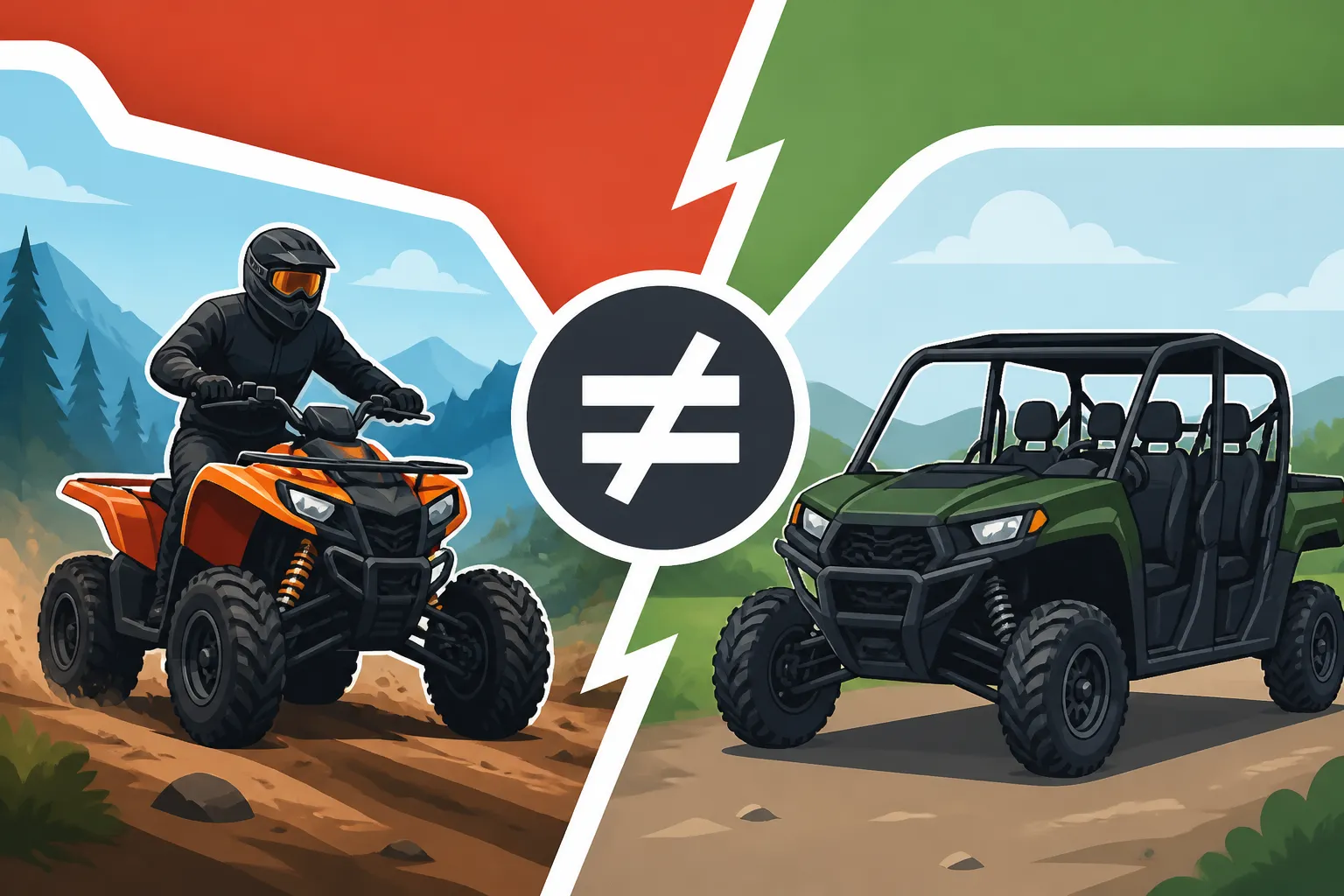
This is arguably the biggest hurdle for traditional ATVs. Wyoming's statutes are quite clear about the type of seating an MPV must possess. According to the law, an MPV is defined, in part, as a vehicle designed to travel on four or more wheels, having a seat or seats not designed to be straddled by the operator.
A conventional quad, by its very design, requires the operator to straddle the engine and chassis, much like a motorcycle. This straddle-style seating is a defining characteristic of an ATV, and it immediately disqualifies it from MPV status. Side-by-sides, on the other hand, feature bench seats or individual bucket seats where the occupants sit in the machine, not on it. This seemingly small detail makes all the difference.
Imagine trying to explain to a Wyoming county clerk that your ATV seat isn't really straddled. It's simply not going to fly. The law is explicit here, leaving no room for interpretation based on rider posture or accessories.
Seat Height: Under 24 Inches from the Ground
Another critical factor that excludes many ATVs is the minimum seat height requirement. Wyoming's MPV definition further stipulates that the vehicle must have an operator's seat height of at least 24 inches from the ground.
While some larger utility quads might come close or even exceed this, many sport quads and even some recreational models have lower seat heights. The design emphasis for many ATVs is a low center of gravity for agile off-road handling, which often translates to a seat positioned closer to the ground. You might find yourself [Measuring Seat Height From the Ground] and discovering your quad falls just short. This single measurement can be a deal-breaker, regardless of any other modifications you've made. It's one of those specific numbers that the [What the MPV and ORV-MC Checklist Form Asks] will verify.
Weight Limits: 300 to 3,000 Pounds
While the seating and seat height are the primary disqualifiers, it's worth noting the weight requirement as well. An MPV must weigh between 300 and 3,000 pounds.
Most traditional quads, from youth models to full-size utility machines, generally fall within this range. A typical sport ATV might weigh 400-600 pounds, while a larger utility quad could be 700-900 pounds. So, while a quad usually meets the weight criteria, it's the other factors that ultimately prevent it from becoming an MPV. However, it's important to be aware of all the criteria. If you have a particularly small youth quad or a heavily modified, extremely heavy machine, you might even run into issues with the weight limits. [Weighing a Machine Before You Register It] is a smart step if you're unsure.
Side-by-Sides: The MPV Success Story
If quads generally don't make the cut, then why do we see so many side-by-sides (UTVs) with Wyoming license plates? The answer lies in how UTVs inherently meet the MPV criteria.
Designed for MPV Status
Side-by-sides, also known as UTVs (Utility Terrain Vehicles) or SxSs, were designed from the ground up with features that align perfectly with Wyoming's MPV definition:
- Non-Straddle Seating: UTVs feature bucket seats or a bench seat, allowing occupants to sit side-by-side (hence the name) rather than straddling the machine. This immediately satisfies the "not designed to be straddled" requirement.
- Higher Seat Height: The chassis design of UTVs typically places the seats well above the 24-inch minimum from the ground. This gives them better ground clearance for off-roading but also helps them meet the road-legal requirements.
- Steering Wheel Control: While not explicitly a disqualifier for ATVs, UTVs operate with a steering wheel and foot pedals, which feels more akin to a traditional automobile and often makes the transition to road use feel more natural for drivers.
- Weight Range: Most UTVs easily fall within the 300 to 3,000-pound weight range, comfortably meeting this requirement.
Because of these fundamental design differences, many side-by-sides, with the addition of required safety equipment like mirrors, turn signals, and a horn, can be successfully registered as MPVs. Companies like SuperATV offer a wide range of accessories and kits specifically designed to help UTV owners meet these road-legal requirements, from full windshields to DOT-approved tires and lighting packages.
The "ORV-MC" (Motorcycle) Class: A Brief Detour
It's also worth noting that some off-road motorcycles (dirt bikes) can become street-legal in Wyoming if they meet specific criteria, often being registered under an "ORV-MC" (Motorcycle) classification, which is distinct from MPV. However, this is also not applicable to quads, as they have four wheels and do not fit the motorcycle definition.
What This Means for Quad Riders in Wyoming
So, if your quad can't be an MPV, what are your options for riding in Wyoming? Don't despair, because there are still plenty of fantastic opportunities.
Sticking to Designated ORV Trails and Roads
Your primary avenue for riding a quad in Wyoming will be on the extensive network of designated ORV trails and roads. These are public lands managed by agencies like the Forest Service and the Bureau of Land Management (BLM), as well as some state lands, that have been specifically opened and marked for off-road vehicle use.
You'll need your [Wyoming's Annual ORV Permit] for these areas. Always consult maps from the managing agencies, like Motor Vehicle Use Maps (MVUMs) for national forests, to ensure you are on an open route. Riding off designated routes can lead to significant fines and damage to natural resources. You can explore [Wyoming's Enrolled Roads and Trails] for more information on where you can legally ride.
Trailering to the Trailhead
Since you generally can't legally ride your quad on most paved public roads to get to the trails, you'll need to trailer your machine. This is a common practice for off-road enthusiasts and ensures you comply with state laws. Many trailheads offer ample parking for trucks and trailers.
Limited Road Crossings and Enrolled Routes
There are specific instances where an ORV may legally operate on a public road:
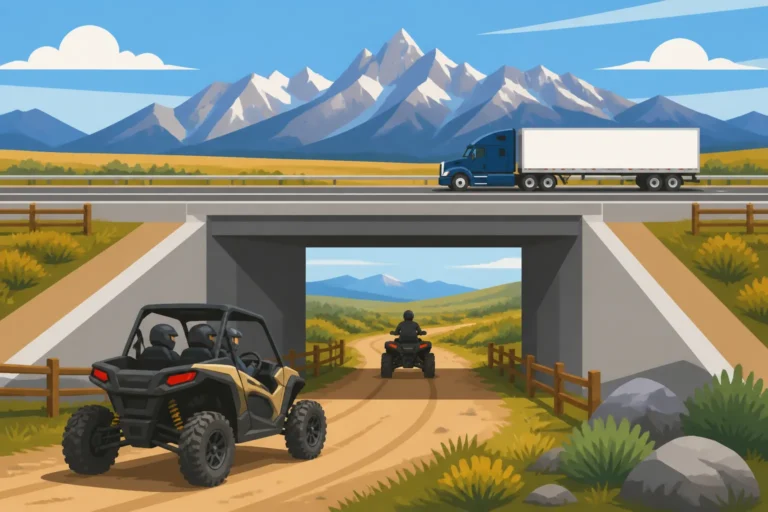
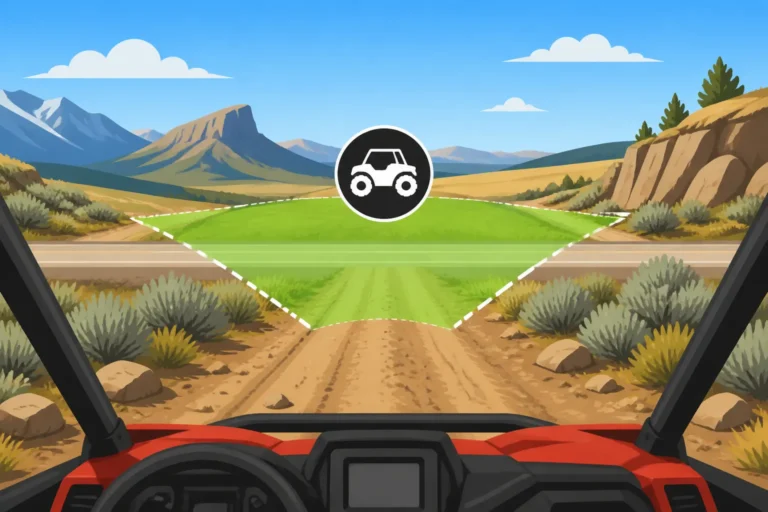
- Crossing a Highway: You can cross a public highway at a right angle after stopping, ensuring it's safe and you're moving directly from one legal riding area to another. This isn't for cruising down the road, but for connecting segments of trail. For details, see [Wyoming Rules for Crossing a Highway].
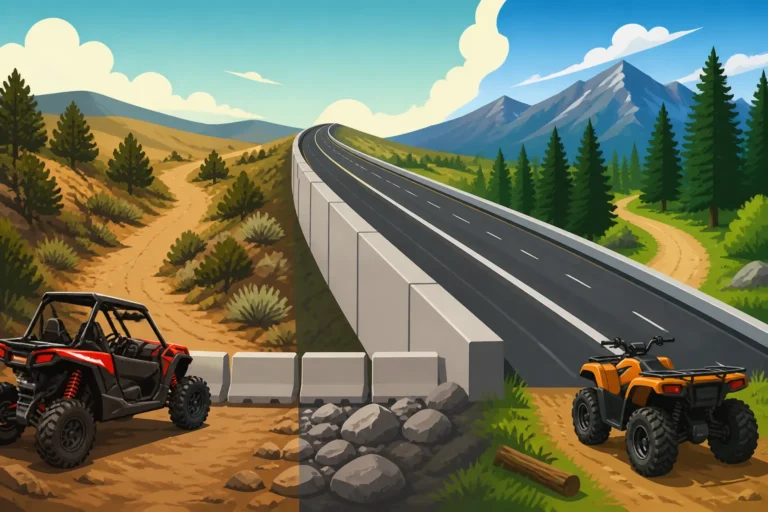
- Designated ORV Roads: Some roads, particularly within national forests or BLM areas, are specifically "enrolled" for ORV use. These are usually clearly marked, and you'll still need your ORV permit. These roads are typically unpaved. Always confirm the status of a road before riding. [Why a Road Needs Two Designations] helps clarify this.
No Street-Legal Kits for Quads
While companies like SuperATV offer kits to make UTVs street-legal, you won't find a similar comprehensive kit that can magically transform an ATV into a Wyoming MPV. Why? Because the fundamental design elements (straddle seating, seat height) are inherent to the quad itself and cannot be easily, or legally, altered to meet the MPV definition without essentially rebuilding the machine into something else entirely. Adding turn signals, a horn, or mirrors to your quad is great for safety and might be required on some specific designated ORV roads, but it won't make it an MPV.
[Wyoming Fines for Riding Without a Permit] or on Closed Roads
It's essential to respect these regulations. Riding your quad on a road that isn't designated for ORV use, or attempting to pass it off as an MPV without meeting the legal criteria, can result in citations and fines. Law enforcement officers, including state troopers and forest rangers, are knowledgeable about these distinctions.
Preparing Your Quad for Wyoming Adventures
Even if your quad can't be an MPV, you can still ensure it's ready for adventure on Wyoming's vast trail system.
Essential Equipment for ORV Use
- Wyoming ORV Permit: As mentioned, this is non-negotiable for public lands.
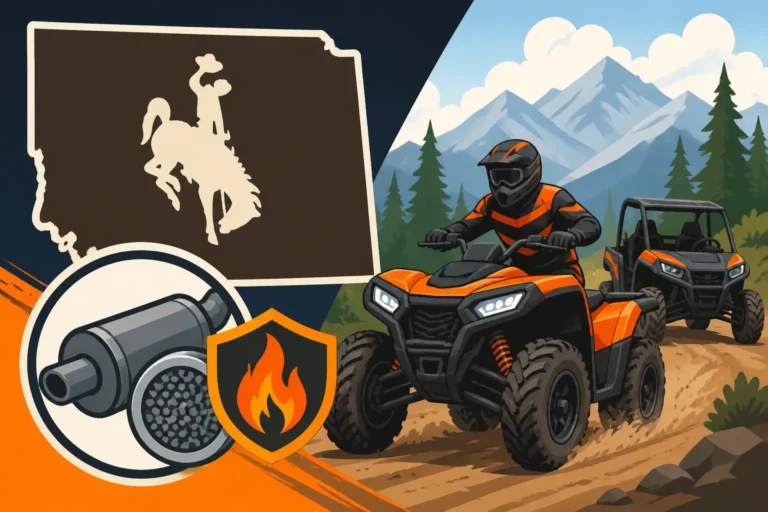
- Spark Arrester: All machines operating on public lands in Wyoming must be equipped with a U.S. Forest Service approved spark arrester to prevent wildfires. [Wyoming Spark Arrester and Sound Rules] covers this in detail.
- Muffler: Your machine must have a muffler that keeps sound levels within legal limits.
- Safety Gear: Helmets are strongly recommended for all riders, and required for those under 18 in certain situations. [Wyoming Helmet Law for ATV Riders] provides more context. Eye protection, gloves, and sturdy riding boots are also crucial.
- Navigation: Carry maps of your riding area, whether paper or digital, and know how to use them. Cell service can be spotty in the backcountry.
- Emergency Supplies: A first-aid kit, water, snacks, tools, and a way to signal for help are always wise when exploring remote areas.
Understanding the Limitations
The key takeaway is that Wyoming has established clear, distinct categories for off-road vehicles, each with its own set of rules and limitations. While this might be disappointing for ATV owners hoping for street-legal freedom, it's designed to ensure public safety, protect natural resources, and maintain the integrity of the state's road and trail systems. Your quad is built for the trails, and that's where it truly shines in Wyoming, offering exhilarating experiences away from pavement. Embrace the designated trails, enjoy the stunning scenery, and leave the highway cruising to the MPVs.
By understanding the rules for [Wyoming's MPV Definition in W.S. 31-1-101] and recognizing the fundamental differences in vehicle design, you can avoid frustrating encounters and ensure your Wyoming adventures are always legal and enjoyable.
Disclaimer
This article is for general informational purposes only and does not constitute professional advice. Laws, prices and regulations vary by location and change over time. Consult a qualified professional for guidance on your specific situation.