Wyoming Riding Areas Good for Kids
Choosing a Wyoming riding area for kids is not just about finding a trail that looks easy on a map. Sand, steep grades, changing weather, traffic, and route restrictions can turn a family outing stressful fast. This guide compares family-friendly places to start, explains how to match terrain to a young rider’s experience, and shares practical planning steps for a safer day out.
How to choose a Wyoming riding area for kids
Match the route to the least experienced rider
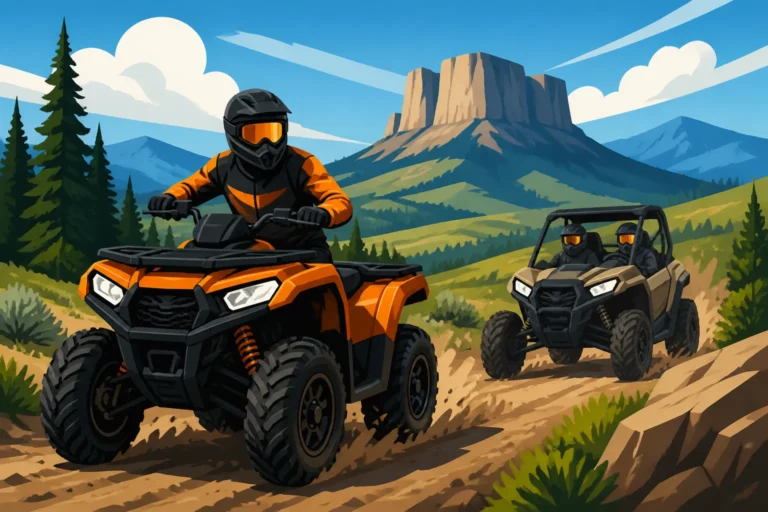
A trail that feels simple to an adult with years of riding may be tiring or intimidating for a child. Before you head out, think about the youngest rider’s control, attention span, stamina, and comfort with loose surfaces. A beginner may do best on a short, predictable route with room to stop, rather than a long loop with steep climbs or narrow sections.
Look for a place where you can turn around without pressure if the group is ready to call it a day. A child who is having fun at the beginning may be tired after an hour of bumps, wind, dust, and concentration. Plan a modest first ride and leave time for breaks instead of treating a trail-mileage target as a goal.
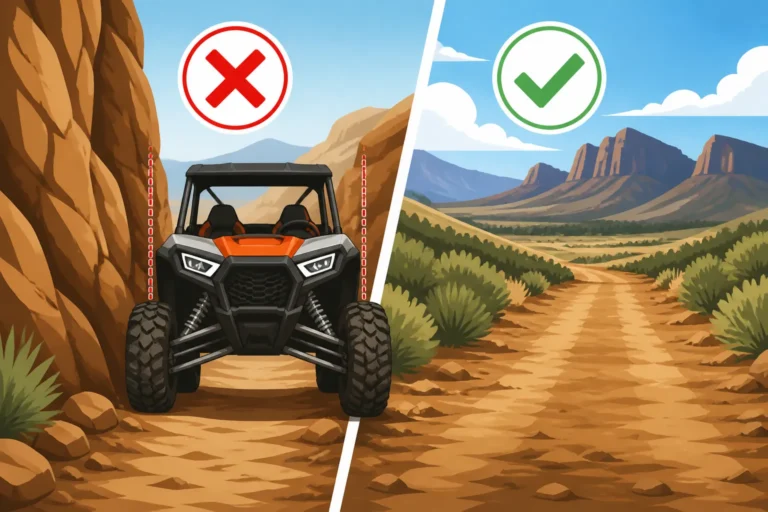
Route width matters, too. Some Wyoming trails have machine-width restrictions, and a route suitable for a small quad may not work for a wider side-by-side. Check the trail rules and your machine’s width before driving to the area. [Wyoming's 50-Inch Trail Limit] explains why a route’s width designation can affect which machines may use it.
Check access, permits, and current conditions
A riding area is only a good family choice if the route is legally open to your machine and your group has the required permit. In Wyoming, a permit or decal does not mean every nearby road or trail is open to ORVs. Follow the land manager’s travel rules, posted signs, and seasonal closures. Start with [Wyoming Trail Maps and MVUMs], then confirm route status with the responsible land manager before setting out.
Wyoming conditions can change quickly. A dry route may become muddy after rain, and a high-elevation road can still hold snow when lower areas are comfortable. If your family is visiting from outside the state, do not assume a home-state registration sticker replaces the Wyoming requirement. Review [Wyoming ORV Permits Explained] and check the rules for each machine you plan to ride.
A mapping app such as onX Offroad can help you orient yourself and compare possible routes, but do not treat an app as the final word on access. Check official travel-management information and pay attention to signs on the ground. It is worth saving the relevant maps before leaving town, especially if you expect weak cell service.
Wyoming areas to consider for a family ride
Poison Spider OHV Park near Casper
Poison Spider, outside Casper, is a practical place to investigate if you want a riding area relatively close to town. The park has a mix of terrain, so a family should not assume that every visible track is suitable for a child or beginner. Choose a conservative route, keep the group together, and turn back if the surface or traffic feels beyond your riders’ comfort level. [Poison Spider OHV Park Outside Casper] offers more area-specific context.
For a first visit, arrive with a simple plan: identify where you can park, choose a short route, and set a clear turnaround point. Avoid following another group onto an unfamiliar track just because it looks manageable from a distance. Loose rock, ruts, and changing grades can be hard to judge until you are close.
Poison Spider can also be a useful option when you want access to town services before or after the ride. That convenience does not remove the need to check route designations, current conditions, and the permit rules. If the family is new to riding, keep the outing short enough that everyone finishes with energy left.
Ponderosa Park on Casper Mountain
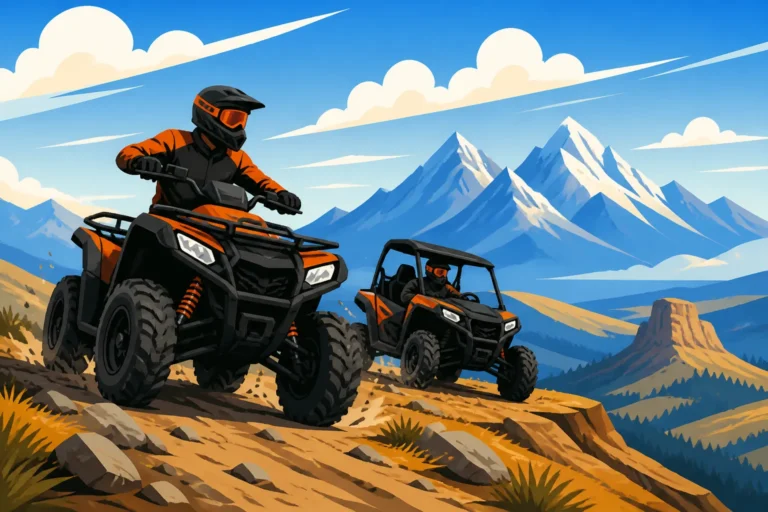
Ponderosa Park on Casper Mountain is another area families may want to research. The mountain setting makes weather and elevation part of the decision. Conditions can feel cooler than expected, and wind or a quick change in weather may make a ride uncomfortable for a child who is not dressed for it. Read [Riding Ponderosa Park on the Mountain] and check the current route information before you go.
A good family approach is to select a route that lets you return to your starting point without committing to a long backcountry outing. Bring an extra layer, water, and a way to communicate if riders become separated. Agree in advance on simple group rules: stay behind the lead adult, stop at junctions, and do not continue past a point where the group cannot see one another.
The name of a riding area does not guarantee that every route inside it is easy. Check the route itself, not just the destination. [Wyoming Trails for Beginners] can help you think through what makes a route more manageable, but the family still needs to match that information to the actual machine, rider, and day’s conditions.
Killpecker Sand Dunes near Rock Springs
Killpecker Sand Dunes offer a very different experience from a forest road or rocky trail. Sand can be exciting, but it takes more effort to steer and manage than a firm, level surface. A young rider may tire quickly, and a machine can lose momentum or become difficult to control in soft areas. Treat dunes as a higher-attention environment rather than an automatic beginner choice.
Before riding, talk through spacing and visibility. Keep enough room between machines to avoid dust and sudden stops, and do not let children ride out of sight. Wind can move sand and reduce visibility, while the open landscape can make it harder to judge distance. Set a clear boundary for where the family will ride, and agree that no one explores beyond it without an adult.
Check access information and local rules before heading to the dunes. Parking, camping, and riding areas may have different conditions and restrictions. The guides to [Riding the Dunes at Killpecker] and [Wind and Shifting Sand on the Dunes] can help you think through the setting, but current signs and land-management information should guide your final plan.
| Riding area | What families should consider | A cautious first-ride approach |
|---|---|---|
| Poison Spider near Casper | Mixed terrain and the need to select routes carefully | Choose a short route and avoid unfamiliar branches |
| Ponderosa Park on Casper Mountain | Mountain weather, elevation, and changing conditions | Dress in layers and set a nearby turnaround point |
| Killpecker Sand Dunes near Rock Springs | Soft sand, wind, visibility, and rider fatigue | Stay together, maintain space, and set clear boundaries |
Prepare children and machines before leaving
Set expectations and check the equipment
A family ride goes more smoothly when children know what to expect. Explain that riders will stop at junctions, wait for the group, and follow the lead adult’s directions. Make sure each child understands how to signal that they need a break. These small conversations are especially helpful when helmets, engine noise, and dust make ordinary conversation difficult.
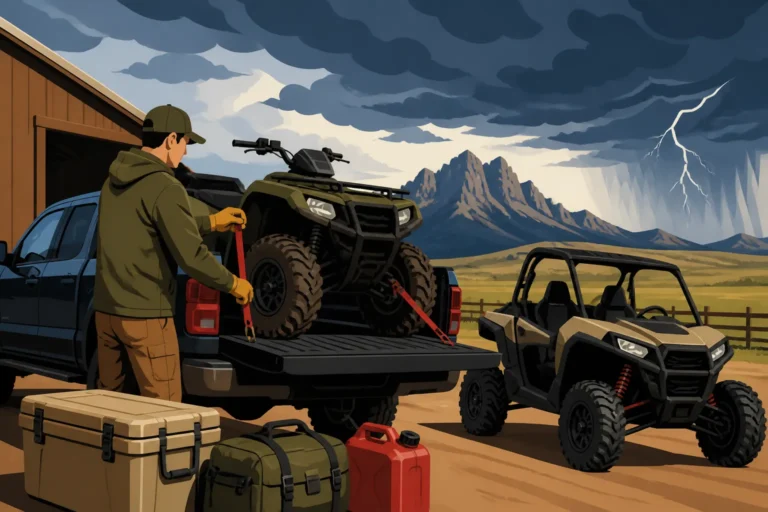
Before departure, inspect tires, brakes, throttle response, lights, and fuel. Adjust helmets so they fit securely, and choose clothing that covers skin and suits the weather. Bring water, snacks, eye protection, basic tools, and a first-aid kit. A child who is cold, thirsty, or uncomfortable is more likely to lose focus.
Rider ages, supervision, and equipment requirements can depend on the situation and applicable rules. Review [Wyoming Minimum Age to Ride Public Land], [Wyoming ORV Permit for a Youth Quad], and [Wyoming Helmet Law for ATV Riders] before you travel. Do not assume a child’s age or riding experience automatically makes a particular machine or route appropriate.
Plan for fatigue, weather, and getting separated
Pick a turnaround time as well as a turnaround location. Families often keep going because they are close to the next junction, even after a child has started to tire. A planned short outing makes it easier to stop while the experience is still positive. If a rider becomes upset, unusually quiet, or less attentive, pause and reassess rather than pushing on.
Use a simple regrouping routine. For example, stop at every junction, count riders, and wait until the last machine catches up before continuing. Tell children what to do if they cannot see the group: stop in a safe spot and stay with the machine, rather than riding around looking for everyone. Adults should agree on who leads and who stays at the back.
Weather deserves particular attention in the mountains and open country. Check the forecast, but also be ready to shorten the ride if clouds build, wind rises, or temperatures drop. Families riding at elevation may find that activity feels more tiring than expected; [Wyoming Riding at Altitude] covers considerations worth keeping in mind. Downloading an offline map in onX Offroad or another navigation app can be useful, but carry a backup plan and do not rely on phone service.
Build a low-stress family riding day
Make the first outing deliberately easy
For a first family trip, choose one area and one straightforward route instead of trying to combine several destinations. Keep the drive and ride schedule realistic, especially if children are not used to long days outdoors. Arriving early can give you time to check signs, review the map, and choose a route without feeling rushed.
Set a few boundaries before engines start. Decide how far apart machines should travel, where the group will stop, and what happens if someone wants to turn around. Keep young riders within direct adult supervision appropriate to their age and ability. On a busy or unfamiliar route, put the least experienced rider where an adult can monitor them closely.
A mapping tool such as onX Offroad may make it easier to compare possible routes and keep track of your location. Use it as one planning aid, not as permission to ride a route. Check official maps, closure notices, and posted signs as well. If a map and a sign seem to disagree, stop and resolve the question before continuing.
Choose success over distance
A successful kids’ ride is not necessarily the longest ride. It may be a short outing where every rider stays comfortable, learns the route routine, and wants to come back. That is a better foundation than pushing a child through difficult terrain until the day becomes stressful.
Keep a note of what worked: the route length, where you took breaks, which gear helped, and when riders began to tire. On the next trip, you can adjust one thing at a time. Perhaps the child is ready for a slightly longer route, or perhaps the better choice is to return to the same area and build confidence.
Before every trip, revisit the essentials: permit requirements, route access, machine width, weather, gear, and the ability to turn around. Wyoming offers very different riding experiences, from Casper-area terrain to the open sand near Rock Springs. The best place for your family is the one where the route, conditions, and riders’ abilities line up on that particular day.
Disclaimer
This article is for general informational purposes only and does not constitute professional advice. Laws, prices and regulations vary by location and change over time. Consult a qualified professional for guidance on your specific situation.