A Red Rear Reflector on a Wyoming Machine
You’ve finally outfitted your off-road machine for street legal status in Wyoming, ready to explore those incredible backcountry roads and connect trails without having to load up the trailer every few miles. You’ve got your turn signals, your horn, even that special rearview mirror, but then someone casually mentions, "Did you remember your red rear reflector?" Suddenly, a tiny, often overlooked piece of plastic throws a wrench in your plans, making you wonder if you’ve truly covered all your bases for safe and legal riding on Wyoming's vast network of open roads. This guide is here to untangle the specific requirements for that often-forgotten red rear reflector, ensuring your machine is not only compliant but also genuinely safe for the unique challenges of Wyoming's mixed-use terrain.
Understanding Wyoming's Rules for Off-Road Vehicles on Roads
Wyoming offers some fantastic opportunities for off-road enthusiasts, but making the jump from dedicated trail riding to cruising on public roads with your ATV or UTV isn't as simple as just hitting the pavement. There's a critical distinction the state makes, and understanding it is the first step toward legal and safe road use, especially when it comes to seemingly minor details like a red rear reflector. It’s all about making sure that when you share the road with everything from ranch trucks to tourists, everyone stays safe.
The Crucial Distinction: ORV vs. MPV in Wyoming
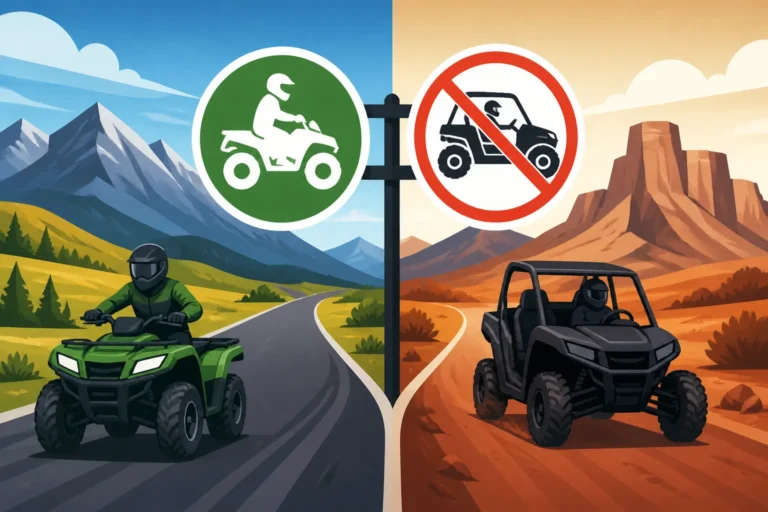
For many riders, the machine they bought for tearing up trails or helping around the ranch is simply an "ATV" or "UTV." In Wyoming, however, there's a vital legal difference between an "Off-Road Recreational Vehicle" (ORV) and a "Multipurpose Vehicle" (MPV). An ORV is what you register with an annual decal, primarily for use on designated trails and enrolled two-track roads. If you're riding with just your [Wyoming's Annual ORV Permit] decal, you are limited to areas specifically designated for ORV use. You cannot legally take that machine on many public roads.
This can be incredibly frustrating. Imagine you're out on an epic trail ride near Dubois, and the next segment of your route is just a quarter-mile down a county road. You see others on similar machines taking that short hop, but is it legal? Not if your machine is only registered as a standard ORV. To bridge that gap – to make your ATV or side-by-side truly capable of road travel – you need to classify and equip it as a Multipurpose Vehicle (MPV). This designation opens up the vast network of county, state, and even some federal roads to your machine, provided it meets stringent safety and equipment standards, including that little red reflector we're talking about. The [Wyoming's MPV Path to the Road] is a different journey entirely, requiring a title, plate, and specific equipment.
Why Wyoming Has Specific Road Equipment Rules
Wyoming is unique. We have incredible wide-open spaces, but those spaces are often crisscrossed by public roads that serve a variety of purposes – from high-speed highways to dusty county roads leading to remote ranches. These roads are shared by everything from semi-trucks to bicycles, and sometimes even free-range livestock. Because ATVs and UTVs (when properly equipped as MPVs) can legally operate on many of these roads, it's absolutely crucial that they are as visible and predictable as any other vehicle.
The specific equipment rules, including the requirement for a red rear reflector, aren't just bureaucratic red tape designed to make your life harder. They are fundamentally about public safety. An MPV on a public road needs to signal its presence clearly, especially to drivers who might not expect to see an off-road machine on pavement. This is particularly true at dawn, dusk, or in inclement weather, when visibility can be significantly reduced. A missing reflector might seem like a small thing, but in a state where a winding mountain road can suddenly put you face-to-face with a massive pickup truck, every bit of visibility counts. These rules ensure that when you choose to use your machine as a street-legal vehicle, you're doing so with the same basic safety considerations that apply to cars and motorcycles.
Why a Red Rear Reflector Matters for Your Wyoming Machine
When you're out on the trails, your focus is often on traction, ground clearance, and navigating obstacles. But when you transition to public roads, even those quiet, gravel county roads that feel like a continuation of the trail, the dynamics change entirely. Suddenly, you're sharing space with other vehicles, and visibility becomes your absolute priority. This is where a seemingly humble piece of equipment like a red rear reflector truly earns its keep, acting as a silent guardian for your safety and ensuring you remain within the bounds of Wyoming law.
Enhancing Visibility: A Lifeline on Wyoming Roads
Think about the conditions you often ride in: early mornings when the sun is just creeping over the eastern plains, late afternoons as shadows lengthen in the mountains, or even those overcast days where everything just seems a little dimmer. Even with your taillights on, a red rear reflector adds a critical layer of passive visibility. Unlike a powered light, a reflector doesn't need electricity to work. It simply bounces light back to its source, meaning that if a vehicle is approaching you from behind, its headlights will illuminate your reflector, making your machine stand out.
This is especially vital on Wyoming's less-traveled roads where traffic might be sparse but moves quickly, or on winding routes where sight lines are limited. A large pickup or SUV might not immediately register your taillights against a busy background, but the distinct, bright red reflection can catch their eye, giving them crucial extra seconds to react. It's an often-underestimated safety feature that provides a continuous, unpowered warning signal to anyone behind you, helping to prevent potentially devastating rear-end collisions. Whether you're connecting two parts of the [Wyoming's Enrolled Roads and Trails] system or just heading into town for gas, being seen is paramount.
Legal Compliance and Avoiding Unwanted Citations
Beyond the crucial safety aspect, having a proper red rear reflector is a non-negotiable legal requirement for any machine classified as a Multipurpose Vehicle (MPV) operating on Wyoming's public roads. Wyoming statutes are clear about the equipment needed for MPVs to be street legal, and a rear reflector is consistently on that list, right alongside headlights, taillights, and a horn. Ignoring this small detail can lead to a roadside stop by a Wyoming Trooper or sheriff's deputy, and potentially an expensive citation.
Imagine you've gone through all the effort to get your [Wyoming MPV Title Requirements] in order, you've paid for your [Wyoming MPV Plate Requirements], and you've even upgraded your machine with all the other necessary gear. To then get pulled over and cited for something as basic and inexpensive as a missing or non-compliant red rear reflector would be incredibly frustrating, not to mention a drain on your wallet. A quick check of your reflector can save you the hassle, the fine, and the inconvenience of a law enforcement interaction that could cut your ride short. Compliance isn't just about avoiding a ticket; it's about demonstrating that you're a responsible rider who respects the rules of the road.
Wyoming's Specific Requirements for Red Rear Reflectors
When it comes to road-legal equipment for your MPV in Wyoming, the details truly matter. It’s not enough to just slap any old reflector on the back of your machine. The state has expectations about what kind of reflector you use and, just as importantly, where it’s placed. Understanding these specifics is key to ensuring you're fully compliant and that your reflector actually does its job effectively.
What Kind of Reflector Does Wyoming Expect?
Wyoming's regulations for Multipurpose Vehicles, much like those for other street-legal vehicles, require a red reflector. This isn't just a suggestion; it's a specific requirement. You won't find specific dimensions or precise shapes laid out in the statute, but the general expectation is for a reflector that is clearly visible and effective. This means avoiding anything too small or obscured.
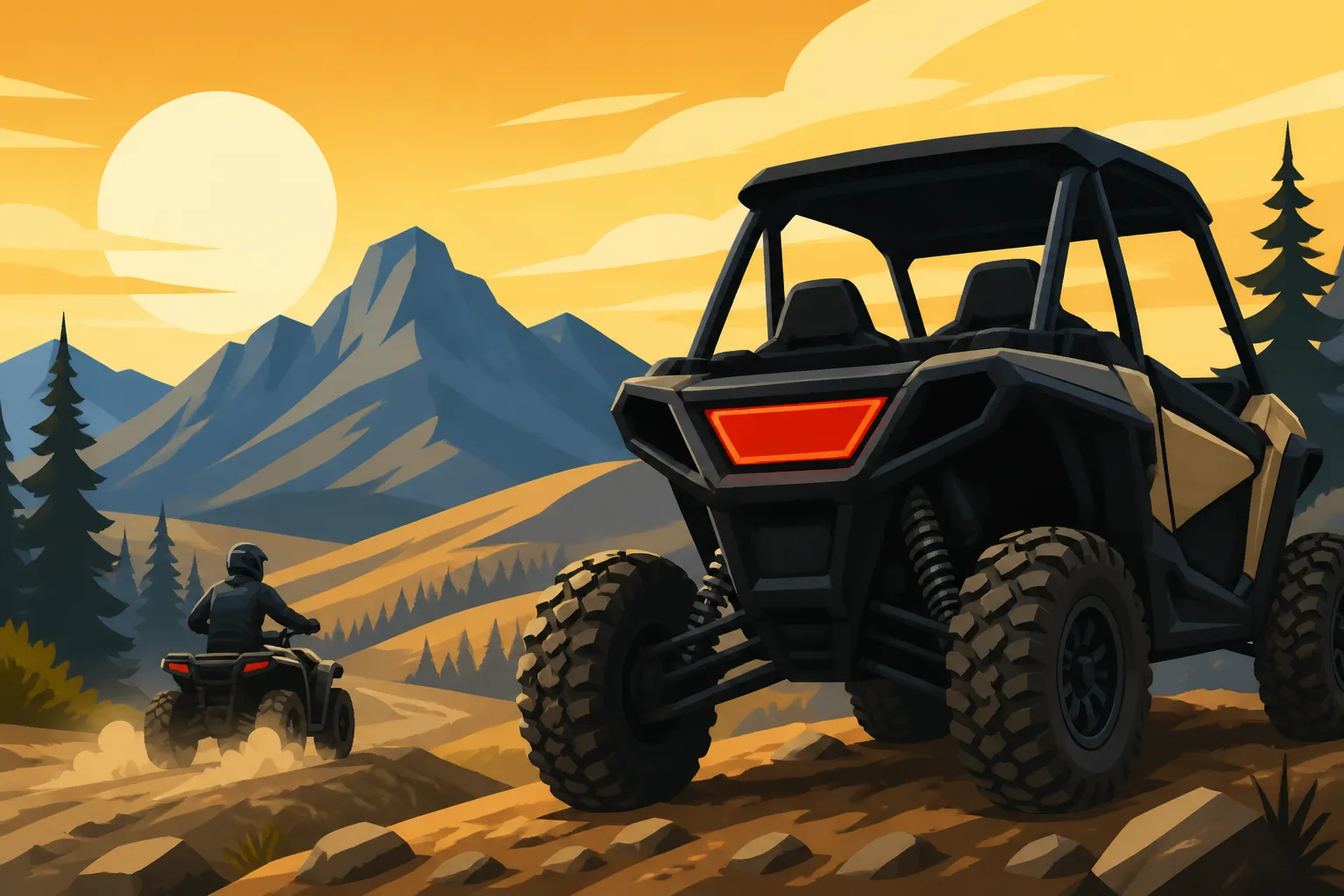
Typically, reflectors that meet national standards, like those found on trailers, bicycles, or other motor vehicles, will suffice. These are usually plastic, square, rectangular, or round, and designed to retro-reflect light, meaning they bounce light back directly to the source, making them appear very bright when illuminated by headlights. It's crucial that the reflector is red – not amber, clear, or any other color. Red indicates the rear of a vehicle and is universally understood as a warning color for traffic approaching from behind. Many aftermarket taillight assemblies for UTVs from companies like SuperATV might incorporate a red reflector directly into their design, which can be a convenient all-in-one solution. Just double-check that it's clearly visible and not merely a decorative element.
Proper Placement for Maximum Effectiveness and Compliance
The placement of your red rear reflector is just as important as its type. To be effective and compliant, it needs to be securely mounted on the rear of your machine and positioned where it has an unobstructed view to the rear. Common sense dictates that it should be relatively symmetrical, or at least placed clearly where it can be seen by approaching traffic.
While specific height requirements (like minimum/maximum distances from the ground) aren't always explicitly detailed for MPVs, general vehicle safety guidelines suggest that reflectors should be visible from a range of angles and not be too low to the ground to be easily obscured by bumps or road debris, nor too high to be out of the direct path of typical headlights. Most commonly, you'll see them mounted on the rear bumper, fender, or integrated into the taillight assembly. The key is that it must be free from any obstruction – meaning it shouldn't be covered by a flag, a spare tire, gear bags, or a buildup of mud and dust. If you're carrying cargo, ensure your reflector isn't blocked. Regularly checking its cleanliness and ensuring it's not damaged or faded is also part of maintaining compliance. A reflector covered in grime is as good as no reflector at all when a Wyoming Trooper or a fellow driver is trying to see you.
How to Install or Ensure Your Red Rear Reflector is Compliant
Getting your machine fully street legal in Wyoming involves a checklist of items, and the red rear reflector is a small but mighty one. Whether your UTV or ATV already has one, or you need to add it, making sure it’s up to snuff is straightforward. It’s all about a quick check and, if needed, a simple upgrade.
Checking Your Machine for Pre-Installed Reflectors
Many newer factory-built UTVs, especially those designed with a nod towards multi-purpose use, might come with a red rear reflector already integrated into the rear bumper or taillight assembly. It's far less common on ATVs, which are traditionally more focused on pure off-road performance, but still worth a look. Before you go out and buy a new one, take a good, close look at the rear of your machine.
Inspect the taillight area, the rear bumper, and any structural elements at the very back of your ATV or side-by-side. Look for a distinctly red, usually square or rectangular, plastic piece that doesn't light up but is clearly designed to bounce light back. Once you've found it, give it a once-over:
- Is it clean? A reflector covered in dust, mud, or grime won't work effectively. Give it a good scrub.
- Is it intact? Over time, plastic reflectors can crack, chip, or fade due to sun exposure and trail abuse. A damaged reflector might not meet the visibility requirements.
- Is it securely mounted? Vibrations from riding can loosen screws or adhesive. Make sure it's not rattling or about to fall off.
- Is it visible? Stand behind your machine from about 20-30 feet away. Is it clearly visible, or is it hidden behind a hitch, a cooler, or a spare tire? Remember, it needs an unobstructed view.
If your machine has a reflector that passes these tests, great! You're one step closer to legal road use. If not, or if it's damaged, it's time for an upgrade.
Sourcing and Installing a New, Compliant Reflector
If your machine doesn't have a red rear reflector, or if the one it has is damaged or inadequate, adding a new one is an easy and inexpensive fix. You have a few options for sourcing:
- Auto Parts Stores: Most automotive stores carry a variety of DOT-compliant red reflectors, often found in the trailer accessories section. These are designed for visibility on public roads and are usually quite durable.
- Powersports Dealers: Your local ATV/UTV dealer might have OEM (Original Equipment Manufacturer) or aftermarket reflectors specifically designed for off-road machines.
- Online Retailers: Websites specializing in powersports parts, like SuperATV, are excellent resources. They often have a wide selection of accessories, including specific street-legal kits that might contain all the necessary reflectors, mirrors, and lighting components you need. When you’re specifically looking to outfit your machine for Wyoming’s road rules, SuperATV offers robust options that hold up to the rigors of our diverse terrain while meeting compliance standards.
Once you have your new reflector, installation is usually a breeze:
- Choose a Location: Pick a spot on the absolute rear of your machine, preferably on a flat surface like a bumper or rear fender, ensuring it’s clearly visible and won’t be obstructed by cargo or a hitch. Aim for a height that puts it within the typical range of car headlights. [Fitting a Red Reflector to the Rear] is often simpler than you'd think.
- Clean the Surface: If you’re using an adhesive-backed reflector, thoroughly clean the mounting surface with rubbing alcohol to ensure a strong bond.
- Mount Securely: Many reflectors come with adhesive backing, screw holes, or both. For maximum durability, especially on an off-road machine that experiences vibrations, using screws in addition to adhesive is highly recommended. Ensure it’s mounted firmly and won't vibrate loose.
- Verify Visibility: Once installed, stand back and check it again. Have a friend shine a flashlight or even their car headlights at it from a distance to confirm it reflects brightly.
Taking these steps ensures your red rear reflector is not just present, but truly compliant and effective in keeping you safe on Wyoming’s roads.
Beyond the Reflector: Other Essential Equipment for Street-Legal ATVs/UTVs in Wyoming
While the red rear reflector is a small but mighty player in the world of Wyoming MPV compliance, it's far from the only piece of the puzzle. To truly take your ATV or UTV from a trail machine to a road-worthy vehicle, you'll need to consider a host of other equipment and, just as importantly, the right paperwork. Overlooking any of these elements can lead to a roadside stop and a premature end to your ride.
A Complete Look at Wyoming MPV Road Equipment
When you're upgrading your ORV to an MPV to hit the pavement in Wyoming, you're essentially turning it into a miniature car in the eyes of the law. This means it needs to meet fundamental safety and visibility standards that allow it to safely share the road with other vehicles. Here's a rundown of the other critical equipment, in addition to that essential red rear reflector:
- Headlights, Taillights, and Brake Lights: Your machine must have at least one headlight (which emits a white light visible from at least 500 feet), at least one red taillight (visible from 500 feet), and a red brake light that illuminates when you apply the brakes. These are non-negotiable for any road use, especially if you plan on riding at dawn, dusk, or night. For detailed specifics, check [Wyoming Lighting Requirements for ORVs].
- Rearview Mirror: Wyoming law specifically requires at least one rearview mirror mounted on the left side of the vehicle. This is critical for monitoring traffic behind you, just like in a car. Many aftermarket suppliers, including SuperATV, offer robust, vibration-resistant mirrors designed for UTVs and ATVs that meet these specific requirements. Having a clear view of what’s behind you is a cornerstone of safe road operation. For more on this, look up [Wyoming Mirror Requirements for Road Use].
- Horn: A working horn, audible from at least 200 feet, is essential for signaling other drivers or pedestrians in a pinch. It doesn’t have to be loud enough to wake the dead, but it needs to be effective. [Wyoming Horn Requirement on a Road Machine] clarifies this.
- Muffler and Spark Arrester: While you likely have these for trail compliance, they’re equally important for road use to control noise and prevent wildfires.
- Windshield/Eye Protection: While not always a specific "windshield" requirement for all MPVs, you absolutely must have adequate eye protection (goggles, safety glasses) if your machine doesn't have a full windshield. Many UTVs can be fitted with aftermarket windshields for comfort and protection.
- Tires: Your tires need to be in good condition, and for extensive road use, DOT-compliant tires are generally recommended. While some aggressive off-road tires can be used on roads, their wear rate is high, and they might not offer the best traction on pavement.
- A Slow-Moving Vehicle Emblem: If your MPV is inherently designed to travel at speeds under 25 mph, it may need to display an orange slow-moving vehicle triangle on the rear.
Meeting these requirements ensures that your machine is equipped to interact safely with other road users, greatly reducing your risk of accidents or citations when riding [Wyoming's Designated ORV Roads].
The Paperwork That Puts It All Together
Beyond the physical equipment, a street-legal MPV in Wyoming also requires the correct documentation. Without these pieces of paper, all the shiny new accessories in the world won't make your ride legal.
- Title and Registration: Unlike many purely off-road machines, an MPV in Wyoming absolutely requires a street-legal title and registration. This process involves your county clerk for the title and your county treasurer for the plate. You cannot just use your ORV decal; you need a proper license plate, just like a car. This starts with [Titling a Multipurpose Vehicle in Wyoming] and progresses to getting [Wyoming MPV Plate Requirements] fulfilled.
- Proof of Insurance: Just like any other registered motor vehicle on Wyoming's public roads, your MPV must carry valid liability insurance. This isn't optional; it's a legal necessity to protect yourself and others in case of an accident. Always carry proof of insurance with you when riding on roads.
- Driver's License with Appropriate Endorsement: You can't just have any driver's license. To operate an MPV on Wyoming roads, you need a valid driver's license with either a motorcycle (M) endorsement or a Multipurpose Vehicle (MR) endorsement. Even if you're an experienced driver, this specialized endorsement is mandatory. For more information, consult [Wyoming Motorcycle Endorsement for an MPV].
- The MPV Checklist: When you go through the titling and registration process, you'll often encounter a specific MPV checklist form from the state. This form helps ensure your machine meets all the criteria, including weight limits and seat height, to qualify as an MPV. Filling it out accurately is a key step in the process. [Wyoming's MPV Definition in W.S. 31-1-101] details these criteria, including [Wyoming MPV Weight Limits] and the [Wyoming MPV Seat Height Rule].
Completing all this paperwork might seem like a hassle, but it’s what legitimizes your machine for road use. Without it, even with a perfect reflector and horn, you’re still not truly street legal in Wyoming.
The Consequences of Non-Compliance: Riding Without a Proper Reflector
It’s easy to dismiss a small component like a red rear reflector as a minor detail, especially when your focus is on the big picture of getting your machine road-ready. However, ignoring this or any other required piece of equipment for your Wyoming MPV can lead to serious consequences that affect both your safety and your wallet. It's not just about avoiding a ticket; it's about protecting yourself and others.
Safety Risks: When You're Not Seen, You're Not Safe
The most significant consequence of not having a proper red rear reflector is the increased risk to your safety. On a trail, visibility is primarily about spotting obstacles. On a public road, visibility is about being seen by others. Without that passive reflective element on the rear of your machine, you significantly increase your vulnerability, particularly in conditions where natural light is limited.
Imagine you're cruising a gravel road near Alcova after sunset. You have your taillights on, but perhaps they're a little caked with dust from the day's ride, or maybe they're just not as bright as a car's. A driver coming up behind you, perhaps distracted or simply not expecting an ATV/UTV on the road, might not see your machine until it's too late. Even a momentary lapse in attention from another driver can turn tragic if your machine isn't clearly visible from the rear. Rear-end collisions, especially with larger, faster-moving vehicles, can result in severe injuries or fatalities for ATV/UTV riders and passengers. The small cost and effort of ensuring a compliant reflector pales in comparison to the potential cost of an accident where you were simply not seen.
Legal Repercussions and the Financial Sting
Beyond the terrifying prospect of an accident, riding a non-compliant MPV on Wyoming roads opens you up to a host of legal troubles. Law enforcement officers, whether it's a Wyoming Trooper, a county sheriff, or a game warden, regularly patrol public roads and are trained to spot machines that don't meet street-legal standards. A missing or inadequate red rear reflector is an easy flag for them.
Here’s what you might face:
- Fines and Citations: You could be issued a citation for operating an improperly equipped vehicle. These fines vary, but they are never pleasant. This is similar to [Wyoming Fines for Riding a Closed Road], where any deviation from the rules can lead to financial penalties.
- Inconvenience and Delays: Getting pulled over means your ride is stopped. You'll spend time talking to the officer, potentially getting a ticket, and then being told you cannot continue riding on the road until the issue is fixed. This can ruin a planned outing and leave you scrambling to trailer your machine or find an immediate solution. [What a Wyoming Trooper Checks Roadside] often includes a thorough inspection of your machine's safety equipment.
- Impoundment: In more serious cases, or if other violations are present, your machine could even be impounded, leading to towing fees, storage costs, and a significant bureaucratic headache to get it back.
- Insurance Issues: If you're involved in an accident while your MPV is not fully compliant with all the required safety equipment, your insurance company might deny or reduce your coverage. This could leave you personally liable for damages and medical expenses, which can quickly add up to tens or even hundreds of thousands of dollars. An insurance policy is only as good as your compliance with the law.
Ultimately, trying to cut corners on something as small as a red rear reflector is a false economy. The risks to your safety and the potential legal and financial repercussions far outweigh any perceived convenience or savings. Taking the time to properly equip and document your MPV for Wyoming roads is an investment in your safety and your peace of mind, ensuring you can enjoy all the diverse riding opportunities our state has to offer without unnecessary worry.
Disclaimer
This article is for general informational purposes only and does not constitute professional advice. Laws, prices and regulations vary by location and change over time. Consult a qualified professional for guidance on your specific situation.